
6 in 10. That is the kind of number that makes parents sit up straight, and it should. The most failed high school class is usually math, with algebra, geometry, and especially calculus near the top of the pile. In college, the same pattern shows up again. Calculus, chemistry, and physics wreck GPA plans fast. I have a blunt take here. A hard class does not make you doomed. A bad plan does. Students fail these classes because they treat them like memory games, then act shocked when the test asks for real problem solving. That move burns them every time. The ugly part is this. The hardest classes in high school and college punish procrastination harder than any English essay ever will. If you miss the first two weeks, the class starts stacking bricks on your head. If you keep up, ask for help early, and do practice problems before the test, you can stay ahead of the mess. If you do not, the grade drops fast, and it does not care about excuses. For students looking ahead to tougher math, a course like UPI Study Calculus 2 gives a cleaner path than trying to limp through later under pressure.
Math usually wins the ugly contest for the most failed high school class. Algebra I shows up a lot because it hits early and filters students fast. Geometry and Algebra II follow close behind. In college, calculus and chemistry often take the crown for most difficult high school subjects’ older cousins. Physics joins them too. Why these classes? They stack skills. Miss one rule, and the next ten problems fall apart. That is why high school fail rates in math stay so high. A student can pass a history quiz by reading the chapter the night before. Try that with algebra and you get crushed. One detail people skip: many schools do not just care about the final exam. They count missing homework, quiz scores, and lab work too. So a student who bombs the first month often has no runway left. A student who starts with UPI Study Calculus 2 or another structured path gets more reps, more practice, and fewer gaps.
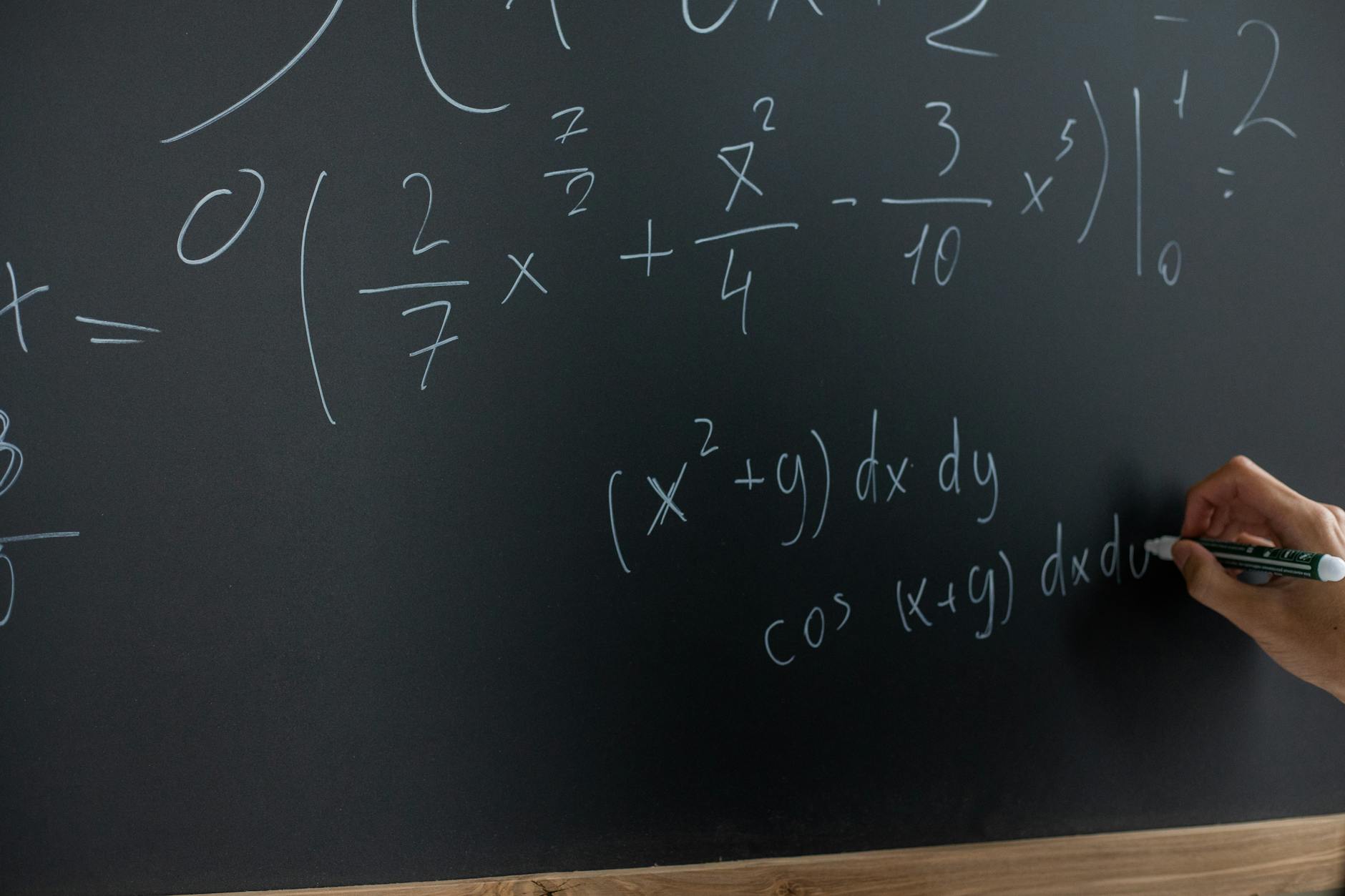
Which students struggle most in STEM?
This matters if you freeze on tests, miss homework, hate word problems, or keep saying, “I get it in class, but I blank out at home.” It also matters if you plan to take AP math, chemistry, physics, or any college STEM class later. Those classes do not care about vibes. They care about reps. If you already need a tutor in middle school math, do not pretend senior-year algebra will magically get easy. That fantasy costs people money and time. I see students waste a semester because they keep waiting for the material to “click” on its own. It usually does not. It clicks after practice, correction, and more practice. Skip this if you never plan to take a math-heavy class and your school path does not require one. A student headed straight into a trade with no algebra requirement should not obsess over calculus horror stories. Same goes for a strong reader who already handles math fine and wants no part of AP stats or chemistry. No shame there. One-sentence truth: the wrong class at the wrong time can wreck a good student. A student who belongs here needs a plan before the first bad quiz, not after the first failing grade. That means office hours, extra problems, and a real study schedule. It also means picking a better route when the school path allows it. I like classes that give structure and repetition, because math students do not need drama. They need clean practice. If you want a smoother step into harder college math, UPI Study Calculus 2 fits that need better than a chaotic cram-and-pray setup.
Understanding Class Failures
These classes fail students for a plain reason: they build on old skills, and weak spots spread. Math and science both do that. If you cannot solve for x, you do not just miss one question. You miss the next four. If you do not understand moles in chemistry, the whole unit turns into noise. That is why people keep asking what class do most students fail. The answer keeps circling back to the same group. A lot of students get this wrong. They think failure means they are “bad at math.” No. Usually they never built the skill stack. They skipped practice, guessed on homework, copied steps without understanding them, then hit the test and froze. Schools also move fast. A teacher may spend one day on a topic that takes a student three days to absorb. That gap grows. Then the student falls behind and starts faking confidence. There is another piece people hate hearing. These classes punish lazy study habits more than effort. Re-reading notes feels safe, but it barely helps. Solving problems from scratch helps. Redoing missed questions helps. Asking “why did I miss this?” helps. A student who uses that method can turn a shaky grade into a passing one. A student who keeps staring at the same workbook page like it will talk back usually fails again.
90+ College Credit Courses Online
ACE & NCCRS approved. Self-paced. Transfer to partner colleges. $250 per course.
Browse All Courses →How It Works
First, the student skips one lesson or one homework set. Then the teacher moves on. That is where the trouble starts. Math and science do not wait around. The next lesson assumes you already know the last one. So the student walks into class half-lost, then misses the next step too. That is how a small gap turns into a giant one. A student who skips this work usually does the same thing every week. They tell themselves they will catch up on Sunday. Sunday turns into panic. Panic turns into copying answers or guessing on a quiz. Then the grade drops, and the student starts avoiding the class because the class feels embarrassing. That shame loop is real. It also keeps the student stuck. A student who does it right acts earlier. They do problems the same day. They mark every wrong answer. They ask for help before the test. They use extra practice, not just notes. If the class allows a stronger outside option, they use that too. A course like UPI Study Calculus 2 gives students more control, which matters when the regular class moves too fast or the school schedule gets messy. The split that matters is this. One student waits for the grade to save itself. It never does. The other student treats hard classes like training, not punishment. That student still has to work. No magic there. But they get a fair shot, and that changes everything.
Can one failed class delay graduation?
Students fixate on the grade. That’s the rookie mistake. A failed core class can shove your graduation back by a full semester, and sometimes a full year, because the class you failed often runs once a year or fills a long chain of prerequisites. Miss Algebra II, Chemistry, or English, and the next class in the line does not care about your excuses. It waits. That delay can cost you tuition for an extra term, plus housing, food, and fees if you live on campus. I have seen one failed class turn into a $3,000 to $8,000 problem fast, and that number can climb higher at private schools. That delay also messes with your plan in a dumb, expensive way. You start piling on extra classes later. You overload. You burn out. Then you fail again.
Students who plan their credit transfer strategy early save $5,000 to $15,000 on total degree costs, and often cut their graduation timeline by a full semester.
The Complete Calculus 2 Credit Guide
UPI Study has a full resource page built specifically for calculus 2 — covering which courses count, how credits transfer to US and Canadian colleges, and how to get started at $250 per course with no deadlines.
See the Full Calculus 2 Page →How much does failing a class cost?
A failed class can cost you the class itself, the retake, and the time you lose while your graduation date slides. At a public school, one semester can cost around $4,000 to $7,000 in tuition and fees. At a private school, that same semester can hit $20,000 or more. If you fail a class and need to retake it, you pay twice for the same material. That is not a learning plan. That is a money leak. Compare that with a self-paced option like UPI Study. UPI Study offers 90+ college-level courses, all ACE and NCCRS approved, for $250 per course or $89 a month unlimited. No deadlines. No race against a semester clock. UPI Study credits transfer to partner US and Canadian colleges, which makes the math simple for students who want a cheaper path through hard material. Calculus 2 is a good example of the kind of class students often avoid until it wrecks their schedule. Paying less for the credit makes a lot more sense than paying twice because a class beat you up the first time.
Common Mistakes Students Make
Mistake one: they retake the same class at the same school without checking the full cost. That seems reasonable because the school already knows their record and “should” make it easy. The problem is simple. Easy does not mean cheap. A repeat class can still carry full tuition, lab fees, and book costs, and now the student has paid for the same credits twice. Mistake two: they wait too long to fix a failed class. That feels harmless at first because one bad grade does not look like a disaster. Then the missed credit blocks the next class, then the next one, and the whole schedule gets jammed. I hate this one. It is lazy planning dressed up as hope, and hope does not pay tuition. Mistake three: they sign up for a harder class before they clean up the weak spot that caused the failure. A student might fail stats, then jump into a more advanced math or science course because it sounds smarter to “move on.” That usually backfires. Weak basics turn into another fail, and now the student has two bad grades instead of one. That is how high school fail rates turn into real college damage.
How UPI Study Fits In
UPI Study fits because it gives students a cheaper way to handle the classes that scare them most. The pace stays in your hands, so you do not get crushed by a fixed deadline while you work, care for family, or simply need more time. That matters a lot in the most difficult high school subjects and in college prep classes that knock students off track. UPI Study also keeps the price low enough that a single mistake does not wreck your budget. Students who need a strong starting point in psychology often use Introduction to Psychology because it helps them build study habits without the usual class pressure. That is a sane move. A lot of students do not fail because they are lazy. They fail because they picked a format that punished them for being human.


Which class details should you check first?
Before you enroll, check four things. First, find out whether the class matches the exact subject you need for graduation or transfer. Second, make sure the course fits your schedule, because a self-paced class still needs your actual time. Third, look at the full price, not just the headline number, and compare that with what your school charges for a repeat. Fourth, read the class outline so you know whether the work level matches your weak spot, not your ego. If you are weighing math-heavy options, Principles of Statistics gives you a clear example of the kind of class that can either save you time or eat your week if you rush it. That kind of decision should feel practical, not dramatic. Use the cheaper path when it actually solves the problem.
See Plans & Pricing
$250 per course or $89/month for unlimited access. No hidden fees.
View Pricing →Frequently Asked Questions
Most students think they fail because they’re “bad at school.” That’s not what happens. What actually works is showing up early, doing every problem, and asking for help before you’re drowning. The most failed high school class is usually Algebra 1, and sometimes it’s Geometry or Chemistry, depending on the school. Math classes sit at the top because each lesson stacks on the last one. Miss one unit, and the next unit feels like a foreign language. You also see high school fail rates spike when kids skip homework and wait until the night before a test. If you want better results, do 20 minutes of practice a day, not a three-hour panic session once a week. Small moves beat big drama.
What surprises most students is that math failure usually starts with one weak skill, not the whole class. You miss fractions in middle school, then Algebra 1 hits you hard. That’s why math shows up so often in lists of the hardest classes in high school. You can’t fake your way through it for long. Teachers also move fast, and tests often cover 5 to 8 skills at once. If you wait until test day, you’re cooked. You need practice, correction, then more practice. Do problems until you can solve them without looking at notes. Use tutoring after the first bad quiz, not after the second report card. That one move saves a lot of students from a brutal semester.
If you get the most failed high school class wrong, your grades can slide fast. Then your GPA drops, your confidence takes a hit, and you may get stuck in summer school or credit recovery. That’s not small stuff. A D in Algebra 1 can block you from Algebra 2 next year, and that can mess with your path in science, engineering, and some college plans. The same thing happens in Chemistry. You miss one unit on equations, then every lab feels harder. Students who ignore the problem usually fall behind by 2 or 3 weeks before they notice. You need to catch trouble early. Ask for extra problems, sit near the front, and fix weak spots right after each quiz.
At some schools, 10% to 20% of students fail Algebra 1 or another math class in a single term. In tougher districts, the number can run higher. That’s why people keep asking what class do most students fail. Science classes like Chemistry and Physics also show high school fail rates because you need both math and memorized facts. One bad test can wreck a grade if your school weights exams heavily. A 50-point quiz and a 100-point test do not hit the same way. You should track every grade, not just the final average. If you see a 72 or lower after the first month, you’re already in the danger zone. Fix it before the class starts snowballing.
The class most students fail in high school is usually Algebra 1, plain and simple. There’s a caveat, though: some schools see more failures in Geometry, Biology, or Chemistry because the teacher, schedule, and student group all change the numbers. You can’t treat every school the same. Still, math classes usually sit near the top of the most difficult high school subjects. They punish weak basic skills fast. If you want to beat that, do five practice problems every day and check every mistake. Don’t just read the answer key. Fix the step where you went off track. A lot of students lose points because they know the idea but miss one sign, one fraction, or one formula on the test.
The most common wrong assumption students have is that hard classes are only for “smart kids.” That’s nonsense. You don’t need genius-level brainpower to pass the hardest classes in high school. You need habits. Students who think they can wing it usually crash in math and science because those classes punish gaps fast. A missing homework grade can hurt as much as a bad test. In a class with 4 unit tests and 20 homework scores, one skipped week can drag your average down hard. You should write down due dates, do work the same day you get it, and ask one question every week if something feels off. Quiet confusion grows fast in Algebra, Chemistry, and Physics.
This applies to you if you’re taking Algebra 1, Geometry, Chemistry, or Physics and you already feel lost after the first few weeks. It doesn’t apply the same way if you’re in an easier elective or a class built around projects and participation. The most failed high school class hits students who miss basics, skip practice, or stay silent when they’re confused. That’s why high school fail rates stay high in math and science. You need to ask for help early, because a 65 in week 3 can turn into a 52 by midterm if you keep guessing. If you’re already behind, use after-school help, a tutor, or one strong study partner and work problems out loud every night.
Start by looking at your last 3 grades today. That’s the first step. If you see scores under 75, you already have a problem, and you need to act fast. Most students wait and hope the next test saves them. That rarely works. In the most difficult high school subjects, one weak unit can drag down the whole quarter. You should write down exactly which skills you missed, like solving equations, balancing chemical equations, or graphing lines. Then fix those skills one by one. Ask your teacher for 3 extra practice sets, not just vague “help.” Do the work the same day. If you wait until Friday, you’ll forget half of it and waste the whole week.
Final Thoughts
The most failed high school class usually comes down to one of two things: math or a class that builds on a skill students never really learned. Either way, the damage comes from waiting too long and paying for the same mistake twice. That is the ugly part. The grade hurts, then the schedule hurts, then the bill shows up. If you are staring at a class that keeps beating you, treat it like a money problem, not a pride problem. Fix the weak spot, choose the cheaper route when it makes sense, and stop pretending a bad plan will somehow turn into a good one. One failed class can cost you a semester and $3,000 or more.
Ready to Earn College Credit?
ACE & NCCRS approved · Self-paced · Transfer to colleges · $250/course or $89/month