
7 types of chemistry sounds like school-speak until you see how much it changes your choices. Before a student learns the seven branches of chemistry, every class can feel like one giant blur of formulas, lab goggles, and stress. Afterward, the picture gets sharper. Organic chemistry deals with carbon-based compounds, so it pulls in medicine, drugs, plastics, and food science. Inorganic chemistry looks at metals, salts, minerals, and all the stuff that does not fit the carbon-heavy mold. Physical chemistry sits closer to physics and asks how reactions happen and why matter behaves the way it does. Analytical chemistry checks what a sample contains and how much of each thing shows up. Biochemistry studies the chemistry of living things. Nuclear chemistry looks at changes in atoms’ nuclei, which sounds intense because it is. Environmental chemistry tracks chemicals in air, water, and soil.
The seven branches of chemistry are organic, inorganic, physical, analytical, biochemistry, nuclear chemistry, and environmental chemistry. That is the short version. Each one studies matter from a different angle, and each one pulls in a different kind of student. Organic chemists often work in pharma, food, and materials. Inorganic chemists show up in batteries, catalysts, and minerals. Physical chemists like models, math, and reaction rates. Analytical chemists often work in labs that test blood, water, drugs, or products. Biochemists usually head toward medicine, biotech, and research on cells. Nuclear chemists work with reactors, radiation, and medical imaging. Environmental chemists study pollution, cleanup, and climate-linked chemical changes.
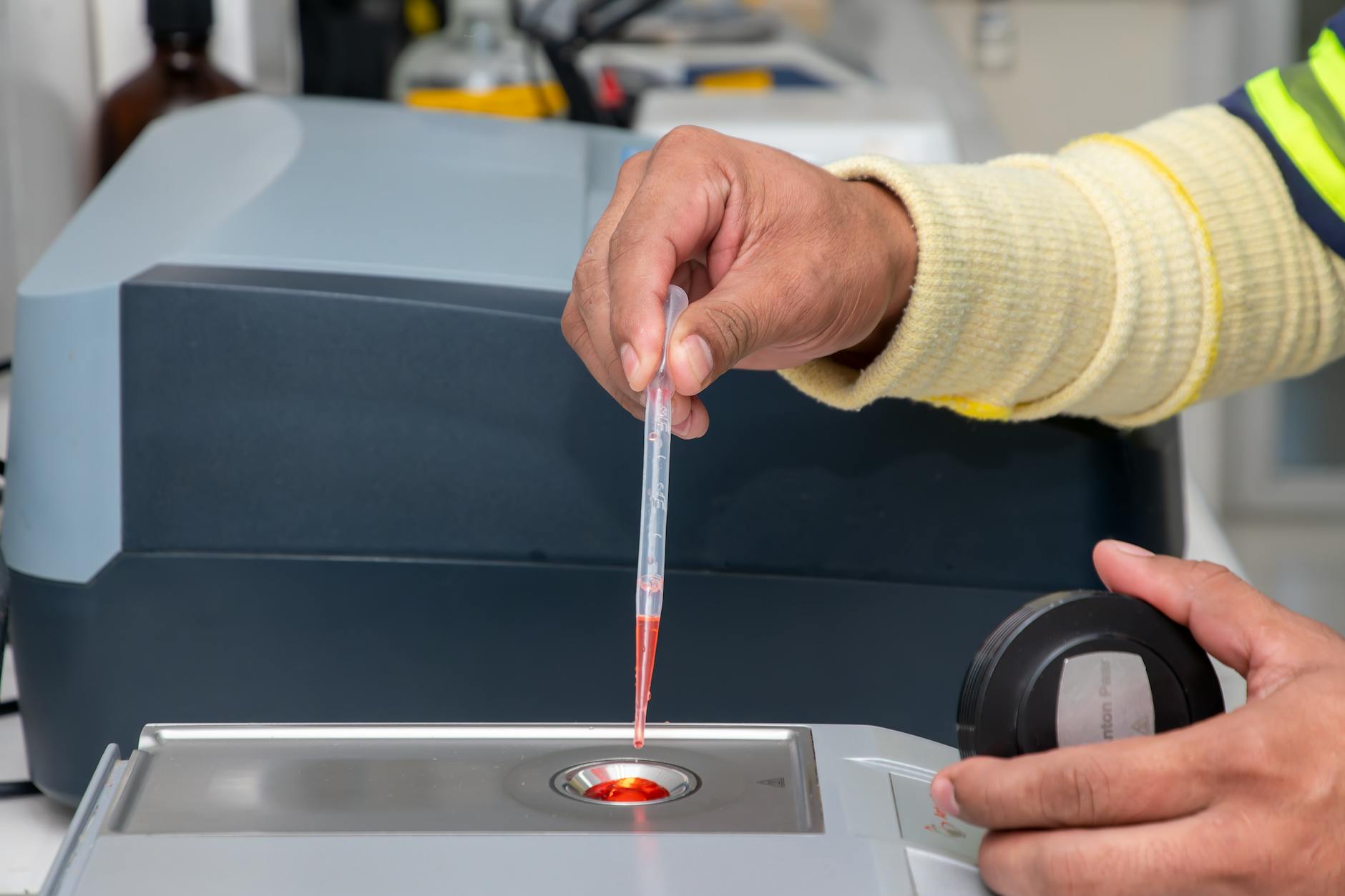
Which chemistry branch fits your goals?
This matters most if you sit in that weird middle spot where you like science, but you do not want to guess your way through a major. A high school student choosing a pre-med or engineering track needs this. So does a college student who keeps hearing “just take chemistry” without hearing which chemistry. A lab tech who wants a better role should care too, because employers rarely hire for “chemistry” in the abstract. They hire for the branch. Organic, analytical, biochemistry, and environmental work all ask for different habits. A student who hates lab work and never wants to touch data should not force this path just because chemistry sounds respectable. If you want medicine, biochem and analytical chemistry matter a lot. If you want clean energy, materials, or manufacturing, inorganic and physical chemistry start to look more useful. If you care about pollution, water quality, or public health, environmental chemistry has real weight. On the other hand, if you want to write code all day, build bridges, or work in finance, this may not be your lane. I like saying that plainly because too many students stay in a major out of habit, not interest. UPI Study’s chemistry courses can help students test fit before they sink years into the wrong branch, and that saves a lot of regret.
How do chemistry branches overlap in practice?
People often get one big thing wrong: they think the seven types of chemistry sit in neat boxes with clean walls. They do not. The seven branches of chemistry overlap all the time, and that overlap is where a lot of real work happens. A biochemist may use analytical chemistry every week. An environmental chemist may need inorganic chemistry to track metals in water. A physical chemist may build models that help an organic lab predict reaction speed. This is messy in a useful way. A second thing people miss: chemistry specializations do not only belong to researchers. Industry, health care, government labs, food companies, energy firms, and schools all use these branches. Some jobs ask for deep lab skill. Others care more about testing, reporting, or process work. In the U.S., chemistry programs often follow lab safety rules, credit limits, and accreditation standards from bodies like ACE and NCCRS when courses move outside a standard campus setup. That matters because students want credit that fits real degree plans, not random classes that sit on a shelf. The best chemistry disciplines list does not just name fields. It shows how those fields connect to actual work. UPI Study’s chemistry pathway fits that reality well.
90+ College Credit Courses Online
ACE & NCCRS approved. Self-paced. Transfer to partner colleges. $250 per course.
Browse All Courses →Why do chemistry branches feel so different?
Before a student understands the seven branches of chemistry, they usually pick courses by accident. They see “chemistry” and think all classes lead to the same place. Then they hit a wall. Organic feels memorization-heavy. Physical feels math-heavy. Analytical feels like detective work. Biochemistry feels like biology with sharper edges. That mismatch can shake a student fast. I think this is where a lot of people quit too early, not because chemistry is impossible, but because nobody told them the field has different doors. After a student sees the seven types of chemistry clearly, the plan gets much smarter. First, they choose a branch based on the kind of work they actually like. Then they match courses to that branch. Then they look at careers that use it. That order matters. If you want medicine, you aim at biochemistry and analytical chemistry. If you want products, materials, or lab development, organic and inorganic chemistry start to matter more. If you want to work on air, water, or soil, environmental chemistry gives you the right frame. The first step is simple: stop treating all types of chemistry like one giant class. The place where people go wrong is rushing into a major before they know which kind of thinking they prefer. Good looks like this: a student picks a branch, sees the point of the class, and stops asking, “Why am I learning this?” That shift changes the whole experience.
How do chemistry branches affect graduation timing?
Students usually miss one thing: the chemistry disciplines list does not sit in a corner of your degree plan. It spreads out into lab time, course order, and graduation timing. Pick the wrong branch too late, and you can lose a whole semester. That can mean a four-year plan turns into five years fast, and that extra year can cost you $10,000 to $25,000 at a public school once you add tuition, fees, books, and living costs. That number stings because the mistake often starts with something that looks small. A student thinks, “I’ll take the chemistry class later.” Later gets expensive. General chemistry opens the door, but the seven types of chemistry push you toward different next steps. Organic usually leads to more labs. Analytical often feeds research and health fields. Physical can demand stronger math. If you choose a track that does not match your major, you can end up retaking classes or filling electives that do not help your degree. I think a lot of students treat chemistry like one big subject, and that habit burns time. One semester can vanish from a sloppy choice.
Students who plan their credit transfer strategy early save $5,000 to $15,000 on total degree costs, and often cut their graduation timeline by a full semester.
The Complete Chem Credit Guide
UPI Study has a full resource page built specifically for chem — covering which courses count, how credits transfer to US and Canadian colleges, and how to get started at $250 per course with no deadlines.
See the Full Chem Page →How much does a chemistry class cost?
At a public college, a three-credit chemistry class often costs $900 to $1,800 in tuition before lab fees and books. Add a lab fee and a textbook, and that same class can land near $1,200 to $2,200. At a private college, the bill can jump to $3,000 or more for one class. Now compare that with UPI Study Chemistry I, where one course costs $250, or the monthly plan at $89 if you move fast and take more than one class. That gap is not a little gap. It is a truck-size gap. Schools love to talk about passion, but students pay in cash. The wrong chemistry specializations can push you into extra classes, and extra classes mean extra rent, extra fees, and extra stress. If you need the credit, price matters. If you ignore price, you usually learn the hard way.
Common Mistakes Students Make
First, a student takes the “interesting” branch instead of the branch their program asks for. That seems smart because chemistry sounds flexible, and the class title feels broad enough. Then the credit does not fit the degree map, so the student pays for a class that does not move them closer to graduation. I have seen this happen with science majors who wanted a class that sounded fun and ended up buying a detour. Second, a student waits too long and signs up for a lab-heavy course at a local college after their schedule gets crowded. That sounds reasonable because they assume they can fit it in later. Later brings higher tuition, a bad class time, and sometimes a delayed graduation. The bill goes up while the payoff stays flat. Third, a student buys the cheapest-looking class without checking transfer rules or course type. That feels sensible because everyone wants a bargain. But a bargain that does not count is not a bargain. It is waste with a receipt. Honestly, this is where many college costs stories get weird, because people blame “high tuition” when the real problem starts with a poor class choice.
How UPI Study Fits In
UPI Study helps when students want real college credit without the usual mess of schedules, deadlines, and high per-class pricing. It offers 90+ college-level courses, all ACE and NCCRS approved, and cooperating colleges in the US and Canada accept the credits. That matters for chemistry because students often need one clean class that fits into a bigger plan, not a whole semester of chaos. The self-paced setup gives students room to move through the work on their own time, which helps if they are also handling work or family demands. If you need a starting point, UPI Study’s chemistry courses give you a direct path at a price that makes sense next to a standard college bill. $250 per course is simple. $89 a month unlimited can work even better if you can finish more than one course fast. That is the kind of math students should pay attention to.


Which chemistry branch should your degree require?
Before you enroll, look at four things. First, check which chemistry branch your degree asks for, because the seven types of chemistry do not all do the same job. Second, check whether the class includes a lab or a lab equivalent, since some majors care a lot about that detail. Third, line up the timeline with your graduation plan, because one late science class can shove back an entire term. Fourth, compare the price of one course against your larger course load, not just against another science class. Environmental Science can help in some degree plans too, but chemistry has its own lane and its own pressure. I would also look hard at the chemistry specializations your major asks for, not the ones that sound coolest. Cool does not pay the rent. Fit does.
See Plans & Pricing
$250 per course or $89/month for unlimited access. No hidden fees.
View Pricing →Frequently Asked Questions
This applies to you if you're trying to sort the seven branches of chemistry for class, major planning, or career ideas. It doesn't apply if you only want a one-line definition and don't care how the fields split up. The 7 types of chemistry are organic, inorganic, physical, analytical, biochemistry, nuclear, and environmental chemistry. Organic chemistry looks at carbon-based compounds, like drugs and fuels. Inorganic chemistry studies metals, salts, and minerals. Physical chemistry looks at energy, speed, and how reactions work. Analytical chemistry helps you identify what's in a sample, often with tools like mass spectrometers. Biochemistry studies the chemistry of living things. Nuclear chemistry looks at atoms, radiation, and decay. Environmental chemistry studies air, water, soil, and pollution. You might see these in a chemistry disciplines list or under chemistry specializations at a college.
You should start with organic chemistry if you want the broadest entry point, because it shows up in medicine, biology, and materials work. The catch is that the best first choice depends on what you want to do. If you like lab tests, analytical chemistry may fit you better. If you like numbers and formulas, physical chemistry may make more sense. If you care about cells and enzymes, biochemistry will feel more useful. Organic chemistry focuses on carbon rings, chains, and reactions. Inorganic chemistry covers metals and salts. Nuclear chemistry deals with isotopes and half-life, often measured in hours, days, or years. Environmental chemistry looks at real-world problems like lead in water or nitrogen in the air. A lot of students mix up all types of chemistry, but the chemistry disciplines list only helps when you match it to your own goals.
The most common wrong assumption you have is that all types of chemistry mean the same thing with different labels. They don't. Each branch has its own questions, tools, and jobs. Organic chemistry doesn't mean 'life chemistry'; it means carbon chemistry. Biochemistry studies life itself, like proteins, DNA, and enzymes. Analytical chemistry isn't about theory first. It's about measurement, often down to parts per million. Physical chemistry uses thermodynamics, kinetics, and quantum ideas to explain what molecules do. Inorganic chemistry covers compounds that don't center on carbon. Nuclear chemistry deals with the nucleus, not the electrons. Environmental chemistry studies pollution and natural systems. You can see why the seven branches of chemistry attract different people. One student may like lab work with samples, while another wants reaction math or medical research, and those chemistry specializations pull in very different skills.
There are 3 big overlaps you run into all the time. Organic chemistry and biochemistry meet in drugs, hormones, and metabolism. Analytical chemistry supports almost every other field because you need to test what you made. Physical chemistry connects to both organic and inorganic work through reaction rates and energy changes. That overlap matters because no lab works alone. A chemist studying a new medicine may use organic chemistry to build it, analytical chemistry to test purity, and biochemistry to see how it affects cells. Environmental chemistry often borrows from analytical chemistry too, especially when you measure tiny amounts of mercury or nitrate in water. The seven branches of chemistry look separate on paper, but real jobs blur them fast. You might see one researcher in a chemistry disciplines list who uses two or three chemistry specializations in the same week.
Environmental chemistry surprises most students because you think it sounds like ecology, but it uses hard chemistry every day. You study what happens to chemicals in air, water, and soil. That means you may track ozone, smog, acid rain, pesticides, or heavy metals like lead and mercury. Nuclear chemistry also surprises people because it sounds rare, yet it matters in medicine, power, and dating old materials with carbon-14. Biochemistry often surprises students too, since it feels less like 'chemistry' and more like biology until you watch enzymes speed up reactions by huge amounts. Organic chemistry gets a lot of attention, but the seven types of chemistry include fields that deal with hospitals, climate, and pollution. If you want chemistry specializations with real-world stakes, these two branches often hit closest to daily life.
Most students chase one class at a time, but what actually works is matching your strengths to the job style first. If you like building molecules, organic chemistry fits jobs in pharma and materials. If you like metals, catalysts, or ceramics, inorganic chemistry gives you more options. If you like measurement and clean data, analytical chemistry can lead to testing labs and quality control. If you like math and models, physical chemistry fits research and advanced study. Biochemistry leads you toward medicine, genetics, and biotech. Nuclear chemistry can take you into imaging, radiation safety, or energy work. Environmental chemistry can send you into water testing, air quality, and policy labs. The seven branches of chemistry don't all lead to the same kind of day. Some jobs sit at a bench. Some live in hospitals. Some work outdoors.
Final Thoughts
The seven types of chemistry sound academic, but they hit your wallet, your schedule, and your graduation date. That is the part students miss. Chemistry is not just a subject list. It is a series of choices that can speed up your degree or drag it out. If you know which branch your program wants, you can spend smarter. If you do not, one class can cost you a semester. That is the reality check: one wrong science course can turn into $1,000 or more and months of delay.
Ready to Earn College Credit?
ACE & NCCRS approved · Self-paced · Transfer to colleges · $250/course or $89/month