
An online physics lab course works like a real lab course with a different toolkit: you still collect data, run calculations, write reports, and get graded on 5 to 10 experiments, but you do it through simulations, remote tools, and datasets instead of a bench full of glassware. The big mistake students make is thinking the course only asks them to watch 20-minute videos and answer a few quiz questions. That version exists in bad programs, and it fails students fast. A real online physics lab asks you to measure motion, compare predictions to results, spot error, and explain what went wrong in a clean lab report. That matters because physics departments do not care about the word “online” as much as they care about whether the lab trains real scientific thinking. A solid virtual physics lab usually includes instructor feedback, graded calculations, and at least one report tied to uncertainty or graphing. You learn how to read a slope, handle units, and test a model against data. You do not get the feel of wiring a circuit or lining up a laser by hand. That tradeoff is real. Students also choose this format for schedule reasons. Some courses run by term, while self-paced accredited courses let you move through several subjects at once and keep access after you finish. The format changes the rhythm, not the work. If you want physics lab online credit, the details inside the course matter far more than the label on the homepage.
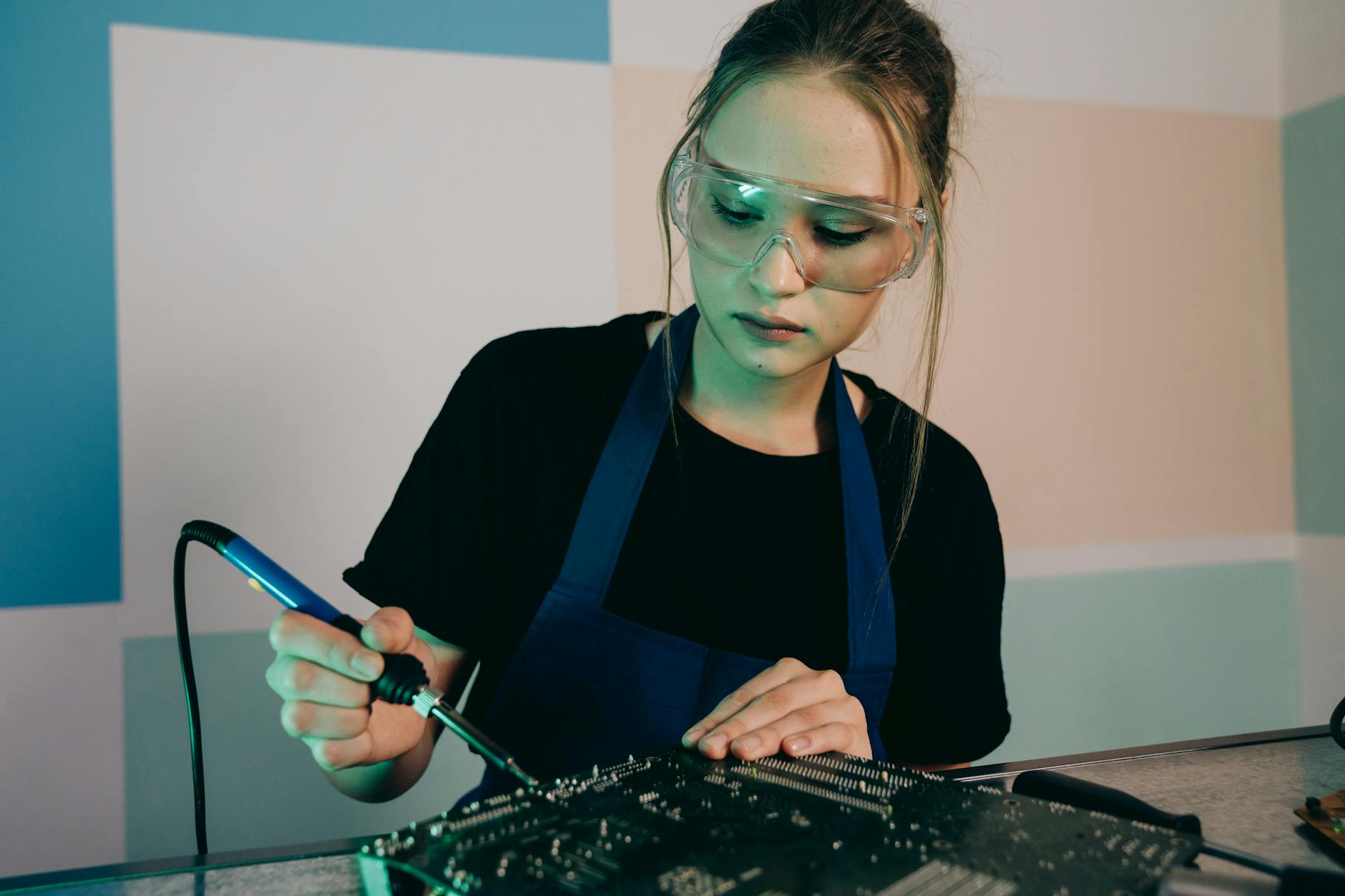
How Do Online Physics Labs Actually Work?
A real online physics lab course usually runs through 5 parts: short demo videos, a simulation or remote activity, data collection, a lab report, and a quiz or graded check-in. That is the core loop, and it shows up in courses built around mechanics, waves, electricity, and modern physics. The student does not sit back and watch; the student records numbers, compares them with a formula, and explains the gap.
The catch: Watching a 12-minute video does not count as a lab by itself. In a proper virtual physics lab, you might measure a pendulum’s period at 0.5 m, change the mass, graph the results in Excel or Google Sheets, and submit a 2-page report with units, error, and a conclusion.
The common misconception is simple and wrong: people think online lab science means “no real science.” The actual course asks for the same habits a campus lab asks for, just through a screen. You still collect data from a simulation, a sensor app, or a pre-built dataset, then you test whether the result matches Newton’s laws or Ohm’s law. A strong course also gives feedback on your report, not just a score on a multiple-choice quiz.
What changes is the setup. You do not spend 20 minutes hunting for a broken power supply, and you do not wait for a lab partner to finish wiring a circuit. That saves time, but it also removes the messy parts of hands-on work. I think that tradeoff feels efficient, but it can make the course feel less physical and more analytical.
A good online physics lab still teaches discipline. You have to label axes, keep track of sig figs, and explain uncertainty in plain English. If your answer says the slope is 9.81 but your graph uses cm instead of m, the software will not rescue you. It catches sloppy thinking fast, which is exactly why the course is more than a playlist.
What Replaces Apparatus In An Online Physics Lab?
A virtual physics lab replaces shelves of equipment with digital tools that still force you to think like a scientist. The best courses use 3 to 6 tool types in one term, and each tool trains a different skill, from graph reading to error checking. You lose the feel of a real knob or clamp, but you gain repeatable data and faster setup.
- Simulations let you change one variable at a time, like mass, voltage, or angle. That helps you see cause and effect fast.
- Remote labs connect you to real equipment through a browser. You may control a setup in real time, then download the result.
- Pre-recorded datasets give you measured values from a real run. You practice analysis, graphing, and uncertainty without building the setup yourself.
- Sensor apps on a phone can measure motion, sound, or acceleration. A 2024 lab might use the accelerometer in a smartphone instead of a cart track.
- Graphing tools such as Excel, Desmos, or Logger Pro help you fit lines and curves. That is where you learn slope, intercept, and unit checks.
- Guided calculations walk you through formulas step by step. They help with energy, force, resistance, and percent error, but they do not teach hand skills.
- Physics I often pairs well with lab work because the same ideas show up in motion, force, and graph reading.
Reality check: No simulation teaches you how a loose wire feels or how fast a clamp slips when someone bumps the table. That part of physics lab online credit stays missing, and I think that gap matters more in electricity labs than in motion labs.
Some courses use a mix of these tools inside one module. A pendulum lab might start with a simulation, move to a phone sensor, then end with a 1-page analysis sheet. That mix keeps the course from feeling fake.
Chemistry I uses the same pattern in a different subject, which is why students who handle one online lab often understand the format faster in the next one.
The Complete Resource for Physics Lab
UPI Study has a full resource page built specifically for physics lab — covering which courses count, how credits transfer to US and Canadian colleges, and how to get started at $250 per course with no deadlines.
Explore Physics Lab Course →What Do Students Actually Learn In Online Labs?
Students learn scientific reasoning first. That means they predict a result, run the test, and explain why the data landed where it did. In a strong online physics lab, you do that more than once, often across 5 to 8 experiments, and the pattern starts to stick: state the idea, gather the numbers, check the graph, fix the mistake.
The second skill is measurement uncertainty. A lab report may ask you to compare 9.6 m/s² with 9.81 m/s², then explain whether the difference comes from rounding, setup error, or a weak model. That sounds small, but this is where a lot of students level up. They stop treating science like answer hunting and start treating it like proof with limits.
Worth knowing: The writing matters as much as the math. A 3-page report with a bad graph usually earns less credit than a neat 1-page report with a clear claim, a labeled axis, and a sensible error check.
You also learn how to troubleshoot. If the line does not fit, you ask whether the units changed, whether the sample size stayed at 10 trials, or whether the graph needs a log scale. That kind of thinking transfers well to later lab science and to any course that uses data.
What you lose is hands-on dexterity. You do not assemble a circuit, tighten a stand, or line up equipment under a teacher’s eye. You also lose some group problem-solving, because a shared table forces fast talk and quick fixes in a way a laptop screen does not. I think that loss is real, not tiny. A virtual physics lab can teach the mind very well and still leave the hands undertrained.
That tradeoff does not make the course weak. It makes it different. If your goal is to understand force, motion, waves, or electric circuits at the college level, the course can still do the job, but it will train your analysis more than your bench skills.
Which Programs Accept Online Physics Lab Credit?
Acceptance depends on the school, not just the format. Community colleges, regional universities, online degree programs, and competitive STEM programs all look at accreditation, lab depth, and transcript wording. The word “online” alone does not decide anything; the lab design and the credit source do. Principles of Statistics shows the same transfer logic in a different subject, where the school cares more about the credit record than the delivery style.
| Program type | Common acceptance pattern | What they usually want |
|---|---|---|
| Community colleges | Often accepts | Accredited lab, clear transcript |
| Regional universities | Often accepts with review | ACE/NCCRS, full lab hours |
| Online degree programs | Often accepts | Equivalent course title, proper credit |
| Competitive STEM programs | Review closely | Hands-on depth, instructor oversight |
| Transcript wording | Matters a lot | “Lab” listed, not just lecture |
| Lab format | Not the only issue | Simulation, remote, or dataset details |
Some schools care about 1 detail more than students expect: whether the transcript clearly shows a lab component. If the record says only “Physics I,” the lab can get messy during evaluation. If it says “Physics Lab” with credit hours and contact style, the review goes faster. That is why the paperwork matters as much as the course itself.
Competitive programs can be pickier, and that is no surprise. A school that trains future engineers may want a lab history that looks exactly like its own lower-division science path.
Should You Choose A Self-Paced Online Lab?
A self-paced online physics lab fits students who need control over time and course load, especially when they want to work through 2 or 3 subjects at once instead of waiting for a 15-week term to end. That format matters if you already know the pace you can handle, because one course can move fast while another stalls. A one-time payment with lifetime access also helps students who want to review graphing, error analysis, or lab writing later without paying again.
Bottom line: Self-paced works best when your schedule is messy but your goal is clear: finish the lab, keep the credit, and move on.
- Good fit: independent students who can finish 5 to 10 experiments on their own.
- Good fit: people taking several accredited courses at once.
- Good fit: students who want lifetime access after a single payment.
- Less ideal: anyone who needs live lab partners every week.
- Less ideal: students who want heavy hands-on equipment practice.
- Less ideal: programs that demand a traditional campus lab for every science credit.
If you want a physics lab online credit option with a self-paced setup, this accredited online course gives you the format to work on your own time and return to the material later.
Some students like the speed; others like the repeat access. I think the repeat access gets ignored too often, and that is a mistake because lab writing improves a lot after a second pass.
The tradeoff is simple. You gain control, but you must supply your own momentum.
Frequently Asked Questions about Physics Lab
An online physics lab course fits you if your school accepts remote lab work for a 4-credit or 5-credit science class, and it doesn't fit you if your program requires in-person bench time or live campus checkoffs. Some nursing, engineering, and pre-med paths still want a traditional lab.
If you pick a course your program won't take, you can lose a term and pay twice for the same 3- to 5-credit requirement. That hurts transfer plans fast, because lab science often sits in a degree map as a locked sequence with lecture plus lab.
The biggest wrong assumption is that a virtual physics lab means no real work, when the course still uses measured data, graphs, error checks, and lab reports. You don't hold a cart, meter stick, or oscilloscope, but you still analyze motion, force, energy, or electricity.
An online physics lab works through simulations, video-based experiments, data tables, and report submissions, so you can complete the same lab ideas without a campus room. The caveat is simple: you learn concepts, data handling, and scientific reasoning, but you don't get hands-on hardware practice.
What surprises most students is that the hardest part is often the writing, not the clicking. In online lab science, you'll still calculate percent error, label graphs, and explain results in 200- to 500-word lab reports, which can take longer than the simulation itself.
Most students rush through the simulation and start writing after the fact, but the better move is to read the lab sheet first, note the variables, and record numbers as you go. That habit matters in 6- to 10-lab courses where one bad table can drag down the whole grade.
Start by checking whether the course carries physics lab online credit for your target school and whether it matches the right course number, like PHYS 101L or PHYS 201L. Then compare the syllabus for 8- to 12-week pacing, lab count, and whether the course includes proctored exams.
A self-paced accredited online physics lab usually uses one-time payment pricing, lifetime access, and the option to work through several courses at once instead of one per term. Fees vary by school and credit level, so compare total cost against 1-semester campus tuition, not just the sticker price.
Many regionally accredited colleges, adult degree programs, and some nursing and health science tracks accept online physics labs when the course shows 3 to 5 semester credits and a real lab component. Community colleges and online universities often post exact transfer rules on their course pages and degree maps.
You learn experimental thinking, data analysis, graph reading, unit conversion, and how to write a lab report with numbers and claims tied together. You lose hands-on tool practice, lab teamwork, and the feel of real equipment, which matters in programs that train for clinical or engineering work.
| Format | What you do | What you learn best | What you lose | |---|---|---|---| | Campus lab | Handle real tools and take measurements | Equipment handling and teamwork | Less schedule freedom | | Virtual physics lab | Run simulations and submit reports | Concepts, data, and analysis | No real apparatus | | Hybrid lab | Mix online work and some in-person sessions | Both skill sets | More scheduling pressure | This difference matters most in 3- to 5-credit science sequences and in programs that require live observation.
Explore the accredited online course for this subject and compare the syllabus, credit value, and pacing against your degree plan before you enroll. If you want self-paced study with lifetime access and the option to take several courses at once, that format gives you the most room to move fast.
Final Thoughts on Physics Lab
An online physics lab works best when you treat it like a real science class, not a shortcut. You still measure, graph, compare, and write, and the good courses make you prove that you understand the result instead of just clicking through slides. That is why the strongest versions feel closer to a real lab than students expect. The screen changes the tools, not the thinking. The biggest win comes from flexibility. You can finish experiments on your own schedule, repeat a hard module, and keep moving without waiting for a campus timetable. The biggest loss comes from touch. You do not build the setup with your hands, and you do not get the same feel for equipment or group work. Both facts matter. Pick the course with open eyes. Look for real lab reports, data analysis, instructor feedback, and a transcript that clearly shows the lab credit. A good online physics lab does not pretend to be a bench lab. It teaches the same habits in a cleaner, more controlled way, and that is enough for a lot of students who need the credit, the knowledge, and the flexibility. If you are ready to move, choose the course format that matches your schedule and start the lab work now.
How UPI Study credits actually work
Ready to Earn College Credit?
ACE & NCCRS approved · Self-paced · Transfer to colleges · $250/course or $99/month