
A bridge does not ask for a neat homework answer. A drone does not care that your contour plot looks pretty. Real engineering work asks a harsher question: can you use calculus 3 to describe something that changes in space, in more than one direction at once? That is where a lot of students get the wrong picture. They think multivariable calculus lives in a notebook and nowhere else. I think that idea causes more trouble than the math itself. In real engineering and physics jobs, calculus 3 shows up in heat flow, fluid motion, stress on parts, electric and magnetic fields, and any place where one number at one point just does not tell the whole story. If you want a clean place to start seeing that pattern, the Calculus 3 course lines up with the same ideas engineers use every day. The hard part is not the symbols. The hard part is learning to see a situation as a field, a surface, or a flow instead of a single line.
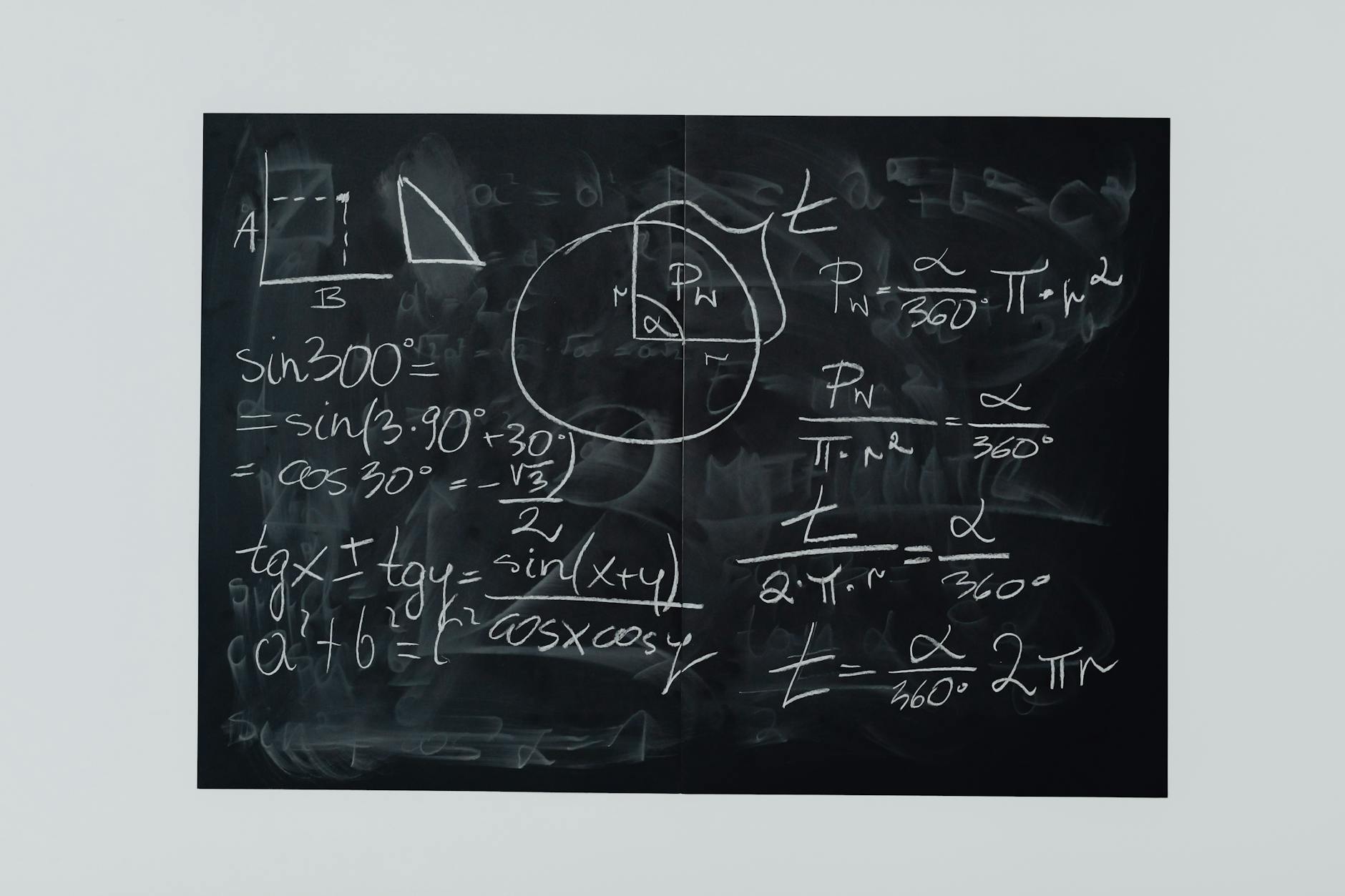
Which engineering jobs need calculus 3?
This matters if you want to work in mechanical, civil, aerospace, electrical, materials, or chemical engineering. It also matters in physics jobs that deal with fields, waves, or energy. If you like building things in CAD but also want to know why a design bends, heats up, or fails, this is your math. If you care about simulation software, the code behind it leans hard on calc 3 applications, even when the screen just shows a polished picture. It does not help much if you only want a job that never touches analysis, measurement, or modeling. A technician who only follows fixed steps all day may not need the full depth of vector calculus. Same for someone who only wants basic business math and never plans to work with physical systems. I mean that plainly. Do not force yourself through this course if you know you will never use a 3D model, a field, or a rate of change in space. One sentence can save a semester. If your future work includes forces, flow, fields, or design tradeoffs, calculus 3 belongs in your toolkit. If your path stays far from that, this class will feel like dragging a piano up stairs.
What calculus 3 actually covers
Calculus 3 deals with functions of more than one variable, so you stop asking one simple question and start asking several at once. Temperature can depend on x, y, and z. So can pressure, density, voltage, and stress. Engineers use partial derivatives to see how one variable changes while the others stay fixed. Then they use gradients to find the direction of fastest increase. That matters in optimization, control systems, and material design. A lot of students mess this up by treating every formula like a trick. Bad move. The point is not memorizing a pile of symbols. The point is learning what kind of quantity lives in each problem. A scalar field gives you one value at each point. A vector field gives you direction and size at each point. That split matters in physics because force, velocity, and electric field all point somewhere. A scalar like temperature does not. If you mix those up, your setup falls apart before you even start solving. There is also real policy weight behind this course. Many U.S. universities use ACE and NCCRS review when they judge non-traditional credit, and calculus 3 often sits inside that transfer system at cooperating schools. That matters for students who need flexible pacing without losing the math they need for engineering programs. The course also builds the language behind line integrals and surface integrals, which sound fancy but really describe work along a path and flow through a surface. That is not decorative math. That is the language of pumps, fields, and energy transfer.
How do engineers use calculus 3?
The most common student misconception is brutal and simple: they think calc 3 is about drawing weird surfaces and doing long homework for no reason. Nope. Real engineers use the ideas in steps. First, they model the thing they care about. Then they choose the right type of function or field. After that, they calculate rates, totals, or directions. The math only works if the model matches the physical situation. Here is how that looks in practice. Say you work on a cooling system. You start with temperature as a function of position. Next, you look at partial derivatives to see where temperature changes fastest. Then you use a gradient or a flux idea to track heat flow through the part. If you need the total heat moving through a curved surface, you move into a surface integral. If you need the work done by a force along a path, you use a line integral. That sequence sounds fancy, but it follows a very direct logic. Model first. Then measure change. Then total things up. Where students usually go wrong is at the model step. They plug numbers into formulas before they know what the variables mean. That leads to nonsense. Good work looks different. You label the variables clearly. You decide whether you need a scalar field or a vector field. You check units. You keep the geometry straight. That part feels slow, and I think that is exactly why strong engineers stand out. They do not rush to the answer. They build the right setup first. And yes, the downside is real. Calc 3 can feel abstract for a while, especially if you only want quick formulas. But that abstract feel starts to make sense once you see how a field in a textbook turns into heat in a chip, air around a wing, or force in a structure.
Why can calculus 3 delay graduation?
Students miss this all the time: calculus 3 is not just “one more math class.” In engineering, it often decides whether you can keep moving in your degree on time. A lot of majors place multivariable calculus right before upper-level work in fields like mechanics, fluids, thermodynamics, electromagnetics, and controls. If you slip a semester here, you can miss a chain of later classes. That delay can push your graduation back by a full term, sometimes two, because schools set up tight course sequences and prereqs stack fast. I’ve seen first-gen students get blindsided by that. It feels like one class. It acts like a gate. That gate matters because calc 3 applications show up in the math behind real design work. Partial derivatives help you study how one variable changes while others stay fixed. Double and triple integrals help you measure volume, mass, and density in strange shapes. Vector calculus shows up in force fields, flow, and field lines. Engineers use this stuff in the real world, not just on paper. UPI Study offers 90+ college-level courses, all ACE and NCCRS approved, and their Calculus 3 course fits that kind of degree planning well because it gives you a clean way to keep your timeline moving. That matters more than people admit.
The Complete Calculus 3 Credit Guide
UPI Study has a full resource page built specifically for calculus 3 — covering which courses count, how credits transfer to US and Canadian colleges, and how to get started at $250 per course with no deadlines.
See the Full Calculus 3 Page →How does multivariable calculus appear in engineering?
In actual engineering work, multivariable calculus shows up in pieces, not as one big dramatic moment. A civil engineer might use a surface integral idea to think about load spread. A mechanical engineer might use partial derivatives to test how a machine responds when temperature and pressure shift at the same time. An electrical engineer might work with gradient, divergence, and curl when looking at fields and flow. The math does not arrive wearing a costume. It shows up as a tool inside a bigger job. That surprises people. They expect a neat “calc 3 problem.” Real work looks messier. One detail many articles skip: engineers spend a lot of time turning word problems into coordinate systems. That part sounds small. It is not. Picking cylindrical or spherical coordinates can make a problem easy or painful, and half the battle comes from choosing the right setup before you touch the algebra. I think that piece trips up more students than the integration itself. UPI Study keeps the course self-paced, so you can slow down on setup problems instead of getting dragged by a class schedule. You can also keep the rhythm of your degree alive while you study the math itself.
What to check before you count calculus 3 toward credit
Before you sign up, look at the course outline and make sure it covers the topics your program uses: partial derivatives, multiple integrals, vector fields, line integrals, and surface integrals. If your engineering major leans toward fluids or electromagnetics, you want vector calculus in there, not a thin version that skips the parts your future classes expect. Also check whether the course gives you enough practice problems. Calc 3 sticks when you do it, not when you just read it. Second, check the pacing rules. A self-paced course should let you move fast when you have time and slow down when your week gets ugly. Third, check how the credit fits your degree plan so you know where it lands. Fourth, make sure the course page clearly states the approval and transfer setup. That part keeps surprises off your plate. If you want another nearby math option for planning, Calculus 2 can help you map the sequence before you start. Clean planning beats last-minute scrambling every time.
Frequently Asked Questions
Start with a heat map, a force vector, or a fluid flow sketch. That's where calculus 3 starts to look real. In engineering math, you use multivariable calculus to handle things that change in more than one direction at once. A civil engineer might use vector calculus to track wind load on a tall building. A mechanical engineer might use partial derivatives to see how temperature and pressure affect a machine part. An electrical engineer might work with fields that move through space, not just along a line. You won't solve every problem by hand. Still, you need the setup, the meaning of each variable, and the habit of checking units. That part shows up everywhere.
What surprises most students is that calculus 3 doesn't show up as a giant math puzzle. It shows up as a model. You use multivariable calculus to describe real stuff like airflow over a wing, heat moving through metal, or stress in a bridge joint. The math often starts with three variables, like x, y, and z, and then grows into gradients, surface integrals, or line integrals. That sounds abstract, but engineers use it to answer plain questions: where does heat move fastest, how much fluid crosses a pipe wall, or what direction does a force push. You don't need fancy language first. You need the picture, the units, and the reason the equation exists.
This applies to you if you want work in mechanical, civil, aerospace, electrical, chemical, or biomedical engineering. It also applies if you plan to do physics, robotics, or any job that uses fields, flow, or 3D shapes. It doesn't matter as much if your path stays in basic drafting, some technician roles, or jobs that never use design math. In those cases, you may use only a little engineering math. Even then, calculus 3 can help you read specs, understand simulations, and talk to engineers without getting lost. If you want to move into design or analysis later, multivariable calculus shows up fast. You'll see it in 3D motion, stress maps, and fluid models.
The most common wrong assumption is that calculus 3 only means harder homework with more symbols. That's not how it works. You use vector calculus and multivariable calculus to model space itself. A robot arm doesn't move on one flat line. A satellite doesn't feel one simple force. A pipe system doesn't move one drop at a time in a straight schoolbook way. Real engineering math deals with direction, spread, curl, and flow. You may spend one day finding a gradient and another day setting up a surface integral over a curved shape. That's normal. The point isn't to collect tricks. The point is to describe what a real object does in 3D space.
If you get it wrong, you can point a design in the wrong direction fast. A small sign mistake in a partial derivative can make your model predict heat moving away from a hot spot instead of toward it. A wrong vector direction can flip a force load on a beam. That's not just a homework issue. In calc 3 applications, bad math can waste hours of test time, throw off a simulation, or lead you to trust a bad design idea. You might still pass a class with shaky understanding, but real engineering jobs won't forgive sloppy setup. One wrong coordinate change can wreck a whole result. That hurts in labs, internships, and first jobs.
A lot of entry-level engineering jobs pay around $70,000 to $95,000 a year in the US, and many of those roles expect you to read multivariable calculus ideas without panic. You don't need to solve every vector calculus problem by hand on day one. You do need to understand what the software is doing. That matters in jobs like design, analysis, controls, aerospace, and energy. If you know calculus 3 well, you can move faster in internships and interviews because you can explain gradients, flux, and 3D motion in plain words. That makes you look ready for real work. Companies notice that fast.
Yes. You still need the math first. Software can draw the graph or run the simulation, but it can't tell you if your setup makes sense. If you use MATLAB, ANSYS, SolidWorks, or Python for engineering math, you still need to know what a vector field means and why a surface integral fits the problem. A program can give you a clean answer in 2 seconds. It can also give you a clean wrong answer just as fast. Calc 3 applications help you spot bad inputs, odd units, and fake-looking results. You don't need to be a human calculator. You do need to be the person who knows what the machine should be doing.
Most students cram formulas, chase homework answers, and hope the symbols start making sense on their own. That usually falls apart. What actually works is tying each topic to one real image. For gradients, think steepest climb on a hill. For line integrals, think work along a path. For flux, think flow through a surface. Use one picture, one unit check, and one sentence about what the answer means. That habit helps you more than memorizing ten templates. In multivariable calculus, you keep running into new shapes and directions, so you need a way to think, not just a list to copy. A good sketch can save you 20 minutes on one problem.
Final Thoughts
Calculus 3 connects to real engineering work because engineers use its ideas every time they measure change in more than one direction, study fields, or work with curved shapes and flow. That is the whole deal. Not fancy. Just real. If you get comfortable with multivariable calculus, you stop treating the math like a wall and start treating it like part of the job. If you are trying to keep your degree on track, focus on the parts that matter most: the topic list, the pace, and the credit path. One class can shift a whole semester. Sometimes it shifts a whole year.
Ready to Earn College Credit?
ACE & NCCRS approved · Self-paced · Transfer to colleges · $250/course or $99/month