
Many students say Calculus 3 feels easier than Calculus 2 because Calc 2 asks you to choose from a pile of methods, while Calc 3 often follows repeatable steps once the 3D picture makes sense. That does not mean Calc 3 is simple. It means the hard part shifts. Calc 2 usually throws integration by parts, trig substitution, partial fractions, improper integrals, sequences, series, and convergence tests into the same term. Each topic asks a different question: Which method fits? What test applies? Does the series even converge? That kind of work punishes hesitation. One wrong choice can sink a whole problem. Calc 3 feels different. You still need skill, but many problems use a clearer routine: choose a coordinate system, set up the integral, read the geometry, then compute. Once vectors, surfaces, partial derivatives, and triple integrals stop looking like random symbols, the course can feel more steady than chaotic. The common misconception says, "Calc 3 is easier because it has fewer tricks." That half-truth causes trouble. Calc 3 has its own traps, especially in 3D visualization and vector fields. Still, for students who hate method-guessing, the calc 3 vs calc 2 difficulty gap can feel real fast.
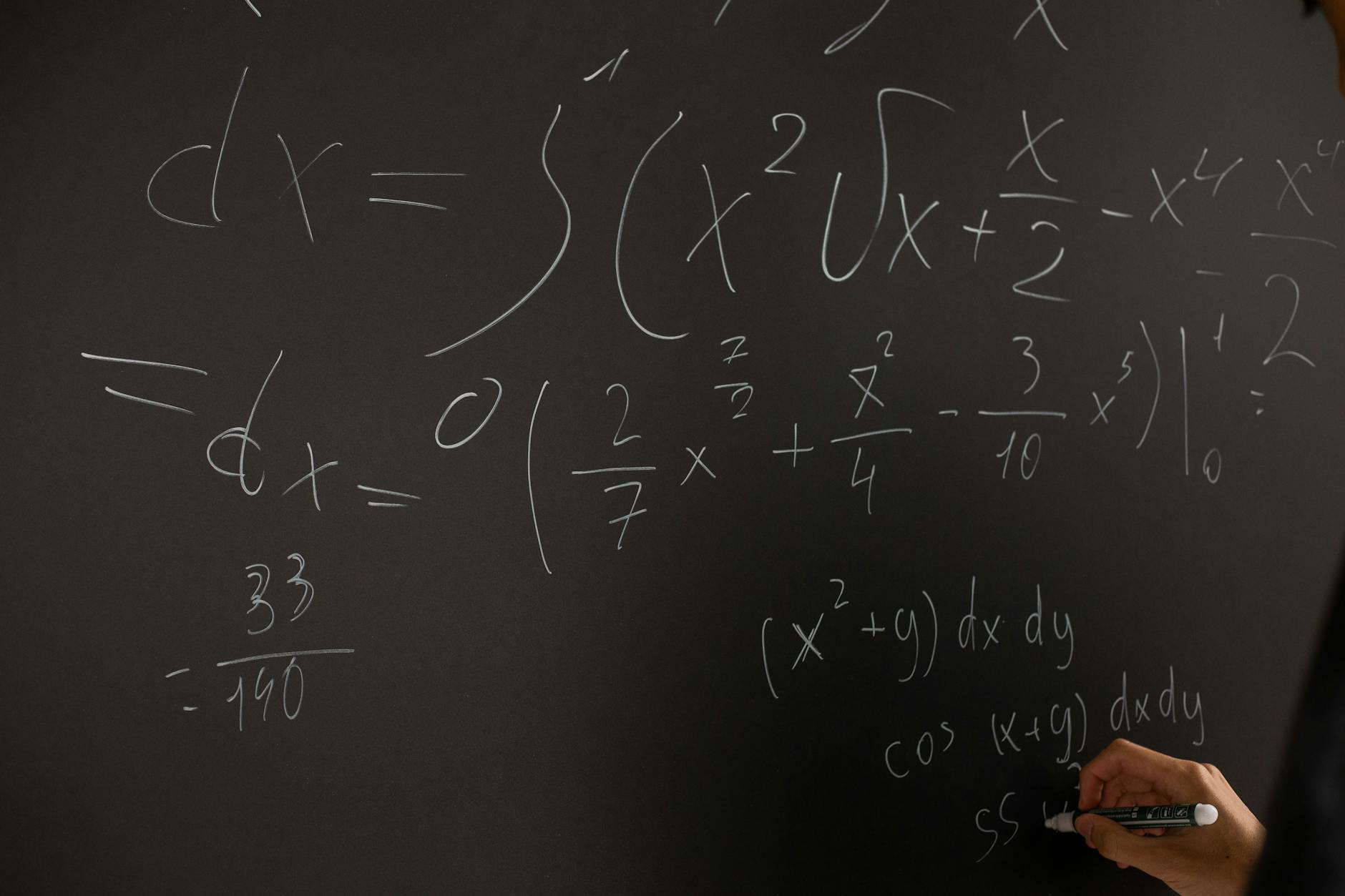
Why Do Students Say Calculus 3 Feels Easier?
Calc 3 often feels easier because many problems use a stable 4-step setup: pick the coordinate system, write the integral, read the geometry, and compute. Calc 2, by contrast, keeps changing the game, and that difference matters more than students expect.
The catch: Calc 2 asks for pattern recognition all term long. One problem wants integration by parts, another wants trig substitution, and a third hides a series test inside a 2-minute decision. That constant method-choosing feels rough because your brain has to sort through 8 or 9 tools before you even start calculating. I think that mental fork-in-the-road is why people call calculus 2 hardest.
Calc 3 still asks for skill, but a lot of the course rewards procedure after the geometry clicks. A vector field question in 2026 may look scary on day one, yet once you know what the arrows mean, the work often follows a familiar path. The same goes for surfaces, tangent planes, and triple integrals. You stop hunting for a trick and start applying a framework.
That shift matters. In Calculus I and Calculus 2, students often spend more time asking, "Which method do I use?" In Calc 3, they more often ask, "What does this object look like in 3D?" Those are very different stress points. One is a puzzle. The other is a map.
Reality check: Not everyone feels that way. A student who reads graphs fast may breeze through 3D surfaces, while another student who loves symbolic steps may hate the extra spatial work. Still, the broad trend holds: Calc 3 can feel calmer because the course repeats a small number of structures across vectors, partial derivatives, and multiple integrals.
Which Calc 2 Topics Make It Feel Harder?
Students usually mean a few specific Calc 2 topics when they say the course feels brutal. The trouble often starts after 5 or 6 chapters, because the class stacks method after method and expects you to pick the right one in seconds, not minutes.
- Integration by parts looks simple, but the LIATE choice and repeated application can trip people up fast.
- Trig substitution feels weird because you replace one shape with another and then have to undo the triangle later.
- Partial fractions can get messy with repeated factors, especially when the algebra stretches past 3 terms.
- Improper integrals force you to deal with limits, infinity, or both, which changes the problem type midstream.
- Sequences and series hit hard because you need to recognize behavior, not just compute an answer. That shift is hard.
- Convergence tests pile on choices: 12 common tests, ratio, root, comparison, alternating series, and more.
- The real pain is speed. A student may know 4 methods, but if they need 90 seconds to choose one, the clock wins.
Worth knowing: The math itself is not always the hardest part. The harder part is picking the right tool before your confidence drops. That is why a 15-point quiz can feel heavier than a full homework set.
If you want a clean contrast, think of Calc 3 material as one coordinate system plus one setup, while Calc 2 keeps asking you to identify a new pattern every few pages. That is a lot to hold in your head at once.
How Does Calculus 3 Become More Procedural?
Calc 3 gets easier for many students because the work often repeats the same structure across 3D topics. Once you learn how to set up a problem, the class can feel less like guessing and more like following a 5-step script.
Vectors, parametric curves, partial derivatives, and triple integrals all have their own style, but they share a common habit: you first identify what the object is, then choose the right formula. That pattern shows up in 3D motion, directional derivatives, and volume problems. The setup matters more than clever tricks. I like that part of the course. It rewards clear thinking, not panic.
What this means: If you can picture a surface like z = x^2 + y^2 or a field of arrows in 3D, the rest often becomes mechanical. You may still need algebra, but you stop chasing surprise moves. A lot of students find that refreshing after the shifting rules in Calc 2.
The course also gives you repeated entry points. In a 2025 class, one professor may ask for the gradient of a function, another may ask for a double integral over a disk, but both problems follow a direct path once you know the setup. That predictability lowers stress for students who do well with routines and clear labels.
The downside is plain. Calc 3 punishes weak visualization. If a student cannot picture a cylinder, plane, or vector field, the procedure feels hollow. Still, for students who think in steps and like structure, the course often feels more manageable than the integration maze in multivariable calculus.
The Complete Resource for Calculus 3
UPI Study has a full resource page built specifically for calculus 3 — covering which courses count, how credits transfer to US and Canadian colleges, and how to get started at $250 per course with no deadlines.
Explore Calculus 3 Course →How Do Calc 2 and Calc 3 Difficulty Compare?
This comparison uses the common student experience, not a universal rule. Some students hate the method-switching in Calc 2. Others hate the 3D thinking in Calc 3. The point is to show where the stress usually lives, because that helps you predict which course will feel heavier.
| Topic | Calc 2 | Calc 3 |
|---|---|---|
| Problem style | Many methods | Repeatable setup |
| Main challenge | Choose the right tool fast | Picture 3D geometry |
| Thinking type | Pattern recognition | Spatial + procedural |
| Common stress point | 6+ integration tests | Axes, surfaces, vectors |
| Why some prefer it | Clear rules once chosen | Fewer surprise tricks |
| Where students get stuck | By parts, series, improper integrals | Triple integrals, vector fields |
The pattern is pretty blunt. Calc 2 asks, "Which idea fits this problem?" Calc 3 asks, "Can you see the shape and follow the setup?" That difference explains why the same student may call one course a monster and the other a relief.
Why Do Some Students Find Calculus 3 Harder?
Students who struggle with spatial visualization often find Calc 3 harder because the course asks them to think in 3 dimensions almost immediately. That includes planes, cylinders, surfaces, vector fields, and integrals over regions that do not fit neatly on a flat page.
A strong algebra student can still get blindsided here. In Calc 2, the work may stay on the line or in a plane, but Calc 3 keeps asking you to translate diagrams into equations. If that translation feels fuzzy, even a simple triple integral can turn into a slog. I think this is the part most people miss when they say, "is calc 3 easier?" Easier for whom? That question matters.
Common mistake: The usual misconception says Calc 3 is "just easier" because the steps look cleaner. That misses the real split. A student who can handle 3D motion and partial derivatives may fly through the course, while another student who needs time to picture a solid may feel lost by week 2.
There is also a memory load problem. Calc 3 brings in new symbols like ∇f, parametric surfaces, and double or triple integrals over regions with names such as cylindrical or spherical coordinates. If a student already feels shaky with coordinates in a 50-minute exam, the course can feel rough very fast.
So the calc 2 versus calc 3 difficulty question does not have one answer. It depends on whether you prefer method selection or spatial setup. That split explains why two students can sit in the same 2026 class and leave with opposite stories.
Should You Explore an Accredited Calculus 3 Course?
If you want a calmer way to handle Calc 3, structured instruction helps a lot because the course runs on repeated setups, not random tricks. A good class should explain the 3D picture, show the steps on paper, and give you enough practice to make the procedure feel familiar before exam day. That matters most when the term covers 3 or 4 big units like vectors, partial derivatives, and multiple integrals.
- Accredited status from a recognized provider
- Clear multivariable examples with 3D visuals
- Worked problems for every major setup
- Practice support before each exam block
- Self-paced access for a full 8- to 12-week term
If you want a flexible option with credit-bearing value, explore the accredited online Calculus 3 course and look for the same things: strong explanations, real examples, and steady practice. A course like that can make the subject feel less like a wall and more like a process.
Frequently Asked Questions about Calculus 3
Many students find Calc 3 easier because it uses fewer new problem types, while Calc 2 leans hard on 6+ integration methods and convergence tests. Once you see vectors, partial derivatives, and 3D graphs, Calc 3 can feel more repeatable.
Most students memorize tricks for trig substitution, partial fractions, and series tests, but that breaks fast on exams. What works better is sorting each problem into 3 or 4 clear types and drilling those until the pattern feels automatic.
This usually applies to students who handle visuals and formulas well, and it doesn't fit students who love long algebraic setup. If you struggle with 3D space but like step-by-step integration, Calc 2 may still feel easier to you.
If you assume Calc 3 will feel easy and skip review, you can get crushed by vector notation, gradients, and cross products in the first 2 weeks. If you assume Calc 2 is always harder, you might ignore how fast Calc 3 builds on Calc 1 ideas.
Start by comparing 5 topics from each class: Calc 2 usually covers integration techniques, improper integrals, and series, while Calc 3 covers partial derivatives, multiple integrals, and vector fields. That side-by-side view shows where your own strength sits.
What surprises most students is that Calc 3 often has fewer wild tricks and more set steps, even though the graphs look harder at first. A triple integral can feel cleaner than a series test that asks you to spot 1 of 8 patterns.
The most common wrong assumption is that 3D automatically means harder. Calc 3 can feel smoother because many problems follow the same procedure, while Calc 2 asks you to choose among 7 or more methods before you even start.
Calc 3 is easier for some students, but not for all of them. If you think in pictures and like formulas with fixed steps, you may prefer it; if you hate coordinate systems and 3D motion, Calc 2 may fit you better.
Calc 2 often hits you with a wider spread of topics, especially series, convergence tests, and advanced integration methods, so one unit can feel like 3 classes in 1. Calc 3 usually groups ideas around vectors, surfaces, and partial derivatives.
Calc 2 has more pattern recognition, because you have to spot whether a problem wants substitution, parts, trig identities, or a convergence test. Calc 3 still has patterns, but the main question often becomes 'which formula fits this geometry?'
Use a simple 2-column check: list the 4 topics you hated most in Calc 2, then list the 4 Calc 3 topics your school teaches, like vectors, partials, and double integrals. If the second list looks more structured, Calc 3 may feel easier.
You can explore an accredited online Calculus 3 course through a school or provider that offers credit-bearing online math classes with 8-16 week terms, professor support, and transfer-ready transcripts. Look for the course page and start dates, then pick the section that matches your schedule.
Final Thoughts on Calculus 3
Calc 2 and Calc 3 punish different habits. Calc 2 leans hard on fast method choice, so students who hate guessing often call it the rougher class. Calc 3 leans on 3D thinking, clean setup, and procedural follow-through, so students who like structure often breathe easier there. That does not make one course easy and the other hard for everyone. A student who loves algebraic tricks may prefer Calc 2. A student who sees shapes clearly may prefer Calc 3. The real lesson is simpler than the online chatter: the course that feels lighter usually matches the way your brain already works. If you are deciding between them, look at the kind of work that drains you most. Do you hate choosing among 8 integration methods, or do you hate picturing a surface in 3D? That answer tells you more than any rumor from last semester. Use that clue, pick the course that fits your strengths, and start with the topic style that will let you build momentum instead of fighting the same wall every week.
The way this actually clicks
Skip step 3 and the whole thing is wasted.
Ready to Earn College Credit?
ACE & NCCRS approved · Self-paced · Transfer to colleges · $250/course or $99/month