
Acids and bases explained in plain terms: acids donate H+ in many reactions, bases accept H+ or release OH-, and the pH scale shows how acidic or basic a solution is. The cut point sits at pH 7, which marks neutral water at 25°C. Below 7, a solution acts acidic. Above 7, it acts basic. That sounds simple until chemistry starts splitting hairs, and it does that fast. A substance can be strong without being concentrated. A weak acid can still sit in a cup at pH 2 if you pack enough of it in. That is why acid base chemistry uses more than one definition and more than one rule. Arrhenius, Brønsted-Lowry, and Lewis each catch a different part of the action. Students usually trip over the same two traps. They mix up strength with concentration, and they treat neutralisation like a magic erase button. It is not magic. It is a reaction with a mole ratio, a salt, and usually water. Buffers add another layer because they resist sudden pH swings instead of stopping them completely. That detail matters in blood, lab work, and wastewater treatment. Skip the shortcuts. Chemistry punishes lazy thinking.
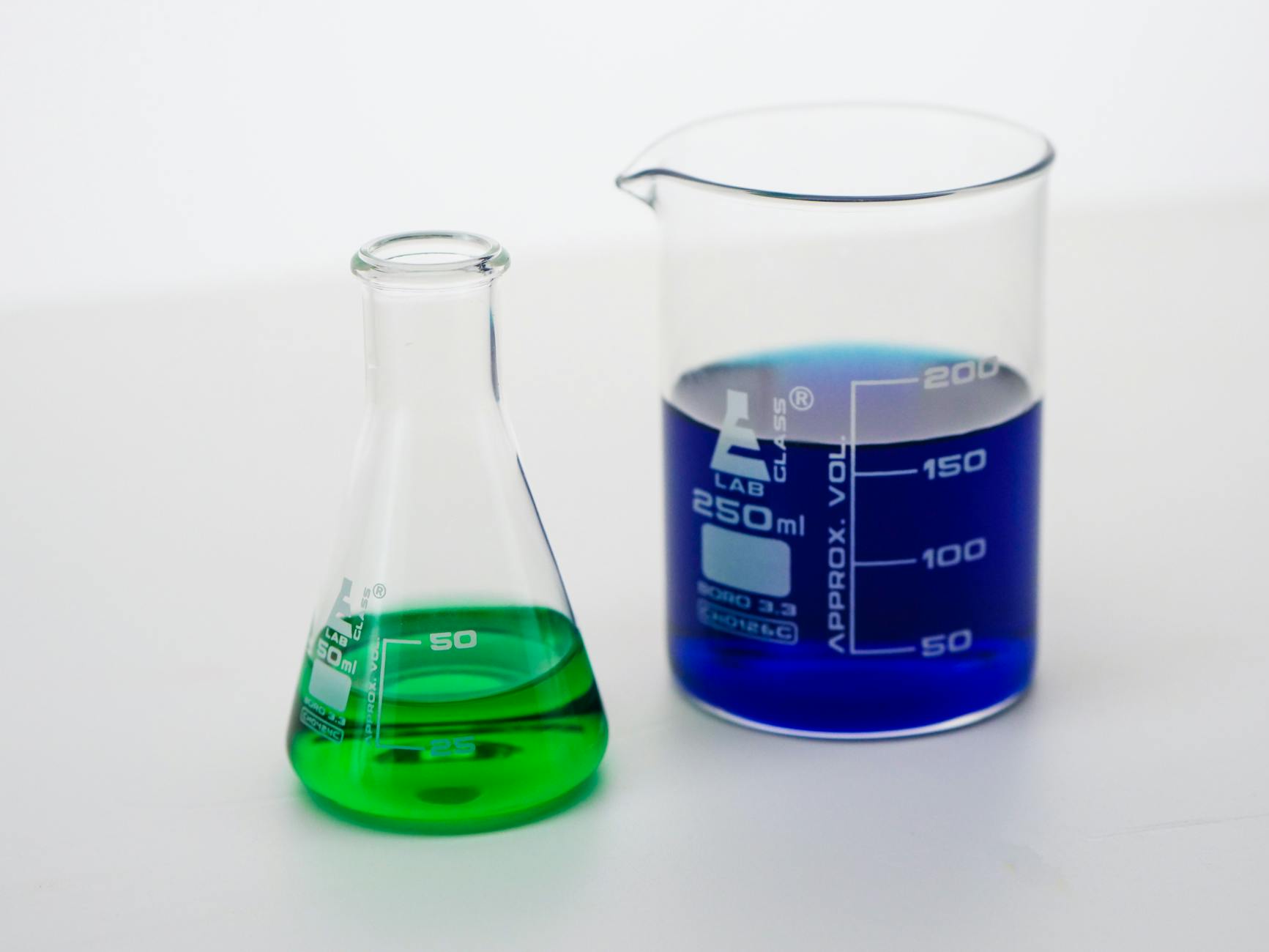
What Do Acids and Bases Mean?
Arrhenius acids make H+ in water, Arrhenius bases make OH-, Brønsted-Lowry acids donate H+, and Lewis acids accept an electron pair; chemists use all 3 because no single rule catches every reaction. In 1884, Svante Arrhenius gave the first simple water-based model, and that still helps with things like HCl in water and NaOH in solution. But it misses reactions that happen without free OH- showing up.
Brønsted-Lowry fills that gap by tracking proton transfer. That is why ammonia, NH3, counts as a base even though it does not contain OH-. It grabs H+ from water and forms NH4+. That idea explains thousands of lab reactions and most textbook acid base chemistry in a clean 1-step way. I think this definition does the best job for beginners because it maps right onto what actually moves.
Lewis goes wider. A Lewis acid accepts an electron pair, and a Lewis base donates one. That sounds abstract until you see BF3 binding to NH3 or metal ions grabbing ligands in a 6-coordinate complex. This definition covers reactions from organic chemistry to industrial catalysis, which is why chemists keep it around. The catch: each definition solves a different problem, so none of them replaces the others. One reaction in a 250 mL flask may fit all 3 models. Another one fits only Lewis. That is not messy. That is chemistry being honest.
A clean rule of thumb helps: Arrhenius works best in water, Brønsted-Lowry works best for proton transfer, and Lewis works for the broadest set of electron-pair reactions. Students who try to use only one definition in every case usually get burned on exams and in labs. The subject rewards precision, not guesswork.
How Does the pH Scale Measure Acids?
The ph scale runs from 0 to 14 and uses a log scale, so each whole number change means a 10× shift in hydrogen ion concentration. Neutral water sits at pH 7 at 25°C. Below 7, acidity rises. Above 7, basicity rises, and that change matters fast.
| pH range | H+ level | Common examples |
|---|---|---|
| 0-3 | Very high H+ | Stomach acid, battery acid |
| 4-6 | Moderate H+ | Orange juice, coffee |
| 7 | 10^-7 mol/L H+ | Pure water at 25°C |
| 8-10 | Lower H+ | Seawater, baking soda mix |
| 11-14 | Very low H+ | Household ammonia, bleach |
Worth knowing: the log scale means pH 5 has 10 times more H+ than pH 6, and pH 3 has 100 times more than pH 5. That is a huge jump from a tiny number change. The scale looks gentle. It is not. A solution near pH 2 can feel brutally acidic, while a pH 9 cleaner can still sting skin and eyes.
Why Are Strong and Weak Acids Different?
Strong vs weak acids differ by ionisation in water, not by how much acid you have in the cup. A strong acid like HCl can ionise close to 100% in water, while a weak acid like acetic acid ionises only a small fraction, often under 5% in typical classroom setups. That one fact causes a lot of confusion, and it should. The names sound like they talk about quantity, but they do not.
A dilute strong acid can beat a concentrated weak acid in reactivity because the strong acid gives more H+ per molecule. A 0.1 M HCl solution can attack metals or drive a neutralisation faster than a 1.0 M acetic acid solution, even though the acetic acid solution contains 10 times more total acid molecules. Strong does not mean more stuff. It means more complete splitting in water.
Bases follow the same logic. Strong bases like NaOH ionise almost fully, while weak bases like NH3 only react with water partly. That is why 0.5 M ammonia does not behave like 0.5 M sodium hydroxide. Students who equate strength with concentration usually miss test questions and lab results. I say that bluntly because the mistake wastes time.
Temperature and solvent matter too. Water at 25°C gives the standard classroom picture, but real lab work can shift behavior. A weak acid may still produce a low pH if you add enough of it, yet the molecules remain mostly unionised. That split between amount and ionisation sits at the heart of acid base chemistry. You need both ideas, or the whole topic turns fuzzy.
The Complete Resource for Acids And Bases
UPI Study has a full resource page built specifically for acids and bases — covering which courses count, how credits transfer to US and Canadian colleges, and how to get started at $250 per course with no deadlines.
Explore Chemistry Lab Course →How Do Neutralization Reactions Work?
A neutralisation reaction happens when an acid supplies H+ and a base supplies OH-, or a base with lone pairs grabs H+ directly, and the main products are salt and water. In a simple 1:1 case like HCl + NaOH, the H+ and OH- combine to make H2O, while Na+ and Cl- stay behind as NaCl. That reaction looks simple because it is simple, but the mole ratio does the heavy lifting. If you mix 0.10 mol HCl with only 0.05 mol NaOH, you leave acid behind. That is why titration math matters so much.
Reality check: complete neutralisation depends on matching moles, not matching liters. A 25.0 mL sample of 0.20 M acid needs 5.0 mmol of base, not a random pour from a beaker. That exact counting idea shows up in antacids, titrations, and wastewater treatment. Wastewater plants often add lime or other bases to push pH back toward 7 so pipes and microbes do not get wrecked. I like this topic because it connects clean formulas to real tanks and real money.
- Antacids like CaCO3 neutralise excess stomach acid and raise pH fast.
- Titrations use a measured volume, often 25.00 mL, to find unknown concentration.
- Wastewater plants target pH near 7 before discharge or biological treatment.
- One mole of H+ needs one mole of OH- in the simplest neutralisation reaction.
- Chemistry lab practice helps you see endpoint color changes, not just equations.
Why Do Buffers Resist pH Changes?
Buffers resist pH change because they pair a weak acid with its conjugate base, or a weak base with its conjugate acid, and that pair can absorb added H+ or OH- without collapsing. A classic buffer might use acetic acid and acetate around pH 4 to 5, while blood keeps a narrow range near 7.35 to 7.45 with the bicarbonate system. That narrow range matters because even a small shift can change enzyme activity.
Here is the trick. If you add acid, the conjugate base mops up some H+. If you add base, the weak acid donates some H+ to cancel it. The buffer does not stop change. It slows the damage. That is why a 0.10 M buffer can handle a small acid spike better than pure water, which has almost no reserve. Students often call buffers boring. Bad call. They hold the line in biology, lab prep, and industrial chemistry.
Buffer capacity depends on how much weak acid and conjugate base you have, plus how close the pH sits to the acid's pKa. A buffer works best when pH ≈ pKa, often within about 1 unit. Push too far, and the system folds. That downside matters. A buffer with the wrong ratio fails fast, and then pH jumps hard.
Which Acid Base Chemistry Ideas Should You Review?
You only need 5 core ideas to handle most acid base questions, and every one shows up in labs, exams, and daily chemistry. Miss one, and the rest start wobbling.
- Arrhenius, Brønsted-Lowry, and Lewis each define acids and bases differently.
- pH 7 is neutral at 25°C; lower means acidic, higher means basic.
- Strong vs weak describes ionisation, not concentration. HCl and NH3 prove that fast.
- Neutralisation uses mole ratios, and 1 mol H+ pairs with 1 mol OH- in the simplest case.
- Buffers use a weak acid and conjugate base pair, often effective within 1 pH unit of pKa.
- Chemistry I pairs well with this topic if you want the full reaction set.
- Environmental Science also uses pH, buffers, and water treatment in real case studies.
How UPI Study Fits
90+ college-level courses, ACE and NCCRS approval, and no deadlines make this a practical route if you want credit without getting trapped in a fixed semester. UPI Study charges $250 per course or $99/month unlimited, and the work stays fully self-paced. That matters if you need one chemistry course now and another later, not a 15-week schedule that runs your life.
UPI Study credits transfer to partner US and Canadian colleges, and that gives the chemistry lab side real weight instead of just theory. The course catalog includes the chemistry lab option, which fits students who want structured science credit without waiting for a campus section to open. UPI Study also works well for people who need to stack courses around work, family, or a tight transfer plan.
The honest appeal here is speed plus control. If you need 1 course this term or 4 courses across a year, the pricing stays clear and the pacing stays yours. That beats paying for dead time in a campus system when your only goal is to keep moving. UPI Study does that job cleanly.
Frequently Asked Questions about Acids And Bases
Acids and bases are substances defined by how they behave in reactions. In acid base chemistry, acids donate protons or produce hydrogen ions in water, while bases accept protons or produce hydroxide ions. These reactions control pH, neutralization reactions, and many biological and industrial processes.
The three main definitions are Arrhenius, Brønsted-Lowry, and Lewis. Arrhenius acids increase H+ in water and bases increase OH-. Brønsted-Lowry acids donate protons and bases accept protons. Lewis acids accept an electron pair and Lewis bases donate an electron pair. Each definition broadens the earlier one.
The pH scale measures acidity based on hydrogen ion concentration. It usually ranges from 0 to 14, with 7 being neutral, values below 7 acidic, and values above 7 basic. Each pH unit represents a tenfold change in hydrogen ion concentration, so the scale is logarithmic.
Strong vs weak acids refers to ionization, not concentration. Strong acids dissociate almost completely in water, while weak acids dissociate only partially. A strong acid can still be dilute, and a weak acid can still be concentrated. The same idea applies to strong and weak bases.
Strength describes the extent to which an acid or base ionizes in water. Concentration describes how much acid or base is present in a given volume. For example, hydrochloric acid is strong because it ionizes fully, but a very dilute HCl solution may still have low concentration.
Neutralization reactions occur when an acid reacts with a base to form water and a salt. In the simplest case, H+ from the acid combines with OH- from the base to make water. These reactions often reduce acidity or alkalinity and are used in titrations, medicine, and environmental control.
A buffer is a solution that resists large changes in pH when small amounts of acid or base are added. Buffers usually contain a weak acid and its conjugate base, or a weak base and its conjugate acid. They are essential in blood chemistry, laboratory work, and industrial processes.
In water, acids increase the concentration of hydronium ions, H3O+, and bases increase hydroxide ions or reduce H3O+. The balance between these ions determines pH. Water itself can act as both acid and base, which is why it is called amphoteric.
A conjugate acid-base pair differs by one proton. When an acid donates a proton, it becomes its conjugate base. When a base accepts a proton, it becomes its conjugate acid. This concept is central to Brønsted-Lowry theory and helps explain reversible reactions and buffer behavior.
Yes. Arrhenius: acids produce H+ in water, bases produce OH- in water; limited to aqueous solutions. Brønsted-Lowry: acids donate protons, bases accept protons; broader and reaction-based. Lewis: acids accept electron pairs, bases donate electron pairs; broadest and useful for complex reactions. Each definition expands the previous one.
An accredited online course gives structured coverage of acids and bases explained, including the pH scale, strong vs weak acids, acid base chemistry, neutralization reactions, and buffers. It helps build accurate understanding for exams, lab work, and practical applications. Explore the accredited online course for this subject to deepen your knowledge.
Final Thoughts on Acids And Bases
Acids and bases stop being scary once you separate the pieces. Definitions tell you what kind of reaction you are looking at. The pH scale tells you how acidic or basic the solution acts. Strength tells you how much ionisation happens in water. Concentration tells you how much material you poured in. Those are not the same thing, and mixing them up causes most mistakes. Neutralisation gives you the cleanest reaction picture because the math is strict. A mole of H+ meets a mole of OH- in the simple case, and that rule drives titrations, antacids, and wastewater work. Buffers add one more layer by resisting pH swings with a weak acid and its conjugate base. They hold pH near a target range, often within about 1 unit of pKa, but they still fail if you overload them. That is the real payoff of acids and bases explained well. You stop memorising random facts and start seeing one system from 3 angles. The definitions, the pH scale, and the reaction math all point at the same behavior. Review those pieces in that order, and the topic gets a lot less slippery. If you want to keep going, study the examples again, redraw the buffer logic, and practice one neutralisation problem with real moles and units.
How UPI Study credits actually work
Ready to Earn College Credit?
ACE & NCCRS approved · Self-paced · Transfer to colleges · $250/course or $99/month