
Chemical reactions happen when atoms break old bonds and form new ones, so the starting substances turn into new substances with new properties. That sounds abstract until you see gas bubbles, a color shift, or a temperature change in a lab tube. A chemical change is not the same as a physical change. Melting ice at 0°C changes form, but it stays water. Burning methane makes carbon dioxide and water, and that is a real chemical reaction because the molecules change. Students often think chemistry means memorizing symbols only. That misses the point. Reaction patterns help you read equations like a map, and once you know the pattern, you can predict a lot faster than guessing. You will see five main reaction types again and again: synthesis, decomposition, single replacement, double replacement, and combustion. You will also see the same balancing trick on nearly every problem, because chemistry cares about atom count, not pretty writing. One copper atom still has to show up as one copper atom on both sides of the equation, and that rule never gets a special pass. The hard part is not the symbols. The hard part is training your eye to notice what changed, what stayed the same, and which products make sense from the reactants in front of you.
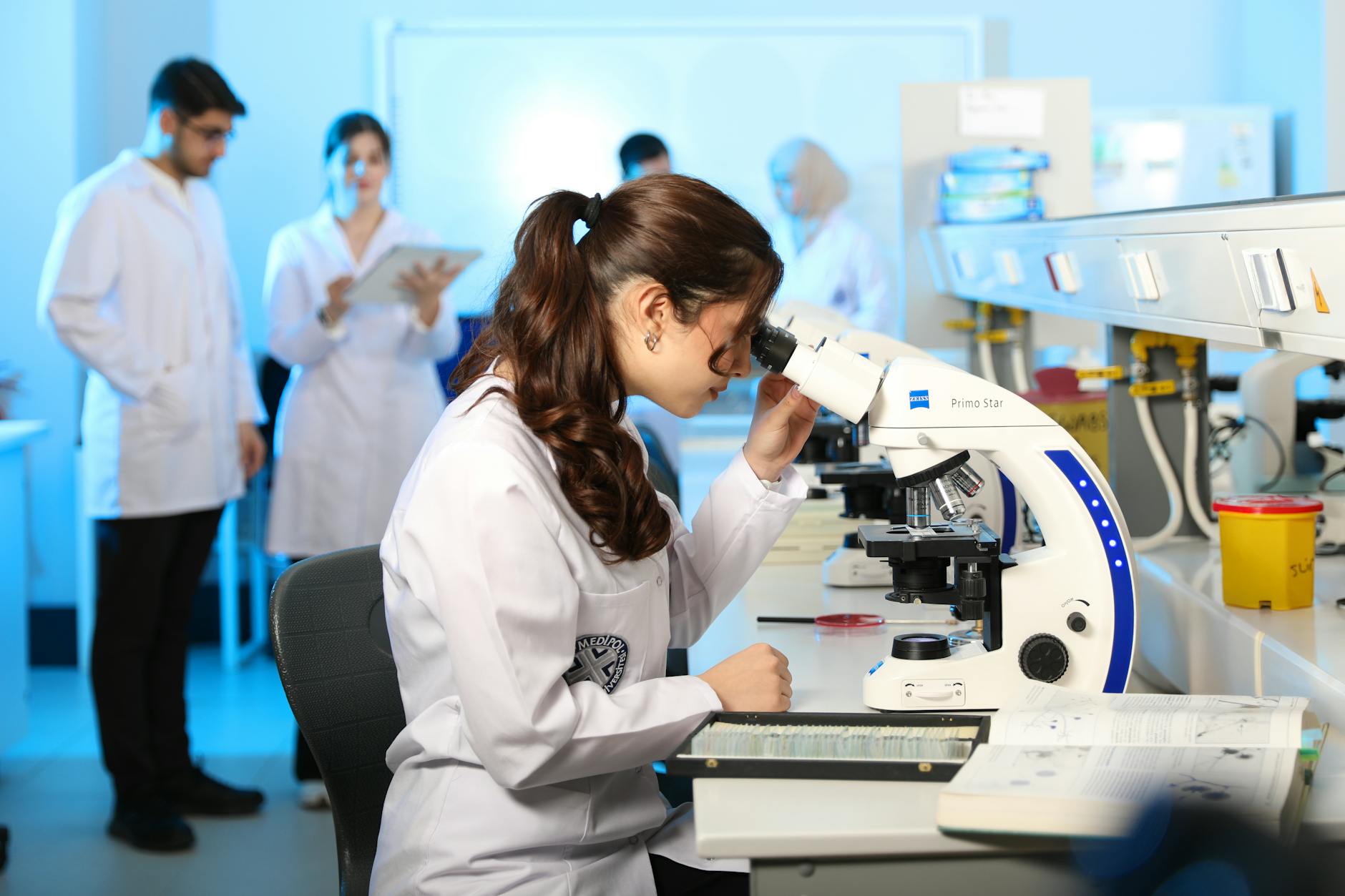
What Counts as a Chemical Reaction?
A chemical reaction changes one set of substances into another by breaking bonds and making new ones, and the new material often behaves differently right away. In a school lab, that can show up in 5 common ways: gas bubbles, a color change, a temperature shift, a solid precipitate, or light.
The catch: A chemical change makes new substances, while a physical change only changes form or state. Ice at 0°C, water at 25°C, and steam at 100°C all stay H2O, but iron rusting turns Fe into a mix that includes iron oxide, and that new substance does not act like the metal bar that started the reaction.
Gas gives away a lot. If vinegar and baking soda foam up in under 1 minute, carbon dioxide forms, and that is not just “mixing.” A precipitate also gives the game away because two clear solutions can make a cloudy solid in seconds, like silver chloride forming from silver nitrate and sodium chloride. Color change, heat, cooling, and light each point the same way: atoms have rearranged.
Not every visible change means a reaction, and that is where students trip. Dissolving 5 grams of sugar in water does not make a new substance, but burning the same sugar in a flame does. My take: chemistry gets easier fast once you stop asking “Did it change?” and start asking “Did it become something new?”
Some reactions look quiet, too. A slow tarnish on silver over weeks, or rust on steel over months, still counts because the substance at the end has different structure and properties. That boring-looking surface film can matter more than a flashy lab spark.
Which Types of Chemical Reactions Exist?
The five reaction types chemistry classes use most often all follow repeatable patterns, and those patterns help you predict products without memorizing random facts. A quick table works better than a wall of notes because you can compare the reactants, products, and the clue that tells you which pattern you have.
| Type | Pattern | Example |
|---|---|---|
| Synthesis | A + B → AB | 2H2 + O2 → 2H2O |
| Decomposition | AB → A + B | 2H2O2 → 2H2O + O2 |
| Single replacement | A + BC → AC + B | Zn + 2HCl → ZnCl2 + H2 |
| Double replacement | AB + CD → AD + CB | AgNO3 + NaCl → AgCl + NaNO3 |
| Combustion | hydrocarbon + O2 → CO2 + H2O | CH4 + 2O2 → CO2 + 2H2O |
Worth knowing: The clue matters more than the label at first. If you see one product from two reactants, think synthesis; if you see oxygen on the left and carbon dioxide plus water on the right, think combustion.
A chart like this saves time, but it also hides one annoyance: real reactions can be messy, and some need heat, light, or a catalyst before they move at all.
The Complete Resource for Chemical Reactions
UPI Study has a full resource page built specifically for chemical reactions — covering which courses count, how credits transfer to US and Canadian colleges, and how to get started at $250 per course with no deadlines.
Explore Chemistry Lab Course →How Do You Balance Chemical Equations?
Balancing chemical equations means making the atom count match on both sides, and you do that with coefficients, not by changing the formulas themselves. The trick feels small, but it saves a lot of grief on homework and tests.
- Start with the skeleton equation and write every correct formula first. For methane combustion, that means CH4 + O2 → CO2 + H2O, not a guessed shortcut.
- Count each atom on both sides before you touch anything. In CH4 + O2 → CO2 + H2O, the left side has 1 carbon, 4 hydrogen, and 2 oxygen atoms, while the right side has 1 carbon, 2 hydrogen, and 3 oxygen atoms.
- Change coefficients, never subscripts. A subscript like the 2 in H2O changes the substance, while a coefficient like the 2 in 2H2O only changes how many molecules you have; that difference matters on every problem worth 1 point or 10 points.
- Balance the hardest atom first, then leave oxygen and hydrogen for last if they appear together. For methane, put a 2 in front of H2O first, then a 2 in front of O2, and the finished equation becomes CH4 + 2O2 → CO2 + 2H2O.
- Recount every atom after each move and fix the leftover mismatch. If you get 1 carbon, 4 hydrogen, and 4 oxygen on both sides, you have the right answer; if not, one coefficient still needs work.
- Simplify coefficients if they share a common factor. If you write 2H2 + 2O2 → 2H2O2, divide every coefficient by 2 and keep the equation in lowest whole-number form.
Reality check: Beginners often change H2O into H2O2 because they want the counts to line up fast, and that breaks the chemistry. A wrong formula can look balanced and still earn zero credit, which is a brutal little trap.
Two more common mistakes show up all the time: forgetting the 1 in front of a single molecule and balancing only one element while ignoring the rest. Good practice means checking the full set of atoms every time, even on a 2-minute quiz.
How Do You Predict Reaction Products?
You predict products by matching reactants to a reaction pattern, then checking whether the products make chemical sense. That sounds tidy, but the details matter: a metal’s activity, a compound’s solubility, and the presence of oxygen all change the answer.
For single replacement, use the activity series. Zinc can replace hydrogen in HCl, so Zn + 2HCl → ZnCl2 + H2 works, but copper cannot do that trick with dilute HCl under normal lab conditions. For double replacement, look at solubility ideas: if one possible product forms an insoluble solid, like AgCl, the reaction has a strong reason to happen.
Combustion follows a cleaner rule set. A hydrocarbon such as methane reacts with O2 to make CO2 and H2O, and the balanced form often uses 2 oxygen molecules or more depending on the fuel. That makes combustion easy to spot and easy to mess up if you forget the oxygen count.
Bottom line: Some reactant pairs do not react at all, and that answer still counts as a prediction. If the activity series says no swap, or if both possible products stay dissolved in water, the equation may have no net change even though you mixed two substances.
State symbols and conditions matter more than students expect. Writing (s), (l), (g), and (aq) tells you whether a precipitate forms, and notes like heat, light, or a catalyst can explain why a reaction needs 80°C or a flame before it starts. I like that honesty in chemistry; it keeps the subject from pretending every mix gives fireworks.
Which Chemical Reaction Examples Should You Know?
A short study list helps because exam questions recycle the same 5 or 6 chemical reaction examples in new clothes. If you can name the pattern, you can usually predict the products in under 30 seconds.
- Rusting of iron: 4Fe + 3O2 → 2Fe2O3. This shows oxidation over time, not a fast flame, and the product is a new solid with different properties.
- Burning methane: CH4 + 2O2 → CO2 + 2H2O. This is combustion, and it always gives carbon dioxide and water when oxygen is present in enough supply.
- Vinegar plus baking soda: acetic acid + sodium bicarbonate → carbon dioxide + water + sodium acetate. The foam tells you gas formed in less than 1 minute, and that makes the reaction easy to spot.
- Silver nitrate plus sodium chloride: AgNO3 + NaCl → AgCl + NaNO3. This is double replacement, and the white AgCl precipitate makes the change obvious in a classroom beaker.
- Zinc with hydrochloric acid: Zn + 2HCl → ZnCl2 + H2. This is single replacement, and the hydrogen gas clue matters because a metal displaced hydrogen from an acid.
- Hydrogen peroxide breaking down: 2H2O2 → 2H2O + O2. This decomposition reaction often speeds up with a catalyst, and the oxygen bubbles tell you the molecule split apart.
What this means: Learn the pattern with the example, not just the equation. That habit helps more than cramming 20 isolated lines the night before a test.
A sharp study set beats a bloated one, and these six reactions cover synthesis, decomposition, single replacement, double replacement, and combustion with very little dead weight.
Frequently Asked Questions about Chemical Reactions
Chemical reactions explained means describing how substances change into new substances with different properties. Atoms are rearranged, but they are not created or destroyed. Reactions involve reactants forming products through bond breaking and bond making. Common reaction types chemistry students study include synthesis, decomposition, single replacement, double replacement, and combustion.
The main types of chemical reactions are synthesis, decomposition, single replacement, double replacement, and combustion. In synthesis, simpler substances combine into one product. In decomposition, one compound breaks apart. Single replacement swaps one element into a compound. Double replacement exchanges ions between compounds. Combustion usually involves oxygen and produces heat, often carbon dioxide and water.
Balancing chemical equations means making the number of atoms of each element equal on both sides of the equation. You change coefficients, not subscripts. Start with the most complex compound, then balance elements that appear once per side, and finish with hydrogen and oxygen if needed. Balanced equations follow the law of conservation of mass.
Balancing chemical equations is important because it shows that matter is conserved during a reaction. The same number of each type of atom must appear in the reactants and products. Balanced equations also let you calculate correct mole ratios, predict how much product forms, and determine limiting reactants in chemistry problems.
To predict products, first identify the reaction type chemistry pattern. Then apply the typical product rules. For synthesis, combine reactants into one compound. For decomposition, split one compound into simpler substances. For single and double replacement, swap ions or elements if the reaction is likely to proceed. Use activity series and solubility rules when needed.
A reaction types chemistry table can help organize patterns: Synthesis: A + B → AB; example 2H2 + O2 → 2H2O Decomposition: AB → A + B; example 2H2O2 → 2H2O + O2 Single replacement: A + BC → AC + B; example Zn + 2HCl → ZnCl2 + H2 Double replacement: AB + CD → AD + CB; example AgNO3 + NaCl → AgCl + NaNO3 Combustion: hydrocarbon + O2 → CO2 + H2O; example CH4 + 2O2 → CO2 + 2H2O
Common chemical reaction examples include rusting of iron, burning methane, neutralizing acid with base, and the reaction of vinegar with baking soda. Rusting is oxidation. Burning methane is combustion. Acid-base neutralization often produces salt and water. Vinegar and baking soda produce carbon dioxide gas, which causes fizzing and bubbling.
Look for the pattern in the reactants and products. If two substances form one product, it is synthesis. If one compound breaks apart, it is decomposition. If an element replaces another in a compound, it is single replacement. If two compounds swap ions, it is double replacement. If a substance reacts with oxygen and releases energy, it is usually combustion.
A reaction may depend on reactivity, concentration, temperature, surface area, and whether products are stable. In single replacement, the free element must be more reactive than the element it replaces. In double replacement, a precipitate, gas, or water must form to drive the reaction. Catalysts can speed reactions without being consumed.
To learn chemical reactions explained in a structured way, look for a course that covers types of chemical reactions, balancing chemical equations, and predicting products with worked examples. An accredited online course can provide guided practice, quizzes, and feedback. Explore the accredited online course for this subject to build confidence in reaction types chemistry and problem-solving.
Final Thoughts on Chemical Reactions
Chemical reactions stop looking random once you separate three jobs: spot the type, balance the atoms, and predict the products. Those are different tasks, and students often blur them together. Don’t. A reaction can be easy to classify and still need careful balancing, or easy to balance and still fail product prediction if you ignore solubility or the activity series. The fastest progress comes from pattern work. Start with 10 examples, not 100. Mix in combustion, one decomposition reaction, two double replacement cases, and a few single replacement problems, then check whether your atom counts land on the same number on both sides. If they do not, the equation is not finished. Pay attention to the clues in the real world, too. Gas, heat, light, a color shift, and a precipitate all tell you something changed at the bond level. That is the part that makes chemistry feel alive instead of mechanical. A good next move is simple: take a fresh set of 8 reaction problems, balance each one, and write the product pattern beside every answer so your brain stops treating equations like random symbols.
How UPI Study credits actually work
Ready to Earn College Credit?
ACE & NCCRS approved · Self-paced · Transfer to colleges · $250/course or $99/month