
Classifying chemical reactions means looking at the reactants and products and spotting a pattern, not memorizing random equations. In a typical Chemistry I course, students meet five first-pass types: synthesis, decomposition, single replacement, double replacement, and combustion. The trick is simple, but students still miss it because they stare at symbols instead of structure. One equation may start with two substances and end with one. Another starts with one compound and breaks into two or more pieces. A third swaps ions, and a fourth burns in oxygen. Those shapes tell you more than the names do. If you can read a chemical equation like a sentence, you can usually classify it in under 30 seconds. That skill matters on quizzes, lab reports, and homework sets where the teacher wants the reaction type before you balance anything. It also helps you predict products, which is where a lot of students lose points. The good news: you do not need to guess. You need a few pattern rules, a sharp eye for oxygen, and a habit of checking whether the number of reactants and products changed in a way that matches the type. Once you see the setup, the rest gets much less messy, and the same five patterns show up again and again across Chapter 3, Chapter 4, and the rest of Chemistry I.
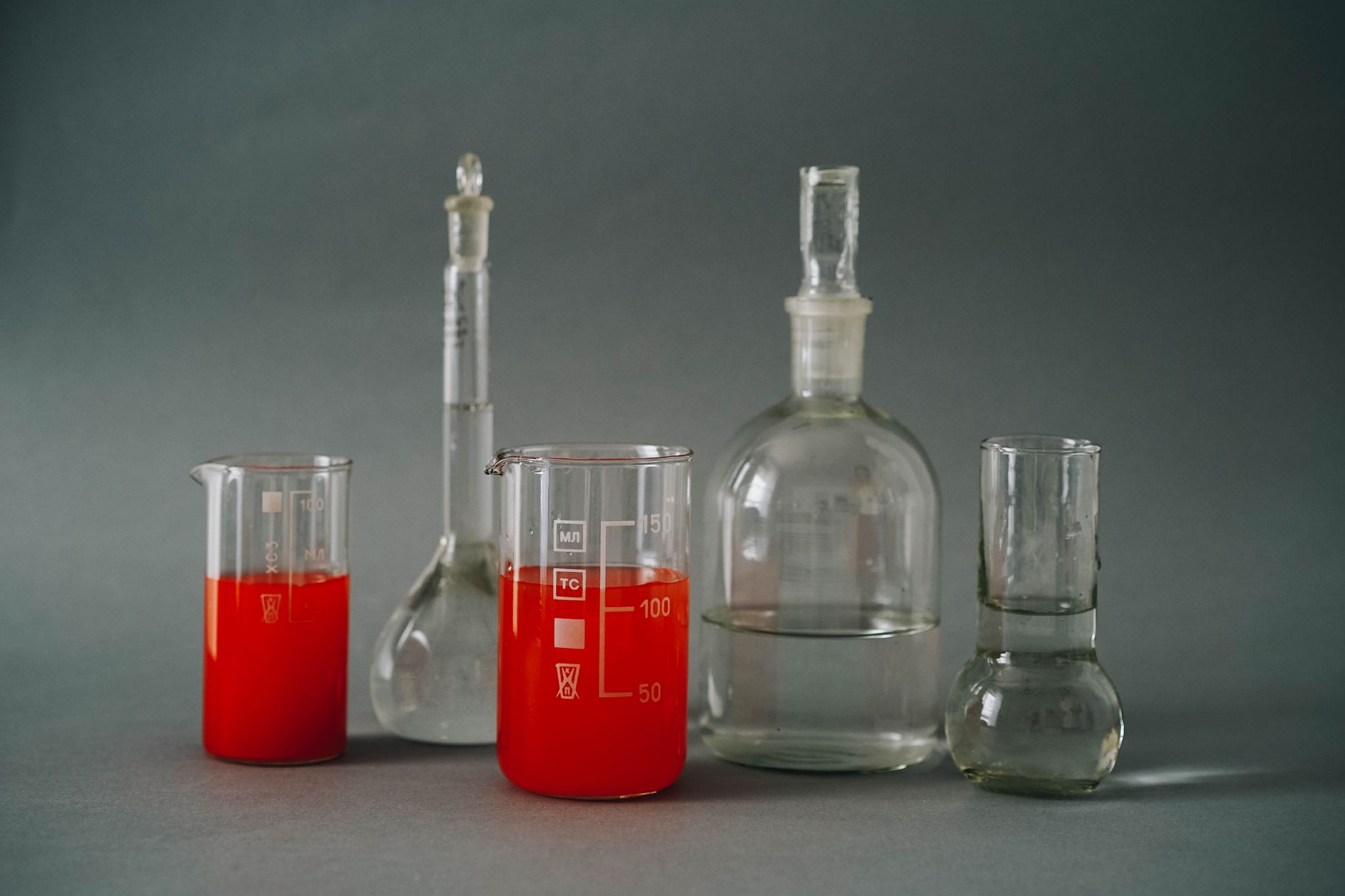
How Do You Classify Chemical Reactions?
Classifying chemical reactions means matching the equation to a pattern: 2 reactants making 1 product, 1 reactant splitting into 2, or ions swapping partners. In Chemistry I, that pattern gives you the reaction type faster than reading every name.
The five starter types show up in almost every first-year class. Synthesis joins substances into one compound. Decomposition breaks one compound apart. Single replacement swaps one element into a compound. Double replacement trades ions between two compounds. Combustion uses oxygen, usually with a hydrocarbon, and makes carbon dioxide and water.
The catch: Students often memorize the names and still miss the test question because the teacher asks for the pattern, not the vocabulary. That is a bad habit, and it costs points on 10-point quizzes and 50-point unit tests alike.
Here is the cleaner way to think about it. Look at how many reactants you start with and how many products you end with. If 2 substances become 1, you are usually looking at synthesis. If 1 substance becomes 2 or more, decomposition jumps out. If a lone element pushes into a compound, that is single replacement. If 2 compounds exchange pieces, that is double replacement.
Combustion stands apart because oxygen shows up as a reactant almost every time, and the products often include CO2 and H2O. That makes it the easiest one to spot, but also the one students rush through and misread when the formula gets long.
A lot of instructors build this into the first 2 weeks of Chemistry I because the same five patterns support balancing, stoichiometry, and lab work later. If you can sort the type from the equation, you already know a big chunk of the answer before you start calculating.
Which Reaction Patterns Identify Synthesis?
Synthesis reactions usually follow a 2-to-1 pattern: two or more reactants combine to form one product. That single-product shape is the fastest clue, and it shows up in simple equations like A + B → AB or metal + nonmetal → ionic compound.
A classic example is 2Na + Cl2 → 2NaCl, where 2 elements join to make 1 compound. Another is MgO + H2O → Mg(OH)2, which combines a compound and a compound into one new compound. The exact formulas change, but the product count stays at 1.
Reality check: A single product does not always mean the equation is balanced yet. You can still need coefficients like 2, 3, or 4 to make the atom count work, and that part matters just as much on a 20-minute quiz as it does on homework.
Students sometimes miss synthesis when the reactants look unfamiliar. Do not let the symbols scare you. If you see 2 reactants and 1 product, start there first. Then ask whether the pieces look like they have fused into a bigger compound. That mental move beats random guessing.
Synthesis also shows up in simple element-plus-element cases, like 2H2 + O2 → 2H2O. The reactants can both be elements, or one can be a compound and the other an element. The core idea stays the same: separate pieces become one larger product.
I like synthesis as a test type because it rewards clean thinking. It is not fancy. It is just a 2-to-1 shape, and once you spot that shape, the equation stops looking like a code.
Which Signs Show Decomposition Reactions?
Decomposition reactions start with 1 reactant and end with 2 or more products, so the quickest clue is the 1-to-many shape. In Chemistry I, heat, electricity, or light often starts the reaction, and the product count usually jumps as soon as the compound breaks apart.
- Look for one compound on the left side and 2 substances on the right side. That pattern shows up in equations like CaCO3 → CaO + CO2.
- Heat often appears above the arrow, especially in lab questions that use Δ. Some classes also show electricity or light as the trigger.
- Common product patterns include an element plus a compound, or 2 simpler compounds. The exact split depends on the original formula.
- If you see H2O2 breaking into H2O and O2, that is a classic decomposition example. It is simple, fast to recognize, and very common in Chemistry I worksheets.
- Do not confuse decomposition with single replacement. In decomposition, one reactant breaks apart; in single replacement, one element kicks into another compound.
- Many teachers ask this on a 5-question warm-up because it checks whether you can read the equation before balancing it. That first glance matters more than the final coefficients.
What this means: The big clue is the number change: 1 reactant becomes 2 or more products, and that shift is hard to fake. If the equation starts with one thing and ends with a pile, your brain should go straight to decomposition.
Learn Chemistry Online for College Credit
This is one topic inside the full Chemistry course on UPI Study — a self-paced, online class that earns real college credit. Credits are ACE and NCCRS evaluated and transfer to partner colleges across the US and Canada. Courses start at $250 with no deadlines and lifetime access.
Browse Chemistry Course →How Do Replacement Reactions Compare?
Single replacement and double replacement both swap parts, but they swap different things and show up in different equation shapes. That is why students mix them up on the first pass. A quick side-by-side check saves time on 10-question homework sets and in timed class quizzes.
| Feature | Single Replacement | Double Replacement |
|---|---|---|
| Reactant pattern | element + compound | compound + compound |
| Product pattern | compound + element | compound + compound |
| What swaps | 1 element replaces another | 2 ions exchange partners |
| Common clue | metal or halogen enters | ion exchange in water |
| Example | Zn + CuSO4 → ZnSO4 + Cu | AgNO3 + NaCl → AgCl + NaNO3 |
| Fast test | one free element appears | no free element appears |
Bottom line: If you see 1 element plus 1 compound, think single replacement; if you see 2 compounds, think double replacement. That split is blunt, but it works.
How Do You Recognize Combustion Reactions?
Combustion reactions usually involve a hydrocarbon plus O2, and they produce CO2 and H2O when the burn is complete. That oxygen clue makes combustion one of the easiest types to spot in a Chemistry I course.
A common example is CH4 + 2O2 → CO2 + 2H2O. You can also see propane, butane, or other fuels in the same 1-fuel-plus-oxygen setup. If oxygen sits on the reactant side and carbon dioxide plus water show up on the product side, combustion is the first guess.
The usual trap comes from incomplete combustion. When oxygen runs short, the products can shift, and you may see carbon monoxide or soot instead of only CO2. That does not erase the combustion label, but it does change the product set in a real lab or a tougher exam question.
Worth knowing: Oxygen alone does not make a reaction combustion. A metal burning in oxygen, like magnesium ribbon, fits a different chemistry story, so do not slap the label on every O2 equation.
Complete combustion gets the clean 2-product pattern, while incomplete combustion looks messier and shows up in lower-oxygen conditions. I think teachers should spend more time on this because students often memorize “oxygen means combustion” and miss the fuel part, which is the real clue.
On a test, scan for 3 things: a carbon-containing fuel, O2 on the left, and CO2 plus H2O on the right. That 3-part check catches most examples before you even balance the atoms.
How Can You Predict Reaction Products?
Predicting products gets much easier when you follow the same order every time. Start with the pattern, then match the reaction type, then write the likely products before you worry about coefficients or a 2-minute timer on the quiz clock.
- Count the reactants and products first. If you see 2 reactants and 1 product, start with synthesis; if you see 1 reactant, check decomposition.
- Check for a lone element. A free metal, halogen, or diatomic element often signals single replacement, and you should watch for H2, N2, O2, F2, Cl2, Br2, or I2.
- Match the pattern to the type. Two compounds on the left usually mean double replacement, while a hydrocarbon plus O2 usually means combustion.
- Write the expected products before balancing. That step helps you avoid the 30-second panic that makes people swap ions the wrong way or forget oxygen’s diatomic form.
- Balance last and check atom counts. If one side has 4 oxygens and the other has 2, fix the coefficients before you hand it in.
Reality check: Product prediction is where students lose the most easy points because they try to balance a reaction they have not identified yet. That move wastes time and usually creates a mess.
A good habit is to ask one blunt question: “What changed?” If one element replaced another, you are in single replacement territory. If ions traded partners, you are in double replacement. If fuel met oxygen, you are in combustion. That sequence is simple, and it beats guessing every time.
Frequently Asked Questions about Chemical Reactions
The surprise for most students is that you classify a reaction by the pattern of reactants and products, not by the name alone. In a chemistry i course, you usually sort reactions into synthesis, decomposition, single replacement, double replacement, or combustion by checking how many substances start and end the reaction.
A synthesis reaction makes one product from two or more reactants. If you see A + B → AB, that's synthesis, like 2H2 + O2 → 2H2O, which gives you one compound from two elements. The caveat is that the products can be more than one substance if the equation isn't balanced yet.
The most common wrong assumption is that you can classify chemical reactions by the atoms' names instead of the equation pattern. That fails fast. You need to compare the number of reactants and products, like 1 compound breaking apart in decomposition or 2 compounds swapping ions in double replacement.
Most students start by trying to memorize every example, but what actually works is matching the equation to a pattern first. Look for 1 reactant turning into 2 products, 2 elements combining into 1 compound, or a hydrocarbon plus O2 making CO2 and H2O.
Start by counting how many reactants and products you have. Then check the shapes: 1 + 1 → 1 points to synthesis, 1 → 2 points to decomposition, 1 element plus 1 compound points to single replacement, and 2 compounds points to double replacement.
If you misclassify the reaction, you'll predict the wrong products and miss the whole problem, especially on college credit exams and lab quizzes. A single mistake with combustion, like forgetting O2 or missing CO2 and H2O, can cost the full question.
This method helps anyone taking chemistry i, AP Chemistry, or an online course with reaction equations, and it doesn't help much if you're only memorizing vocabulary without solving equations. Students who study online for transferable credit also use the same reaction patterns on ACE NCCRS credit work.
5 main types cover most Chemistry I problems: synthesis, decomposition, single replacement, double replacement, and combustion. If you learn those 5 patterns, you can classify most textbook reactions in under 30 seconds and spot the products faster on homework and exams.
A decomposition reaction starts with 1 compound and breaks into 2 or more simpler substances. You can spot it by the pattern AB → A + B, like 2H2O → 2H2 + O2, and the reactant usually looks more complex than the products.
Single replacement has 1 element and 1 compound as reactants, while double replacement has 2 compounds that swap parts. If you see A + BC → AC + B, that's single replacement; if you see AB + CD → AD + CB, that's double replacement.
A combustion reaction uses 1 hydrocarbon plus O2, and it usually makes CO2 and H2O. You'll see fuel plus oxygen on the left, like CH4 + 2O2 → CO2 + 2H2O, which makes combustion easy to spot once you know the oxygen pattern.
For many online course options, you can study online through a chemistry i course and earn transferable credit when the course carries ACE NCCRS credit. A lot of schools list the course length as 8 to 16 weeks, and the reaction types still follow the same 5-pattern system.
Final Thoughts on Chemical Reactions
Chemical reaction types look hard until you stop treating them like a memory test. The pattern does most of the work. Two reactants turning into one product points to synthesis. One compound breaking apart points to decomposition. One element forcing its way into a compound points to single replacement. Two compounds swapping partners points to double replacement. Oxygen plus fuel points to combustion. That is the whole game for Chemistry I. Once you train your eye to count reactants and products first, the equation starts giving away its own answer. You will still need to balance atoms, and you will still run into weird-looking formulas, but the first decision gets much easier. The students who do best do one thing that sounds almost too simple: they write the reaction type above the equation before they solve anything else. That habit cuts down on dumb mistakes. It also makes later topics like stoichiometry and net ionic equations feel less scary because the pattern is already familiar. If you are studying for a quiz or unit test, practice with 10 equations at a time and force yourself to name the type before you predict products. That small drill builds speed fast, and speed matters when the clock starts moving.
The way this actually clicks
Skip step 3 and the whole thing is wasted.
Ready to Earn College Credit?
ACE & NCCRS approved · Self-paced · Transfer to colleges · $250/course or $99/month