
Acid and base strength means how far a substance goes in water, not how much of it sits in the beaker. A strong acid donates H+ almost completely, while a weak acid leaves a lot of molecules unchanged. Same idea for bases: strong bases grab H+ or make OH- more fully than weak ones. That is where most students go sideways. They mix up strength with concentration. A 1.0 M weak acid can be less strong than a 0.01 M strong acid, because strength talks about equilibrium, not just amount. That mistake shows up fast in chemistry I, especially when homework asks you to compare the relative strengths of acids and bases without giving molarity first. You compare strength by looking at dissociation, ionization, Ka, Kb, pKa, and pKb. Bigger Ka means a stronger acid. Bigger Kb means a stronger base. Smaller pKa or pKb means the same thing in log form. Those numbers tell you where equilibrium sits and whether the reactants or products win in water. That matters in a real college credit course because acid-base problems do not reward guessing. They reward clean thinking. If you know what happens in solution, you can predict reaction direction, identify conjugate pairs, and stop treating every acid like it behaves the same way. It does not. Hydrochloric acid, acetic acid, ammonia, and sodium hydroxide all play different games, and the numbers explain why.
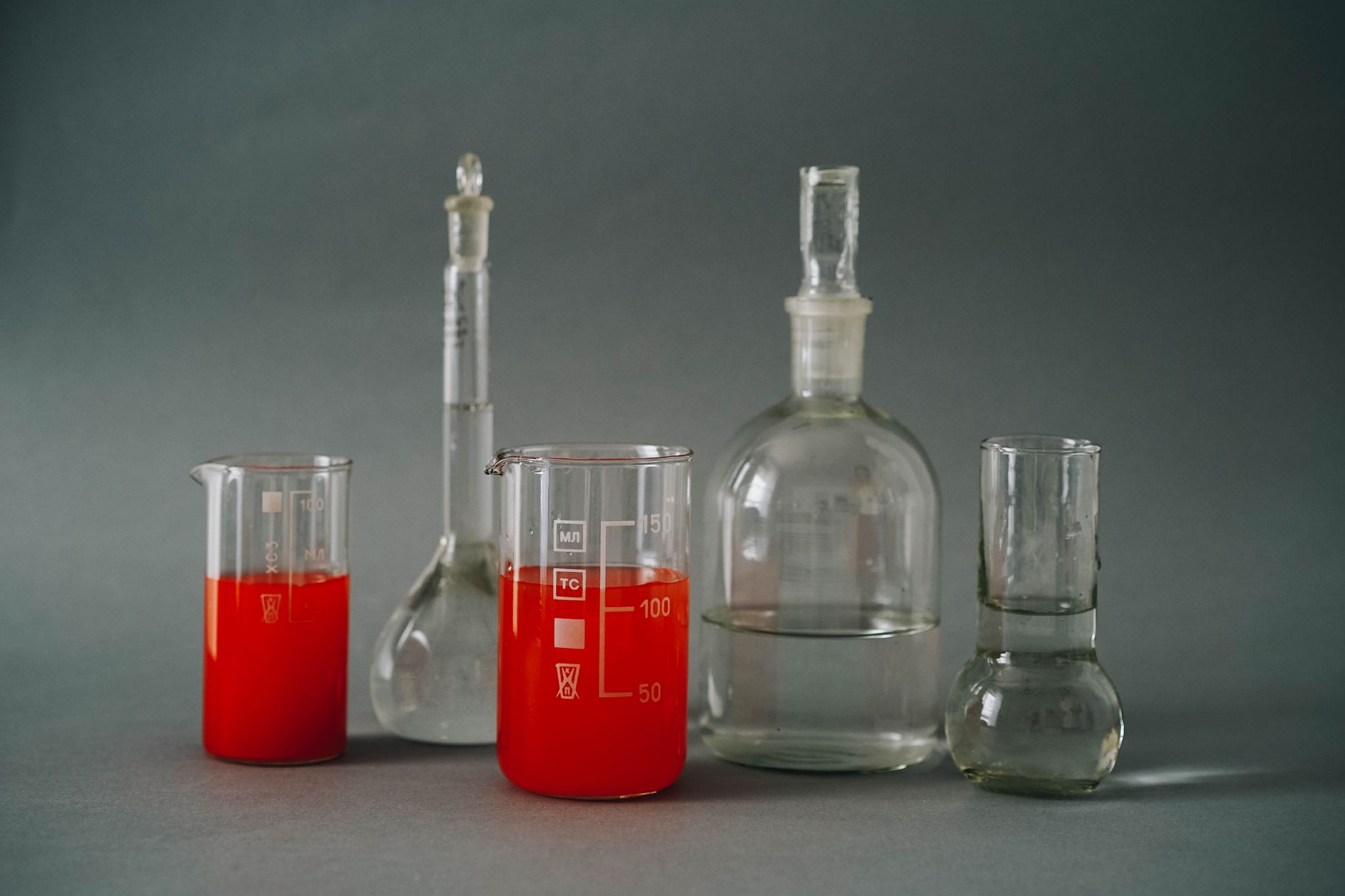
How Do You Compare Acid Strengths?
Acid strength tells you how easily an acid donates H+ to water, and the cleanest measure is the extent of ionization at equilibrium. A strong acid, like HCl, gives up nearly 100% of its protons in water, while a weak acid, like acetic acid, may ionize only about 1% or less in a typical dilute solution.
Reality check: Strength does not mean concentration. A 0.10 M HCl solution can be weaker in amount than 1.0 M acetic acid, but HCl still counts as the stronger acid because it ionizes far more completely. That misconception wrecks a lot of first-semester chemistry exams, and it is a bad habit to carry into a chemistry I course or a college credit class.
Look at the equilibrium position. Strong acids sit far to the product side, so most of the acid turns into H3O+ and its conjugate base. Weak acids set up a real balance, with many molecules still undissociated. That balance matters more than the starting bottle label.
The best test is simple: ask which acid donates a proton more readily in water. If one acid reaches 99.9% ionization and another reaches 0.2%, the first acid is stronger, even if the second one comes in a 2.0 M flask. That is the whole game.
In practice, acid strength controls pH, reaction speed in some cases, and which direction proton-transfer reactions lean. A student who knows that can compare acids without memorizing random lists, which is a lot less painful than brute-force study.
Why Do Strong Acids Ionize More Completely?
Strong acids ionize more completely because water stabilizes the ions well enough that the equilibrium sits almost entirely on the product side. In a 25 °C aqueous solution, HCl, HBr, and HI dissociate so fully that you treat them as essentially complete proton donors in intro chemistry.
Dissociation and ionization sound similar, but chemistry classes use them a bit differently. Dissociation usually means an ionic compound falls apart into ions, while ionization means a molecular acid forms ions after reacting with water. Either way, strong acids generate lots of H3O+ because the forward reaction wins by a huge margin.
The catch: The formula alone does not tell you strength. HNO3 has one acidic hydrogen and still behaves as a strong acid, while CH3COOH also has one acidic hydrogen and behaves as a weak acid. The number of H atoms in the formula does not decide the outcome; equilibrium does.
Weak acids do not fail because they are broken. They simply do not push far enough toward products. At equilibrium, a weak acid still keeps a large pile of undissociated molecules in solution, which is why a 0.50 M acetic acid sample can coexist with only a small amount of acetate and hydronium.
That difference matters when you predict reactions. If you can spot which side has the stronger acid, you can predict whether proton transfer is nearly complete or only partial. That saves time and keeps you from treating every acid-base reaction like a simple yes-or-no event.
How Do Ka And pKa Compare Acids?
Ka gives you the numeric strength of an acid in water, and pKa turns that number into a log scale that is easier to compare fast. A larger Ka means a stronger acid, and a smaller pKa means the same thing; that is why tables in general chemistry often list pKa values instead of huge decimal Ka numbers. In a chemistry I course, you will see acids ranging from pKa below 0 for strong mineral acids to around 4.76 for acetic acid.
Worth knowing: pKa works because each drop of 1 unit means a tenfold change in Ka. That is not a cute detail. It is the whole point of the scale.
- Ka measures how much an acid dissociates in water at equilibrium.
- pKa = -log Ka, so smaller pKa means stronger acid.
- HCl has a very low pKa, while acetic acid sits near 4.76.
- A 2-unit pKa gap means about 100 times difference in strength.
- Compare two acids directly by their pKa values; lower wins.
That log scale makes comparisons faster, but it also hides how extreme the gap can be. A pKa of -7 and a pKa of 5 differ by 12 units, which means a strength difference of about 10^12. That is not subtle. That is a chasm.
If you know pKa, you can predict which acid donates H+ first, which conjugate base stays weakest, and which side of an equilibrium gets favored. That is why Chemistry I often spends real time on acid tables instead of treating them like a side note.
Learn Chemistry Online for College Credit
This is one topic inside the full Chemistry course on UPI Study — a self-paced, online class that earns real college credit. Credits are ACE and NCCRS evaluated and transfer to partner colleges across the US and Canada. Courses start at $250 with no deadlines and lifetime access.
Browse Chemistry Courses →How Do You Compare Base Strengths?
Base strength tells you how readily a base accepts H+ or produces OH- in water, and you compare it with Kb and pKb the same way you compare acids with Ka and pKa. Strong bases like NaOH and KOH dissociate almost completely in water, while weak bases like ammonia only react partially, often leaving most molecules unchanged at equilibrium.
That same strength-versus-concentration mistake shows up here too. A 1.0 M ammonia solution can still be a weak base, while a much more dilute NaOH solution still counts as strong because NaOH dissociates nearly 100%. Students hate this part at first because the labels feel backward, but the chemistry is not backward; the wording is.
Bottom line: Strong bases do not stay as intact molecules very long in water, and weak bases do. Kb measures that pull toward OH- formation, and pKb = -log Kb makes the comparison easier. Bigger Kb and smaller pKb mean a stronger base, just like bigger Ka and smaller pKa mean a stronger acid.
Conjugate pairs matter here. A strong acid has a very weak conjugate base, which means the acid gives up H+ so easily that the leftover base does not grab it back well. HCl leaves Cl-, and Cl- is a weak base. NH4+ is the conjugate acid of NH3, and NH3 is a weak base, so the pair sits on the other side of the strength scale.
That pattern helps you predict behavior fast. If one side contains a strong acid, its conjugate base will almost never act like a strong base in water. The math and the chemistry point in the same direction.
Which Factors Make Acids And Bases Stronger?
Acid and base strength comes from structure and environment, not luck, and the strongest clues usually show up in bond behavior and equilibrium. A 1-unit change in pKa already means a 10× shift, so small structural differences matter more than students expect.
- Bond polarity and bond strength matter because a weaker H-A bond breaks more easily during proton loss.
- Atom size matters. Down Group 17, HI acts stronger than HF because the H-I bond breaks more easily.
- Electronegativity matters across a row. For binary acids, higher electronegativity often helps stabilize the conjugate base.
- Resonance spreads charge out. Acetate stays more stable than ethoxide, so acetic acid is stronger than ethanol.
- Inductive effects pull electron density away. CF3COOH is much stronger than CH3COOH because three fluorines drain charge.
- Solvent effects matter too. Water, methanol, and acetonitrile can shift equilibrium and change apparent strength.
- Temperature can move equilibrium, so a 25 °C table does not tell the whole story for every lab setup.
A smart student does not memorize these as random facts. You ask which factor stabilizes the conjugate base or makes proton transfer easier, then you use that to rank strength. That is cleaner than rote memorizing 40 acids from a chart.
How Do You Predict Acid-Base Reactions?
You predict acid-base reactions by comparing the strongest acid and base on each side, then checking which side holds the weaker pair. The side with the weaker acid and weaker base usually wins, and that rule works in the same way in most Gen Chem 1 problems.
Frequently Asked Questions about Acid Base Strength
The surprise is that strength depends on how completely an acid or base dissociates in water, not on how concentrated the solution looks. A strong acid like HCl gives up nearly 100% of its protons, while a weak acid like acetic acid only ionizes a little.
This applies to you if you're in general chemistry, AP Chemistry, or a chemistry I course, and it does not apply if you're only memorizing names with no reaction work. The same ideas also show up in an online course that gives college credit or transferable credit.
Most students memorize a list of strong acids and strong bases, but that breaks fast on test day. What actually works is comparing Ka, Kb, pKa, and pKb, because those numbers tell you how far ionization goes and which side of equilibrium wins.
The most common wrong assumption is that a stronger acid and a stronger base can both 'win' in the same reaction. They can't. A strong acid pushes toward complete dissociation, and a weak base only grabs a proton partially, so equilibrium shifts to the weaker side.
Start by writing the acid-base reaction and spotting the conjugate pairs. Then compare pKa values for the acids on both sides; the lower pKa marks the stronger acid, and equilibrium favors the side with the higher pKa species.
If you get it wrong, you predict the wrong direction for equilibrium and miss whether the reaction goes near completion or barely moves. That can wreck buffer questions, titration curves, and any problem where you need to predict product formation from Ka or Kb data.
Ka measures how strongly an acid ionizes in water, and Kb measures how strongly a base ionizes in water. Bigger Ka means a stronger acid; bigger Kb means a stronger base, and the matching pKa or pKb gets smaller as strength rises.
A $0 shortcut won't help here; pKa gives you a fast way to rank acids because each 1-unit drop means a 10× increase in strength. So pKa 3 is 100 times stronger than pKa 5, and the lower number wins.
You compare the relative strengths of acids and bases in water by checking which species donates or accepts protons more completely. Strong acids like HNO3 dissociate almost fully, while weak bases like ammonia only pick up a fraction of available protons.
Dissociation means a compound splits into ions already present in the molecule, while ionization means a neutral molecule forms ions after meeting water. Strong electrolytes do this almost completely, and weak acids or bases do it only partly.
You predict reaction behavior by comparing the pKa of the acid on the left with the pKa of the conjugate acid on the right. If the product side has the weaker acid, equilibrium favors products, and the bigger pKa gap gives you a stronger push.
Strong acids and bases behave differently because they dissociate or ionize almost completely in water, while weak ones reach equilibrium with a lot of molecules still unchanged. That difference changes pH, reaction extent, and how far proton transfer goes in a chemistry I problem.
Final Thoughts on Acid Base Strength
Acid and base strength looks messy until you strip away the labels and watch what happens in water. Then the pattern gets sharp. Strong acids ionize almost completely. Weak acids do not. Strong bases act the same way on their side. Ka, Kb, pKa, and pKb give you the numbers, and equilibrium tells you which direction wins. The big mistake is still the same one: students confuse strength with concentration. That error leads to bad predictions, wrong lab answers, and bad exam picks. A dilute strong acid still counts as strong. A concentrated weak acid still counts as weak. The bottle size does not decide the chemistry. If you remember only one rule, make it this one: compare the stronger acid and the stronger base on each side, then favor the side with the weaker conjugate pair. That rule handles most intro problems without drama, and it also gives you a real sense of why reactions go where they go. This stuff gets easier once you stop treating it like a memorization trap and start reading the equilibrium signs. Practice with pKa tables, compare one reaction at a time, and build the habit until the numbers feel normal.
How UPI Study credits actually work
Ready to Earn College Credit?
ACE & NCCRS approved · Self-paced · Transfer to colleges · $250/course or $99/month