
Buffers are solutions that resist pH change when small amounts of acid or base are added. They work because a weak acid and its conjugate base, or a weak base and its conjugate acid, can absorb those changes instead of letting pH swing sharply. If you are asking what buffers are in chemistry, the short answer is that they are chemical shock absorbers. A buffer does not stop pH from changing forever, but it slows the change enough to keep a system in a useful range. That matters in blood, cell chemistry, drug formulas, and everyday lab work. This topic appears early in a chemistry i course because it connects acid-base theory to real behavior in solution. Students often meet buffers while learning equilibrium, pH, and conjugate pairs, and the idea shows up again in college credit chemistry work because it is foundational. Once you understand how buffers chemistry relies on paired species, the rest becomes much easier: one part of the pair removes added H+ and the other replaces it when needed. For many students who study online for transferable credit, buffers are also a good test of whether they can reason through a system instead of memorizing a definition. That skill pays off in later chemistry and biology courses, where pH control is never just a side note.
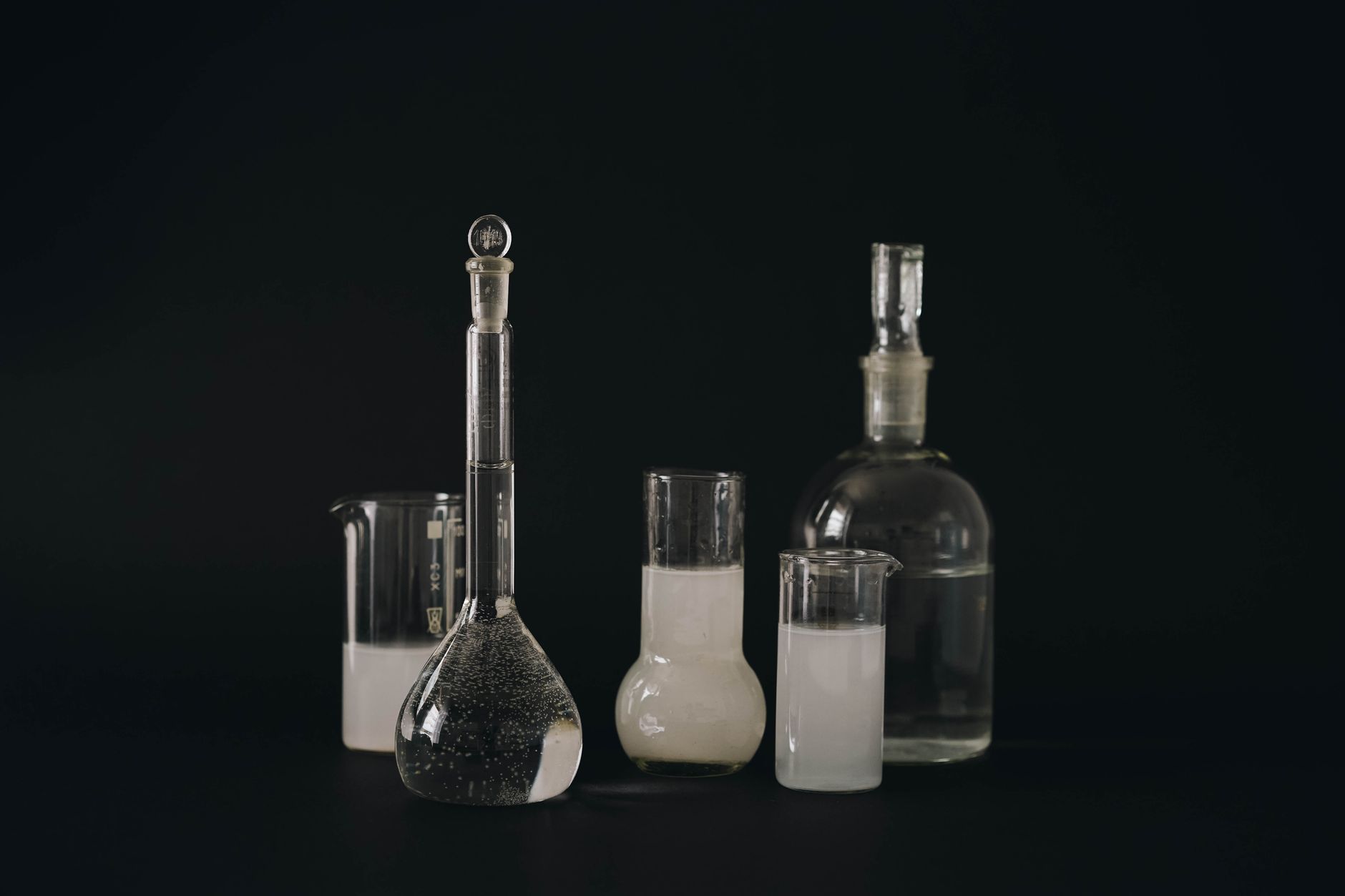
What Are Buffers in Chemistry?
In general chemistry, a buffer is a solution that keeps pH from shifting much when a small amount of acid or base is added. If a few drops of HCl or NaOH enter a buffered system, the pH may change only slightly, often by less than 1 unit. That is why buffers are introduced early in a chemistry i / college-credit sequence: they turn abstract acid-base ideas into something measurable.
A buffer usually contains two related species, such as acetic acid and acetate. The weak acid can donate H+, while the conjugate base can accept H+ when extra acid appears. Because neither component reacts completely, the solution can absorb a disturbance instead of letting the pH jump from, say, 4.8 to 2.0 in one step.
This topic also matters in online course study because it connects equilibrium, pH, and conjugate pairs in one place. When students prepare for exams or ace nccrs credit requirements, buffer questions often check whether they can predict what happens after adding 0.10 mol of acid, not just repeat a definition. The idea is simple, but the reasoning is precise: buffers chemistry depends on a balanced pair working together at the same time.
The catch: a buffer is not “pH proof.” It only resists change within a limited range, usually about 1 pH unit around the pKa of the weak acid. Outside that range, the solution behaves much more like plain water.
How Do Buffers Resist pH Change?
Buffer action comes from equilibrium, not magic. In a weak-acid buffer such as acetic acid/acetate, the acid portion can donate H+ when base is added, while the conjugate base can capture added H+ when acid is added. If 0.01 mol of OH− enters the solution, acetic acid supplies H+ to neutralize it and becomes acetate; if 0.01 mol of H+ enters, acetate removes it and becomes acetic acid again.
The same logic works for a weak-base buffer, just in reverse. For example, ammonia and ammonium form a pair in which NH3 accepts H+ and NH4+ donates H+ when needed. That means the system responds to a disturbance by shifting the balance between the two species, not by letting free H+ or OH− build up quickly. In a 2024 lab, this is the core idea students are expected to explain, not merely memorize.
What this means: each part of the pair has a job. The weak acid handles added base, and the conjugate base handles added acid; together they keep the pH near a set point.
You can think of the pair as a chemical reserve. When one member is used up a little, the other member replaces it through equilibrium. Because the acid or base is weak, only a fraction ionizes at any moment, which leaves enough material in both forms to keep the buffer working after a small change of 0.1 M, 0.01 mol, or even a few milliliters of titrant.
Learn Chemistry Online for College Credit
This is one topic inside the full Chemistry course on UPI Study — a self-paced, online class that earns real college credit. Credits are ACE and NCCRS evaluated and transfer to partner colleges across the US and Canada. Courses start at $250 with no deadlines and lifetime access.
Browse Chemistry Course →Which Buffer Components Work Together?
To solve buffer problems, first identify the conjugate pair. A good buffer needs a weak acid and its conjugate base, or a weak base and its conjugate acid, present together in meaningful amounts. In many homework sets, the key clue is a pair that differs by exactly 1 H+.
Common examples show the pattern clearly:
- Acetic acid / acetate: CH3COOH and CH3COO−
- Carbonic acid / bicarbonate: H2CO3 and HCO3−
- Ammonia / ammonium: NH3 and NH4+
- Phosphate pair: H2PO4− and HPO42−
If you are checking a test question, ask which species can donate one proton and which can accept one proton. The conjugate base has one fewer H+ and usually one more negative charge; the conjugate acid has one more H+ and often one more positive charge. That pattern is enough to spot the correct pair in most cases.
For students working through Chemistry I, this is one of the fastest ways to build confidence. It also helps when you review Environmental Science, because natural waters often use the same buffering logic.
Why Does Buffer Capacity Matter?
Buffer capacity is the amount of acid or base a buffer can absorb before its pH changes too much. A 1.0 M buffer usually resists change better than a 0.10 M buffer because it has more acid-base material available.
- Higher concentration usually means higher capacity, because more moles are available to react.
- A 50 mL buffer at 0.20 M can resist more added acid than the same volume at 0.02 M.
- Buffers work best near their pKa, often within about 1 pH unit on either side.
- If the weak acid is nearly used up, added base can overwhelm the system quickly.
- If the conjugate base is nearly used up, added acid can drive pH downward fast.
- Temperature, dilution, and total volume can all reduce performance in a lab flask.
- A buffer has limits: after enough titrant, it stops buffering and behaves like an ordinary solution.
That is why chemists pay attention to both composition and amount. A balanced 1:1 mixture is often effective, but a tiny 10 mL sample may fail where a 1 L prepared buffer succeeds.
Why Are Buffers Important in Chemistry?
Buffers matter because many reactions only work well in a narrow pH window. Enzymes in biology, for example, may lose activity if pH drifts by just 0.5 to 1.0 unit, and lab protocols often specify a target like pH 7.20 or 8.00 for that reason. In blood, the bicarbonate buffer helps keep pH near 7.4, which is essential for normal cell function.
In chemical labs, buffers protect reactions, stabilize calibration solutions, and make measurements repeatable. A student preparing a solution for a 2025 experiment may need to adjust pH without destroying the sample, and the buffer gives that control. This is also why buffer questions appear so often on exams: they test whether you understand equilibrium, not just formulas.
For anyone studying online for transferable credit, mastering buffers is worth the effort because the idea reappears in analytical chemistry, biochemistry, and lab techniques. Once you can explain why a weak acid/conjugate base pair resists change, you can predict behavior in titrations, biological fluids, and industrial mixtures. That skill is practical, testable, and widely reused.
Chemistry I often uses buffers as a bridge between theory and real systems, and that makes the topic especially valuable for later coursework. A second useful reference point is Principles of Finance, where precision and process matter in a different way; chemistry rewards the same disciplined study habits.
Frequently Asked Questions about Buffers
$0.00 is what a buffer costs to explain in class, but the chemistry matters: a buffer is a solution that keeps pH from swinging fast, usually within about 1 pH unit, by pairing a weak acid with its conjugate base or a weak base with its conjugate acid. You see this in blood, lakes, and lab work.
What surprises most students is that a buffer does not stop pH change completely; it just slows it down. The weak acid mops up added base, and the conjugate base mops up added acid, so the pH shifts only a little unless you add more acid or base than the buffer can handle.
The most common wrong assumption is that any acid or base can make a buffer, but a strong acid like HCl or a strong base like NaOH can't do that job. You need a weak pair, such as acetic acid and acetate, because they both stay partly intact in water.
Most students memorize the Henderson-Hasselbalch equation first, but what actually works is learning the pair first: weak acid plus conjugate base, or weak base plus conjugate acid. Once you know that 1:1 relationship, the math in a chemistry I course makes a lot more sense.
Start by naming the acid-base pair and writing the conjugate partners, then check the moles of each after any acid or base gets added. That first step tells you whether you're working with a true buffer, a buffer after a small change, or a mixture that lost its buffering power.
If you get buffer capacity wrong, you'll predict a tiny pH change when the real solution swings hard, which can wreck lab results by 0.5 to 2.0 pH units. Buffer capacity depends on how much weak acid and conjugate base you have, not just on their ratio.
Buffers in chemistry keep blood, enzymes, and cells working by holding pH in a narrow range, often around 7.35-7.45 in human blood. The body uses the bicarbonate buffer system, and enzymes can lose shape fast if the pH drifts too far.
This applies to anyone taking chemistry I, a chemistry i course, or an online course for college credit, and it doesn't stop at a campus lab. If you want ace nccrs credit or transferable credit while you study online, buffers belong in your core list because professors test the acid-base pair and pH change together.
Buffer capacity tells you how much acid or base a buffer can absorb before the pH starts jumping, and it rises when the solution has more total buffer particles, often near a 1:1 acid-base ratio. In a 100 mL sample, a stronger buffer can absorb more added HCl or NaOH than a weak one.
Buffers matter because they keep reactions stable in a 50 mL flask and in living tissue, so your titration data and your biology lab both stay usable. If the pH drifts too far, color changes, enzyme activity, and reaction rates all shift fast.
Final Thoughts on Buffers
Buffers are clear examples of how chemistry explains real stability. A weak acid and its conjugate base, or a weak base and its conjugate acid, do not cancel pH changes completely, but they soften them enough to keep a system usable. That small difference makes a buffer so important. Once you can identify the pair, you can predict how the solution will respond to added H+ or OH−. Once you understand buffer capacity, you can also see why amount, concentration, and pH range all matter. A 1.0 M buffer has more staying power than a 0.10 M buffer, and a system near its pKa will usually perform better than one far outside its useful range. The idea shows up everywhere because stability matters everywhere: in blood, in enzyme reactions, in titrations, and in analytical work. For students, that means buffer questions are not just another chapter detail. They are a core skill that connects equilibrium to application. If you are reviewing this topic now, practice with a few example pairs and a few pH-change scenarios until the pattern feels automatic. Then move to the next problem and test the same logic again.
How UPI Study credits actually work
Ready to Earn College Credit?
ACE & NCCRS approved · Self-paced · Transfer to colleges · $250/course or $99/month