
Physical and chemical properties tell you what a substance looks like, how it behaves, and whether it can turn into something new. Physical properties describe traits you can observe without changing the substance’s identity, like color, density, melting point, and state of matter. Chemical properties describe what happens when a substance reacts, such as burning, rusting, or reacting with acid. That difference matters in chemistry because the whole point is to tell what a substance is made of and what it can become. A clear example helps. Ice and liquid water share the same substance, H2O, but they differ in state and temperature behavior, so those are physical properties. Iron rusting in air tells a different story, because iron reacts with oxygen and forms iron oxide, which has a new identity. One change keeps the substance the same. The other makes something else. Students often get tripped up because both kinds of properties can show up in the lab at the same time. A metal can have a shiny surface, a density of 7.8 g/cm3, and also a strong tendency to corrode. The first three clues help you describe it. The last clue helps you predict what it will do next. That split between description and reaction sits at the center of chemistry, and it shows up in every basic lab from water tests to metal reactions.
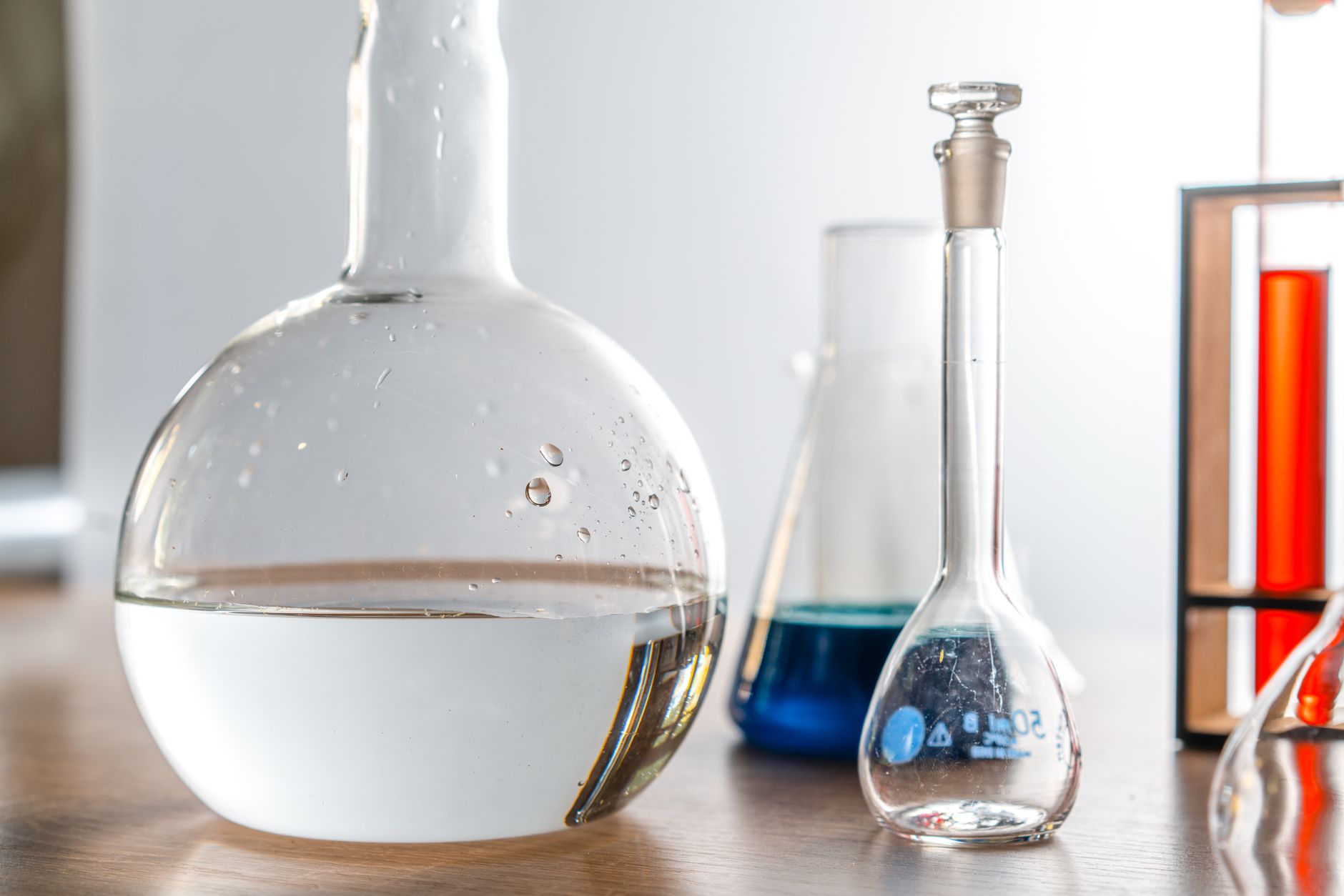
What Are Physical And Chemical Properties?
Physical properties are traits you can observe or measure without changing a substance’s identity, and chemical properties are traits you only see when the substance reacts and becomes something new. That split matters in chemistry i and in any chemistry i course, because students use it to sort out what can be measured right away and what needs a reaction test.
A physical property stays with the substance even if you change its shape, size, or state. Water still counts as H2O at 0°C as ice, 25°C as liquid water, and 100°C as steam at sea level. The state changes. The identity does not. Color, mass, volume, density, melting point, boiling point, and hardness all fit here because you can record them without making a new substance.
A chemical property shows up only when a substance can react. Iron has the chemical property of reacting with oxygen to form rust, and methane has the chemical property of burning in air to make carbon dioxide and water. In both cases, the starting material does not stay the same. That is the whole game.
The catch: A substance can have both kinds of properties at once, and that is where students often slip. Sodium is a soft metal at room temperature, so softness is physical, but sodium also reacts fast with water, and that reaction reveals a chemical property in less than 1 minute. Same sample, two different kinds of facts.
The clean way to think about it is this: if you can describe a trait without changing composition, you have a physical property; if the trait only appears during a reaction that makes a new substance, you have a chemical property. That is the difference professors look for on exams, lab reports, and transfer credit work tied to college credit or transferable credit.
How Do Physical And Chemical Properties Differ?
The difference comes down to composition versus appearance or state. Physical properties let you describe what a substance looks like or how it behaves under normal conditions, while chemical properties tell you what it can turn into during a reaction. That split matters because two samples can look alike at first and still react in very different ways.
| Feature | Physical Property | Chemical Property |
|---|---|---|
| What you see | Color, odor, texture, state | Flammability, rusting, acidity |
| Identity change? | No | Yes, new substance forms |
| Common test | Measure 25°C, 1 atm, mass, density | React with oxygen, acid, or heat |
| Lab example | Ice melting at 0°C | Iron turning to rust over days |
| How it helps | Identifies by description | Predicts reaction behavior |
| Where you see it | Everyday samples, Chemistry I | Combustion labs, corrosion tests |
Worth knowing: A shiny metal and a dull powder can share a physical property like density yet differ sharply in chemical behavior. That is why a lab manual cares about both observation and reaction, not just one.
Students usually miss the point if they treat “change” as one thing. A change in state, like water freezing at 0°C, stays physical. A change in composition, like vinegar reacting with baking soda, counts as chemical.
Which Physical Properties Help Identify Substances?
A good ID test often starts with 5 or 6 physical clues, not one magic number. Color, density, and melting point can tell you a lot before you ever run a reaction test.
- Color gives a fast first clue, like copper’s reddish tone or sulfur’s yellow look. It helps describe a sample, but it does not prove identity by itself.
- Odor can point to a substance, such as ammonia’s sharp smell. You should never sniff directly; wafting keeps the sample at a safer distance of a few inches.
- Density compares mass and volume, usually in g/cm3 or g/mL. Water sits near 1.0 g/mL at 4°C, while iron sits near 7.8 g/cm3.
- Melting point tells you the temperature where a solid turns to liquid. Pure ice melts at 0°C, and pure water boils at 100°C at sea level.
- Solubility shows how much of a substance dissolves in a solvent like water. Table salt dissolves easily, while sand does not, which helps labs separate mixtures.
- Conductivity shows how well a substance moves heat or electricity. Copper conducts electricity well, which is why it shows up in wiring and lab probes.
- Hardness tells you how much a material resists scratching. The Mohs scale runs from 1 to 10, with talc near 1 and diamond at 10.
Chemistry I usually puts these traits on lab worksheets because they give quick evidence without changing the sample itself.
Reality check: A single physical property rarely names a substance on its own. A density of 2.70 g/cm3 might suggest aluminum, but you still need more than one clue to make a solid call.
Learn Chemistry Online for College Credit
This is one topic inside the full Chemistry course on UPI Study — a self-paced, online class that earns real college credit. Credits are ACE and NCCRS evaluated and transfer to partner colleges across the US and Canada. Courses start at $250 with no deadlines and lifetime access.
Browse Chemistry Course →Which Chemical Properties Show A New Substance?
Chemical properties show up only during a reaction, and that reaction makes a new substance with a different composition. Flammability, for instance, tells you whether a material can react with oxygen fast enough to burn. Methane burns in air, while nitrogen gas does not support that kind of reaction, so the result changes at the molecular level.
Rusting gives another clean example. Iron reacts with oxygen and water over days or weeks, and the surface turns into iron oxide, which has different properties from the original metal. That is not a surface trick. It is a chemical change. The same idea shows up with acid-base behavior, where vinegar can react with baking soda and release carbon dioxide gas in seconds. If you see bubbles, heat, or a color shift tied to a reaction, you are looking at chemistry in motion.
Decomposition also fits here. Hydrogen peroxide breaks down into water and oxygen, especially with a catalyst like manganese dioxide, and that reaction shows a chemical property because the original compound does not stay intact. Some reactions need heat above 100°C, while others start at room temperature, so the exact trigger matters.
Bottom line: Chemical properties do not live in the label alone; they show up when the substance actually reacts. That is why a lab report cares about conditions like 1 atm, 25°C, or a 10-second reaction window, not just the name on the bottle.
Students tend to like these examples because they feel concrete, but the downside is that reactions can be messy. A sample can darken, bubble, or smell different for more than one reason, so you have to link the evidence to a new substance, not just to a dramatic-looking moment.
How Can You Tell A Change Is Physical?
A physical change changes form, size, or state, but it leaves the substance’s identity alone. That is the test students should use first, because a simple 0°C melt or a ripped sheet of paper can look dramatic without creating anything new.
- Check the starting material and ask whether the formula stays the same. Ice melting to liquid water still gives H2O, so the change stays physical.
- Look for a simple reversal. If you can reverse the change by cooling, heating, or reshaping within about 5 minutes, that points toward a physical change.
- Watch for a new substance. Burning wood makes ash, smoke, carbon dioxide, and water vapor, so the original wood does not remain the same.
- Use the evidence, not the drama. Tearing paper changes size and shape, but it does not create a new chemical identity.
- Check for reaction clues like gas, heat, or color tied to composition. Rust on iron builds over days, often 24 hours to several weeks, and it marks a chemical change.
What this means: A melted ice cube and a crushed soda can both count as physical changes, even though one needs heat and the other needs force. A new substance never appears in either case.
Why Do Physical And Chemical Properties Matter?
Scientists use physical and chemical properties to identify unknowns, choose materials, and predict what will happen in a reaction. A lab tech might compare density, melting point, and conductivity before running a test, because those three numbers can separate copper from aluminum or salt from sugar with real precision.
The same idea helps in daily lab work and in exam settings. A student in a 50-minute chemistry lab can spot a liquid’s boiling point, then use a flame test or acid reaction to check whether the sample stays the same or changes into something new. That habit keeps error down and makes the data easier to trust.
Materials choice matters too. Engineers pick copper for electrical wires because it conducts well, and they avoid iron in wet places when corrosion would become a problem. That is not random. It comes straight from property data.
Study Chemistry I online if you want more practice reading those traits in a course format that matches the way college labs ask the question. You will see the same pattern in Environmental Science, Physics I, and other science classes, but chemistry gives the clearest split between what a substance is and what it can do.
A student who can tell a physical change from a chemical one saves time on quizzes and lab write-ups. That skill also helps on transfer credit exams, where one mistake about identity versus appearance can knock out the whole item. Use the property first, then decide whether the substance stayed the same.
Frequently Asked Questions about Physical And Chemical Properties
If you mix them up, you’ll misread what a substance actually is and may call a change physical when it really changes the substance’s identity, like iron rusting into iron oxide. Physical properties describe size, color, mass, melting point, and boiling point; chemical properties describe how a substance reacts, like burning or rusting.
They apply to anyone studying matter in chemistry, from middle school labs to a chemistry i course, and they do not apply to opinions or labels like “pretty” or “useful.” You can measure these properties in a lab, such as density in g/cm³ or melting point in °C.
A physical change keeps the substance’s identity the same, while a chemical change makes a new substance. Melting ice at 0°C, cutting paper, and dissolving sugar stay physical; burning wood or rusting iron makes new substances and counts as chemical change.
Most students memorize lists, but what actually works is asking one simple question: did the substance stay the same, or did it turn into something new? Boiling water at 100°C only changes state, while vinegar reacting with baking soda makes carbon dioxide gas.
Start with observable physical properties like color, odor, state, density, and melting point, then test chemical behavior with reactions if needed. That order helps you separate appearance from identity, which matters in a chemistry i course and in any lab report.
What surprises most students is that a property can be chemical even if nothing looks dramatic at first. Iron can look the same for a while, yet its ability to react with oxygen makes rusting a chemical property, not a physical one.
The most common wrong assumption is that any visible change must be a chemical change. That’s false, because tearing paper, crushing a can, or freezing water changes shape or state without making a new substance.
In a 3-credit online course, you often study these properties through quizzes, lab videos, and exams, and ACE NCCRS credit can support transferable credit at cooperating universities. You usually see topics like density, reactivity, and phase changes in week 1 or 2.
Physical and chemical properties are traits you use to describe matter, and they help you tell one substance from another using facts like a 5 g/mL density, a 78°C boiling point, or reactivity with кисл? No, strike that.
Physical properties help you identify a substance by giving measurable clues like melting point, boiling point, density, and solubility. Water boils at 100°C at sea level, and ethanol boils at about 78°C, so those numbers help you tell them apart.
Chemical properties include flammability, rusting, corrosion, acidity, and reaction with oxygen or acid. Sodium reacts fast with water, while gold resists corrosion, so those behaviors tell you how a substance can change into something new.
Physical and chemical properties show up in general chemistry, and that class often carries college credit or transferable credit when it matches the school’s 3- or 4-credit science sequence. You’ll usually see the topic before bonding, acids, and bases.
Final Thoughts on Physical And Chemical Properties
Physical properties tell you what a substance looks like, feels like, or measures like. Chemical properties tell you what it can become when it reacts. That split sounds small, but it drives almost every basic chemistry question you will see in class. Keep the test simple. If the sample changes state, shape, or size and stays the same substance, call it physical. If a new substance forms, call it chemical. Ice melting at 0°C, paper tearing, and a can crushing all fit one side. Rusting iron, burning wood, and vinegar reacting with baking soda fit the other. Students often want a shortcut, but chemistry does not work that way. You need the evidence. Look for a new substance, a temperature change tied to reaction, gas formation, or a change that cannot reverse with simple heating or cooling. Those clues do the real work. A strong habit here pays off fast. It helps in lab reports, quizzes, and transfer-credit science courses, because instructors keep asking the same question in different clothes: did the substance stay the same, or did it turn into something else? Use that question every time you sort a change, and the distinction starts to feel automatic.
How UPI Study credits actually work
Ready to Earn College Credit?
ACE & NCCRS approved · Self-paced · Transfer to colleges · $250/course or $99/month