
Solubility in chemistry means the maximum amount of a substance that can dissolve in a solvent at a set temperature, and for gases, a set pressure. That simple idea sits behind salt water, soda fizz, and a lot of chemistry I course homework. Think of it like a limit, not a mystery. A spoonful of sugar may vanish in tea, but after enough stirring, the liquid stops taking in more sugar at 25°C. That point matters. It tells you the solution has reached its solubility limit, which means the liquid already holds as much dissolved solute as it can at that condition. Students often mix up “dissolving” with “can dissolve forever.” Not true. A substance can dissolve fast and still hit a ceiling. That ceiling changes with temperature, and for gases it also changes with pressure. Those two facts let you predict whether a solid, liquid, or gas will stay dissolved, settle out, or build up in a container. You will also see why some pairings work and others fail. Water dissolves table salt well, but it does a poor job with oil because their particles do not pull on each other the same way. Once you understand solute, solvent, intermolecular forces, and saturation, solubility stops looking random and starts looking like a pattern you can read.
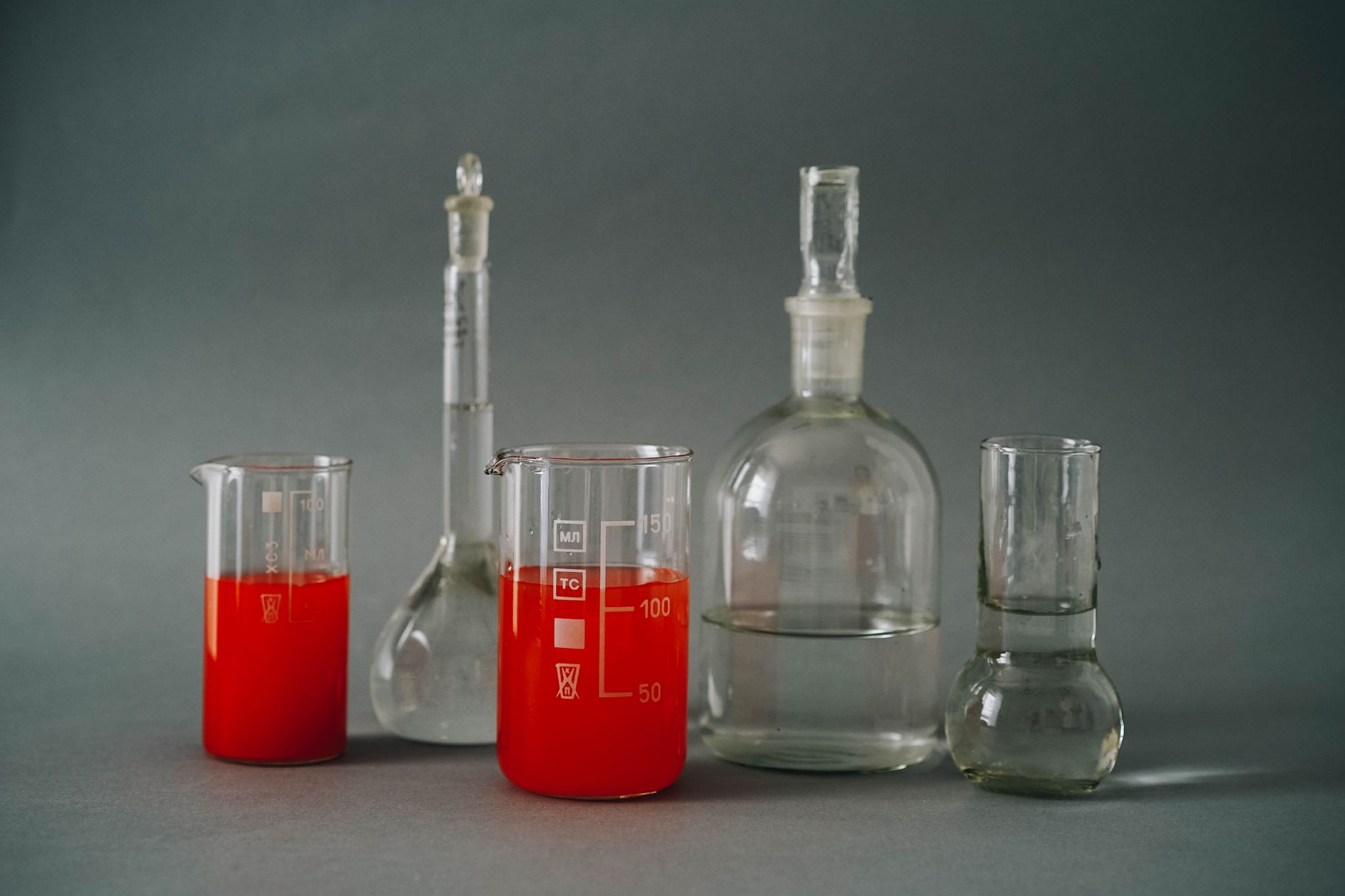
What Is Solubility in Chemistry?
Solubility in chemistry is the maximum amount of a solute that can dissolve in a solvent at a specific temperature, and for gases, at a specific pressure. A 20°C beaker of water can hold one amount of sodium chloride; a 60°C beaker can hold a different amount, and that difference matters in any chemistry I course.
A solute is the substance that gets dissolved, and a solvent is the substance that does the dissolving. Water often plays the solvent role because it pulls apart ions and polar molecules well, but the word “often” matters because ethanol, benzene, and other solvents behave differently at 1 atm or 2 atm.
Dissolving does not mean the process will keep going forever. Once the solvent reaches its limit, extra solute stays behind as a solid or a separate phase. That point marks a saturated solution, which sounds fancy but just means “full for now.”
The catch: A saturated solution at 25°C can still change if you raise the temperature to 40°C or cool it to 5°C. That is why lab results, drink mixes, and college credit chemistry problems all ask for the temperature, not just the substance names.
I like this part of chemistry because it rewards careful reading. A student who notices the condition—25°C, 1 atm, or 0.5 L of solvent—usually beats the student who memorizes a definition and stops there.
In a chemistry I course, solubility problems usually ask for the point where added solute no longer dissolves. That limit gives you the line between a clear solution and a saturated one, and it often shows up in grams per 100 mL or moles per liter.
A spoon that still leaves crystals in the glass tells you the liquid has crossed its solubility limit. The leftover solid is not a failure; it is the clue.
How Do Solute and Solvent Affect Solubility?
The identity of the solute and solvent controls solubility because particles need compatible attractions to mix well. Water at 25°C dissolves sodium chloride far better than hexane does, and that difference comes from polarity and intermolecular forces, not luck.
What this means: Polar molecules usually dissolve in polar solvents, and nonpolar molecules usually dissolve in nonpolar solvents. Chemists call that “like dissolves like,” and it works because strong attractions between similar particles beat the weak mismatch between unlike ones.
Water has a strong dipole and can form hydrogen bonds, so it pulls ions like Na+ and Cl- apart with real force. Oil molecules do not offer that same pull, so a water-oil mix at 20°C splits into two layers instead of one solution.
Intermolecular forces sound abstract, but they act like tiny magnets with different strengths. Hydrogen bonding, dipole-dipole forces, and London dispersion forces all matter, and a solvent must compete with the force holding the solute together.
Reality check: A substance can dissolve a little and still not dissolve well. That is why 5 mL of ethanol mixes with water, while the same amount of oil sits apart and forms a visible boundary.
This is where a chemistry I course gets practical. If a homework problem gives you a polar solute and a polar solvent, you can predict better solubility before you touch a calculator.
The downside is that real mixtures can act messy. Some molecules have both polar and nonpolar parts, so they do not fit neatly into one box, and that can make a prediction feel less clean than the textbook example.
For students working through Chemistry I, this topic shows why the same solvent can dissolve one compound at 25°C and reject another at the same temperature. The particles make the decision.
A clean prediction starts with polarity, then looks at the attractions between particles. That order saves time on quizzes and lab write-ups.
Learn Chemistry Online for College Credit
This is one topic inside the full Chemistry course on UPI Study — a self-paced, online class that earns real college credit. Credits are ACE and NCCRS evaluated and transfer to partner colleges across the US and Canada. Courses start at $250 with no deadlines and lifetime access.
Browse Chemistry Course →Why Does Temperature Change Solubility?
Temperature changes solubility because particles move faster at higher temperatures, and that changes how much solute a solvent can hold. Many solids, like potassium nitrate, dissolve more at 60°C than at 20°C, while gases usually do the opposite.
Worth knowing: A solid does not always follow the same rule as a gas. Table sugar dissolves better in hot tea, but carbon dioxide escapes faster from a warm 30°C soda than from a cold 4°C one.
For many solid solutes, added heat helps break the forces holding the crystal together. That is why a warmed solvent can fit more dissolved particles before it reaches saturation, and why some lab graphs climb sharply between 0°C and 100°C.
Some solids barely change with temperature. Sodium chloride barely shifts across a wide range, which annoys students who expect one tidy rule for every compound. Chemistry rarely gives that kind of comfort.
Gases act differently because higher temperature gives gas particles more energy to leave the liquid. Warm water cannot keep dissolved oxygen as well as cold water, which matters in lakes, fish tanks, and any 1 L sample left on a hot bench.
Bottom line: Heat often helps solids dissolve, but it usually hurts gas solubility. That split rule shows up in every decent chemistry I course because it lets you read solubility curves instead of guessing.
A good example is soda. A sealed can can hold dissolved carbon dioxide at room temperature, but once you open it and warm it, the gas comes out fast and you lose the fizz.
That limitation matters in real work too. A chemist who stores a gas solution at 5°C gets a different result than one who stores it at 25°C, even if both use the same solvent.
How Does Pressure Affect Gas Solubility?
Gas solubility in liquids rises when pressure rises because more gas particles hit the liquid surface and force more of themselves into solution. For gases, pressure matters in a way solids almost never feel, and that makes carbonated drinks the easiest example.
- Start with a sealed container. At 2 atm, a gas like carbon dioxide dissolves more readily than it does at 1 atm because the gas pushes harder on the liquid surface.
- Open the container. The pressure drops fast, often in less than 1 second, and dissolved gas starts leaving the liquid as bubbles.
- Warm the liquid after opening it. At 25°C, gas escapes faster than it does at 4°C, so the drink goes flat sooner.
- Raise the pressure again. In a soda plant, higher pressure keeps more CO2 in solution, which is why bottling lines use tight seals and controlled gas pressure.
- Remember Henry’s law. Higher gas pressure means higher gas solubility, and that rule helps you predict what happens in scuba tanks, soda cans, and sealed lab bottles.
The pattern is simple, but it has sharp edges. A gas solution can look stable at 3 atm and then lose gas the moment pressure falls to 1 atm.
Students who memorize the pressure rule usually do better than students who try to reason from sight alone. A clear liquid can still hold a lot of dissolved gas.
For chemistry I students, this is one of the cleanest predictions in the unit. Pressure up, gas solubility up; pressure down, gas solubility down.
Which Factors Help Predict Dissolving?
A fast prediction starts with four checks: what the solute is, what the solvent is, how warm the mixture is, and whether gas pressure matters. If the solution already sits at its limit, extra solute will stay undissolved, even if the substance looks very soluble on paper.
- Check polarity first. Water at 25°C usually dissolves ionic or polar solutes better than nonpolar ones, which is why salt and sugar behave so differently from oil.
- Match intermolecular forces. Hydrogen bonding, dipole-dipole forces, and dispersion forces decide whether particles attract enough to mix.
- Look at temperature. Many solids dissolve more at 60°C than at 20°C, but gases usually dissolve less as the liquid warms.
- For gases, check pressure. At 2 atm, gas solubility rises compared with 1 atm, so sealed bottles hold more dissolved gas than open ones.
- Ask whether the solution is saturated. If the liquid already holds its maximum at that temperature, extra solute remains as a solid at the bottom.
- Use the data given in the problem. A homework question with 5 g, 50 mL, or 30°C usually wants you to compare those numbers with a solubility limit, not guess from memory.
The hard part: The trap is assuming every solute follows the same rule. It does not, and that is why a student who reads the conditions carefully usually beats the one who rushes.
If a question names water, a gas, and 1 atm, think about pressure and temperature together. If it names a solid salt, focus on temperature and saturation first.
Chemistry I online course pages often frame these problems the same way: identify the particles, read the condition, then decide whether the solution can still take more solute.
For a student aiming for transferable credit, that habit pays off because it turns solubility from a memorized definition into a repeatable test strategy.
Frequently Asked Questions about Solubility
35.9 g of NaCl can dissolve in 100 mL of water at 25°C, and that number shows the basic idea of solubility in chemistry: the most solute you can dissolve in a given solvent at a set temperature. Once you hit that limit, the solution turns saturated.
Solubility in chemistry is the maximum amount of a solute that you can dissolve in a solvent at a given temperature, and for gases, pressure matters too. Sugar in water and oxygen in soda both show this, but they follow different rules.
What surprises most students is that hot water does not help every substance dissolve better. Many solids, like sugar, dissolve more as temperature rises, but gases like carbon dioxide dissolve less in warm liquid and more under higher pressure.
If you get solubility wrong, you can end up with extra solid left in the beaker or a gas escaping from solution, and your data will miss the real saturation point. That matters in titrations, recrystallization, and any lab that uses a saturated solution.
This applies to you if you're in Chemistry I, a chemistry I course, or any online course that uses solution chemistry, and it doesn't stop at one school or format. If you earn college credit through ACE NCCRS credit or transferable credit work, solubility still shows up in the same core ideas.
Most students memorize a few solubility rules, but what actually works is linking solute, solvent, temperature, pressure, and intermolecular forces. That helps you predict why sodium chloride dissolves in water but oil does not, and why gases behave differently from solids.
Start by naming the solute and the solvent, then check whether the substance is ionic, polar, or nonpolar. A polar solute usually dissolves better in a polar solvent like water, while higher pressure mainly changes gas solubility.
The most common wrong assumption is that anything with enough stirring will dissolve forever. Stirring helps a solid dissolve faster, but it does not change the saturation limit at 25°C, 40°C, or any other fixed temperature.
Intermolecular forces decide whether the solute and solvent attract each other strongly enough to mix, so 'like dissolves like' often works. Water, with strong polarity and hydrogen bonding, dissolves ethanol well, but it resists many nonpolar substances.
Higher pressure increases gas solubility, and Henry's law explains why a sealed soda keeps carbon dioxide dissolved better than an open drink. Once you pop the top, pressure drops fast and gas leaves the liquid.
A saturated solution tells you the exact point where no more solute dissolves at that temperature, so you can compare mixtures with real data instead of guesses. In a 25°C lab, that point often controls how much solid stays behind and how clean a crystal forms.
Final Thoughts on Solubility
Solubility looks simple on the surface. A substance dissolves, or it does not. Then you add temperature, pressure, polarity, and saturation, and the subject turns into a set of rules with real bite. That is the useful part. Once you know what counts as the solute, what counts as the solvent, and what conditions the problem gives you, you can make a solid prediction before you ever see the answer choices. A hot solvent often holds more dissolved solid. A pressurized container holds more gas. Water and oil still refuse to mix because their attractions do not line up. The idea of a saturated solution also changes how you read lab results. Leftover solid does not mean you failed to dissolve something. It often means you reached the limit for that temperature. That is a different claim, and chemistry cares about the difference. If you are studying for class, treat solubility like a pattern test. Read the particles. Read the conditions. Then ask whether the mixture still has room for more dissolved material. That habit will help on quizzes, labs, and longer problem sets.
How UPI Study credits actually work
Ready to Earn College Credit?
ACE & NCCRS approved · Self-paced · Transfer to colleges · $250/course or $99/month