
Language develops in children in a steady chain: listening, vocal play, babbling, first words, two-word speech, grammar growth, and longer conversations. Most babies start with sounds before meaning, then move toward words around 12 months, and build short sentences by age 2. That pattern matters in educational psychology because typical development gives adults a rough map for what to expect without turning every child into a stopwatch case. The big idea is simple. Kids do not wake up speaking in full sentences. They start by hearing speech patterns, then copying rhythms, then linking sounds with people, objects, and actions. A child who points, babbles, and reacts to a name often shows healthy early steps, even before clear words appear. A child who grows up hearing two languages can still follow the same broad path, though the timing of each step may shift a bit. Teachers and parents should watch for progress across months, not one rough day. A 15-month-old who says only a few words may still fall within a normal range, while a 2-year-old who does not combine words needs closer attention. That mix of milestones, context, and steady change sits at the heart of psychology 120 educational psychology course ideas, because learning never happens in a vacuum. It grows through practice, response, and the child’s daily world.
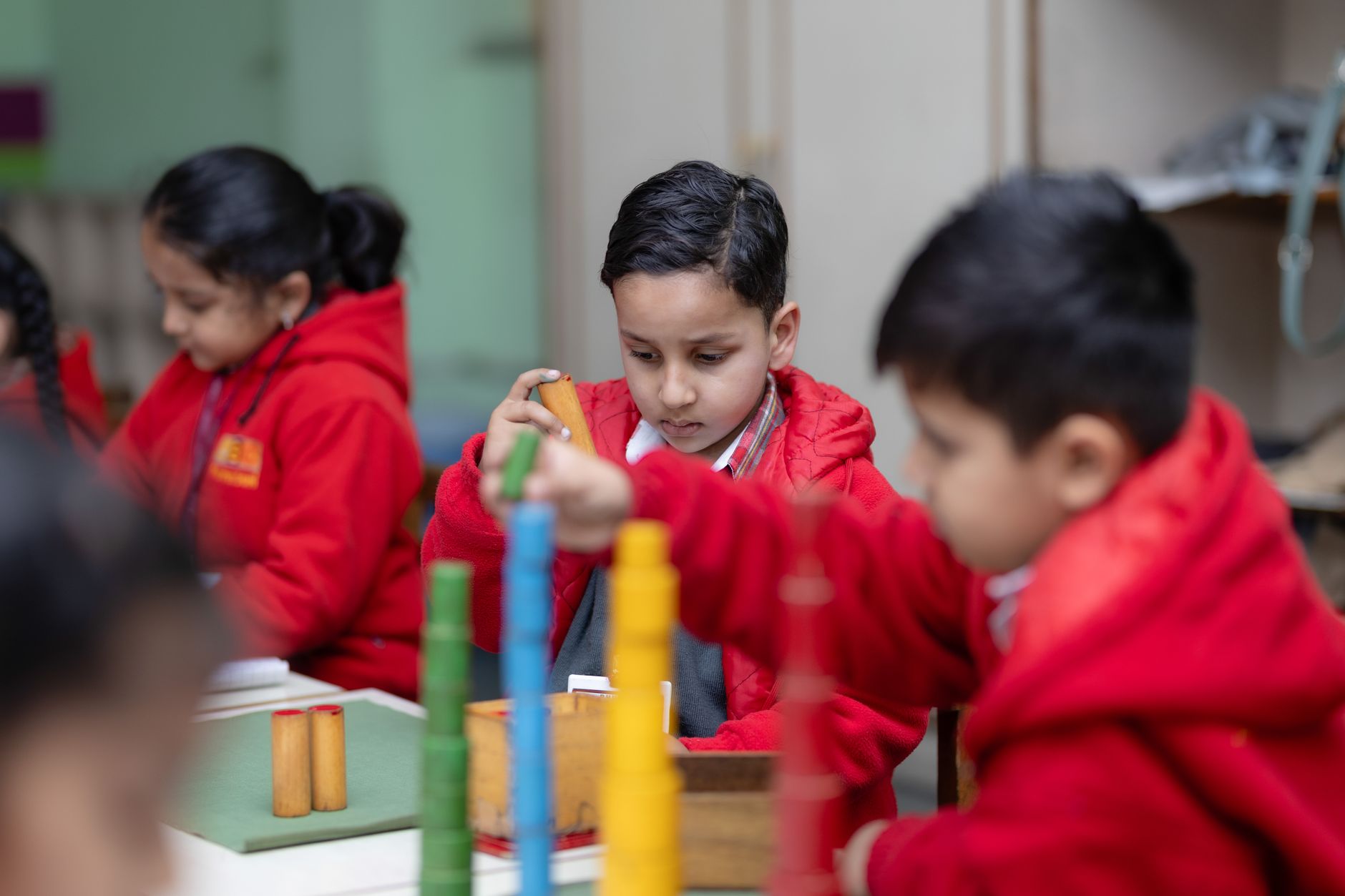
How Does Language Develop In Children?
Language development starts with listening and sound play, then moves through babbling, first words, short word pairs, grammar growth, and longer talk that lets a child explain, ask, and retell. In educational psychology, typical development means a child follows this general sequence with steady change across 12, 18, and 24 months, even if the exact pace varies.
Babbling matters more than people think. Around 6 months, many babies repeat sounds like "ba-ba" or "da-da," and that vocal practice helps them match speech rhythm before they link words to meaning. By about 12 months, many children use 1 to 10 clear words, though some use a few more and some fewer. That spread does not automatically signal trouble.
The catch: Teachers and parents often watch for growth in three parts at once: understanding, speaking, and social use. A child may know a word at home, say it at daycare, or save speech for a trusted adult, and that uneven pattern can look odd without being wrong.
By age 2, many children start combining words like "more milk" or "go باہر" in simple, meaningful pairs. By age 3, grammar starts to show up in real ways: plurals, short questions, and small stories. That shift from babble to books how language develops in kids sounds neat on paper, but real children do it in messy bursts, not in a smooth line.
A teacher who knows this can spot normal variation faster than a worried adult who only hears what a child cannot yet say. A parent who notices 20 words at 18 months, then 60 words a few months later, sees a healthy slope even if the child still drops endings or uses short phrases. The best sign is not polished speech. It is forward motion.
Language growth also connects to reading later on. Children who hear 1000s of words, songs, and stories before school tend to build stronger word maps, especially when adults answer their attempts instead of talking over them. That does not mean every child must hit the same date on the calendar. It means the pattern should move.
What Are The Main Language Milestones?
Children usually move through language milestones in a common order, even though the ages do not land like clockwork. The sequence matters more than a single score. A child who skips one step but keeps moving forward often looks typical; a child who stalls for months deserves attention.
- Cooing often appears around 2-4 months, when babies make soft vowel sounds and start practicing voice control.
- Babbling usually shows up around 4-6 months, and repeated sound strings like "ba-ba" or "ma-ma" build speech rhythm before meaning.
- First words often arrive near 12 months, though some children speak their first clear word closer to 10 months and others closer to 15 months.
- Vocabulary growth can speed up between 18-24 months, and some children hit a word "spurt" when new words appear fast, sometimes 5 to 10 a week.
- Two-word combinations often start near age 2, such as "want juice" or "doggie باہر," which show the child can link ideas, not just labels.
- Early grammar grows between 2 and 4 years, when children use plurals, pronouns, and short questions, then later tell simple stories by age 4 or 5.
Reality check: Not every child hits each milestone on the same birthday, and bilingual children may split words across 2 languages, which can make their total vocabulary look smaller than it really is.
By 3 years, many children can follow short directions with 2 steps, name familiar objects, and answer simple "what" questions. By 4 or 5, they often start using longer sentences and can retell a 3-part event, like a trip to the park or a classroom problem. That narrative skill matters because it shows memory, sequence, and grammar working together.
The order gives adults a real clue. A child who babbles at 6 months, says words at 12 months, and starts short phrases by 24 months fits the usual path. A child who stops using words after already having them does not.
Why Do Some Children Develop Language Faster?
Language grows faster when hearing, brain growth, and daily interaction line up. A child with normal hearing, steady sleep, and lots of back-and-forth talk may add words faster than a child who hears speech poorly, gets fewer responses, or spends 6 hours a day in front of a screen. Educational psychology treats that pattern as social learning, not magic.
Caregiver talk matters a lot. Babies and toddlers learn from modeling, repetition, and reinforcement, so when adults name objects, wait for a reply, and praise attempts, children get more chances to connect sound with meaning. Reading aloud for 10-15 minutes a day also helps, because repeated words in a book often show up 20 or 30 times across a week.
Worth knowing: Children in bilingual homes do not lose language skill; they often split words across two languages early on, then catch up in overall communication as exposure grows across 2 settings and more daily use. That can look slower from the outside and still be perfectly normal.
Temperament plays a part too. A shy child may talk less in a group of 12 peers but speak more at home, while a bold child may experiment with words in public and make faster social gains. Preschool also adds a lot, because 20 classmates, songs, and turn-taking give children a built-in language workout that one-on-one talk cannot copy.
A child who hears rich language at breakfast, during play, and at bedtime usually gets more practice than a child who hears only short commands. That difference can show up by age 3 in vocabulary size, sentence length, and how well the child tells a story. This is where adults sometimes misread silence as low ability, when the real issue is low access.
Brain development sets the floor, but daily talk fills in the rest. The child with the same age and same grade may still grow at a different pace because language learns from repeated use, not from one perfect lesson.
Learn Educational Psychology Online for College Credit
This is one topic inside the full Educational Psychology course on UPI Study — a self-paced, online class that earns real college credit. Credits are ACE and NCCRS evaluated and transfer to partner colleges across the US and Canada. Courses start at $250 with no deadlines and lifetime access.
Explore Educational Psychology →Which Signs Suggest A Language Delay?
A language delay shows up when a child falls behind across several milestones, not when one word comes late. By 18 months, most children use at least a few words and respond to speech, so patterns matter more than a single awkward week.
- Little or no babbling by 6-8 months can point to early speech trouble, especially if the child rarely makes social sounds.
- No clear first words by about 15 months deserves attention, even if the child points, smiles, or follows routines well.
- Poor response to names or simple directions at 12-18 months can signal hearing issues or a broader language delay.
- A vocabulary of only a few words after age 2, or no jump from 10 to 50 words, often shows slower growth.
- Losing words at any age needs quick follow-up, because regression is not a typical part of language growth.
- Weak two-word speech by 24 months can matter, especially if the child still uses single words for most needs.
- Speech that adults outside the family cannot understand much by age 3 may point to a language or sound problem.
One sign alone does not prove a problem. A child who talks less in a new classroom for 2 weeks may just need time, while a child who shows the same gap across home, preschool, and playdates needs a closer look.
What this means: Teachers should watch for clusters: low babbling, few words, little response, and weak sentence growth all together. That pattern tells a clearer story than any single late word.
Parents should trust trends over excuses. If a child is quiet at 20 months but keeps adding words month by month, that looks different from a child who stays stuck for 3 months.
What Should Teachers And Parents Notice?
Language shows up everywhere in school life: following 2-step directions, asking for help, answering "why" questions, and taking turns in a group of 8 to 20 children. In everyday talk, the same skill shows up when a child tells what happened at recess, names feelings, or fixes a broken sentence without giving up. That is why educational psychology cares so much about talk, listening, and social back-and-forth.
If a child keeps falling behind across several milestones, or makes no meaningful progress for about 2-3 months of support, adults should consult a speech-language pathologist or pediatrician. Waiting a full school year can waste time, and that delay can make reading and classroom participation harder.
Bottom line: Adults should treat language like a moving target, not a one-time test score. A child who grows from 5 words to 40 words in 3 months usually shows healthy progress, even if the grammar still sounds rough.
- Model rich words during daily tasks: name colors, actions, and feelings in 5-10 second bursts.
- Ask open-ended questions like "What happened next?" instead of only yes-or-no prompts.
- Read aloud 10-15 minutes a day, and repeat favorite books across the week.
- Watch turn-taking: a good sign appears when a child answers, waits, and responds within 2-3 exchanges.
- Seek help fast if speech drops, stalls, or stays hard to understand after age 3.
A lot of adults wait too long because they hope a child will "grow out of it." Sometimes that happens. Sometimes it does not. The safer move is to notice patterns early and act while the brain is still changing fast.
How Does Educational Psychology Explain Language Growth?
Educational psychology says language grows through observation, practice, feedback, and the child’s social world, not through memorizing word lists alone. That idea shows up in classrooms, homes, and the Introduction to Psychology lens that many learners meet in a first college class.
Kids learn fastest when adults respond to what they try to say. If a 3-year-old says "dog run," and an adult answers "Yes, the dog is running fast," the child gets a model one step above their own level. That small move matters more than most people think. A child hears the next version of the sentence, then tries it later.
Reality check: A psychology 120 educational psychology course often focuses on the same idea: learning grows through interaction, feedback, and practice over time, not through a single lecture. Language follows that pattern from the first coo to later storytelling.
Teachers also use these ideas when they pair speech with pictures, gestures, songs, and short routines. A child who hears the same target word 20 times across a day may learn it faster than a child who hears it once in a rushed correction. That is why repetition, not pressure, does the heavy lifting.
Some students study this path through an Educational Psychology course because it links child growth, classroom behavior, and learning support in one place. The theory sounds neat, but the real world stays messy: shy children, bilingual homes, hearing issues, and uneven attention all shape the pace of language growth.
The smartest adult move is simple. Watch the child, not the script.
Frequently Asked Questions about Child Language Development
Language usually starts with crying and cooing in the first 2 months, moves to babbling around 6 to 10 months, and often reaches first words near 12 months. By age 2, many kids use about 50 words and start 2-word phrases.
The most common wrong assumption is that children learn language in one straight line, but kids often understand more than they can say for months. A 15-month-old might follow simple directions, then stay quiet for weeks before a word burst.
What surprises most students is that grammar starts before kids speak in full sentences. By age 2 to 3, many children use word order like 'more juice' or 'Daddy go,' even while they drop small words like 'the' and 'is'.
Language develops through babble, first words, two-word phrases, and then longer sentences, and you should notice whether your child responds to sound, copies words, and uses new words in play. In educational psychology, typical growth also includes steady gains in understanding, not just talking.
Start by writing down 10 to 15 real examples of what your child says or understands in a week. That gives you a clear picture of vocabulary size, grammar, and whether they use words with different people.
Psychology 120 educational psychology fits you if you want a clear college-level view of child learning, classroom development, and language growth, and it doesn't fit if you want only speech therapy training. Many schools treat it as college credit through an online course with ACE NCCRS credit or transferable credit.
Most students wait for big milestones, but what actually works is watching small changes every 2 to 4 weeks, like new sounds, more words, or longer sentences. That helps you spot steady growth from babble to books how language develops in kids.
If you get it wrong, you can miss a 6-month delay in babbling, a 2-year delay in combining words, or a child who needs extra help with hearing, speech, or learning. That can affect classroom reading, because spoken language supports print and vocabulary.
Your child learns faster when they hear rich talk, books, songs, and back-and-forth replies, and 20 minutes of shared reading a day can expose them to thousands of words over a year. Kids who hear more language usually build stronger vocabularies by preschool.
Yes, you can study online through a psychology 120 educational psychology course and earn college credit that can count as ACE NCCRS credit or transferable credit at cooperating schools. You learn the stages, the role of practice, and how teachers notice speech and reading growth.
You usually see eye contact, turn-taking, babbling by 6 to 10 months, first words near 12 months, and 2-word phrases around age 2. A child who points, imitates, and answers simple questions is showing healthy language growth.
Final Thoughts on Child Language Development
Language development in children follows a clear path, but no two kids walk it at the same speed. Babies start with sound, then move to babble, words, short phrases, grammar, and stories. That order gives adults a useful frame, especially when they want to tell the difference between normal variation and a real delay. The strongest clue usually shows up over time. One late word does not tell the whole story. A child who keeps growing from month to month, uses more words, and joins back-and-forth talk usually moves in the right direction even if speech sounds rough at 2 or 3 years old. On the other hand, a child who loses words, stays stuck, or misses several milestones at once needs attention sooner rather than later. Parents and teachers do not need to become speech experts. They only need to watch for patterns, give children rich talk, and react when progress slows for 2-3 months. That simple habit catches more problems early than panic does. If you want to think about child language with a sharper eye, start by listening for the next step, not the perfect sentence.
How UPI Study credits actually work
Ready to Earn College Credit?
ACE & NCCRS approved · Self-paced · Transfer to colleges · $250/course or $99/month