
American students do not need perfect French to study in France, but they do need the right language match for the program they choose. Some French universities teach whole degrees in English, while French-taught programs often ask for B2 and sometimes C1 on the CEFR scale. That is the part most applicants miss. The usual mistake is simple: students think "studying in France" means every classroom runs in French. That is not how the system works. France now offers English-taught bachelor’s tracks, many master’s programs in English, and exchange options with mixed language rules, especially in cities like Paris, Lyon, and Toulouse. The catch: is that English-taught does not mean French-free. A student may still need French for housing, daily life, internships, or a school that wants proof of basic language ability. A French university admission American applicant should read the exact program page, not a general university brochure, because one master’s may ask for B2 French while the one next door asks for IELTS 6.5 and nothing else. Two semesters of college French usually help, but they rarely carry a student all the way to French-taught university work. That gap matters more than people think, especially in law, political science, business, and health fields.
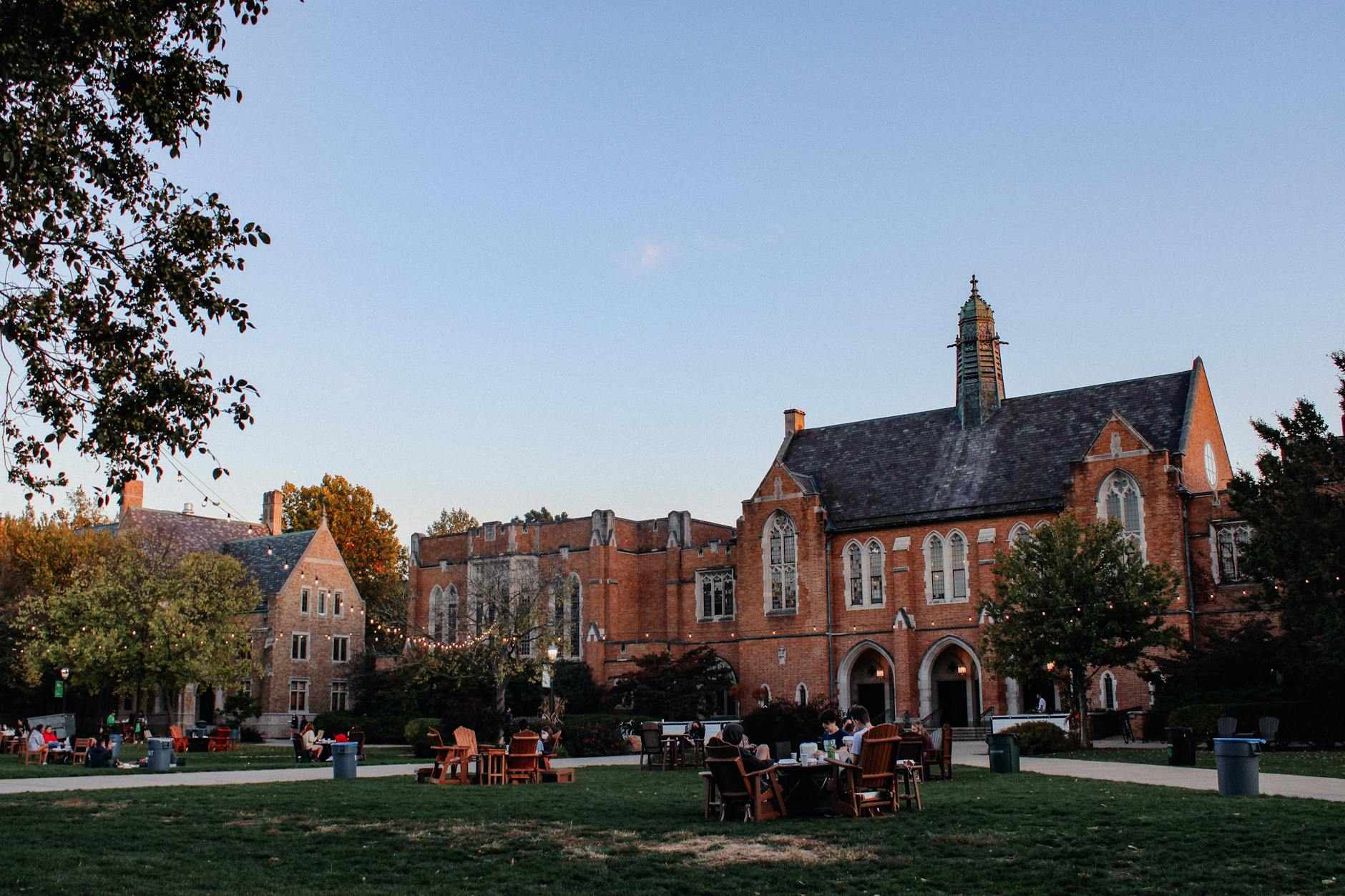
Which French programs teach in English?
Many French universities now teach full degrees in English, especially at the master’s level, and the strongest supply sits in business, engineering, data, and international studies. That means a French university admission American applicant can find real options without already speaking fluent French, but the program page must name English as the language of instruction.
The catch: The most common misconception is that every degree in France runs in French; in reality, universities like Sciences Po, Sorbonne University, and EDHEC offer English-taught tracks, and some master’s programs list 100% English or 50/50 bilingual delivery. A student who only reads the main university homepage can miss the fine print, and the fine print controls the admission rule.
English-taught does not erase French from the picture. A school may admit you with English proof like IELTS or TOEFL, then still expect 1 or 2 semesters of French study for daily life, internships, or elective courses, especially in cities where the local admin office uses French first. That is why study abroad France language planning works best when you treat French as useful support, not dead weight.
Some bachelor’s programs also teach in English, but they show up less often than master’s programs. France’s public universities and grandes écoles change language rules by department, year, and cohort, so a program page dated 2025 can differ from the one for 2024. Check the exact language line, the degree level, and any note about language certificates before you build your application around it.
A few students assume English-taught means they can skip French forever. That view is lazy. You can get admitted with English in hand, but life in France still runs on French in leases, bank forms, and campus offices, and that matters fast.
If you want to compare a French language path alongside your degree plan, a structured course like French II can give you a cleaner sense of what two semesters really cover, especially before you commit to a French-taught major.
What French level do universities require?
French-taught degrees usually ask for B2, while more selective master’s and many humanities programs push toward C1. English-taught programs often waive French proof, but bilingual tracks and internships can still ask for A2, B1, or a recent certificate.
| Program type | Typical French level | What schools often ask for |
|---|---|---|
| English-taught bachelor’s | No French required or A2 | English proof; French helpful |
| English-taught master’s | No French required, sometimes B1 | IELTS, TOEFL, or school test |
| Bilingual program | B1 to B2 | Mix of French and English classes |
| French-taught bachelor’s | B2 | DELF B2, TCF, or TEF |
| French-taught master’s | B2 to C1 | Recent score, often under 2 years old |
| Selective departments | C1 or higher | Reading, writing, and interview in French |
Reality check: Some schools accept a recent placement test or waive proof if you completed 2 or 3 years of French in a French-speaking school, but that waiver stays rare and program-specific. The safest reading of French level for university France is this: B2 opens the door, and C1 helps in competitive programs.
A strong application reads the rules line by line, not wishfully. If a master’s page says DELF B2, that is not a suggestion. If it says "French required," you need proof, not confidence.
For students mapping a language plan around an English-taught degree, a course such as French II can still matter because many schools expect you to survive admin French even when class French never appears. That is a small detail until your housing office wants a form in French only.
The Complete Resource for French Requirements
UPI Study has a full resource page built specifically for french requirements — covering which courses count, how credits transfer to US and Canadian colleges, and how to get started at $250 per course with no deadlines.
Explore French 2 Course →Which French tests do American students submit?
American applicants usually show French with one of four names on the score report: DELF, DALF, TCF, or TEF. Schools care about the level, the date, and whether the test fits a bachelor’s, master’s, or language requirement.
- DELF covers A1 through B2 and gives a diploma that does not expire. For French-taught university study, B2 is the level most schools care about.
- DALF covers C1 and C2. Selective programs in France often like DALF C1 because it shows advanced reading and writing, not just classroom French.
- TCF comes in several versions, including the TCF TP for general use. Scores usually stay valid for 2 years, which makes timing matter for applications.
- TEF also gives a level score and appears in university and migration settings. Some schools use it for placement, while others want DELF or DALF instead.
- Program-specific language tests can replace a national exam. A university may run its own interview, written test, or internal placement exam, especially for exchange or bilingual tracks.
- Some schools accept proof from prior study, such as 2 years of university French or a French-medium diploma. That shortcut works only when the admissions office names it in writing.
- No test works everywhere. A university in Paris may accept TCF, while a school in Lyon asks for DELF B2 or DALF C1, so the acceptance rule changes by institution.
Worth knowing: A recent score often matters more than the test brand, because schools want current proof, not a certificate from 2018. If your score sits near a cutoff, a fresh retake can help more than another class.
If you want to build that test prep in a way that fits a university timeline, French II can give you structured practice before you sit for a DELF, DALF, TCF, or TEF exam.
How far do two semesters of French go?
Two semesters of college French usually put an American student around A1 or A2, with maybe some pieces of B1 if the course runs hard and the student practices a lot outside class. That level helps with greetings, simple directions, food orders, and short emails, but it does not usually cover lectures, essays, or fast classroom debate.
A normal two-semester sequence often means 2 class periods a week for 14 to 15 weeks each term, which gives you exposure, not mastery. A student who studies 5 hours a week, uses a tutor, or joins a French club will move faster than someone who only shows up for class and homework. Prior Spanish or Italian can also help, because Romance-language grammar and vocabulary overlap in visible ways.
Bottom line: Two semesters rarely reach the french language requirement study abroad level for a French-taught degree, and that holds even when the student earns good grades. You can survive short exchanges, tourist tasks, and some basic campus life, but a full French-taught master’s usually needs more like B2, which sits well above beginner or low-intermediate work.
Immersion changes the math. A summer in France, 1-on-1 tutoring, daily conversation, or a semester abroad can move a student farther in 3 months than a classroom alone can move them in 9 months. Still, results vary by effort, sleep, and how much French the student hears outside class. A student who speaks French for 20 minutes a day will outrun one who studies only before exams.
I like to say this plainly: two semesters give you a start, not a passport. If your target program teaches in French, you need a longer runway than most students expect.
A planning course such as French II can help you judge that gap before you spend money on the wrong track.
How should Americans meet French requirements?
A smart French application starts with the program language, not with a generic "study in France" dream. Match the school’s rule first, then build the test and timeline around that exact requirement.
- Check whether the degree runs in English, French, or both. A master’s in Paris may want IELTS 6.5, while a humanities bachelor’s may want B2 French.
- Find the exact cutoff on the program page. Look for CEFR labels like B1, B2, or C1, plus the accepted proof such as DELF, DALF, TCF, or TEF.
- Choose the test that fits your deadline. DELF and DALF offer permanent diplomas, while TCF and TEF often use scores that stay current for about 2 years.
- Build a study plan around your target. If you need B2 and you sit at A2 after 2 semesters, expect months of extra work, not a quick weekend fix.
- Decide between more French study and an English-taught route. That choice saves time, money, and a lot of application stress when the cutoff sits high.
What this means: If you are 6 months out from applying, you need to work backward from the cutoff, not forward from your current class. That is where a focused course can help, especially one that fits on your schedule.
If you want a structured way to prepare for the language side of French university admission American applicants face, explore the accredited online French II course and use it to build toward the level your target program asks for.
Frequently Asked Questions about French Requirements
Yes, if you're entering a French-taught program, you usually need B2 for a bachelor's and C1 for many master's tracks. If you're in an English-taught program, French often isn't required for admission, but daily life in France still gets much easier with some French.
This applies to you if you're applying to a French-taught degree, which means a lycée-style bachelor program, a licence, or a master's taught in French; it doesn't apply the same way if you're choosing an English-taught track at schools like Sciences Po or many business schools. For study abroad France language planning, the admission rule and the campus language rule are often different.
The part that surprises most students is that 'English-taught' does not mean 'no French needed' for everything, because housing, visas, admin, and some internships still run in French. A student can enter an English program with zero French and still hit real-life problems in a 12-week first term.
If you miss the required french level for university france, your application can get rejected or pushed to a lower-language path, and that can delay admission by 1 full intake. A B1 score won't satisfy a B2 requirement, and schools often ask for DELF, DALF, TCF, or TEF proof.
Start by checking whether your target program teaches in French, English, or both, because the french university admission american route depends on that split. Then match your test to the program: DELF B2, DALF C1, TCF, or TEF are common, and two semesters of college French usually leave you around A2 to low B1.
Two semesters of college French usually get you to A2 or low B1, not the B2 or C1 level that French-taught degrees want. A beginner who studies 2 terms, 3-5 hours a week, and uses class plus self-study can handle basic travel talk, but not academic essays or seminar debate.
Most students take 2 semesters of French and hope that will be enough, but the path that actually works is 3-4 semesters plus a test like DELF B2 or TCF. For studying in france french requirements, schools look at your proof, not your hope.
The most common wrong assumption is that English-taught programs ignore French completely, but you still need French for apartments, CAF paperwork, transit, and part-time work. A 2024 campus move can feel smooth in class and hard at the prefecture if you know only classroom French.
DELF, DALF, TCF, and TEF are the main tests French universities use, and many schools accept B2 for undergraduate study and C1 for graduate study. DELF and DALF give permanent diplomas, while TCF and TEF give a score report that schools read against their cutoffs.
No, two semesters usually won't get you to the B2 level most French-taught programs want, especially if you start at zero. If you want that target in 12-18 months, you usually need a third or fourth semester, 5+ hours a week outside class, and test prep with actual timed practice.
Explore the accredited online course for this subject to build the French level for university France with structured lessons, test prep, and a clear path from A1 to B2 or C1. You can start with the exact course that fits your program goal and timeline.
Final Thoughts on French Requirements
Studying in France as an American looks simpler once you separate English-taught options from French-taught ones. That split matters more than almost anything else, because a program in English can lower the language barrier fast, while a French-taught degree usually asks for B2 or C1 and does not bend much on that point. The common trap is to treat two semesters of college French like a finish line. They are not. They give you a base, some classroom confidence, and a small boost for daily life, but they rarely carry you into academic French on their own. That is why the strongest applicants read program pages closely, compare DELF, DALF, TCF, and TEF, and match the test to the actual cutoff. French universities do not all play by one rule, and that is the part students miss when they rely on broad advice from friends or old forum posts. One school may waive French for an English master’s, while another may ask for B2 and a recent score. A careful read saves time, money, and a bad application cycle. Start with the program language, then build from there. That order keeps your plan honest and gives you a shot at the right school the first time.
How UPI Study credits actually work
Ready to Earn College Credit?
ACE & NCCRS approved · Self-paced · Transfer to colleges · $250/course or $99/month