
Trade deficits and surpluses show whether a country sells more to the world than it buys from it. The balance of trade compares exports and imports over a month, quarter, or year, and the sign tells you which side wins. Exports are goods and services a country sells abroad. Imports are what it buys from other countries. If exports top imports, the country runs a trade surplus. If imports top exports, it runs a trade deficit. If both sides match, it has balanced trade, which sounds neat but rarely lasts long in real life. People often treat a deficit like a red flag and a surplus like a gold star. That shortcut misses a lot. The United States ran a large trade deficit in 2023, yet it still attracted huge foreign investment and kept growing. Germany has often run a surplus, but that does not mean every household there feels rich. Trade numbers tell one part of the story, not the whole movie. In international business, these numbers matter because they shape currency moves, factory output, shipping demand, and government policy. They also show up in an international business course and in macroeconomics classes because students need to read the data with a calm head, not a panic button. The hard part is not spotting the gap. The hard part is asking what caused it, how long it has lasted, and whether it points to stronger demand, weaker demand, or a structural shift in the economy.
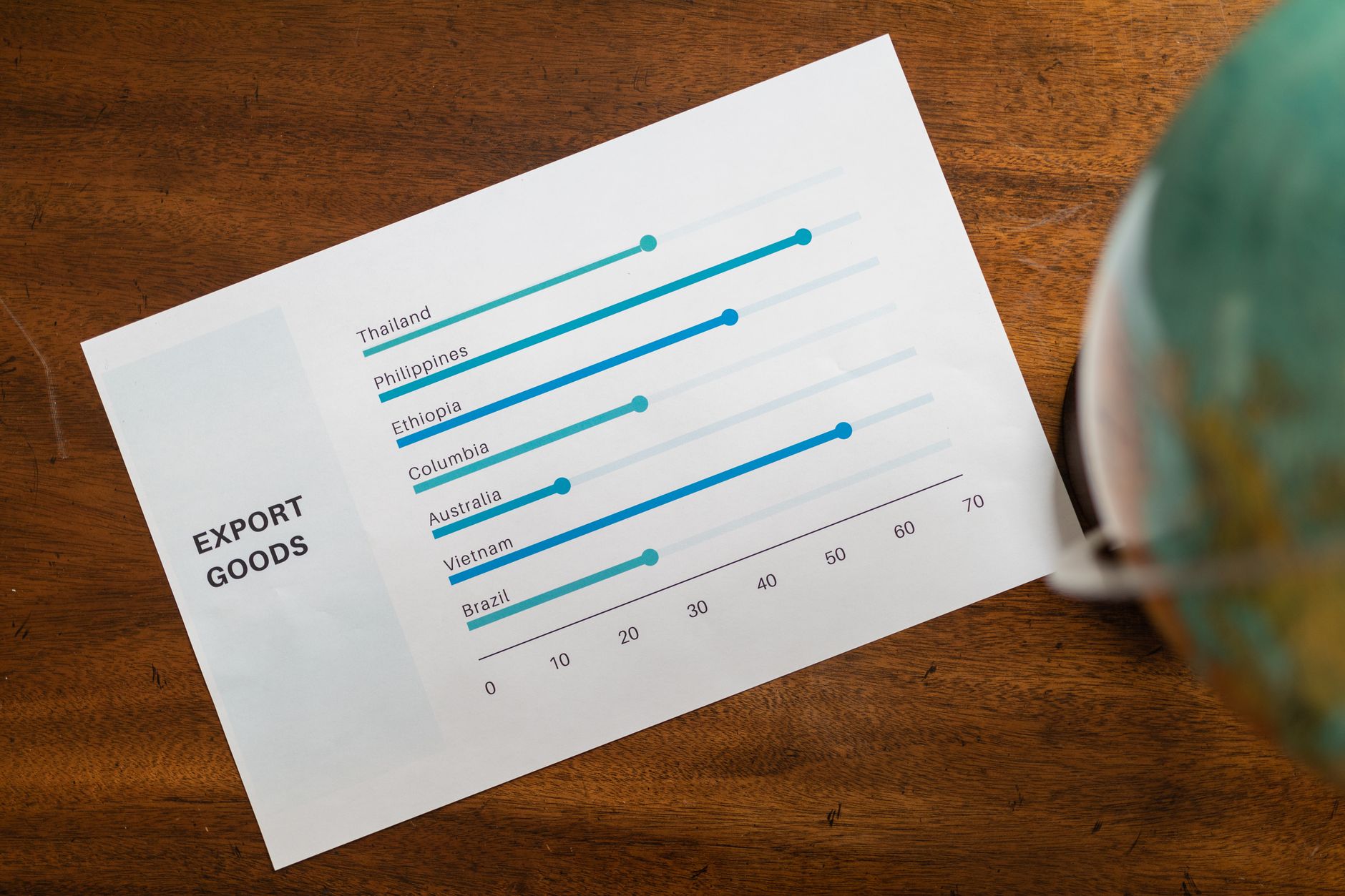
What Do Trade Deficits And Surpluses Mean?
A trade deficit means a country bought more from abroad than it sold abroad during a set period, while a trade surplus means the opposite; balanced trade means exports and imports match exactly, which can happen in a month, a quarter, or a year.
Exports include cars, wheat, software, tourism services, and shipping fees. Imports include phones, oil, medicines, and machine parts. The trade balance equals exports minus imports, so a positive number means surplus and a negative number means deficit. In 2023, the United States imported far more goods than it exported, but it also exported a huge amount of services, which keeps the picture from turning into a simple cartoon.
The catch: A deficit does not automatically mean failure, and a surplus does not automatically mean success. A country can run a deficit because people and firms buy a lot, while another country can run a surplus because weak home demand pushes producers to sell abroad.
That is why students in international business should treat trade data like a clue, not a verdict. Japan has posted surpluses for long stretches, and the U.S. has posted deficits for long stretches, yet both economies stayed large, complex, and globally active. The number matters. The story behind it matters more.
How Are Trade Deficits And Surpluses Measured?
Trade balance math looks simple, but the reporting rules matter a lot. Governments usually release trade data on a monthly schedule, often with a 3- to 6-week lag, and they separate goods from services before they add everything up.
- Start with total exports of goods and services for the period. A monthly report may show goods, services, and a combined total, all on the same release date.
- Then total imports of goods and services for that same month, quarter, or year. If a country imports $10 billion more than it exports, the balance shows a $10 billion deficit.
- Subtract imports from exports. Exports minus imports gives the trade balance, and the sign tells you whether the country ran a surplus or deficit.
- Check the reporting period and the price basis. Some reports use nominal values, while others adjust for inflation or seasonal swings, which can change the story in a big way.
- Read the release note for revisions. Agencies like the U.S. Census Bureau and Bureau of Economic Analysis often revise earlier figures after late shipping records or service data come in.
Reality check: A headline number can move by billions of dollars after one revision, so the first print never tells the whole truth. That is normal, not shady.
The mechanics matter because a March deficit and a full-year deficit do not mean the same thing. A student who reads the release calendar, the 1-month window, and the nominal-versus-adjusted label gets the data right the first time.
Why Do Trade Deficits And Surpluses Occur?
Trade imbalances happen because real economies do not line up neatly. Consumer demand, exchange rates, productivity, energy prices, tariffs, capital flows, and the business cycle all push trade numbers around, sometimes fast and sometimes for years.
If a currency gets stronger, imports often get cheaper and exports often get pricier. That can widen a deficit even if factories keep humming. If oil prices jump from $60 to $90 a barrel, an importer can see its bill rise even when overall demand stays flat. China’s export growth over the last few decades came from scale, supply chains, and productivity gains, while many oil importers saw deficits grow when energy costs spiked.
What this means: A deficit can go up while foreign investors pour money into a country’s bonds, stocks, or factories. That money flow helps pay for the extra imports, so the deficit and the capital inflow often move together.
Surpluses also come from pressure, not magic. A country can post a surplus because households spend less, wages stay weak, or firms sell into foreign markets while local demand stays soft. Germany’s long export strength has tied partly to strong manufacturing and partly to cautious domestic spending. I think people oversimplify this topic all the time, and that habit wrecks good analysis. Trade numbers reward patience, not hot takes.
Learn International Business Online for College Credit
This is one topic inside the full International Business course on UPI Study — a self-paced, online class that earns real college credit. Credits are ACE and NCCRS evaluated and transfer to partner colleges across the US and Canada. Courses start at $250 with no deadlines and lifetime access.
Browse International Business →How Do Trade Imbalances Affect The Economy?
Trade imbalances can lift GDP in the short run or drag it down, depending on what drives them. A deficit can support growth when firms import capital goods for a new plant, but it can hurt domestic output when cheap imports squeeze local producers.
Jobs, prices, currency value, and borrowing all move with the trade balance. More imports can lower consumer prices for a while, which helps households, but they can also cut demand for local steel, textiles, or electronics. A surplus can strengthen a currency and support manufacturing jobs, yet it can also signal weak domestic demand if people save too much and spend too little. The U.S. imported more than it exported for years, but it also borrowed from abroad and kept financing investment, so the story never fit a single label.
Bottom line: A deficit linked to $500 billion in factory equipment looks very different from a deficit driven by $500 billion in consumer goods.
Long-term deficits can pile up foreign debt if a country keeps financing imports with borrowing instead of income. Long-term surpluses can build reserves and give firms more cash, but they can also create tension with trade partners. That tension shows up in tariffs, complaints at the WTO, and political fights that last longer than one election cycle.
Which Policies Influence Trade Balance Most?
Policy can move trade numbers, but it rarely works like a clean switch. A 10% tariff may cut imports in one sector and raise prices in another, and countries often see the deficit shift instead of disappear.
- Tariffs raise the price of imported goods. The 2018 U.S. tariffs on steel and aluminum pushed some domestic output up, but they also raised costs for buyers downstream.
- Quotas cap how much a country can import. That can protect local firms, yet it can also create shortages and higher prices when demand stays strong.
- Subsidies help domestic producers compete. They can build industries fast, but they can also trigger retaliation from trade partners.
- Exchange-rate policy changes the price of exports and imports. A weaker currency can help exporters, but it can also make fuel and food more expensive.
- Fiscal policy shifts demand at home. If households and firms buy more imports during a boom, the deficit often grows even without a tariff change.
- Industrial policy backs sectors like chips, batteries, or shipping. That can reduce import dependence over time, but results usually take 2 to 10 years, not 2 months.
Worth knowing: Trade agreements can lower barriers, but they often move deficits across partners instead of wiping them out. That is why politics loves simple promises and economics does not.
How Should Students Read Trade Deficit Data?
Students should read trade data like a stack of clues, not a single score. Start with the split between goods and services, because a country can run a goods deficit and still post a services surplus in travel, finance, or software. Then check the trend over 6 months or 12 months, not just one headline release, because one shipping spike can distort a monthly figure by billions. In international business, that habit matters in class, on exams, and in real market analysis.
- Check goods and services separately.
- Look at 12-month trends, not one month.
- Read partner-country detail for China, Mexico, Germany, or Canada.
- Ask whether the gap comes from energy, consumer goods, or investment goods.
- Link the number to exchange rates, prices, and supply chains.
Frequently Asked Questions about Trade Balance
Most students memorize the words first, but what works is this: a trade deficit means you import more goods and services than you export, and a trade surplus means you export more than you import. Economists measure both with a simple formula: exports minus imports, usually for 1 month, 1 quarter, or 1 year.
Start with exports, subtract imports, and use the same time period for both numbers. If exports total $500 billion and imports total $650 billion, the trade balance shows a $150 billion deficit; if exports hit $700 billion and imports stay at $650 billion, you get a $50 billion surplus.
This applies to anyone taking an international business course, a college credit class, or an online course on trade, and it doesn't stop at business majors. You need it if you study economics, global supply chains, or policy, because trade data shapes prices, jobs, and exchange-rate debates.
A trade gap can reach hundreds of billions of dollars, and that number gets attention fast. The United States had a goods trade deficit of about $1 trillion in 2023, while Germany and China often post large surpluses in the same years.
What surprises most students is that a trade deficit does not automatically mean a weak economy, and a surplus does not always mean a strong one. A country can run a deficit for years if it attracts foreign investment, grows fast, or buys lots of capital goods.
The most common wrong assumption is that balanced trade means both sides trade equal dollar amounts every month. Real trade changes with oil prices, exchange rates, tariffs, and seasonal demand, so a country can move from surplus to deficit across 12 months without any policy shock.
Trade deficits and surpluses happen because countries differ in costs, demand, resources, exchange rates, and policy. A country that saves a lot, makes products other countries want, or keeps its currency cheaper often runs a surplus, while one that spends more than it produces often runs a deficit.
If you mix up a trade deficit with a trade surplus, you can misread the balance of trade and miss the real policy issue. That mistake can cost points on questions about tariffs, quotas, current accounts, and why a country imported $300 billion more than it exported in a year.
A trade deficit can pull in foreign goods, lower some prices, and support consumer choice, while a surplus can boost factory output and export jobs. The effect depends on the sector, because a strong export boom in autos or chips can help one region while import competition hurts another.
Tariffs, quotas, exchange-rate policy, subsidies, and tax rules can all change deficits surpluses and the quest for trade balance. A 10% tariff can raise import costs, while a weaker currency can make exports cheaper and imports more expensive in global markets.
Yes, a country can have balanced trade and still face high debt, slow growth, or weak wages. Trade balance only covers exports and imports of goods and services; it does not show income inequality, unemployment, or budget deficits.
An online course can teach you the basics of trade deficits, surpluses, and balance of trade in 4 to 8 weeks, and many programs count for transferable credit or ace nccrs credit. That helps if you want study online while keeping your schedule open.
They shape pricing, sourcing, and where companies sell, especially in international business and import-export work. A firm that buys parts from 3 countries, sells in 2 markets, and watches a 5% currency shift can change suppliers fast when trade rules move.
Final Thoughts on Trade Balance
Trade deficits and surpluses look simple on paper, but they sit on top of real behavior: what people buy, what firms make, what money flows in, and what prices do across borders. A deficit means imports outran exports over a set period. A surplus means exports led. Balanced trade means the two sides matched, which sounds tidy but rarely lasts once exchange rates, demand, and policy start moving. The smarter question is not, “Is a deficit good or bad?” The smarter question is, “What caused it, how long has it lasted, and what else moved with it?” That is how economists read the numbers. That is also how students in international business avoid lazy answers on exams and in real work. Watch the split between goods and services. Watch the trend over 6 months, 12 months, and 5 years. Watch the country’s currency, energy bill, and capital flows. A trade gap can point to strong investment, weak domestic demand, or plain old dependence on imports. The number alone never tells the whole story. If you can explain that difference cleanly, you already think like someone who reads global business data with a sharper eye than most headlines do. Start there, and the rest of trade analysis gets much less foggy.
How UPI Study credits actually work
Ready to Earn College Credit?
ACE & NCCRS approved · Self-paced · Transfer to colleges · $250/course or $99/month