
Classic physics experiments test real laws, not just memory. In a school lab, you use a pendulum, wires, springs, lenses, and meters to check ideas like gravity, resistance, and refractive index against actual readings. That is the whole point of physics practical work: theory meets numbers, and bad data gets exposed fast. A clean lab result usually depends on small details. A 1 mm mistake in length, a 0.1 s timing slip, or a loose contact can change the answer more than a full page of notes. That is why physics lab experiments matter so much. They teach you how a law behaves when the setup is real, messy, and imperfect. The classic set shows up again and again: simple pendulum for gravity, Ohm's law for current and voltage, Hooke's law for springs, meter bridge for resistance, prism work for refraction, and calorimetry for specific heat. Some labs also check wavelength, Young's modulus, or relationships that anchor the rest of the subject. A good student does not just copy the expected result. A good student knows what the apparatus measures, what graph should appear, and which error will ruin the reading first. That is the skill. Not guessing. Reading the setup, watching the numbers, and knowing what they mean before the teacher asks.
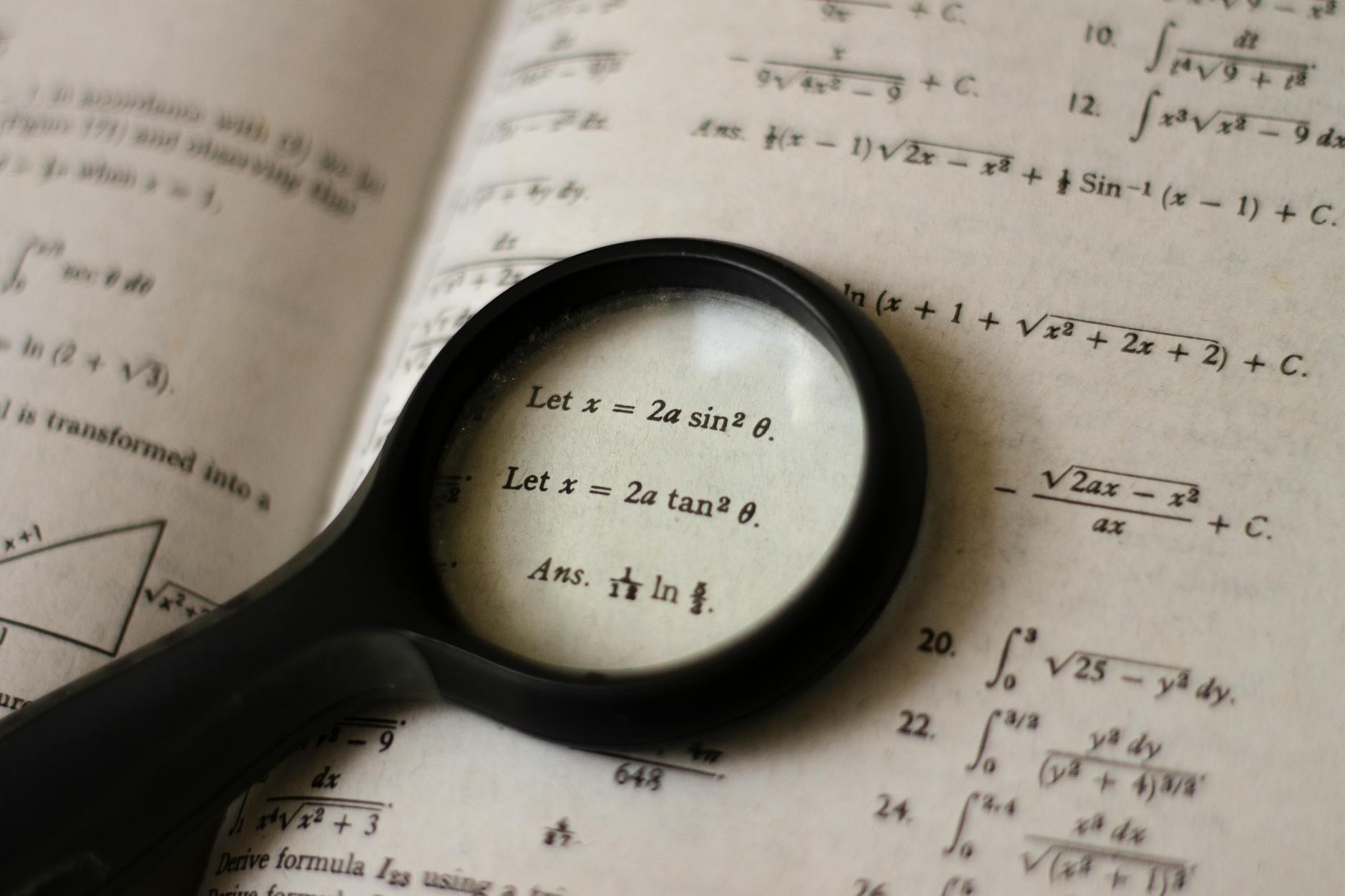
What Do Classic Physics Experiments Measure?
Classic physics experiments measure real quantities such as acceleration due to gravity, resistance, specific heat, refractive index, wavelength, and relationships like F = kx or V = IR. These physics lab experiments do one simple job: they test whether a formula from class still works when you use a ruler, stopwatch, wire, or lens in a live setup.
A simple pendulum lab usually targets g, the acceleration due to gravity, by timing 20 swings or more and using the length of the string. Ohm's law checks how current changes with voltage across a resistor, and the graph should stay close to a straight line if the resistor behaves well. A Hooke's law setup measures how far a spring stretches for each added load, often in 50 g steps, and the slope tells you the spring constant. Prism and lens work measure refractive index and wavelength, which means you study how light bends and spreads through glass or air.
The catch: The point is not memorizing a formula and calling it science. The point is watching the formula survive data, and that is where weak lab experiments physics students rush through usually fall apart. Specific heat work, for example, checks how much heat 100 g of water or metal absorbs before its temperature rises by a measured number of degrees, often 10°C or more. That makes physics practical work useful, because it ties symbols to actual change.
A few classics also estimate constants or verify proportional relationships, like Young's modulus for a wire or the inverse relation between image distance and object distance in lens work. If your readings do not match the expected pattern within a small range, the setup, not the law, usually needs a hard look.
Which Physics Lab Experiments Belong In A Standard Table?
These are the physics practical work staples most students meet in school labs and first-year courses. Each one targets a different idea, and each one has a different weak spot. Some fail because of timing. Some fail because of alignment. Some fail because the wire you touched with sweaty fingers added resistance. That is the ugly truth.
| Experiment | What it measures | Core apparatus | Expected result | Main error sources |
|---|---|---|---|---|
| Simple pendulum | g, period | bob, string, stand, stopwatch | T^2 ∝ L | reaction time, length error, air drag |
| Ohm's law | V, I, resistance | cell, resistor, ammeter, voltmeter | straight V-I line | contact resistance, heating, zero error |
| Hooke's law | force, extension | spring, masses, meter scale | F ∝ x | parallax, elastic limit, calibration |
| Meter bridge | unknown resistance | bridge wire, jockey, galvanometer | balance point near ratio rule | wire heating, end correction, loose contacts |
| Prism/refraction | refractive index, angle of deviation | prism, rays, protractor, pins | minimum deviation pattern | alignment, pin placement, parallax |
| Specific heat | heat capacity | calorimeter, thermometer, heater | temperature rise from energy input | heat loss, thermometer lag, stirring |
| Young's modulus | elasticity of wire | wire, scale, loads, screw gauge | extension follows load | small length change, zero error, creep |
Reality check: A neat table does not save a sloppy lab. If your meter bridge balance point jumps 3 cm between repeats, or your pendulum period changes by 0.4 s with the same length, the data needs fixing before the report does.
How Do You Set Up Each Physics Experiment?
A clean setup saves time later. The best physics experiments start with the apparatus laid out in the right order, the scale checked, and the first reading taken only after the geometry looks right. Rushing this part usually gives you ugly numbers and a bad graph.
- Set the apparatus on a stable bench and line up the scale, ruler, or wire with the main measuring direction. In a pendulum or spring lab, check that the bob or load hangs freely before you start timing.
- Take one trial reading to spot zero error, loose contact, or bad alignment. If the ammeter needle does not return to 0 or the balance point sits far from the expected spot, fix it first.
- Collect at least 3 readings for each setting. In a timing lab, run 20 oscillations instead of 1 swing, because a 0.2 s reaction delay hurts one reading far more than a grouped set.
- Change only one variable at a time. Add mass in 50 g steps, length in 10 cm steps, or voltage in small steps so the pattern stays clear and your graph stays usable.
- Record numbers the moment you read them. Do not trust memory for 5 minutes; that is how a 12.6 cm extension turns into 13.6 cm on the page.
- Repeat the full set once more if the values jump around. Two matching runs beat one lucky run, and a 2% spread tells you more than a single pretty point.
Physics I basics and Calculus I support also help here, because a graph only makes sense when you can read slope, ratio, and change without guessing.
The Complete Resource for Physics Lab Experiments
UPI Study has a full resource page built specifically for physics lab experiments — covering which courses count, how credits transfer to US and Canadian colleges, and how to get started at $250 per course with no deadlines.
Explore Physics Lab Course →Why Do Physics Experiments Give Different Results?
Physics experiments give different results because real instruments have limits and real people make small mistakes. A 1 mm parallax slip on a ruler, a 0.05 s reaction delay on a stopwatch, or a 2°C temperature drift in a calorimetry lab can push the final answer away from the ideal value. That is not drama. That is normal lab life.
Parallax hits readings on scales, meter bridges, and vernier tools when your eye sits above or below the mark instead of level with it. Zero error also bites hard: if a voltmeter starts 0.2 V off zero, every reading inherits that fault. Least-count limits matter too, because a ruler marked in 1 mm divisions cannot honestly give you 0.01 mm precision. People love to write extra digits they did not earn.
Friction and air resistance slow pendulums and moving parts, so the observed period or motion differs from the clean textbook result. Contact resistance causes trouble in Ohm's law and meter bridge work, especially when clip leads are dirty or loose. Heating changes resistance during a current run, so the graph bends when it should stay straight. Alignment mistakes in prism work, and bad focus in lens work, can change the angle by 1° or more, which is plenty to spoil a neat calculation.
Worth knowing: Repetition fixes a lot, but not everything. If you take 5 readings and average them, random noise drops; if your balance wire is misaligned by 2 mm, the average just hides the same wrong setup five times. Graphing helps because a straight-line fit reveals outliers faster than one raw number, and that matters more than fancy wording in the report.
Which Results Should You Expect From Physics Practical Work?
A good lab result usually follows the same pattern every time, and that pattern tells you more than the final number alone. If your data ignores the expected trend across 3, 5, or 10 readings, something in the setup or recording went sideways.
- Ohm's law should give a straight V-I graph. A sharp bend usually points to heating, a poor resistor, or a loose lead.
- Hooke's law should give a straight extension graph up to the elastic limit. If the spring does not return near its original length, you pushed it too far.
- A simple pendulum should show T^2 rising with length. Longer string, longer period; that pattern should stay steady across 20 swings.
- Prism or refraction work should show a clear minimum deviation or a bent ray path that matches Snell's law. Random angles mean the pins or ray box were not lined up well.
- Specific heat work should show temperature rising after a known energy input. If 100 g of water barely changes after several minutes of heating, the thermometer, heater, or insulation needs a hard look.
- Young's modulus work should show a small but measurable extension with added load. A zero change after adding mass usually means the scale cannot see the movement or the wire stayed slack.
- Success means your result lands close to the accepted value and your graph looks clean. A suspicious result usually shows scattered points, a wild intercept, or a slope that changes for no clear reason.
How Can You Learn Physics Experiments Faster?
Fast progress in physics practical work comes from short, repeated practice, not from staring at a lab manual for 3 hours and hoping the steps stick. If you rehearse setup, reading, and graphing in a steady way, you stop wasting time on the same mistakes like misreading a 1 cm mark or mixing up voltage and current.
Physics lab course study works best when it breaks the work into apparatus, calculations, and report writing. That matters because a student who can name the meter bridge parts in 2 minutes still might freeze when asked to calculate unknown resistance from a balance length. Guided practice cuts that gap.
The real gain comes from structure. A well-built course gives you the sequence for each classic experiment, the expected graph shape, and the error sources that usually wreck the result. That is a better use of time than random YouTube clips, which often skip the boring parts that decide your grade. If you want confidence with physics lab experiments, use a course that keeps the focus on measurements, not hype.
Explore the accredited online physics lab course if you want a guided way to review apparatus, calculations, and report writing in one place. You can move at your own pace, check the same experiment more than once, and build the habits that make lab experiments physics feel less like guesswork and more like a repeatable skill.
Frequently Asked Questions about Physics Lab Experiments
$0 in theory, but a broken meter rule, stop watch, or power supply can wreck a whole lab session. Classic physics experiments usually teach 5 things at once: what you measure, the apparatus, the expected pattern, the graph shape, and the biggest error source.
Physics experiments measure a real quantity such as time period, resistance, refractive index, or acceleration, and they test a rule with data. A pendulum gives you time period, Ohm’s law gives you V and I, and a diffraction setup gives you wavelength; small timing slips and reading errors are the usual weak spots.
Start by listing the measured variable, the apparatus, and the formula before you touch the setup. In lab experiments physics work best when you collect 5 or more readings, note units like seconds, volts, or millimetres, and check the zero error first.
Most students rush the readings and copy the answer later, but careful repeats and a clean graph work better. In classic physics experiments, 3 good repeats beat 1 fast reading, and a straight-line graph usually shows random error more clearly than raw numbers.
This applies to you if you take school physics, college lab work, or exam-based practical work, and it doesn't help if you only want theory without experiments. Physics lab experiments usually ask for method, apparatus, result, and error source in the same answer, often across 1 full practical write-up.
You lose marks fast, because examiners look for real errors like parallax, reaction time, friction, zero error, and heat loss. In physics practical work, a bad error note can cost you 2 to 4 marks even when your calculation is right.
The surprise is that the result often looks a little messy even when the theory is right. In physics experiments, a pendulum rarely gives the exact same time twice, and a resistance graph may bend slightly because wires heat up or the contacts are loose.
The most common wrong assumption is that the textbook result should appear exactly, down to the last digit. In lab experiments physics usually show small gaps from the ideal value, and that gap often comes from 1 or 2 clear sources like calibration error or human timing.
A standard setup usually uses 3 to 6 main tools, like a metre rule, stop watch, ammeter, voltmeter, lens, or ray box, and each tool matches one measurement. The apparatus matters because the wrong tool gives the wrong precision, like a metre rule missing 1 mm divisions.
You can study them in an accredited online course that covers physics experiments, physics lab experiments, and worked practical answers with setup, result, and error analysis. Explore the accredited online course for this subject and build your lab skills with guided practice.
Final Thoughts on Physics Lab Experiments
Classic physics experiments teach you how to think like a lab student, not like a memorizer. You measure g with a pendulum, resistance with V and I, extension with a spring, and refractive index with light that bends on cue. Then the real lesson hits: a 1 mm mistake, a loose contact, or a bad eye line can wreck the cleanest formula. That is why these labs matter in any physics course. They train you to watch the data, spot the pattern, and trust the graph more than a guess. A straight line, a sensible slope, and a result near the accepted value tell you the setup worked. Scattered points, a bent curve, or a result that misses by a mile tell you to stop and fix the method. Do not treat the lab as a formality. Treat it like proof that the theory lives in the real world. That habit pays off in every section of physics practical work, from timing 20 oscillations to reading a meter bridge balance point. Start with one classic experiment, learn the apparatus cold, and then work through the rest until the patterns feel obvious.
How UPI Study credits actually work
Ready to Earn College Credit?
ACE & NCCRS approved · Self-paced · Transfer to colleges · $250/course or $99/month