
Precalculus teaches the language that calculus expects, and calculus uses that language to study change. That is the real difference precalculus calculus students need to see. One course builds the tools. The other uses them fast. Precalculus covers functions, graphs, trigonometry, polynomial behavior, rational expressions, exponentials, and logarithms. Calculus starts with limits, derivatives, and accumulation, then assumes you can already solve equations, read graphs, and handle algebra without slowing down every step. If you still fight with factoring or the unit circle, calculus feels like a sprint in wet shoes. That is why the math course sequence matters. Schools usually place precalculus before calculus because calculus class time does not allow long review of 10th-grade algebra or 2 years of trig. A student who walks in ready can spend the hour learning new ideas. A student who walks in shaky spends the hour rescuing old ones. The question is not just do I need precalculus before calculus. The sharper question is whether you can already do the work precalculus drills until it feels automatic. If not, calculus will not feel mysterious. It will feel crowded. And that crowding usually starts with one small gap, then grows into missed signs, bad graphs, and slow exams.
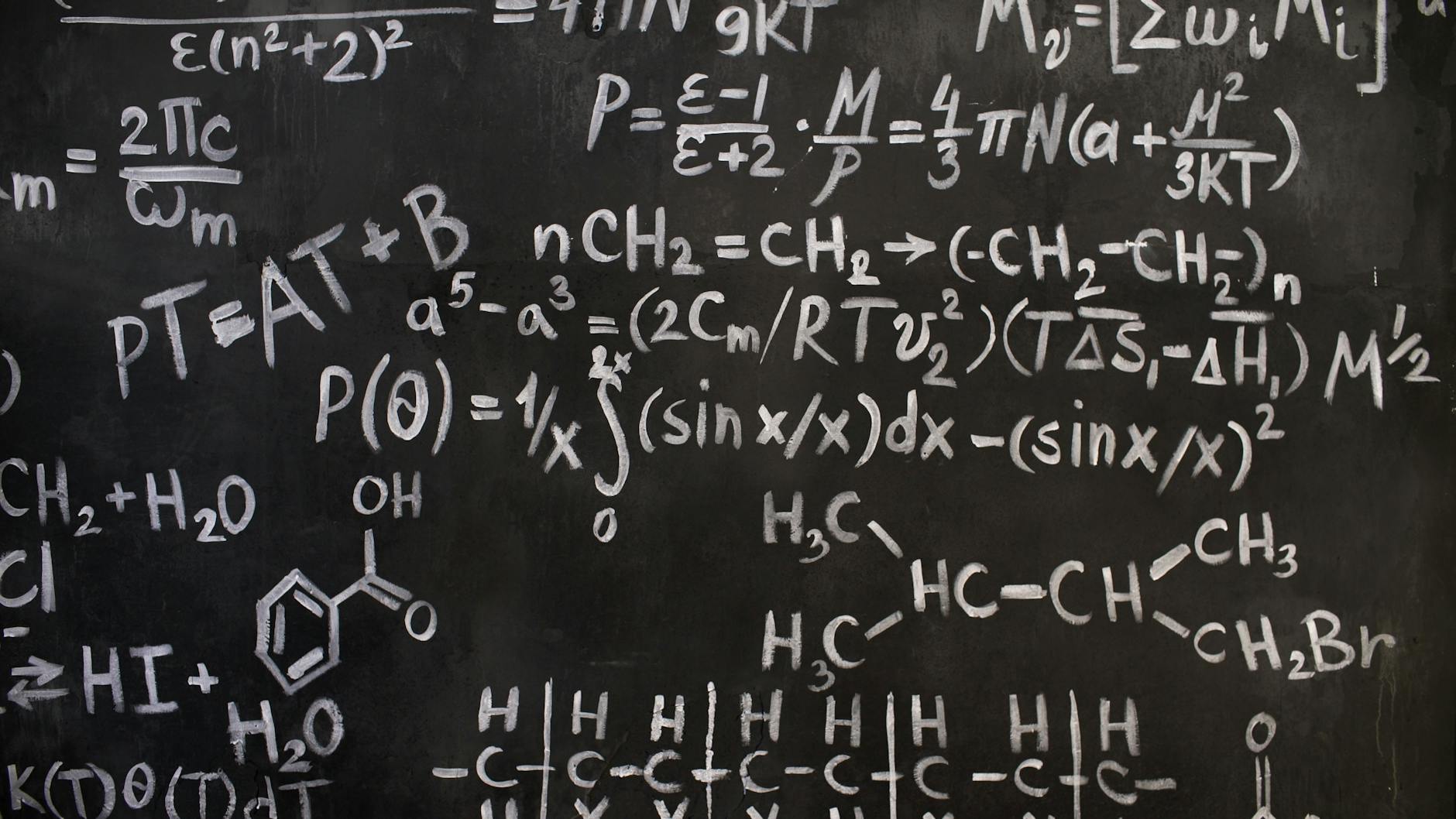
What Does Precalculus Cover Before Calculus?
Precalculus covers the math tools calculus expects you to use without pause: functions and their shifts, polynomial and rational behavior, exponential and logarithmic rules, trigonometry, inverse functions, and graph reading. That mix sounds ordinary, but it acts like a language course with about 6 major grammar topics and 20 smaller habits.
Think about functions first. In precalculus, you learn how a graph changes when you move it 2 units left, stretch it vertically by 3, or reflect it across the x-axis. You also learn domain and range, which matter because a function only works on the inputs it can handle. That sounds small. It is not small. A wrong domain can wreck an entire calculus problem before you even start.
Trigonometry gets heavy attention too. Students work with sine, cosine, tangent, the unit circle, and identities such as \u03c3? No, the usual ones: \u03c3? Let's keep it clean. Students learn the unit circle values, angle measure in radians, and identities that turn messy expressions into something usable. Calculus assumes you already know why 0, \u03c0/2, \u03c0, and 3\u03c0/2 matter. It does not stop to reteach them.
What this means: A student who can read $y=\ln(x)$, $y=\frac{1}{x-3}$, and $y=2^x$ without panic has already crossed a big line. That is why a strong precalculus class feels practical, not decorative. It teaches you how to see a graph as behavior, not decoration.
The best precalculus courses also drill composition and inverse notation, like $f(g(x))$ and $f^{-1}(x)$, because calculus uses those ideas in chain-rule work and function thinking. If you want a clean example of that bridge, the precalculus course shows how algebra, trig, and graphing fit together before the pace speeds up.
A weak course can still look busy, but busy is not the same as ready. Precalculus earns its place by making 8 or 9 different skills feel automatic enough for a calculus class to use them instantly.
How Does Calculus Use Precalculus Topics?
Calculus assumes you already handle algebra and graphs quickly, because class time goes to limits, derivatives, and accumulation, not to long review. Many schools want a minimum C in precalculus or a placement score that puts you straight into the next math course. That matters because a 50-minute exam leaves almost no room for relearning the basics mid-test.
| Precalculus topic | How calculus uses it | What happens if it is weak |
|---|---|---|
| Functions | Domain, range, composition | Wrong input set, broken notation |
| Graphing | Read slope, shape, and change | Misread trends and turning points |
| Trig | Unit circle, identities, radians | Stuck on derivative formulas |
| Algebra | Solve, factor, simplify fast | Calculator time, not calculus time |
| Exponents/logs | Growth and decay models | Lost in exponential rules |
| Where to take it | Math course sequence | Precalc first, then calculus |
The catch: A student who needs 10 extra minutes to factor a quadratic loses more than time; they lose the thread of the whole problem. That is why precalculus preparation matters so much before calculus starts.
The table looks plain, but the pattern is sharp: calculus trusts your setup skills and spends its time on new ideas. If you want a direct next step after precalculus, Calculus I is where those tools get used at full speed.
The Complete Resource for Precalculus
UPI Study has a full resource page built specifically for precalculus — covering which courses count, how credits transfer to US and Canadian colleges, and how to get started at $250 per course with no deadlines.
Explore Precalculus Course →Why Does Precalculus Exist As A Bridge?
Precalculus exists because calculus studies change, but change only makes sense after students can manipulate functions and symbols with speed. Schools built the course around 1 big problem: too many students arrived at calculus with shaky algebra, weak trig, or half-remembered graph ideas from 1 or 2 years earlier.
The bridge works in two directions. On one side, precalculus sharpens algebraic fluency. On the other, it starts training students to think about behavior over intervals, which is close to the mindset calculus uses for limits and derivatives. You do not get formal derivative rules yet. You do get repeated practice with what a function does as $x$ changes from 2 to 2.1 to 2.01. That small shift matters.
Reality check: Calculus does not pause for long division or basic factoring. If a school gives 16 weeks to a semester course, it expects those habits to already run in the background. That is the whole point of the bridge: move the mechanical work out of the way so the new material can breathe.
Precalculus also pulls together topics that students often learn in separate years. A graphing idea from algebra, a trig idea from geometry, and an exponential rule from earlier math all show up in one place. That mix can feel messy. I think that mess is useful. Real mathematical thinking rarely arrives in neat boxes.
The course also protects students from a bad shortcut. Some people try to jump straight into calculus because they want to move fast. That usually backfires when they hit inverse functions, rational expressions, or radian measure and realize they never made those ideas automatic. A bridge course saves time later, even if it feels slower now.
If you want a cleaner path through the math course sequence, precalculus acts like the last long practice lap before the main race. It asks for patience in 3D, not just speed in 1D.
Which Prerequisites Do Calculus Classes Assume?
Most calculus classes assume you can already do several skills fast, and many schools set a minimum C in precalculus or a placement cutoff before you enroll. That matters because the first weeks often move through 5 or 6 topics without stopping for review.
- Solving equations quickly matters because derivative and limit problems often hide algebra inside the setup. If you freeze on a simple equation, the calculus part never gets a fair shot.
- Factoring and simplifying have to feel automatic. A rational expression like (x^2-9)/(x-3) should not eat 8 minutes of a 50-minute test.
- Trig identities and unit circle values need to come back fast. Calculus classes use radians, sin, cos, and exact values like \u03c0/2 and \u03c0 all the time.
- Graph reading matters because calculus asks you to spot slope, steepness, and turning points. A shaky eye on graphs leads to shaky answers.
- Composition and inverse notation, such as f(g(x)) and f^-1(x), show up in rule-based work. If those symbols look foreign, the pace feels brutal.
- Exponent and log rules drive growth and decay problems. A class may spend 1 day on the math model and expect the algebra to already be known.
- Many schools use a placement test or a grade cutoff, often a C or better in precalculus, before calculus enrollment. That screen exists because remedial review can take 1 full semester.
Worth knowing: The course does not teach these pieces from zero. It assumes you already own them, which is why a strong precalculus course can save you from months of catch-up later.
If you want another math class that leans on clean symbolic work, Discrete Mathematics also rewards students who can read notation without hesitation.
How Do Students Struggle Without Precalculus?
Students who skip precalculus usually do not fail because calculus feels abstract. They fail because old skills keep interrupting the new ones. A derivative problem turns into a factoring problem. A limit turns into a trig cleanup problem. A graph question turns into a domain mistake.
That pattern gets ugly fast on timed work. Picture a 50-minute calculus test with 8 questions. If a student spends 7 minutes on each algebra step before touching the calculus idea, the clock disappears after just 5 problems. No dramatic mystery there. The math simply starves the student of time.
Weak graph sense creates another trap. Calculus uses graphs to show slope, motion, and change, but students who never trained on transformations often miss whether a graph shifted left 2 units or right 2 units. Miss the shift, and the derivative answer can still look neat while the logic falls apart. That is a nasty kind of wrong, because it feels close.
Bottom line: Skipping precalculus does not just make calculus harder; it changes what the class feels like. The student thinks they are learning limits, but they spend half the class chasing algebra they should have mastered earlier.
Signs and domain restrictions cause more trouble than people expect. A student may drop a negative sign, ignore an excluded value, or treat $\ln(x)$ like it works on all real numbers. Those errors look small. In calculus, they can wreck continuity, derivative work, and interpretation in one shot.
I think the biggest problem is speed. Calculus rewards students who can hold 2 or 3 ideas at once. Without precalculus, one small algebra snag can break the whole chain, and a 75-minute class suddenly feels like a rescue mission.
That is why the question do I need precalculus before calculus gets such a blunt answer in practice: if the basics still cost real time, calculus will charge interest on every step. The precalculus course is where that debt gets paid down before the harder class starts.
Frequently Asked Questions about Precalculus
What surprises most students is that precalculus is not "almost calculus"; it teaches the algebra, trigonometry, and function skills that calculus assumes from day one. If you struggle with graphs, exponents, or radians, calculus feels twice as hard.
If you mix up the difference precalculus calculus, you usually hit a wall in the first 2-3 weeks of calculus because teachers don't stop to reteach function notation, unit circle ideas, or factoring. Then limits and derivatives start feeling like code with missing pages.
First, check whether you can handle functions, trigonometry, and algebra at speed; those are the main signs you're ready for calculus. If you can't, precalculus gives you the 1-semester bridge most math course sequence plans use before Calculus I.
Yes, if your math skills are shaky, because calculus assumes precalculus ideas like polynomials, logarithms, and the unit circle without re-teaching them. Some students place into calculus from placement tests, but the gap still shows up fast.
One extra semester, or about 12-16 weeks, is the usual cost of taking precalculus before Calculus I. That time buys you cleaner work with functions, identities, and graphs, which helps with limits, derivatives, and later physics or economics classes.
Most students rush from algebra straight into calculus because they want to stay on schedule, but what actually works is matching the course to your skill level. A strong precalculus run cuts down on errors with radicals, trig values, and inverse functions.
Precalculus helps anyone who has not mastered Algebra II topics, especially functions, graph shifts, and trigonometry, and it doesn't help much if you've already earned strong marks in those areas. If you can handle unit-circle values and logarithms, you may be ready for calculus now.
The most common wrong assumption is that calculus only means harder algebra, but calculus studies change, slope, and area using limits, derivatives, and integrals. Precalculus prepares you for that by teaching the language of functions, including composition and inverse functions.
Calculus assumes you already know functions, domain and range, graph reading, trigonometric ratios, logs, exponent rules, and basic factoring. It also expects you to read notation like f(x) and understand why radians matter in derivatives and integrals.
Precalculus spends more time on setup work like graphing, identities, and function behavior, while calculus focuses on limits, derivatives, and integrals. In class, that means precalc asks, 'What shape is this function?' and calculus asks, 'How fast is it changing?'
Calculus is usually harder because it adds new ideas like limits and rates of change on top of math you already know, while precalculus stays closer to algebra and trig. That said, a weak precalc background can make precalc feel harder than calculus later.
Colleges use precalculus as the last stop before Calculus I, especially in STEM paths that expect 4 years of high school math or a placement score high enough for advanced work. It also helps students who need one more term before moving into college algebra-heavy classes.
You can start calculus without precalculus if your algebra, trig, and function skills are already strong, but most students who skip it struggle with limits, graph shifts, and unit-circle work. Explore the accredited online course for this subject and build the bridge before Calculus I.
Final Thoughts on Precalculus
Precalculus and calculus are not rivals. They are parts of one math course sequence, and each one asks for a different kind of thinking. Precalculus builds fluency with functions, graphs, trig, exponentials, and logarithms. Calculus spends that fluency on limits, derivatives, and accumulation. That difference sounds simple, but students feel it in very real ways. A person who can factor fast, read a graph cleanly, and handle radian measure walks into calculus with a lot less friction. A person who cannot do those things often mistakes old weakness for new confusion. That confusion has a smell to it. It shows up as slow work, skipped signs, and answers that look almost right. So the real question is not whether precalculus feels useful in the abstract. The real question is whether you already have the skills calculus will assume from day one. If the answer is no, precalculus gives you the space to build them before the pace tightens. If you are choosing your next math class, start with the course that matches your current skill level, not the one that sounds faster. Then move forward with less drag and a lot more control.
How UPI Study credits actually work
Ready to Earn College Credit?
ACE & NCCRS approved · Self-paced · Transfer to colleges · $250/course or $99/month