
Pattern recognition in computers means spotting regularities in data and turning them into a label, a prediction, or an alert. A phone that opens with your face, a spam filter that catches 99% of junk mail, and a fraud system that flags a $900 charge all use the same basic idea: find a pattern, compare it to what the system learned, then make a decision. That sounds simple, but the real work happens before the decision. Computers do not “see” or “understand” the way people do. They measure pixel values, word counts, sound waves, or sensor readings, then look for repeats, shapes, and statistical signals. A photo app may notice edges and face shapes. A text tool may count words like “free” or “urgent.” A factory sensor may watch for a vibration that lasts 0.2 seconds longer than normal. This idea sits at the heart of artificial intelligence, machine learning, and computer vision. If you want to know how a model learns from examples instead of hard-coded rules, pattern recognition is the place to start. The whole field grows from that one habit: compare new input with past data, then guess what it most likely means.
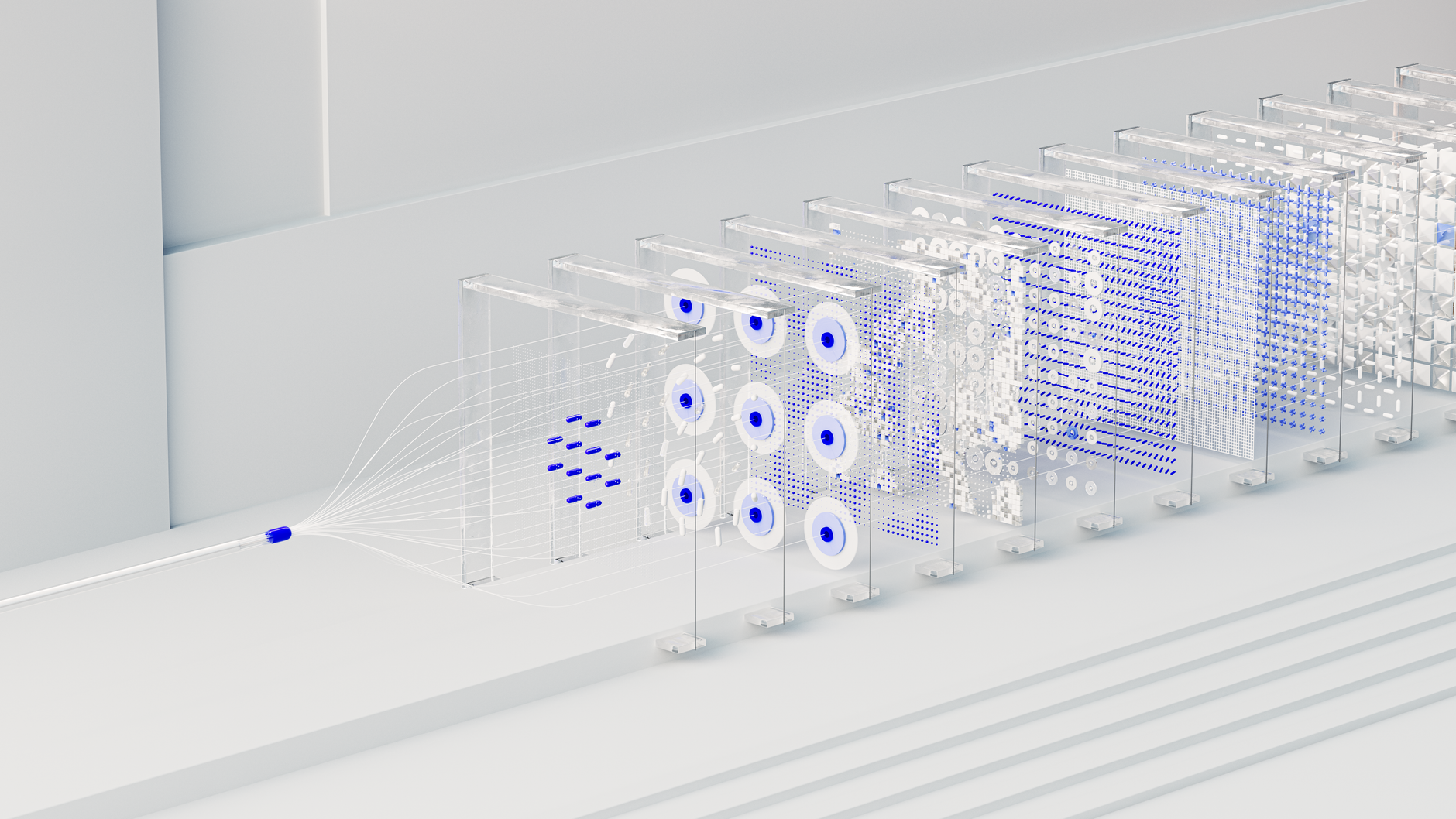
What Is Pattern Recognition in Computers?
Pattern recognition in computers is the act of finding regularities in data and mapping them to labels, predictions, or alerts. A system might see 1,000 handwritten 2s, hear a 440 Hz tone, or read 5,000 emails and learn what those inputs have in common.
A computer does not care about the story behind the data. It watches numbers. In an image, it tracks pixel values. In text, it counts words and phrases. In a signal, it checks timing, amplitude, and frequency. That is why a face unlock system, a spam filter, and a weather model can all use the same core logic even though they work on very different inputs.
The difference between pattern recognition and simple rule-following matters a lot. A rule says, “if the word FREE appears, mark the email as spam.” Pattern recognition says, “emails with FREE, all caps, and a 98% bounce rate often belong to spam, so treat this one the same way.” One is rigid. The other learns from examples.
Reality check: A machine does not “recognize” a cat the way a person does. It may only know that 120,000 labeled cat photos share shapes, edges, and textures that keep showing up in new images.
That is why the phrase “recognizing in computer” sounds simple but hides a lot of math. The computer does not wake up and understand. It computes similarity, compares features, and picks the most likely class.
In classic AI, this idea showed up early in OCR, speech tools, and handwritten digit systems from the 1970s and 1980s. Today, the same logic runs on phones, medical scanners, and fraud systems that process millions of records a day.
Why Is Feature Extraction So Important?
Feature extraction turns raw data into signals a model can compare. In image work, that may mean edges, corners, or texture blobs. In text, it may mean word counts, n-grams, or sentence length. In audio, it may mean frequency bands measured over 20 milliseconds.
A raw photo has millions of pixels, but a model cannot do much with a giant wall of numbers alone. It needs features that point to shape, contrast, and location. That is why older computer vision systems leaned hard on edge detectors and shape descriptors before deep learning took over. They made the data smaller and smarter at the same time.
The catch: Better features often beat fancier models. A simple classifier with strong features can outscore a deep model trained on sloppy input, especially on small datasets with only 500 or 1,000 samples.
Text works the same way. A model can count how often “refund,” “urgent,” or “winner” appears in 10,000 messages, then use those counts to sort emails. Audio systems do this with frequency patterns, which helps speech tools tell “bit” from “beat” and a siren from a guitar note.
This is where classic AI still teaches good habits. If you hand a model noisy, weak features, it learns noise. If you hand it clean, useful features, it spots structure faster and makes fewer dumb mistakes. That sounds boring, but boring often wins in real systems.
Feature extraction also explains why computer vision got so much better once models started learning their own features from raw images. Earlier systems depended on hand-made rules. Newer systems still need structure, but they can build part of that structure from data, which changed the field after 2012 and the rise of deep convolutional networks.
Learn Artificial Intelligence Online for College Credit
This is one topic inside the full Artificial Intelligence course on UPI Study — a self-paced, online class that earns real college credit. Credits are ACE and NCCRS evaluated and transfer to partner colleges across the US and Canada. Courses start at $250 with no deadlines and lifetime access.
Explore on UPI Study →Why Does Pattern Recognition Power Machine Learning?
Pattern recognition powers machine learning because learning itself means finding repeatable structure in data. A supervised model sees 1,000 labeled examples, spots what they share, and uses that pattern to predict the next case. That is the whole trick, just dressed up in math.
Machine learning systems do not get every rule spelled out one by one. A recommendation model on Netflix or YouTube does not receive a script that says, “if someone watches 3 crime shows, suggest 2 more.” It studies watch history, clicks, time spent, and skips, then learns which patterns predict interest.
Bottom line: Pattern recognition gives machine learning its memory, and without that memory, the model has nothing to generalize from.
This also explains why computer vision became such a big deal. A vision model trains on thousands or millions of images, learns which edges, textures, and shapes matter, and then uses that knowledge on a new photo it has never seen. That is pattern recognition with scale, and it works because the model can compare new data against a huge learned base.
The downside is simple. Models can lock onto the wrong pattern. If 80% of the training photos of wolves happen to show snow, the model may start treating snow as part of “wolf.” That kind of mistake looks silly from the outside, but it shows how literal these systems can be.
Modern AI still sits on this foundation. Language models, fraud tools, medical image classifiers, and ad systems all depend on recognizing patterns from examples. The names change. The core idea stays stubbornly familiar.
What Can a Real AI Course Teach About Pattern Recognition?
A student taking an Introduction to Artificial Intelligence course at a community college can study pattern recognition online and earn college credit through work that ties directly to ACE and NCCRS credit rules. In a 4- to 8-week module, that student may classify images, sort text, or train a tiny model on 200 labeled examples, which makes the idea feel real instead of abstract. A course like this also gives a clean path to transferable credit when a school accepts it, and that matters if the student wants to save time and keep moving.
- They learn how models label data from 2 classes, 5 classes, or more.
- They see feature extraction in text, images, and 1D signal tasks.
- They study errors, thresholds, and why 95% accuracy can still mislead.
- They practice study online with assignments they can finish on a flexible schedule.
- They build AI literacy that helps in class, work, and tech interviews.
A course that uses pattern recognition well does not just talk about AI. It shows the student how a model moves from raw input to a decision. That is a much better lesson than memorizing buzzwords.
If a school offers an Introduction to Artificial Intelligence course with ACE NCCRS credit, the student gets both the topic and the academic payoff in one place.
How Does Pattern Recognition Show Up in Real Life?
Pattern recognition shows up everywhere because data keeps piling up in 2026. A phone unlocks with a face scan, a bank flags a $1,200 transfer, a doctor’s tool marks a shadow on an X-ray, and a speech app turns 30 seconds of audio into text.
The best real-world examples are not flashy. Spam filters catch junk before you waste 12 seconds opening it. Security systems spot a strange login from another country. Retail systems notice that 3 products often sell together. All of that starts with patterns.
The downside is easy to miss. A system can look smart in a demo and still fail when the lighting changes, the accent changes, or the data shifts by 5%. That is why pattern recognition needs testing, not applause.
People sometimes treat pattern recognition like magic, but it feels more like disciplined guessing. The computer keeps score with data, not vibes. That makes it powerful, and also a little blunt.
This AI course path makes more sense when you see those examples side by side. You stop thinking about “AI” as one giant thing and start seeing the small building blocks under it.
Frequently Asked Questions about Pattern Recognition
If you get it wrong, you'll mix up a cat with a dog, miss a fraud pattern, or misread a medical scan, and a model trained on 1,000 bad examples can keep repeating the same mistake. Computers learn from labeled data, not guesswork.
What surprises most students is that computers don't 'see' or 'understand' like people; they match numbers, shapes, and text patterns across thousands or millions of examples. A face app, a spam filter, and a voice assistant all use this same idea.
This applies to anyone studying AI, data science, image tools, or speech systems, and it doesn't apply to someone looking for human-style memory or intuition. If you're asking what is pattern recognition in computers, you're asking about models that learn from data, not feelings or common sense.
Most students memorize terms like classification and hope that helps, but real progress comes from looking at 3 things: the input data, the features, and the label. That approach works in images, text, and signals like ECG traces.
Start with one small dataset, such as 100 labeled photos or 200 text messages, and sort them into 2 classes. Then look for repeated features like color, shape, word choice, or signal spikes, because pattern recognition starts with visible differences.
Pattern recognition in computers is not the same as human recognition, because computers use features and statistical rules while humans use memory, context, and meaning. A person can spot a joke or a fake smile fast, but a model needs training data and clear labels.
The most common wrong assumption is that the computer 'understands' the pattern the way a person does. It doesn't. It maps input into classes, like 'spam' or 'not spam,' using feature extraction and classification rules from an introduction to artificial intelligence.
An introduction to artificial intelligence course usually shows pattern recognition as the bridge between raw data and machine learning, using examples like image labels, text categories, and signal detection. You also see feature extraction, where the system turns messy input into usable numbers.
Computers recognize patterns in computer vision, text, and signals by turning data into features and then classifying those features into groups. In images, that can mean edges and textures; in text, word counts or embeddings; in signals, peaks, timing, or frequency.
Pattern recognition powers machine learning and computer vision by giving models the rules they learn from examples, like 50,000 labeled images or millions of text tokens. Without it, a system can't sort, detect, or predict with any real consistency.
Yes, you can study online through an online course that offers college credit, ACE NCCRS credit, or transferable credit for 3 or 4 semester credits. If the course covers pattern recognition, it usually sits inside an introduction to artificial intelligence or machine learning unit.
Look for an online course that lists college credit, ACE or NCCRS approval, and a clear syllabus with classification, feature extraction, and computer vision topics. That setup tells you the class covers the same core ideas used in pattern recognition and machine learning.
Final Thoughts on Pattern Recognition
Pattern recognition sits under a lot of the tech people use every day, from image apps to search engines to fraud alerts. It starts with raw data, passes through feature extraction, then ends with a model making a choice based on learned patterns. That process looks ordinary on paper, but it powers some of the most useful tools in modern computing. The big idea is not that computers think like people. They do not. They compare numbers at speed, and they do it with far less common sense than most humans expect. That is why they can sort 1 million records in a flash and still miss a weird edge case that a person spots right away. Still, this field matters because it gives you the basic language of AI. Once you understand classification, features, training data, and model errors, the rest of machine learning starts to look less mysterious. You can read a product pitch, a research paper, or a course outline and see what it actually means instead of just hearing the buzz. That is the real value here. Pattern recognition gives you a way to read how modern AI works, where it fails, and why some systems feel smart only when the data stays neat. If you are exploring AI, start with the basics of features, labels, and training data, then look at one real model and trace how it makes its choices.
How UPI Study credits actually work
Ready to Earn College Credit?
ACE & NCCRS approved · Self-paced · Transfer to colleges · $250/course or $99/month