
Unsupervised learning in AI is a way for a model to find patterns in data that has no labels, no answer key, and no teacher showing the right output. The model looks for groups, repeated shapes, odd cases, and hidden structure on its own. That makes it different from supervised learning, where you give the model examples with correct answers, like spam or not spam, cat or dog, pass or fail. This matters because a huge amount of real data comes unlabeled. Think of customer purchases, app clicks, medical notes, network logs, and music streams. In those cases, the goal is not always prediction. Sometimes you want the model to sort things into clusters, shrink messy data into something smaller, or spot a rare event that stands out from the crowd. A strong introduction to artificial intelligence course usually starts here for a reason: this is where students first see AI as pattern finding, not just prediction. The hard part is that unsupervised learning does not hand you a neat score like 98% accuracy. You often judge it by whether the clusters make sense, whether the compression keeps useful information, or whether the anomalies look real. That can feel messier than supervised learning. It also feels more like real life. Data rarely shows up with labels on it, and the model has to make sense of the noise first.
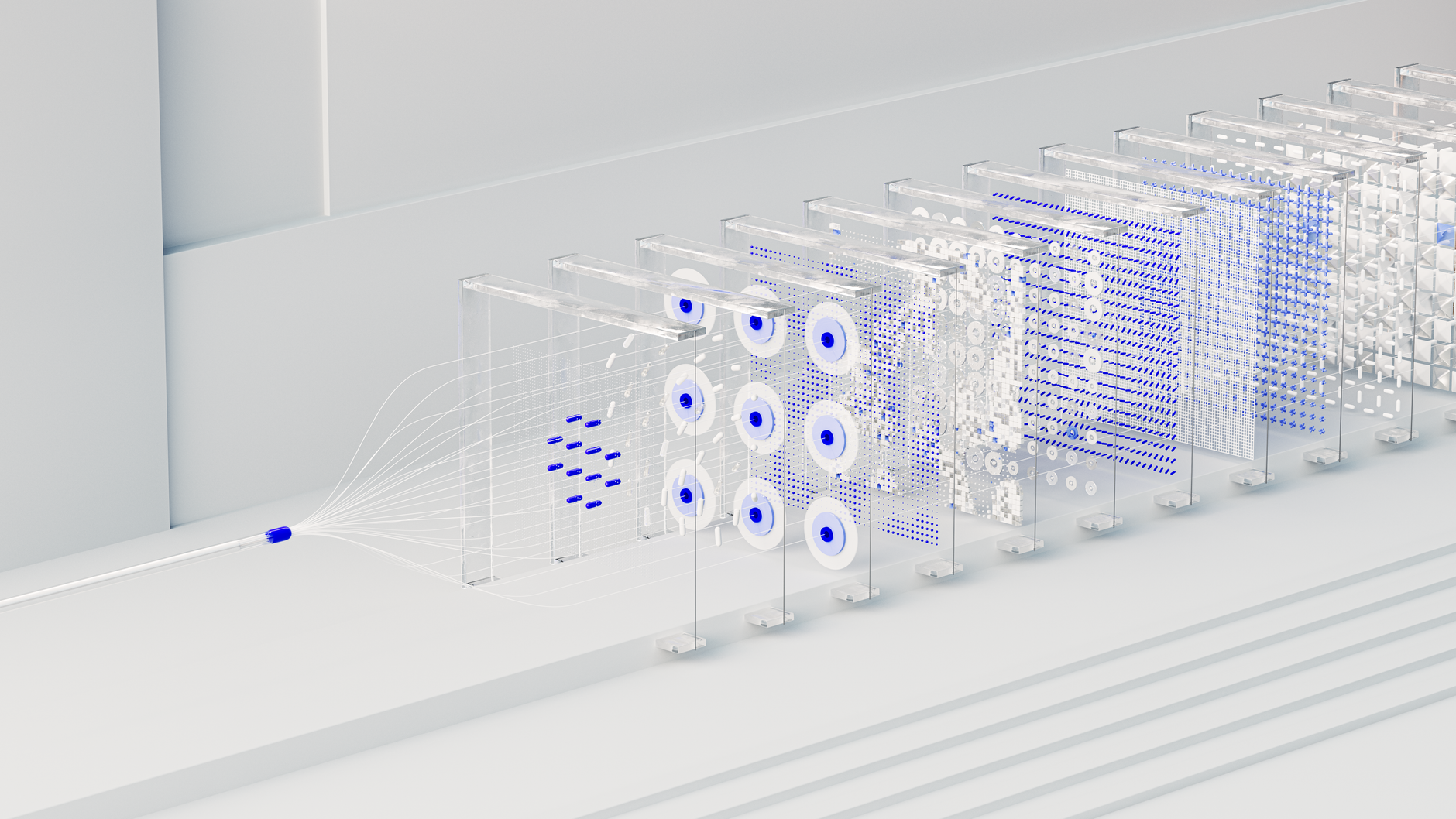
How Does Unsupervised Learning Find Patterns?
Unsupervised learning finds patterns by comparing data points to each other, then grouping or compressing them based on similarity, distance, or density. A k-means model, for example, may place 1,000 customer records into 5 clusters by repeatedly moving centroids until the groups stop changing much.
That process sounds simple, but the details matter. Distance measures like Euclidean distance help the model decide which points sit close together in a 2D chart or a 100-feature table. Density methods look for areas where points pack tightly, which helps with messy shapes that k-means handles badly. The catch: the model has no label to tell it what a “good” group looks like, so the algorithm chases structure based on math, not meaning.
Compression also plays a big role. Principal Component Analysis, or PCA, can take 50 features and reduce them to 2 or 10 while keeping much of the spread in the data. That helps with speed, plotting, and noise removal. I think this part is where students either get it or get lost, because the model does not discover truth in a human sense; it just finds repeated structure that stands out across thousands or millions of rows.
Some methods look for outliers instead of groups. If 9,900 bank transactions cluster one way and 100 sit far away, the odd 100 can trigger an anomaly score. That is useful, but it can also flag normal edge cases, which makes the method powerful and a little suspicious at the same time.
Which Unsupervised Learning Methods Matter Most?
In practice, 5 method families show up again and again. Each one solves a different pattern-finding job, and each one works best on a different kind of data, from 2D points to text files with thousands of terms.
- Clustering groups items by similarity. K-means works well on numeric data when you want clear buckets, like 3 to 12 customer segments.
- Hierarchical clustering builds a tree of groups. It helps when you want to see nested structure instead of one flat answer.
- Dimensionality reduction shrinks data size. PCA is common when 100 features feel too noisy or too hard to plot.
- Association rules find items that appear together. Market basket analysis often uses retail data, like bread and butter or phone and case pairs.
- Anomaly detection spots rare points. It works well on fraud logs, machine sensors, and network traffic where 1% of cases may look strange.
- Topic modeling finds themes in text. It works on article collections, support tickets, or 10,000-message chat archives.
- Introduction to Artificial Intelligence fits students who want a structured starting point before they touch clustering or PCA.
Worth knowing: some methods give you clean labels after the fact, but the labels still come from the algorithm, not from people. That feels handy, yet it can also be misleading if you treat every cluster like a real-world category.
Learn Artificial Intelligence Online for College Credit
This is one topic inside the full Artificial Intelligence course on UPI Study — a self-paced, online class that earns real college credit. Credits are ACE and NCCRS evaluated and transfer to partner colleges across the US and Canada. Courses start at $250 with no deadlines and lifetime access.
Browse AI Course Credit →Why Is Unsupervised Learning Different From Supervised?
Supervised learning uses labeled examples, so the model learns a direct mapping from input to answer. If you train on 10,000 photos labeled “cat” or “dog,” the goal is to predict the right label for a new image. Unsupervised learning skips that answer sheet and tries to reveal structure inside the data itself.
That difference changes the whole training goal. In supervised learning, the model minimizes error between its guess and the true label, often with a loss like cross-entropy or mean squared error. In unsupervised learning, the model may try to reduce distance inside clusters, preserve variance, or raise the likelihood of a data distribution. Reality check: no label means no direct accuracy score, and that makes evaluation less tidy than a 92% test result.
This matters when labels cost money, time, or expert labor. A radiologist can label 500 scans, but not 500,000. A company can tag 2,000 support tickets, but not every message from the last 6 years. Unsupervised learning helps when the answer is missing, expensive, or not even defined yet. I like that honesty. The model admits, “I do not know the right class,” and still tries to find something useful.
That said, unsupervised learning can feel slippery. Two runs of the same algorithm may produce different groups if the data shifts or the random start changes. Supervised learning usually feels more stable because the labels act like guardrails. Unsupervised learning removes those guardrails on purpose.
When Should You Use Unsupervised Learning?
Use unsupervised learning when you have lots of unlabeled data and you want structure, not a fixed answer. A team with 1 million rows of click data, 20 product features, or years of sensor logs often starts here because labeling every record would take months. That makes it a strong fit for discovery work, especially in the first pass over a new dataset. What this means: you use it to ask, “What is hiding in here?” before you ask, “Can the model predict this exact thing?”
- Customer segmentation: group buyers by spending, frequency, or product mix.
- Fraud spotting: flag transactions that sit outside normal 1% behavior.
- Data compression: cut 200 features down to 10 for faster modeling.
- Recommendation support: find users or items with similar taste patterns.
- Exploratory analysis: map 50,000 records before building a supervised model.
Introduction to Artificial Intelligence pairs well with this topic because pattern discovery sits at the heart of early AI work. If you also want a practical next step, Programming in Python gives you the coding base to run clustering and PCA on real data. Bottom line: unsupervised methods shine when labels do not exist, but they also help when labels exist and you still need a cleaner first look at the data.
How Long Does Unsupervised Learning Training Take?
Training time depends on data size, feature count, cluster count, and the stop rule. K-means usually stops when centroids move less than a small tolerance, or when it hits a maximum number of iterations. Many libraries, including scikit-learn, use 300 iterations as a default cap for k-means.
That 300-iteration limit matters because the algorithm can stop early or grind through all 300 passes over the data. If you set a smaller epsilon, the model waits for tighter movement before it quits, which usually raises runtime. If you raise the number of clusters from 3 to 20, the model also spends more time checking assignment changes and centroid updates. A 10,000-row dataset with 12 features will train much faster than a 10-million-row dataset with 500 features, and that gap can be huge.
PCA has its own speed story. On dense numeric data, it can run fast enough for interactive work, but a wide table with 2,000 columns can slow things down fast. Density-based methods like DBSCAN can also get heavy when point counts climb, because they check neighborhoods instead of just moving centroids. I think this is the part students skip too fast, and that causes trouble later.
A smaller epsilon does not make the model smarter. It just makes it fussier. That is a real tradeoff, and it can be the difference between a 2-minute run and a 20-minute one.
Frequently Asked Questions about Unsupervised Learning
Unsupervised learning is a type of machine learning where an AI model is trained on unlabeled data. Instead of learning from correct answers, it looks for patterns, groupings, and hidden structure on its own. It is commonly used for clustering, anomaly detection, and data compression in AI systems.
Unsupervised learning works by analyzing data points and finding similarities, differences, and relationships without labeled outcomes. The model uses statistical methods or distance measures to group similar items or reduce data complexity. This makes it useful for discovering patterns that are not obvious to humans.
Supervised learning uses labeled data, meaning each training example has a known output or correct answer. Unsupervised learning uses unlabeled data and tries to discover structure without guidance. In supervised learning, the goal is prediction; in unsupervised learning, the goal is pattern discovery and organization.
Unlabeled data is important because unsupervised learning is designed to work without predefined answers. Many real-world datasets are not labeled, such as customer behavior logs, sensor readings, or text collections. Unsupervised methods can still extract useful insights from this data by finding patterns or clusters automatically.
Common examples include customer segmentation, topic modeling, anomaly detection, recommendation grouping, and image compression. For example, an AI system might group customers with similar buying habits or detect unusual financial transactions. These tasks rely on discovering structure in data rather than predicting a labeled target.
Clustering is a technique that groups similar data points together based on their features. The model does not know the correct groups in advance; it creates them by comparing patterns in the data. Clustering is widely used in marketing, biology, cybersecurity, and other AI applications.
Dimensionality reduction is an unsupervised learning method that reduces the number of variables in a dataset while keeping important information. It helps simplify complex data, improve visualization, and sometimes speed up model training. Methods like PCA are often used to reveal the most important structure in the data.
Unsupervised learning can discover clusters, correlations, hidden categories, outliers, and repeated structures in data. It may reveal that certain users behave similarly, that some transactions are unusual, or that documents share common topics. This is useful for organizing data and finding insights without manual labeling.
Unsupervised learning is useful when labeled data is limited, expensive, or unavailable. It is often used in fraud detection, customer segmentation, recommendation systems, document analysis, and exploratory data analysis. It helps AI systems find structure first, which can support later prediction or decision-making tasks.
A major challenge is that there is no labeled answer to check against, so results can be harder to evaluate. The model may find patterns that are not meaningful or useful. Choosing the right algorithm and interpreting the output often require human judgment and domain knowledge.
Yes. An introduction to artificial intelligence course often includes unsupervised learning because it is a core AI concept. Students learn how machines can discover patterns without supervision, compare it with supervised learning, and understand how AI handles unlabeled data in practical situations.
Students can study unsupervised learning through an online course in artificial intelligence or machine learning that offers college credit. Some programs are designed to help learners earn transferable credit or ace NCCRS credit. These courses often include lessons on clustering, pattern discovery, and data analysis.
Unsupervised learning shows that AI can learn from data even when no labels or answers are provided. It helps beginners understand how machines can organize information, discover hidden relationships, and support analysis in the real world. This concept is foundational in any introduction to artificial intelligence.
Final Thoughts on Unsupervised Learning
Unsupervised learning matters because real data rarely arrives with labels already attached. A model can still sort 10,000 rows into clusters, shrink 50 features into 5, or flag the 1% of cases that look off. That makes it useful in fraud work, customer analysis, text mining, and early-stage data cleanup. The tradeoff is plain. You gain discovery, but you lose the clean answer key that supervised learning gives you. That means you have to think harder about whether a cluster means anything real, whether an anomaly truly looks weird, and whether a compressed dataset still keeps the useful parts. I prefer that kind of honesty over fake certainty. It feels harder, but it matches how data works outside a textbook. If you remember one thing, remember this: unsupervised learning does not predict a known label; it tries to reveal structure that nobody pointed out ahead of time. That is why it shows up so early in an introduction to artificial intelligence course and why it keeps showing up in serious AI work later. The methods are not magic. They are careful pattern hunters. Start with a small dataset, run one clustering method, and inspect what the groups actually mean before you trust them.
How UPI Study credits actually work
Ready to Earn College Credit?
ACE & NCCRS approved · Self-paced · Transfer to colleges · $250/course or $99/month