
Eukaryotic cells are cells with a true nucleus and membrane-bound organelles, and that one feature changes almost everything about how the cell works. Plants, animals, fungi, and protists all use this cell type, while bacteria and archaea do not. That gap matters because it changes how DNA stays protected, how proteins get built, and how energy gets handled inside the cell. Many students start with one wrong idea: they think every cell has a nucleus. Nope. Bacteria and archaea have DNA, but they do not package it inside a nucleus the way eukaryotes do. That difference shows up on every intro to biology i course exam, and it also shows up in real life when you compare a tiny bacterial cell to a human cheek cell that has many internal parts doing different jobs. You can spot a eukaryotic cell by looking for a nucleus, mitochondria, endoplasmic reticulum, Golgi apparatus, and other organelles wrapped in membranes. Those parts let the cell split work into separate spaces, which helps it grow larger and handle more complex tasks. A single-celled protist and a neuron both use this setup, even though they look nothing alike. If you are studying for college credit in biology, this topic shows up early because it sets up everything that follows: cell size, gene control, energy use, and differences between plant and animal cells. Once you can name the parts, the whole unit stops feeling like a pile of terms and starts acting like a system.
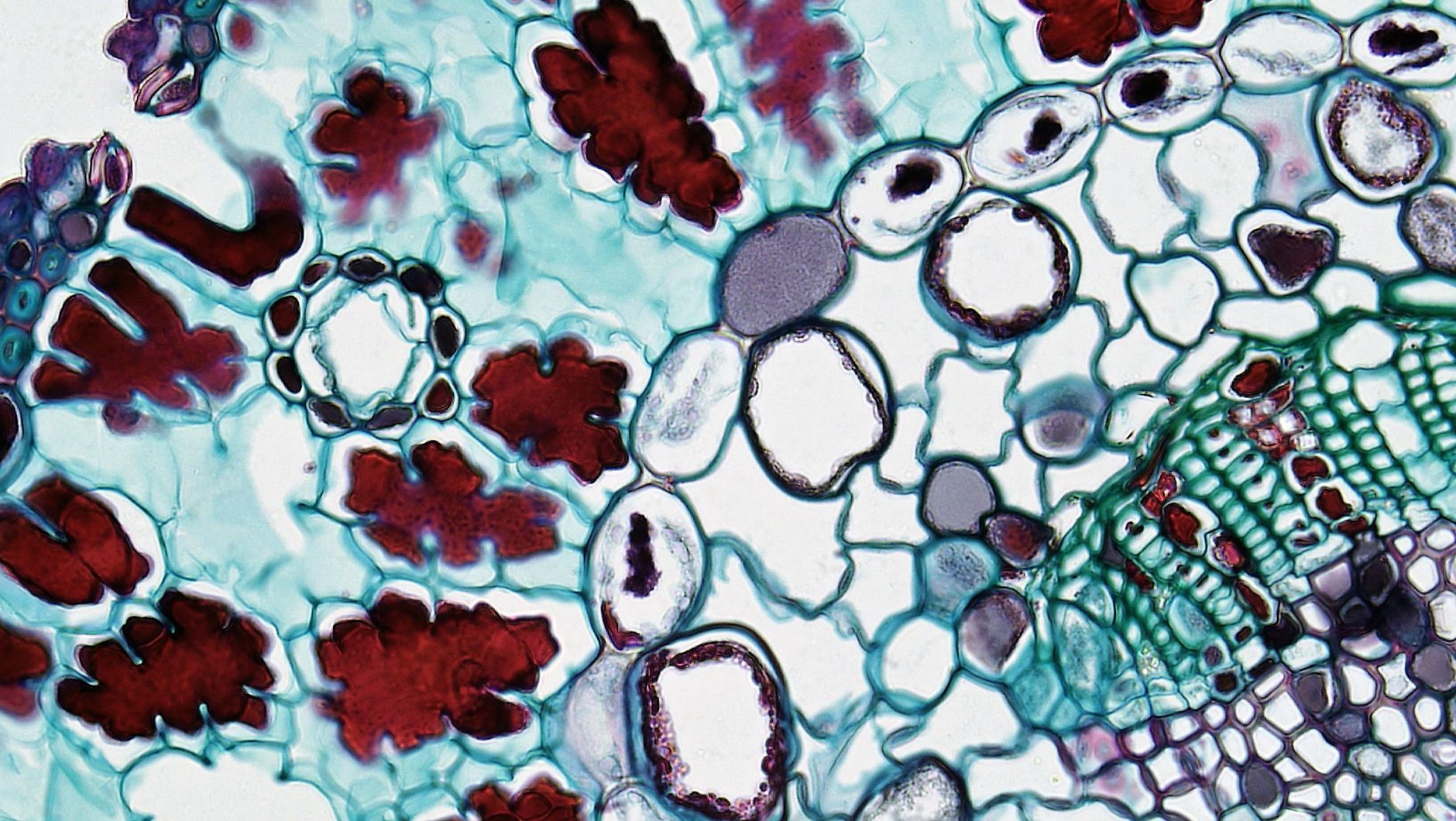
What Makes Eukaryotic Cells Different?
Eukaryotic cells have a true nucleus that holds DNA inside a membrane, and they also have organelles with their own membranes, like mitochondria and the Golgi apparatus. That setup separates them from prokaryotic cells, which include bacteria and archaea and do not have a nucleus at all.
The catch: The most common mistake is thinking every cell has a nucleus, but bacteria and archaea do not. Their DNA sits in a region called the nucleoid, which means a biology class can show 2 cells that both carry genes while only 1 has a nucleus.
That difference sounds small, but it changes cell size, shape, and control. Eukaryotic cells usually measure about 10-100 micrometers across, while many bacteria fall closer to 1-5 micrometers. I think that range matters more than people expect, because size lines up with complexity here in a pretty honest way.
A eukaryotic cell does not just store DNA. It sorts tasks across several internal spaces, and that lets it handle growth, repair, and specialization in a way a simpler cell cannot. That is why a nerve cell and a leaf cell can both be eukaryotic yet act so differently.
On an intro to biology i course exam, the clean answer is simple: eukaryotes have a nucleus and membrane-bound organelles; prokaryotes do not. If you remember only one contrast, make it that one.
Which Structures Do Eukaryotic Cells Have?
A eukaryotic cell usually contains 11 main parts students should know: nucleus, nucleolus, cell membrane, cytoplasm, mitochondria, endoplasmic reticulum, Golgi apparatus, lysosomes, vacuoles, ribosomes, and cytoskeleton. Plant cells also add chloroplasts and a cell wall, which gives them a very different look from animal cells.
- The nucleus stores DNA and acts like the cell’s control center. The nucleolus sits inside it and helps make ribosomes, which start building proteins.
- The cell membrane surrounds the cell and controls what enters and leaves. The cytoplasm fills the cell and holds the organelles in place.
- Mitochondria make most of the cell’s ATP, the main energy molecule. Cells that need lots of energy, like muscle cells, often have many mitochondria.
- The endoplasmic reticulum helps build and move proteins and lipids. Rough ER has ribosomes attached, while smooth ER does not.
- The Golgi apparatus modifies, sorts, and ships molecules. Lysosomes break down waste, and vacuoles store water, food, or other materials.
- Ribosomes build proteins in both animal and plant cells, and the cytoskeleton gives shape and support. Chloroplasts appear only in plant cells and capture sunlight for photosynthesis.
Worth knowing: These parts work together, not alone. A cell that has a nucleus but no mitochondria would fail fast, because it could not make enough energy for basic work.
If you want a clean study path, Introduction to Biology I matches this topic well, and the organelle list shows up early in almost every chapter.
Why Does the Nucleus Matter?
The nucleus matters because it stores DNA, protects that DNA from damage, and helps control which genes turn on or off. In a human cell, the nucleus keeps 46 chromosomes organized, while the same basic idea appears in yeast, oak trees, and many protists.
What this means: A nucleus lets a cell control gene expression in a tighter way, so it can make some proteins at 8 a.m. and different ones at 8 p.m. That kind of timing helps cells grow, specialize, and divide with more precision than prokaryotic cells usually can.
This matters during development. A fertilized egg and a skin cell in the same body carry the same DNA, but the nucleus helps each one use different genes, which is why one becomes a neuron and the other becomes a skin cell. That switch does not happen by magic; it depends on gene regulation.
The nucleus also helps with reproduction because it organizes DNA before cell division. During mitosis, chromosomes line up, separate, and go to new cells in an orderly way. Without that setup, a complex cell would have a hard time copying itself without making a mess.
I like this part of cell biology because it explains why eukaryotes can do more with the same basic chemistry. A prokaryotic cell can still be smart and fast, but a nucleus gives eukaryotes a cleaner system for control.
Learn Biology 1 Online for College Credit
This is one topic inside the full Biology 1 course on UPI Study — a self-paced, online class that earns real college credit. Credits are ACE and NCCRS evaluated and transfer to partner colleges across the US and Canada. Courses start at $250 with no deadlines and lifetime access.
Browse Biology 1 Course →How Do Membrane-Bound Organelles Help?
Membrane-bound organelles help by splitting cell work into separate rooms, and that compartment setup makes the cell faster and more organized. In a eukaryotic cell, mitochondria make ATP, the rough endoplasmic reticulum helps build proteins, and the Golgi apparatus packages them for delivery.
Reality check: A cell does not need one giant open space to work well. It often works better with 5 or 6 smaller spaces, because each organelle keeps a job in its own place and limits interference from other reactions.
That matters for waste, too. Lysosomes break down old parts and unwanted material, while vacuoles store water, salts, and food molecules. In plant cells, one large central vacuole can take up most of the cell’s volume, which helps with pressure and storage at the same time.
Compartmentalization also helps with transport. Molecules move from the endoplasmic reticulum to the Golgi apparatus, then out to where they need to go. That path is not random, and I think that order is one reason eukaryotic cells can manage more complex tasks than prokaryotic cells with a simpler layout.
Study online if you like, but do not skip the organelle map. Once you know what each membrane-bound part does, cell biology starts making sense instead of feeling like a list of fancy words.
How Do Plant and Animal Cells Differ?
Plant and animal cells are both eukaryotic, so they both have a nucleus, mitochondria, ribosomes, and a cell membrane. The big difference comes from what each cell needs to do: plants make their own food with photosynthesis, while animals need flexible cells that can move, stretch, and form many tissues. That is why plant cells add chloroplasts and a rigid wall, and animal cells do not. In a 10th-grade lab, that difference often becomes the easiest way to tell them apart under a microscope.
- Plant cells have a cell wall made of cellulose; animal cells do not.
- Plant cells have chloroplasts for photosynthesis; animal cells lack them.
- Plant cells usually have one large central vacuole, sometimes taking up most of the cell.
- Animal cells usually look rounder or more flexible, while plant cells often look boxy.
- Both cell types share the same core 3: nucleus, mitochondria, and cell membrane.
Introduction to Biology I and Introduction to Biology II both cover these differences, and the comparison often shows up in the first 2 units.
How Can You Identify a Eukaryotic Cell Fast?
A fast ID works like this: if you see a nucleus and membrane-bound organelles, you are looking at a eukaryotic cell. Bacteria lack both of those features, so they usually look smaller, simpler, and less compartmentalized.
The easiest test is the nucleus. If the DNA sits inside a clear, membrane-wrapped structure, that cell fits the eukaryotic pattern. If the DNA floats in a nucleoid region instead, you are in prokaryote territory.
Then check for organelles. Mitochondria, endoplasmic reticulum, Golgi apparatus, lysosomes, vacuoles, and chloroplasts all point toward eukaryotes, even if the cell shape changes a lot from one species to another. Plant and animal cells can look wildly different, but they still share the same basic internal plan.
One limitation: not every eukaryotic cell has every organelle. Mature red blood cells in humans lose their nucleus, and that special case trips people up in class. Still, the rule holds for most cells you study in intro biology.
If you remember the pattern, you can label diagrams faster and make fewer dumb mistakes on quizzes. That is a plain win.
Frequently Asked Questions about Eukaryotic Cells
What surprises most students is that eukaryotic cells keep their DNA inside a nucleus, while prokaryotic cells do not. You see this in animals, plants, fungi, and protists, and the cell also has membrane-bound parts like mitochondria, which help it do more jobs at once.
If you mix them up, you'll miss the 2 biggest clues on most intro exams: a nucleus and membrane-bound organelles. That mistake can cost you points on cell diagrams, because bacteria have no nucleus, while human, plant, and fungal cells do.
Most students try to memorize a long list, but what actually works is learning the 4 main parts first: nucleus, cell membrane, cytoplasm, and organelles like mitochondria or the Golgi apparatus. In an intro to biology i course, that pattern helps you spot cell types faster.
This applies to any student in intro to biology i, an online course, or a lab class who needs to identify cells from a diagram or microscope slide. It doesn't apply to prokaryotes like bacteria, which lack a nucleus and most membrane-bound organelles.
The most common wrong assumption is that the cell membrane does the same job as the nucleus, but it doesn't. The nucleus stores DNA, and the membrane controls what enters and leaves the cell, while organelles like mitochondria make energy.
A $0 mistake in cell ID can still hurt your grade, and that matters in a college credit or ace nccrs credit study online course. If you learn the 3 main signs of eukaryotic cells early, you can answer diagram questions faster on quizzes and exams.
Start by looking for a nucleus, because that single feature separates eukaryotic cells from prokaryotic cells in 1 quick check. Then scan for other membrane-bound organelles, such as mitochondria, chloroplasts in plants, or a Golgi apparatus.
Eukaryotic cells are usually larger than prokaryotic cells, but size alone doesn't prove anything. A better test is structure: eukaryotes have a nucleus and organelles, while prokaryotes usually measure about 1-5 micrometers and lack both.
Membrane-bound organelles matter because they split cell work into separate jobs, so the cell can run more efficiently. Mitochondria make ATP, ribosomes build proteins, and the endoplasmic reticulum helps move and shape molecules inside the cell.
Eukaryotic cells show up in biology units that support transferable credit, especially in an online course where you study cell structure and function. If you can point out the nucleus, mitochondria, and cell membrane, you can handle most intro questions on the topic.
Final Thoughts on Eukaryotic Cells
Eukaryotic cells stand out because they have a nucleus, membrane-bound organelles, and a level of internal order that prokaryotic cells do not match. That one difference shapes everything else: how DNA gets stored, how proteins get made, how energy gets produced, and how cells grow into tissues and organs. The most useful habit here is to stop treating cell parts like a random vocab list. A nucleus protects DNA. Mitochondria make ATP. The endoplasmic reticulum and Golgi apparatus move and sort molecules. Chloroplasts turn sunlight into sugar in plant cells. Once you link each structure to a job, the whole topic gets easier to remember. The other habit is to watch for the common trap. Students often think all cells have a nucleus, but bacteria and archaea do not. That single correction clears up a lot of confusion, especially when you compare prokaryotes with plant and animal cells in the same chapter. If you are studying for a quiz, make one quick sketch of a plant cell and one of an animal cell, then label the nucleus, mitochondria, ribosomes, and cell membrane from memory. That practice takes 10 minutes and usually beats rereading the page three times.
How UPI Study credits actually work
Ready to Earn College Credit?
ACE & NCCRS approved · Self-paced · Transfer to colleges · $250/course or $99/month