
Cells are the basic units of life, and the main parts you need to know are the cell membrane, cytoplasm, nucleus, and organelles. Each part has a job. The membrane controls what enters and leaves, the cytoplasm holds the cell’s interior, the nucleus stores DNA in eukaryotic cells, and organelles handle jobs like energy use and protein building. That sounds simple, but the details matter. A cell does not run like a pile of parts on a desk. It works like a tiny living system where each structure depends on the others. If the membrane fails, the cell loses balance. If the nucleus cannot read DNA, the cell cannot make the right proteins. If mitochondria stop working, energy drops fast. For students in a first college biology class, this topic shows up everywhere: membranes, genes, plant cells, animal cells, and metabolism. You also need it for lab diagrams, exam questions, and transfer credit courses that cover basic life science. One reason this topic sticks is that you can tie almost every structure to a function. That makes the subject less like memorizing labels and more like reading the logic of life itself.
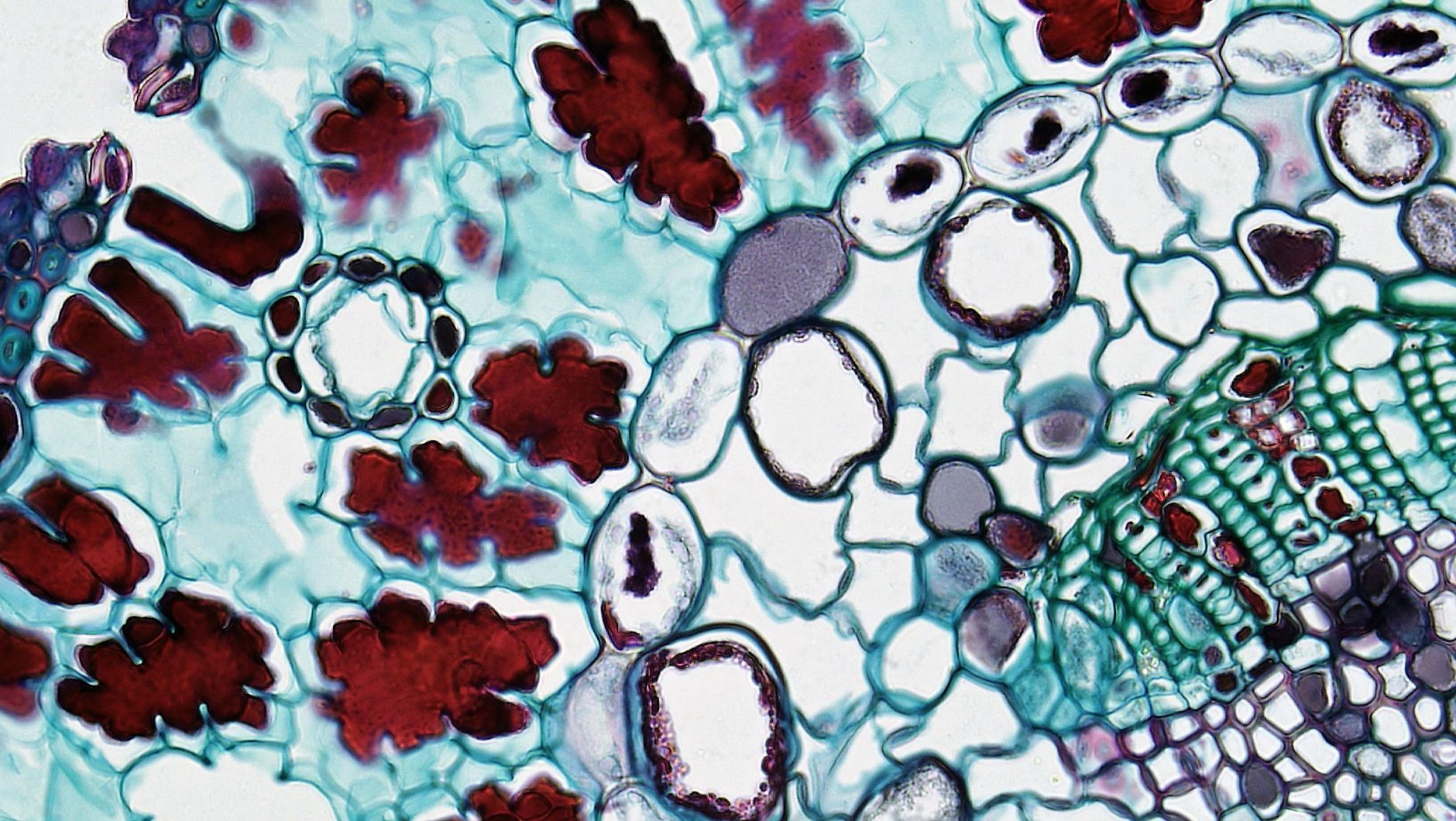
What Are The Main Cell Components?
The main cell components are the cell membrane, cytoplasm, nucleus, and organelles, and they work as one system in both plant and animal cells. In a typical eukaryotic cell, the membrane forms a thin outer edge, the cytoplasm fills the inside, and organelles do jobs like energy production, protein building, and waste handling.
A first-year biology class usually starts here because these 4 parts explain most cell diagrams. The membrane acts like a border with rules. The cytoplasm gives the cell a working space. The nucleus holds DNA in eukaryotes, and organelles such as mitochondria, ribosomes, the endoplasmic reticulum, and the Golgi apparatus keep the cell alive. I like this topic because it rewards clear thinking. You do not need fancy words; you need a clean map of what does what.
What this means: If you know these 4 parts, you can read almost any cell image from an intro to biology I course without getting lost. In a lab slide, even a 10x or 40x view can show the rough shape of the cell, but the organelles often need stronger microscopes or textbook diagrams.
A cell never acts like separate pieces glued together. It works like a small city with traffic, storage, control, and repair all happening at once. That is why basic cell structure shows up in exams, lab reports, and Introduction to Biology I with the same core pattern again and again.
How Does The Cell Membrane Control Cells?
The cell membrane controls cells by acting as a flexible boundary that lets some materials in and keeps others out. In most biology texts, it appears as a phospholipid bilayer about 7-10 nanometers thick, and that tiny layer does a huge amount of work.
The membrane is picky. That is the whole point. Small molecules like oxygen and carbon dioxide can move across more easily, while larger or charged substances need transport proteins, channels, or pumps. Water often moves by osmosis, and cells use that to keep a stable internal balance. If too much water enters or leaves, the cell can swell, shrink, or stop working right.
Reality check: A membrane does not just block things; it also helps cells talk to their environment through receptor proteins and chemical signals. That matters in nerve cells, muscle cells, and immune cells, where 1 wrong signal can change what the cell does next.
This is one reason membrane questions show up so often in biology tests. They connect structure to function in a direct way. If a cell needs nutrients, it must cross the membrane. If it needs to release waste, same deal. If it needs to respond to a hormone, the membrane often starts the chain reaction. For a student working through Introduction to Biology I, this topic is not decorative. It sits at the center of cell survival.
Why Is Cytoplasm Important In Cells?
Cytoplasm matters because it gives the cell its working space, holds organelles in place, and supports many chemical reactions inside the membrane. In eukaryotic cells, the cytoplasm includes the cytosol, which is the watery fluid where enzymes move, react, and build the molecules cells need every minute.
That fluid does more than fill space. It helps materials move from one part of the cell to another, and it gives organelles a place to function without crashing into each other. In a typical animal cell, mitochondria, ribosomes, and vesicles sit in the cytoplasm and keep doing their jobs while the cell stays alive. The cytoplasm also helps the cell keep shape, especially when internal pressure changes.
Worth knowing: Cytoplasm feels boring at first, but it supports metabolism in a way students often miss. Many reactions happen there in seconds, not hours, and a cell can fail fast if the interior environment shifts too far from normal.
I think cytoplasm gets underrated because it looks like “just filler” in diagrams. It is not filler. It is the stage where the cell’s chemistry happens. A good Introduction to Biology I lesson should make that clear with a labeled diagram and a simple cell model, because the idea clicks faster when you can see where the organelles sit in the 3D space.
Learn Biology 1 Online for College Credit
This is one topic inside the full Biology 1 course on UPI Study — a self-paced, online class that earns real college credit. Credits are ACE and NCCRS evaluated and transfer to partner colleges across the US and Canada. Courses start at $250 with no deadlines and lifetime access.
Browse Biology 1 Course →What Does The Nucleus Do In Cells?
The nucleus stores DNA and directs cell activity in eukaryotic cells, which makes it the control center for gene expression and protein production. Most nuclei measure about 5-10 micrometers across, and that size still holds an entire genome’s instructions inside one membrane-bound space.
DNA does not stay active by itself. The nucleus helps decide which genes turn on and which stay quiet, and that choice shapes what proteins the cell makes. That matters because proteins run nearly everything: enzymes, transporters, structural fibers, and many signaling tools. If the nucleus sends the wrong message, the cell can build the wrong proteins or none at all.
The nucleolus sits inside the nucleus and makes ribosomes, which then leave the nucleus and help build proteins in the cytoplasm. That link between nucleus and ribosomes is a clean example of how cell structures cooperate. One part stores the instructions. Another part helps build the machines that read them.
Bottom line: The nucleus gives eukaryotic cells order, and that order matters in tissues that divide often, such as skin or bone marrow, where cells must copy DNA accurately before dividing into 2 new cells.
Students usually remember the nucleus fastest because it has a clear job and a clear name. Still, it also has a downside: if DNA gets damaged or misread, the whole cell can drift off course. That is why a strong Introduction to Biology I unit spends time on the nucleus instead of rushing past it.
Which Organelles Differentiate Plant And Animal Cells?
Plant and animal cells share several organelles, but plant cells add a few structures that change how they store water, capture light, and hold shape. This comparison matters because exam questions often ask students to tell the two cell types apart from a diagram with 4 or 5 labels.
| Structure | Plant Cell | Animal Cell |
|---|---|---|
| Cell wall | Present; cellulose | Absent |
| Chloroplasts | Present; photosynthesis | Absent |
| Large central vacuole | Usually 1; stores water | Small vacuoles, if present |
| Mitochondria | Present | Present |
| Ribosomes | Present | Present |
| Endoplasmic reticulum and Golgi apparatus | Present | Present |
| Lysosomes | Rare or less prominent | Common |
The pattern is simple, but students still miss it under test pressure. Plant cells feel more rigid because the wall adds support, while animal cells stay more flexible. That difference matters in tissues, movement, and how each cell type keeps its shape under stress. Introduction to Biology I usually tests this with a diagram, not a long essay, so a fast visual memory helps.
How Do Cell Structures Support Life Processes?
Cell structure and cell function match each other in a neat way: membranes control transport, mitochondria make ATP, ribosomes build proteins, and the nucleus directs the whole show. In a 2026-era intro biology class, this is not just memorization trivia. It is the logic behind growth, repair, energy use, and reproduction in every living thing from bacteria to humans, even though prokaryotes and eukaryotes use different setups.
- Membrane: controls entry, exit, and signaling across a 7-10 nm barrier.
- Cytoplasm: holds organelles and supports thousands of reactions each minute.
- Nucleus: stores DNA and helps make proteins through gene expression.
- Mitochondria: turn food into ATP, the cell’s main energy currency.
- Ribosomes: build proteins from amino acids, often in seconds per chain segment.
A student who learns this once can use it in more than one class. The same cell map shows up in lab practicals, test diagrams, and any basic life science course that asks you to explain how form affects function. That is exactly why Introduction to Biology I and Introduction to Biology II both rely on cell structure so much. If you study online for college credit, this topic also gives you a strong base for later work in genetics, anatomy, and microbiology.
Frequently Asked Questions about Cell Structure
Start with the cell membrane, because it controls what enters and leaves the cell. Then look at the cytoplasm, nucleus, and organelles like mitochondria and ribosomes, since those parts handle transport, control, and energy.
This applies to anyone studying basic life science, from high school students to people taking an intro to biology i course, and it doesn't apply to people who only need a quick memorized list with no structure. You learn cells best when you connect each part to a job.
What surprises most students is that the cell membrane does more than hold the cell together. It also acts like a selective gate, while the nucleus stores DNA and tells the cell when to make proteins.
The most common wrong assumption is that all cell parts do the same thing. They don't. Mitochondria make energy, ribosomes build proteins, and the Golgi apparatus sorts and ships materials inside the cell.
You should know 4 main parts first: the cell membrane, cytoplasm, nucleus, and major organelles. In plant cells, add a cell wall, chloroplasts, and a large central vacuole; animal cells lack those 3 structures.
Most students memorize names first, but that doesn't stick. What works better is linking each part to a job, like mitochondria for energy, lysosomes for cleanup, and the nucleus for DNA control.
If you get cell structure wrong, you miss how life processes work, and that hurts later topics like photosynthesis, respiration, and genetics. You also lose easy points on diagrams that ask you to label 5 or 6 parts.
The components and structure of cells include a membrane, cytoplasm, nucleus, and organelles that keep the cell alive. Plant cells also have a rigid cell wall and chloroplasts, while animal cells have no cell wall and usually have smaller vacuoles.
An intro to biology i online course helps you study online with diagrams, quizzes, and short labs, which makes cell parts easier to remember. If the course offers college credit or transferable credit, you can also use it for a degree plan.
The nucleus stores DNA and controls cell activities, so it acts like the cell's command center. In most human cells, it sits near the center, while red blood cells don't have one at all.
Plant cells look boxy because the cell wall gives them a firm shape, and the large vacuole helps hold water and pressure. Animal cells look more rounded or irregular because they don't have a cell wall.
Major organelles each do a different job: mitochondria make ATP energy, ribosomes build proteins, the endoplasmic reticulum moves materials, and the Golgi apparatus packages them. That's the basic teamwork behind cell function.
Yes, an intro to biology i course can carry ace nccrs credit when the provider lists those approvals. That gives you college credit for work like cell diagrams, organelle quizzes, and module tests.
Final Thoughts on Cell Structure
Cells look small, but the ideas inside them reach across all of biology. The membrane explains control. The cytoplasm explains activity. The nucleus explains instruction. Organelles explain how one tiny unit can eat, move, copy DNA, and keep itself alive without any outside help. That is why cell structure shows up so early in biology classes. If you can tell a plant cell from an animal cell, explain what the nucleus does, and connect mitochondria to ATP, you already have a real base for later topics like genetics, tissues, and metabolism. You also read diagrams faster, and that saves time on tests. The best part is that this topic rewards practice. A few labeled drawings, a couple of comparison charts, and one strong pass through the main organelles can change how the whole subject feels. It stops looking random. It starts looking organized. If you are reviewing for class or building toward a biology requirement, use the cell as your anchor point and test yourself on each part until the functions feel automatic.
How UPI Study credits actually work
Ready to Earn College Credit?
ACE & NCCRS approved · Self-paced · Transfer to colleges · $250/course or $99/month