
Biology is the study of living organisms, from tiny cells to whole ecosystems, and the scientific method is the process scientists use to ask questions, test ideas, and build evidence. That sounds simple, but it covers a huge range of life, from how DNA shapes traits to how a forest changes after a fire. The science of biology matters because it touches medicine, farming, conservation, and daily health choices. A doctor who studies bacteria, a farmer who tracks crop pests, and a biologist who watches coral reefs all use the same basic habit: observe first, then test. That habit keeps biology from turning into guesswork. You will see this pattern again and again in an intro to biology I course. A student may study cells in one unit, genetics in another, and ecology in the next, yet each topic still depends on the same method: ask a question, collect data, and check whether the evidence supports the claim. That is what makes biology a science instead of a pile of facts to memorize. The best part is that this way of thinking shows up outside class too. If you want to understand a news story about vaccines, climate change, or food safety, biology gives you the tools to ask, “What did they test, and what did they actually find?”
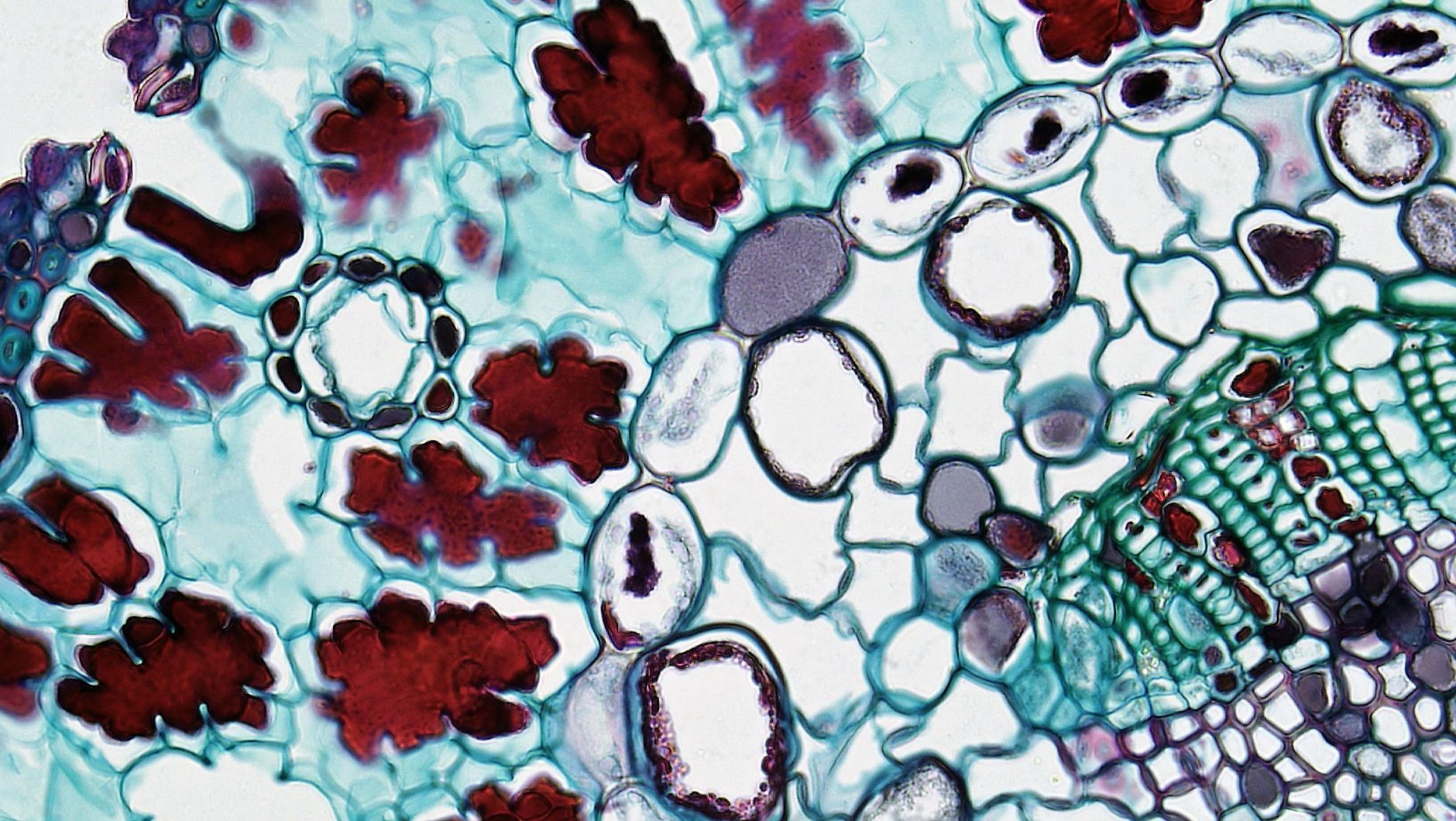
What Is Biology and Why Does It Matter?
Biology is the science of living organisms, and it covers life at every scale, from a 0.1-micrometer bacterium to a rainforest that stretches for miles. It studies cells, tissues, organs, populations, and ecosystems, so it reaches far beyond memorizing animal names or plant parts.
That range matters in medicine, where biologists study viruses, cancer cells, and genes; in agriculture, where they track crop yields and pests; and in ecology, where they measure species loss and habitat change. A 2023 report from the World Health Organization, for example, still leaned on biological research to explain disease spread and public health response.
The catch: Biology looks simple on the surface, but a good biology question can involve 3 levels at once: molecules, organisms, and environments. That mix makes the field messy in a good way, and honestly, that mess is part of the fun.
Biology also shapes everyday choices. A 5-minute look at a food label, a 30-second handwash, or a 10,000-step fitness plan all connect to how the body uses energy, fights infection, and repairs cells. If you care about your own health, this subject is already in your life.
Students often treat biology like a word list, and that misses the point. The real job of biology is to explain how life works, not just to name parts of it. That shift matters because once you understand the process, you can read a lab result, a news story, or a science claim with a sharper eye.
A first-year student in Introduction to Biology I usually meets this big idea early: life connects, and the connections matter more than isolated facts.
How Does Biology Study Living Things?
Biology studies living things by using observation, questions, hypotheses, predictions, experiments, data collection, and conclusions, usually in that order. A biologist might watch plants bend toward light, notice a fish species shrinking in size, or compare 2 groups of bacteria after 24 hours.
The process starts with a real observation. Maybe leaves in one greenhouse grow faster near a window, or mice in one habitat gain weight after a high-sugar diet. That observation turns into a question, and the question becomes a testable hypothesis, which means a statement you can check with evidence.
What this means: A hypothesis is not a wild guess; it is a clear idea that can fail. That matters because biology gets better when a scientist risks being wrong.
Next comes a prediction. If more light helps plant growth, then seedlings near 12 hours of light should grow taller than seedlings near 4 hours of light after 14 days. That prediction gives the experiment a target, and it keeps the scientist honest.
Biologists then run experiments, measure results, and compare groups. One group gets the treatment, and another group acts as the control. If 18 out of 20 plants respond the same way, that pattern matters more than one strange outlier.
You can see this style of thinking in an online biology course or in a lab at a college like Arizona State University, where students may compare cells under a microscope and track change over time. A scientist trusts evidence because life is too complex for wishful thinking.
Which Steps Make a Biology Experiment Scientific?
A scientific biology experiment follows a clear order. You start with something you can see, touch, or measure, then you shape that idea into a test. The sequence matters because random guessing never beats a controlled setup.
- Make an observation. For example, seedlings near a sunny window may grow faster than seedlings on a shelf across the room.
- Form a testable hypothesis. You might predict that 12 hours of light each day will make bean plants grow at least 2 centimeters taller than 6 hours of light after 14 days.
- Identify variables. Light hours become the independent variable, while plant height after 2 weeks becomes the dependent variable.
- Run a controlled experiment. Keep soil, water, pot size, and temperature the same, and test only the light level across 20 plants.
- Record results. Measure height every 3 days, write down numbers, and calculate the average change instead of trusting memory.
- Repeat or revise. If the result changes in a second 14-day trial, adjust the hypothesis and test again.
Reality check: A clean experiment can still fail, and that is normal. Biology respects the data, not the ego.
A strong example beats a vague one every time, and plant growth works well because it gives you a visible threshold, like 2 centimeters or 10 leaves. That kind of number makes the claim harder to fake and easier to check.
Learn Biology 1 Online for College Credit
This is one topic inside the full Biology 1 course on UPI Study — a self-paced, online class that earns real college credit. Credits are ACE and NCCRS evaluated and transfer to partner colleges across the US and Canada. Courses start at $250 with no deadlines and lifetime access.
Browse Biology 1 Course →Why Is Evidence So Important in Biology?
Evidence keeps biology honest because it turns a claim into something other people can test, repeat, and challenge. A study with 1 experiment and no controls says very little, while 3 repeated trials with clear measurements tell a much stronger story.
Biologists look for data, replication, controls, and peer review. Data gives the numbers, replication shows the result again, controls give a fair comparison, and peer review lets other scientists examine the work before the field treats it as solid. That process can feel slow, but slow science often saves people from bad ideas.
Bottom line: A claim in biology carries weight only when other researchers can check it, often with the same method, the same species, and the same 95% confidence standard in a formal paper. If a result falls apart in a second lab, scientists do not protect the claim just because they like it.
Conflicting results happen all the time. One lab may find that a drug slows tumor growth in mice, while another lab gets no effect. Then scientists look at sample size, temperature, timing, and measurement tools, because a 2-degree shift or a smaller sample can change the outcome.
Evidence also changes when new discoveries appear. In 1953, Watson and Crick described the structure of DNA, and that changed genetics fast. Science does not worship old ideas; it updates them when better evidence shows up.
That habit makes biology trustworthy, but not perfect. The field keeps revising itself, and that openness is one reason it stays useful.
What Should You Expect in Intro To Biology I?
An intro to biology I course usually covers cells, DNA, evolution, genetics, and basic ecology, and many schools ask for a grade of C or better to earn college credit or transferable credit. That rule matters because a 2.0 or 70% cutoff can decide whether the course counts toward a degree plan, an ACE NCCRS credit review, or both. Students who study online often like the pace, but the work still demands steady attention over 4 to 8 weeks or a full 12- to 16-week term.
- Cells and organelles: learn how a 1-celled organism and a human cell handle energy.
- DNA and heredity: track traits through 2 parents, 1 generation, and simple genetic crosses.
- Evolution basics: see how populations change across many generations, not overnight.
- Ecology: study food webs, habitats, and population size across 3 or more species.
- Lab skills: measure, graph, compare, and write short conclusions from actual data.
Worth knowing: Biology courses feel easier when you treat them like a set of tools, not a memory race. The students who do best usually spend 20 to 30 minutes a day reviewing terms and graphs instead of cramming the night before.
A course like Introduction to Biology I often gives you the same core structure whether you study on a campus or at home. The material stays grounded in real life, and that helps when the class moves from cells to ecosystems.
How Can You Connect Biology to Real College Credit?
College-level biology can count for real credit when the course meets a school’s rules for grade, review, and transfer. A lot of students miss that detail and focus only on the topic name, but the credit rules matter just as much as the science content.
A provider may offer ACE or NCCRS credit, and a university may accept that credit within a larger degree plan. Some schools ask for a minimum grade of C, while others set the bar at 70% or higher. That is a real mechanics issue, not a tiny detail.
The best move is to match the course to your goal before you start. If you want a class that fits into a 12-week schedule, or one that gives you room to study at night after work, a self-paced online course can help a lot. A course with no fixed deadlines also suits students who need a slower rhythm.
The topic stays the same no matter where you study it: life, evidence, and the habits of careful science.
Frequently Asked Questions about Biology
Most students memorize terms first, but the faster path is to start with the big idea: biology is the study of living things, and the scientific method is how you test ideas with observation, hypotheses, experiments, and evidence. That process turns guesswork into science.
Biology is called a science because you study life with testable questions and evidence, not opinions. Scientists look at cells, organisms, and ecosystems, then use data from experiments, field studies, and repeatable results to explain what they see.
A typical intro to biology i course can count as college credit when your school accepts the course for transfer or degree progress, and many students use it to move through a 3-credit or 4-credit science requirement. That matters if you need lab science for a major or general education plan.
What surprises most students is that the science of biology changes when new evidence shows up. A theory in biology doesn't mean a wild guess; it means a well-tested explanation built from years of observations, experiments, and data from places like Harvard, Oxford, or your local lab.
Start by picking one topic, like cells, genetics, or evolution, and then read the lesson, take notes, and answer the review questions before you move on. If you're taking an online course, that habit keeps you from treating biology like pure memorizing.
If you skip a hypothesis, mix up variables, or ignore evidence, you can draw a false conclusion from a biology experiment. That can ruin a lab report, a 20-question quiz, or a whole unit on cells and heredity.
Ace nccrs credit in biology applies to you if you're taking a qualifying course for college credit, and it doesn't apply if you never complete the work or the required assessments. That credit route matters for students who want transferable credit from an online course or a self-paced class.
The most common wrong assumption is that biology just means memorizing names of body parts or animals. The truth is that the subject asks how living systems work, from 1 cell to whole ecosystems, and the scientific method helps you prove your answer with evidence.
You observe a pattern first, then you write a hypothesis that gives a testable explanation. In biology, that might mean watching how 2 plant groups react to light, then predicting what will happen before you run the experiment.
Experiments matter because they let you change 1 factor and watch what happens while keeping the rest the same. That setup helps you see cause and effect, which sits at the heart of biology, chemistry, and other lab sciences.
You can study parts of biology without a lab, but you miss the hands-on side that shows you how scientists collect evidence. A lab may use microscopes, slides, or simple measurements, and those tools help you see living systems up close.
The scientific method supports biological discovery by giving you a repeatable path: ask, predict, test, and revise based on evidence. That's how scientists figured out ideas about DNA, bacteria, and inheritance across more than 100 years of research.
Students use online biology courses for transferable credit because they can finish structured lessons from home and still build college credit for a degree plan. If the course also carries ace nccrs credit, it gives schools a clear way to review the work.
Final Thoughts on Biology
Biology starts with life itself, but it only becomes strong science when a question turns into a test. That is the real lesson here. You observe carefully. You ask a clear question. You build a hypothesis that can fail. Then you check the result against data, not mood, rumor, or a lucky guess. That habit explains why biology reaches into medicine, farming, genetics, and ecology. A 2-week plant test and a 2-year disease study use the same core logic, even if the tools look different. Once you get that pattern, biology stops feeling like a wall of terms and starts feeling like a way to think. The scientific method also gives you a filter for claims outside class. If a headline says a supplement changes health in 7 days, you can ask about the sample size, the control group, the measurements, and whether another lab got the same result. That kind of question changes how you read the world. A good first step is simple: pick one biology topic, read the question behind it, and ask what evidence would count as a fair test.
How UPI Study credits actually work
Ready to Earn College Credit?
ACE & NCCRS approved · Self-paced · Transfer to colleges · $250/course or $99/month