
Multivariable calculus matters most in jobs that model change in 2D, 3D, or higher, especially engineering, physics, machine learning, economics, and medical imaging. The honest answer to who uses calculus in real life is this: a smaller group uses it directly every week, while a larger group uses software built on it and never writes the equations by hand. That split matters. A structural engineer may use partial derivatives to study stress in a bridge deck. A graphics programmer may use gradients to shade a 3D scene. A medical imaging engineer may use reconstruction formulas to turn 2D scan data into a usable picture. A product manager in the same company may never touch a derivative at all. So is calculus useful? Yes, if your work deals with optimization, motion, flow, fields, or reconstruction. No, if your role only reads the output from tools that specialists already built. Real-world calculus applications sound huge on paper but show up in practice in a much narrower set of jobs. The work exists. The math sits behind it. The person using it depends on the role, the team, and how close the job sits to the model itself.
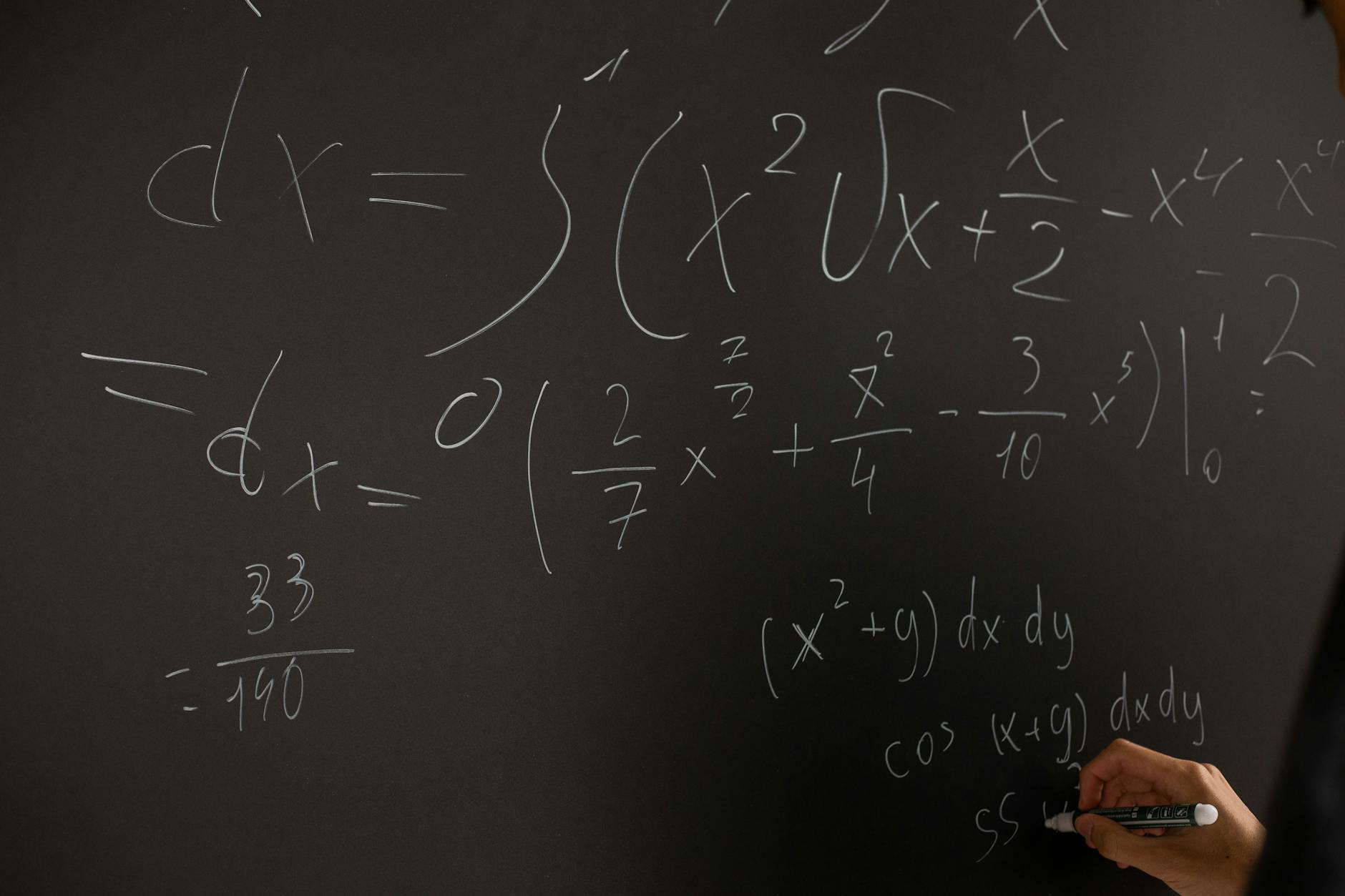
Who Actually Uses Calculus in Real Life?
Multivariable calculus gets used directly by the people who build models, tune systems, and solve change in 2D or 3D, not by everyone in a technical field. In 2026, that usually means engineers, physicists, graphics programmers, machine learning researchers, quantitative economists, and imaging scientists, while a lot of other workers in those same fields just read the results. That split is the real answer to who uses calculus in real life.
The catch: Most jobs in these fields do not ask you to derive equations from scratch every day. A civil engineer may use software like ANSYS, MATLAB, or Civil 3D; a data scientist may call a library function; a radiology technologist may run a scanner protocol. The math still matters, but the computer handles the 20-page derivation that no one wants to redo at 11 p.m.
That is why calculus in jobs feels uneven. A research physicist at CERN or a controls engineer at Siemens may use partial derivatives daily, while a project engineer, analyst, or operations lead in the same company may only need enough math to read a graph and spot a bad trend. This is where students get fooled: they hear “industry uses calculus” and imagine every employee doing heavy math, which is just wrong.
The practical uses of calculus cluster around six areas: engineering design, physics simulation, computer graphics, machine learning optimization, economics modeling, and medical imaging. If your work touches forces, heat, motion, light, probability, or scan reconstruction, calculus lives nearby. If your work mostly uses dashboards and packaged reports, you may never see more than a derivative sign. That difference is not small. It changes the kind of course you should take and how hard you should study.
Which Engineering Jobs Use Calculus Daily?
Engineering uses multivariable calculus where systems change across space and time, especially in stress analysis, fluid flow, heat transfer, signal processing, and control systems. An aerospace engineer who designs a wing at Boeing or Airbus may use pressure gradients and lift models to test shape changes across a 3D surface. A civil engineer may model how a 50-ton load spreads through a bridge beam. A controls engineer may use differential equations to keep a robot arm stable within a 0.1-second response window.
Reality check: Plenty of engineering roles never ask you to do that math yourself. Design coordinators, field engineers, QA staff, and project managers often work with software outputs, drawings, and test reports instead of derivations. They still need enough math to judge whether a result looks sane, but they do not spend their day solving triple integrals. That is a common gap between school and work.
The direct users tend to sit closer to analysis and R&D. A thermal engineer might model heat flow through a battery pack across 300 cells. A signal-processing engineer might use calculus ideas to filter noise from a 5G waveform. A mechanical engineer working on CFD may study fluid velocity at thousands of mesh points, and the software often uses calculus under the hood. If you want the strongest link between class and job, this is where it lives.
multivariable calculus course material fits that kind of work well because the jobs above lean on partial derivatives, vector fields, and optimization rather than one-variable algebra. Still, the hard truth matters: many engineering titles sound math-heavy, but only a smaller set uses calculus every week.
How Do Physics and Graphics Use Calculus?
Physics and computer graphics both use calculus to model change, but they use it in different ways. Physics uses it to describe motion, energy, fields, and simulation; graphics uses it to move cameras, shade surfaces, and animate 3D scenes in real time. In both fields, most day-to-day users rely on engines and libraries, while a smaller group writes the math that drives them.
| Field | Real-world application | Who touches the math directly |
|---|---|---|
| Physics | Motion, fields, simulation | Researchers, modelers, PhD teams |
| Graphics | Lighting, animation, rendering | Graphics engineers, engine devs |
| Physics example | Projectile path over 9.8 m/s² gravity | Lab scientists; most others use software |
| Graphics example | Shade a 60 fps 3D scene | Shader writers; artists use tools |
| Where used | Simulation tools, game engines, film pipelines | Unity, Unreal, MATLAB, Blender |
Worth knowing: A film artist at Pixar or a game artist at Ubisoft may never derive a lighting equation, yet their pipeline still depends on calculus-based rendering models. I like that split because it is honest: the math is real, but the job title does not always belong to the person doing it.
The Complete Resource for Calculus Applications
UPI Study has a full resource page built specifically for calculus applications — covering which courses count, how credits transfer to US and Canadian colleges, and how to get started at $250 per course with no deadlines.
Explore Calculus 3 Course →Why Do Machine Learning and Economics Need It?
Machine learning uses calculus because training a model means minimizing error across thousands or millions of parameters. Gradient descent, partial derivatives, and constrained optimization all come straight from multivariable calculus. A neural network with 10 million weights does not improve by magic; it updates each weight by following the gradient of the loss function. That is the core of practical uses of calculus in AI work.
Bottom line: Data scientists often use libraries like PyTorch or TensorFlow without writing the derivatives themselves, and that changes the job a lot. A machine learning researcher may need the math for backpropagation, but an analyst building a churn dashboard may never see it. This confuses students more than any other field because the same team can include both heavy math users and pure software users.
Economics uses calculus for marginal analysis, utility, and equilibrium models. If a firm wants the profit-maximizing output for 2 products, calculus helps find the point where extra cost and extra revenue balance out. A common example is estimating how many units to make when a small increase in output changes profit by $1.50 per unit at one point and $0.20 at another. Economists also use it to study constrained choices, like spending 40% of a budget on housing and 25% on transport.
Even here, most people in jobs do not work the same way. Policy analysts, business teams, and many product managers use summaries from models, not the derivations. The people closest to the math usually sit in research, quantitative finance, or modeling teams. That is the pattern across real-world calculus applications: direct use at the model-building edge, indirect use everywhere else.
Which Medical Imaging Jobs Use Calculus?
Medical imaging uses calculus to rebuild pictures from raw signals, filter noise, and improve resolution in CT, MRI, and ultrasound systems. A CT scan can collect hundreds of 2D measurements, then reconstruction math turns them into a 3D image that doctors can read. The people who write that math work very close to the scanner, and they use derivatives, integrals, and transforms all the time. Radiologists usually interpret the final image, not the equations behind it.
- CT reconstruction: turn many 2D slices into one 3D scan.
- MRI modeling: estimate signal changes across magnetic fields.
- Ultrasound filtering: reduce noise in real time.
- Imaging scientist: writes reconstruction code in MATLAB or Python.
- Radiologist: reads the image, rarely derives the math.
Should You Learn Calculus for Your Career?
Learn calculus deeply if you want engineering, physics, machine learning, or imaging development, because those paths use derivatives, gradients, and optimization in live work. If you plan to work in project management, operations, technical sales, or analyst roles that mainly use software outputs, you can often stay at a conceptual level and still do the job well. That is the honest split.
A student aiming for aerospace design or medical imaging research needs more than a surface view. A person moving into product analytics or business reporting usually needs enough math to read a model, catch a mistake, and ask a smart question. The difference can be huge. One role may need partial derivatives and vector fields; another may only need to know what a gradient means on a chart.
So ask a blunt question: do you want to build the tools, or just use them? If you want the first path, take the math seriously and practice with real-world calculus applications, not just textbook drills. If you want the second path, keep your focus on interpretation and tool use. Either way, the topic is not random school baggage. It shows up in jobs that move, measure, optimize, or image things in 3D.
If you want structured practice, explore the accredited online course for this subject and see how multivariable calculus online fits a serious study plan.
Frequently Asked Questions about Calculus Applications
Engineers, physicists, data scientists, economists, and medical imaging teams use calculus every day, but only a smaller slice of them use multivariable calculus directly. In real work, a civil engineer may use gradients for slope design, while a radiology team uses partial derivatives in CT and MRI reconstruction.
Start with one field and one formula, then match it to a job task like force, flow, or cost. That keeps you from treating calculus like a pile of symbols, and it helps you see why a 3D gradient or a rate of change matters in practice.
If you get it wrong, you can design a bridge with bad stress estimates or a flight model with the wrong lift and drag values. In physics and engineering, a small sign error in a derivative can flip a result and send a design test back to zero.
The most common wrong assumption is that only professors and math-heavy researchers use it. In real-world calculus applications, working people use it in CAD graphics, machine learning loss functions, pricing models, and medical scans, while plenty of technicians, coordinators, and analysts in those fields rarely touch it directly.
Yes, calculus is useful in jobs where you model change, motion, cost, or shape, even if you never solve long homework problems. A supply-chain analyst may use optimization ideas, and a game artist may never write derivatives even though the graphics pipeline depends on them.
Most students memorize formulas first, but what actually works is linking each formula to one job task like speed, surface area, or probability change. That shift matters in calculus in jobs because an economist may use elasticity in pricing, while a machine learning engineer may use gradients in training.
What surprises most students is that multivariable calculus shows up in medical imaging and computer graphics more than in many office jobs with the word 'analytics' in the title. A CT scan uses reconstruction math across many measurements, and a 3D renderer uses surface normals and partial derivatives to shade a face or car body.
This applies to you if you want to work in engineering, physics, graphics, machine learning, economics, or medical imaging, and it does not apply much if your job stays with basic reporting, simple bookkeeping, or routine admin work. In those lighter roles, you may never go past algebra and spreadsheets.
Engineers use multivariable calculus to model heat, fluid flow, stress, and slope across 2D and 3D systems. A mechanical engineer may use partial derivatives to estimate how temperature changes across a turbine blade, and a civil engineer may use gradients to plan drainage on a road.
Physicists use calculus to track motion, fields, and energy, while economists use it to model marginal cost, demand, and profit curves. A physicist may integrate acceleration to get velocity, and an economist may use derivatives to find the price that gives the best return.
Machine learning uses calculus to train models with gradient descent, graphics uses it to shade and move 3D objects, and medical imaging uses it to rebuild body scans from raw data. In practice, a neural net updates weights with gradients, a game engine lights a scene, and a CT system reconstructs slices from many measurements. Explore the accredited online course for this subject.
Final Thoughts on Calculus Applications
Calculus does not sit in every job that sounds technical. It sits in the jobs that model change, optimize outcomes, or rebuild information from messy data. That means engineers who size loads, physicists who simulate motion, graphics developers who control light, machine learning teams who tune losses, economists who study margins, and imaging specialists who reconstruct scans. The rest of the workforce often uses the results without touching the derivation. That split should calm you down, not scare you. You do not need to become a math purist unless your career plan puts you close to the model itself. If you want to build aircraft, train models, write rendering code, or design imaging systems, take calculus seriously and practice it with real applications. If you want to manage projects, read reports, or work inside software workflows, you still need the ideas, but you may not need the full machinery. The smartest move is simple. Match the math to the job, then study with a clear target in mind. If your path needs multivariable calculus, start there and treat it like a working tool, not a school ritual.
How UPI Study credits actually work
Ready to Earn College Credit?
ACE & NCCRS approved · Self-paced · Transfer to colleges · $250/course or $99/month