
The substitution rule in calculus 2 turns a messy integral into a cleaner one by changing variables, usually with u. You pick part of the integrand, rename it, and rewrite the differential so the integral matches a form you can actually finish. That sounds small. It is not. A lot of basic integration problems in a calculus 2 course hide a chain rule pattern, and u-substitution reverses that pattern in a controlled way. If you can spot an inside function and its derivative near it, you can cut through expressions with powers, exponentials, trig functions, and radicals without guessing wildly. For a student working toward a nursing degree, engineering transfer, or a general math requirement, this matters because integration shows up in homework, quizzes, and final exams fast. One clean substitution can save 10 minutes on a problem. A bad choice can waste the same 10 minutes and leave you with an algebra mess. The method works best when you treat it like pattern matching, not magic. The real skill is not just knowing what u stands for. The real skill is seeing when the inside expression and its derivative sit together in the integral, then rewriting the whole thing so the pieces line up. Once that clicks, the substitution rule stops feeling like a trick and starts feeling like a normal way to read an integral.
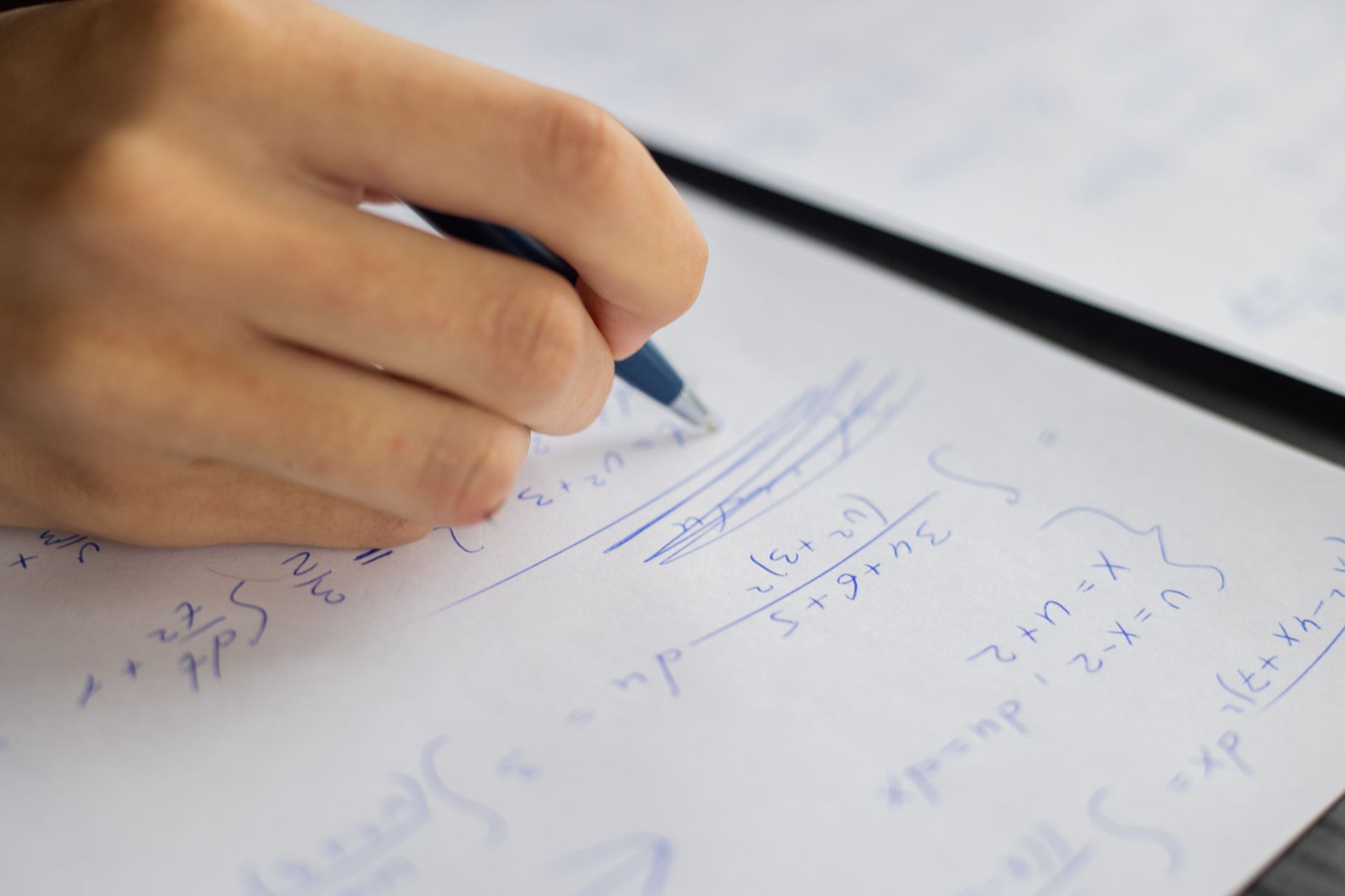
What Is the Substitution Rule in Calculus 2?
The substitution rule in calculus 2 means you rename a complicated inside expression with a new variable, usually u, so the integral becomes simpler and easier to evaluate. It reverses the chain rule in a clean 1-variable way.
Think of an integral like \int 2x(x^2+1)^5 dx. The inside piece, x^2+1, has derivative 2x right next to it, so you can swap the clutter for a new name and turn a 6-part expression into a standard power rule problem. That is why students use u-substitution on so many homework sets.
The catch: The method only works without friction when the differential matches the inside derivative closely, and that match does not happen in every integral. If you pick the wrong u, you can make a 20-second problem feel like a 10-minute rescue mission.
A strong substitution acts like a translation. You keep the math the same, but you change the words. One variable expression becomes another variable expression, then you integrate in the easier variable and switch back if you need the answer in x.
That idea matters in a calculus 2 course because many integrals hide the same 2-part structure: an outer function and an inner function. Once you see that structure, the method stops looking random.
How Do You Choose a Good Substitution?
A good substitution starts with a quick scan of the integrand, not a full algebra hunt. Look for a 2-piece pattern: one part sits inside another, and the derivative of the inside part appears nearby with the right factor.
- Find the inner expression first. In \int (3x+1)^4 dx, the inside is 3x+1, not the power 4.
- Check whether its derivative appears nearby. The derivative of 3x+1 is 3, so this integral works only if you see that factor or can create it in 1 step.
- Look for common signals like powers, exponentials, trig functions, and radicals. Expressions such as e^{5x}, \sin(2x), and \sqrt{1-4x^2} often hide a substitution.
- Ask whether the inside choice will actually simplify the integral. If u = x^2+9 turns a radical into \sqrt{u}, that beats forcing a clumsy 2-minute detour.
- Check the threshold of usefulness: if the rewrite still looks just as messy after 1 substitution, stop and rethink. A bad substitution often adds 3 extra algebra steps and no payoff.
- In borderline cases, test the derivative match before you commit. If the nearby factor is off by 2 or 5, you can often fix it with a constant; if it is off by x, the idea may fail.
Reality check: Not every integral wants u-substitution, and forcing it can make the work uglier than the original. That opinion sounds blunt, but it saves time on exams where 1 small wrong move can sink the whole problem.
Learn Calculus 2 Online for College Credit
This is one topic inside the full Calculus 2 course on UPI Study — a self-paced, online class that earns real college credit. Credits are ACE and NCCRS evaluated and transfer to partner colleges across the US and Canada. Courses start at $250 with no deadlines and lifetime access.
Explore Calculus 2 Course →How Do You Replace dx and Rewrite the Integral?
Once you choose u, the rest of the job is mechanical. You translate every x-based piece into u, replace dx through du, and keep the equation balanced so no stray x terms survive.
- Define u clearly and write the substitution next to the integral. For example, let u = x^2+1, not just “use u” and hope the algebra fixes itself.
- Differentiate both sides to get du. If u = x^2+1, then du = 2x dx, and that 2x factor tells you the integral can move forward.
- Solve for the missing piece. If du = 2x dx, then x dx = du/2, which gives you the exact replacement you need in 1 line.
- Rewrite the whole integral in u, not half in x and half in u. Mixed variables cause the most common mistake, and they waste 5 to 10 minutes during a test.
- Integrate with respect to u, then switch back to x if the problem asks for an answer in x. The final back-substitution should restore the original variable cleanly.
- Check the structure one last time. If any x still hides in the rewritten integral, the substitution is incomplete and the setup needs another pass.
What this means: The algebra matters as much as the calculus here, because one missing dx or one leftover x can ruin the whole rewrite. I like this method because it rewards neat thinking, not memorized rituals.
Which Integrals Fit the Substitution Rule Best?
The best candidates usually show a nested function and its derivative in the same 2-line span. If the integral has a clear inside-outside structure, u-substitution often turns a hard-looking expression into something you can finish in under 3 steps.
- Look for f(g(x))g'(x). That pattern is the textbook signal, and it shows up in powers, roots, and trig composites all the time.
- Powers of binomials fit often. An expression like (2x-1)^6 works well because the inside derivative, 2, sits close to the base.
- Exponentials and trig functions also fit. Forms like e^{4x} or \cos(7x) usually need just 1 substitution and 1 constant factor.
- Radicals can fit when the inside expression repeats. A term like \sqrt{1-x^2} gets easier if the derivative of 1-x^2 is already nearby.
- Some integrals are awkward for substitution. If the derivative of the inside expression never appears, or appears only after 4 extra algebra steps, another method may be cleaner.
- Some integrals do not need it at all. A plain power like \int x^5 dx already has a direct antiderivative, so substitution adds noise instead of help.
- On a timed quiz, trust the pattern over the urge to force a trick. That habit saves more points than fancy moves do.
Why Does Substitution Rule Work So Well?
The substitution rule works because the chain rule in calculus works in reverse, and that is a structural fact, not a clever stunt. If a derivative of a composite function looks like f'(g(x))g'(x), then the integral of that same pattern can collapse into a single-variable problem with u.
That connection gives students a real advantage in a calculus 2 course. Instead of treating every integral as a fresh puzzle, you start seeing repeated shapes across 20 or 30 problems, and that pattern recognition makes practice feel less chaotic. A student who can spot the match in 30 seconds usually solves the rest of the problem with much less stress.
The method also builds a bridge to more advanced integration work later, because the same idea of changing variables appears again in definite integrals and other techniques. I think that is the best part of u-substitution: it teaches you to read the structure of a problem instead of chasing symbols one by one.
There is a downside, though. Students sometimes memorize the steps without seeing the reason, then freeze when the integrand looks slightly different on an exam. If you remember the 1 big idea—rename the inside, rewrite the matching differential, then integrate the simpler form—you stay much steadier when the problem changes shape.
Frequently Asked Questions about Calculus 2
Pick a part of the integrand that has a matching derivative nearby, then set that part equal to u. In a calculus 2 course, you often spot this in expressions like (2x)·e^(x^2) or (3x^2)·cos(x^3), where the inside and its derivative sit together.
You need 2 main pieces: a new variable like u and a matching differential like du. If your integral has 1 inside function and its derivative, the substitution rule can turn a messy integral into a basic one in a few steps.
What surprises most students is that u-substitution works backward from the chain rule, not forward. You replace the inside expression first, then rewrite dx using du, and that turns a hard integral into one with a simpler power, trig, or exponential form.
If you choose the wrong substitution, the integral gets messier and you can lose the differential completely. Then you may end up with extra x terms, a bad du, or an integral that no longer matches the new variable, which makes the problem much harder.
The most common wrong assumption is that any inner expression can become u. That doesn't work unless the derivative of that expression also appears in the integrand, at least up to a constant like 2, 3, or 5.
Yes, the substitution rule in calculus 2 is a change of variables that rewrites an integral in a simpler form. You choose u, change dx into du, and then integrate with respect to u instead of x; the original variable comes back at the end.
Most students try to guess the antiderivative first, but what actually works is spotting a derivative match before you start. You check whether the inside function has its derivative nearby, then you rewrite the whole integral in u and keep the algebra clean.
This applies to students in calculus 2 who face integrals with a clear inside function and matching derivative, like many chain-rule style problems. It doesn't help much when the integrand has no clear pair, such as a plain polynomial with no inner function to substitute.
You replace the differential by differentiating your chosen u, like u = x^2 so du = 2x dx. Then you solve for dx or for the part that matches it, and that step lets you rewrite the whole integral using only u and du.
u-substitution matters in an online course because many Calculus 2 units on integration count toward college credit, especially in courses tied to ACE or NCCRS credit review. If your class uses weekly quizzes or proctored exams, this topic usually shows up early and often.
You know they fit when the derivative of your chosen inside function appears in the integrand with only a constant difference. For instance, if u = x^3 + 1, then 3x^2 dx has to show up somewhere, and that exact pairing is what makes the method work.
Yes, you can study online and learn substitution rule skills well if the course gives you lots of practice problems with full worked steps. This fits students who want transferable credit through a 3-credit or 4-credit calculus class, but it still takes real practice with 10 to 20 problems before the pattern feels natural.
You should remember that the goal is to make the integral simpler, not just different. If the new variable removes a repeated inside function and gives you a basic integral form, you've picked the right substitution.
Final Thoughts on Calculus 2
u-substitution looks small on paper, but it changes how you read integrals. You stop staring at symbols and start spotting structure. That shift matters in calculus 2 because the course throws a lot of composite expressions at you, and the students who do well usually build a fast eye for the inside function, the matching derivative, and the clean rewrite. The best habit is simple. Read the integral once, ask what sits inside what, and check whether the derivative appears nearby with the right factor. If the answer looks messy after 1 substitution, do not keep forcing it. That restraint saves time and keeps your work cleaner. A lot of students think integration always means long algebra. Not true. Many basic problems turn into 1 neat change of variables and a short antiderivative once you pick the right u. That is a good place to be, because it makes quiz problems feel less random and homework feel less like guesswork. Keep practicing with powers, exponentials, trig functions, and radicals. Those patterns show up again and again. If you can solve those with confidence, you will handle the rest of the chapter with a lot less panic.
The way this actually clicks
Skip step 3 and the whole thing is wasted.
Ready to Earn College Credit?
ACE & NCCRS approved · Self-paced · Transfer to colleges · $250/course or $99/month