
Reaction yields in chemistry tell you how much product a reaction really makes compared with the most it could make. The three terms you need are theoretical yield, actual yield, and percent yield. Theoretical yield is the max you calculate from stoichiometry. Actual yield is the amount you collect in the lab. Percent yield compares the two and turns the result into a percentage. That percentage matters because chemists do not care only that a product formed. They care whether the reaction acted the way the equation predicted, which matters in a 1 g student lab just as much as it does in a 1000 kg industrial batch. A reaction can make product and still perform badly. That sounds harsh, but chemistry rewards precise thinking. A 92% yield usually looks strong. A 35% yield usually points to losses, side reactions, or a reactant limit you did not spot. That is why reaction yields in chemistry show up in every serious lab report, from Chemistry I to advanced synthesis work. Once you know the formula, you can spot where the product disappeared and why the number on the balance did not match the number from the equation.
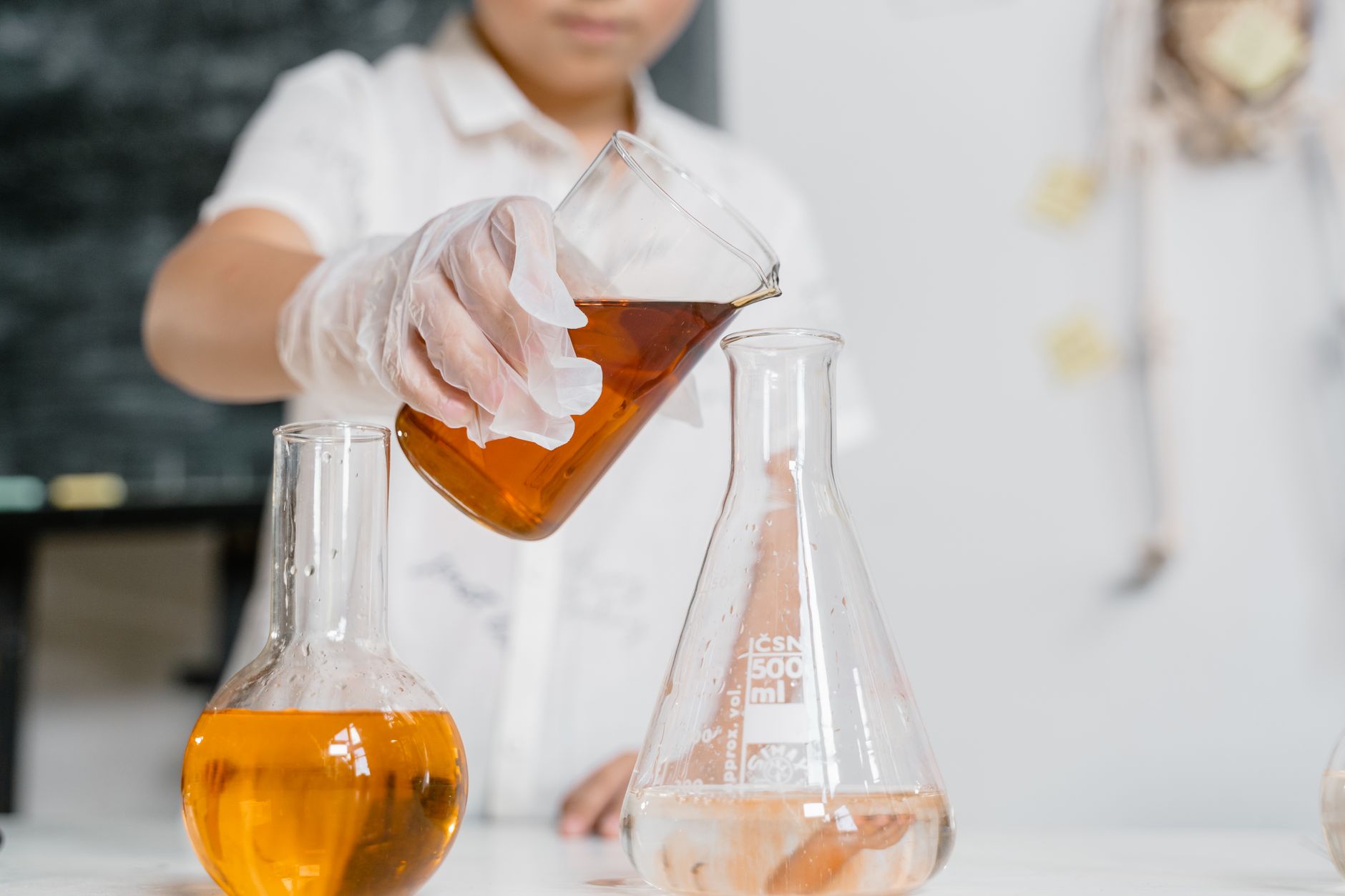
What Are Reaction Yields in Chemistry?
Reaction yields in chemistry tell you how much product a reaction made compared with the maximum amount the balanced equation predicts, usually as a mass in grams or a percentage. Theoretical yield comes from the mole ratio in the equation, actual yield comes from what you isolate on the balance, and percent yield ties them together in one number.
The catch: A reaction can form product and still post a weak yield, like 62% or 48%, because chemistry judges results against the limit set by stoichiometry, not against wishful thinking. That is why a lab can “work” and still disappoint. A 10.0 g theoretical yield with only 6.8 g collected tells a clear story.
Chemists use yield as a reality check. A 95% yield says the reaction behaved close to plan, while a 20% yield usually signals losses, side reactions, or a bad limiting-reactant choice. In a college lab, that gap can separate a clean experiment from a messy one. I like this idea because it forces you to respect the numbers, not the mood of the experiment.
Theoretical yield has one job: show the maximum product possible from the starting amounts. Actual yield has a different job: show what you truly isolated after filtering, drying, or distilling. Percent yield gives the ratio, and that ratio helps you judge whether your Chemistry I work matched the equation or wandered off course. A reaction that gives 4.5 g from a 5.0 g theory looks excellent; a reaction that gives 4.5 g from a 12.0 g theory does not.
How Do You Calculate Percent Yield?
Percent yield uses one plain formula: percent yield = (actual yield ÷ theoretical yield) × 100. If you collect 8.4 g of product when the equation predicts 10.0 g, the math gives 84%, and that number tells you how close the lab came to the maximum.
- Write the formula before you touch the calculator. Percent yield = (actual yield ÷ theoretical yield) × 100.
- Find the theoretical yield from the balanced equation and the limiting reactant. If the stoichiometry gives 10.0 g after a 2-hour reaction, use 10.0 g, not a guess.
- Measure the actual yield after isolation and drying. If the dried product weighs 8.4 g, that is the number you put in the numerator.
- Substitute the values: (8.4 g ÷ 10.0 g) × 100 = 84%. The units cancel, which is why percent yield ends in a plain percent.
- Read the result like a scientist, not a cheerleader. An 84% yield is solid; a 41% yield means you lost a lot somewhere, even if the flask looked fine.
- Check your work against obvious errors, like using 10 g when the theoretical yield was 0.10 mol converted to 9.8 g. Small decimal slips can crush a result by 100×.
What this means: The formula does not care how much time you spent in lab or how expensive the reagent was; it only cares about actual mass and theoretical mass. That is why a $40 bottle of reagent can still give a poor result if the math or the technique goes sideways. In Chemistry I, students often lose points on the yield step because they skip the unit check.
One clean habit saves headaches: keep your theoretical yield in grams and your actual yield in grams, then let the ratio do the rest. If your lab handout says the product should form in 30 minutes, do not confuse time with yield. Time helps the reaction finish, but it never replaces the equation.
Learn Chemistry Online for College Credit
This is one topic inside the full Chemistry course on UPI Study — a self-paced, online class that earns real college credit. Credits are ACE and NCCRS evaluated and transfer to partner colleges across the US and Canada. Courses start at $250 with no deadlines and lifetime access.
Browse Chemistry Course →Why Is Actual Yield Lower Than Theoretical Yield?
Actual yield usually lands below theoretical yield because real reactions lose material in several 1-5% chunks, not because the equation lies. The limiting reactant may run out early, the reaction may stop before completion, or a side reaction may steal atoms that should have gone into the product. That gap is normal in real labs.
A 100% yield sounds nice on paper, but it rarely survives contact with glassware, heat, or human hands. Product can stick to a beaker, stay dissolved in a wash liquid, or vanish during transfer from a flask to a filter funnel. Purification can also remove some of the target compound along with impurities, especially after recrystallization or distillation. If you have ever watched a few drops cling to the side of a funnel, you have seen yield disappear in real time.
Reality check: Low yield does not automatically mean the chemistry was wrong. A 67% yield can come from a perfectly valid reaction that lost product during drying, while a 98% yield can hide a sloppy product that still contains impurities. Chemists care about both purity and quantity, and those two numbers often pull in opposite directions. That is the annoying part.
Side reactions matter too. If your starting material can form two products, only one route counts toward your target compound. In a lab that starts with 5.0 g of reagent, even a tiny competing reaction can shave the yield down by 10% or more. Measurement error adds another layer. A balance that rounds to 0.01 g, a wet sample, or a rushed transfer can make the final mass look higher or lower than it really is. That is why yield never stands alone; it always sits next to technique, purity, and the limiting reagent.
Which Factors Change Reaction Yields Most?
A 1% mistake in stoichiometry or a 5°C temperature swing can move yield faster than students expect. The biggest shifts usually come from the way you measure, mix, heat, and isolate the product, not from luck.
- Reagent purity changes the starting point. A 95% pure solid gives less usable material than a clean sample, even before the reaction begins.
- Stoichiometric errors can wreck the limiting-reactant calculation. If you misread 0.50 mol as 0.05 mol, the yield math falls apart fast.
- Temperature affects rate and selectivity. A reaction run at 25°C may behave very differently from the same setup at 80°C.
- Reaction time matters when the reaction needs 30 minutes, 2 hours, or overnight to finish. Stopping too early leaves unreacted starting material behind.
- Equilibrium can cap output below 100%. Some reactions simply do not push all the way to products, even with perfect lab work.
- Lab technique affects transfer loss. A few milliliters left in a pipette, flask, or filter paper can cut yield more than a math mistake.
- Contamination and rounding error both distort the final number. A balance reading of 2.34 g instead of 2.33 g looks tiny, but it still changes percent yield.
Worth knowing: A small error can snowball. In a Chemistry I lab, one wet sample or one mislabeled flask can turn a 78% yield into 71% without changing the chemistry at all. That is why clean technique matters more than fancy wording in the report.
The best students do the boring things well: they label everything, dry the product fully, and check the balance twice. That habit beats guessing every time. In Chemistry I, those habits show up in the yield grade as clearly as any theory question.
How Do Limiting Reactants Affect Yield?
The limiting reactant sets the ceiling for theoretical yield because the reaction stops when that reagent runs out, even if the other reactant still sits there in excess. If you start with 2.0 mol of A and 3.0 mol of B, but the equation needs 1 mol of A for every 2 mol of B, then B limits the product and A stays left over.
That ceiling matters more than most students expect. Extra reagent does not create extra product once the limiting reactant disappears. If the equation predicts 4.0 g of product from the limiting reagent, adding another 10 g of the excess reagent will not push the theoretical yield above 4.0 g. It just leaves more unreacted material in the flask.
Bottom line: Limiting-reactant math controls the whole yield calculation, and a wrong choice can throw off the expected product by 25% or more. I think this is the part students should drill first, because one clean mole ratio can save a whole lab report from chaos. If you miss the limiting reagent, every later number looks suspicious.
Here is a short example. Suppose the balanced equation says 2 mol of A react with 1 mol of B to make 1 mol of product. You have 5.0 mol of A and 2.0 mol of B. B limits the reaction, because 2.0 mol of B can use only 4.0 mol of A. That means the theoretical product depends on 2.0 mol of B, not the extra 1.0 mol of A. If the product molar mass equals 50 g/mol, the ceiling becomes 100 g. The excess A cannot raise that number. It only sits there and waits.
Frequently Asked Questions about Reaction Yields
Reaction yields in chemistry tell you how much product you actually make compared with the most you could make from the balanced equation. Theoretical yield comes from stoichiometry, actual yield comes from the lab bench, and percent yield uses the formula actual ÷ theoretical × 100.
In a chemistry i course, a percent yield of 78% means you made 78 g of product out of a 100 g theoretical yield, or 39 g out of 50 g. Use actual yield divided by theoretical yield, then multiply by 100; the units cancel, so grams, moles, or liters all work if they match.
Most students plug in the first product number they see, but what actually works is finding the limiting reactant first. That reactant sets the theoretical yield, and a 2:3 mole ratio can change the result fast if one reagent runs out early.
If you get reaction yields wrong, you can overbuy reagents, miss your lab grade, or report a percent yield above 100%, which usually points to a weighing or drying error. A 100%+ result almost never means perfect chemistry.
This applies to anyone taking chemistry i, an online course, or a college credit class that uses lab data, including students aiming for transferable credit. It doesn't change the core math for AP, university, or ACE NCCRS credit work; the same percent yield formula still runs the show.
Start by balancing the equation and converting every reactant amount into moles, because that shows which substance limits the reaction. Then use the mole ratio from the balanced equation to find theoretical yield before you compare it with actual yield.
The thing that surprises most students is that a clean-looking reaction can still give a low yield, even when the equation balances perfectly. Side reactions, product loss during filtration, and incomplete drying can pull a 95% theoretical setup down to 60% or less in real lab work.
The most common wrong assumption students have is that the starting mass equals the product mass, which ignores stoichiometry and mole ratios. A 10 g reactant sample can make 2 g, 5 g, or 12 g of product depending on the balanced equation and the other reactant.
The limiting reactant sets the ceiling for reaction yields, because once it runs out, the reaction stops even if you have extra of the other reactant. If you start with 0.20 mol of one reagent and 0.35 mol of another, the smaller side usually controls the final product amount.
Real reactions usually produce less than the maximum possible amount because atoms don't all end up in the target product. Some get lost to side reactions, some stay in solution, and some disappear during transfers, so a 100 g theoretical yield often turns into a smaller actual yield.
Yes, reaction yields show up in online course work for ace nccrs credit, and the math stays the same whether you study online or in a live lab. You still calculate theoretical yield, actual yield, and percent yield from the same balanced equation and measured product mass.
Final Thoughts on Reaction Yields
Reaction yields in chemistry give you a clean way to judge how well a reaction performed. Theoretical yield tells you the maximum. Actual yield tells you what you really collected. Percent yield turns that gap into a number you can compare, whether the result lands at 92%, 75%, or 38%. The hard part is not the formula. The hard part is seeing where the missing product went. Limiting reactants set the cap. Side reactions steal atoms. Transfers, drying, and purification trim the rest. Measurement error can blur the whole picture by 0.01 g or more, which sounds tiny until it changes the final percentage. That is why a low yield does not always mean bad chemistry. Sometimes it means the reaction never had enough of the right reagent. Sometimes it means the product stayed on the glass. Sometimes it means the experiment worked, but the lab hand was rough. If you can calculate percent yield and explain the loss, you already understand the core idea. Practice one more stoichiometry problem, then check your answer against the limiting reactant before you call the reaction a success.
How UPI Study credits actually work
Ready to Earn College Credit?
ACE & NCCRS approved · Self-paced · Transfer to colleges · $250/course or $99/month