
The foreign exchange market operates by trading one currency for another in pairs, like EUR/USD or USD/JPY, and prices change all day as banks, firms, funds, and traders place bids and offers. No single building runs it. The market exists across banks, brokers, dealers, and trading systems in New York, London, Tokyo, and other hubs, so it runs 24 hours a day on weekdays. That setup matters because exchange rates affect real life quickly. A stronger dollar can make imported phones cheaper in the US, while a weaker peso can raise the local price of fuel or wheat. A business that owes 1 million euros cares about the rate today, not next month. So does a tourist, a pension fund, and a factory that buys parts from abroad. Most people first meet forex through a chart, but the real story starts with supply and demand. If more people want dollars than euros at a given moment, the dollar tends to rise against the euro. If the demand flips, the rate moves the other way. Interest rates, inflation, trade flows, politics, and plain fear all push that balance around. That mix makes forex noisy, fast, and sometimes ugly, but it also makes the market useful. You can see the whole economy showing up in one price.
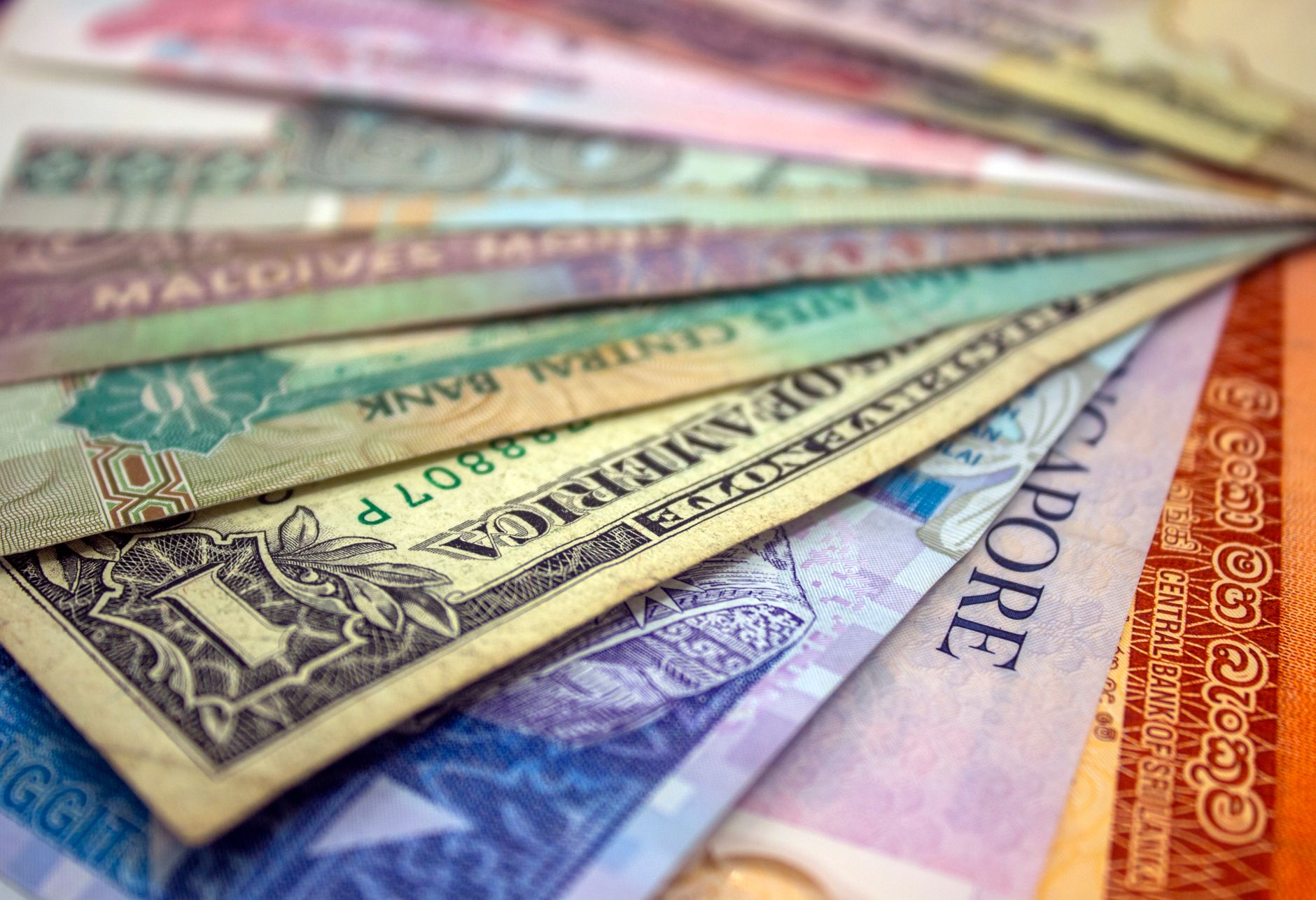
How Does the Foreign Exchange Market Work?
Forex works as a giant pair-trading system, not as one single building, and that matters because a quote like EUR/USD tells you how many US dollars buy 1 euro at that moment. Prices change every second as banks, brokers, dealers, businesses, and traders post bids and offers across time zones from Tokyo to London to New York.
The catch: The market never sleeps on weekdays, and that 24-hour rhythm creates constant price updates. A dealer in London can fill a bank order at 8:00 a.m. local time, then a trader in New York can react 5 hours later to the same news, which keeps the market moving even when one center closes.
Forex also uses a matched network instead of a central exchange like the New York Stock Exchange. A commercial bank may quote a bid of 1.0820 and an offer of 1.0822 on EUR/USD, while another dealer posts a slightly different spread. Those small gaps matter because the spread is the dealer’s price for making the trade happen.
The market feels huge because it is huge. The Bank for International Settlements reported average daily foreign exchange turnover above $7 trillion in 2022, and that scale explains why prices can move on tiny changes in demand. A multinational paying suppliers, a hedge fund making a 2-day trade, and an importer locking in next month’s invoice all hit the same pool of liquidity.
That setup gives forex a blunt, almost rude efficiency. If buyers want dollars now, the dollar price rises now. If sellers rush in after a policy speech or a jobs report, the price can drop just as fast. A slow-moving market would fail here, and forex never acts slow for long.
Who Buys And Sells Foreign Exchange?
A lot of different players trade currencies, and they do not all want the same thing. Some want to pay a bill, some want to hedge risk, and some want profit from a 0.5% move. That mix creates huge daily volume and tight spreads in the major pairs.
- Commercial banks handle most of the flow. They quote prices, match orders, and pass risk to other dealers in seconds.
- Central banks trade to shape the currency or stabilize a panic. The Bank of Japan, the European Central Bank, and the Federal Reserve all affect forex, even when they do not trade directly.
- Multinational firms move money for payroll, profits, and supply chains. A company with sales in 12 countries can create steady demand for several currencies at once.
- Importers and exporters hedge invoices. If a firm must pay €500,000 in 30 days, it may lock in the rate now so a surprise swing does not wreck the budget.
- Investors and hedge funds chase return. They may switch between 2 currencies based on interest-rate gaps, inflation data, or a central bank statement.
- Tourists and students trade smaller amounts, but millions of small transactions still add up. A family converting $3,000 for a trip can feed the same market that handles billion-dollar orders.
- Online retail traders add speed and noise. Their trades are small next to bank flows, yet they react fast to charts, headlines, and 24-hour price action.
Worth knowing: Macroeconomics helps students see why these motives differ, because a trade for cash flow and a trade for speculation do not push price the same way. That difference matters more than most beginners think.
Banks and funds create the deepest liquidity, but they also make the market twitchy when many of them chase the same story. A calm day and a shock day can look nothing alike.
How Are Exchange Rates Determined?
Exchange rates come from supply and demand most of the time, not from a single boss sitting in one office, and that is the heart of floating-rate systems. If a country attracts more foreign money in 1 week than it sends out, buyers bid up its currency. If money leaves faster than it enters, the currency usually weakens.
Interest rates matter because money moves toward better returns. If the Federal Reserve keeps rates above the European Central Bank’s rate, global investors may prefer dollar assets, which can lift the dollar against the euro. Inflation expectations matter too, since a currency with 6% inflation can lose appeal faster than one with 2% inflation if people think prices will keep rising.
Bid-ask spreads show the price of instant trading. A bank may buy euros at 1.0820 and sell them at 1.0822, and that 0.0002 gap reflects risk, inventory, and competition. In the biggest pairs, the spread stays tiny. In smaller markets, it can widen fast when news hits.
Trade flows and capital flows both move currencies, but they do not always point the same way. A country can export a lot of cars and still see its currency fall if investors pull out $10 billion from its bond market. Sentiment can overpower clean textbook logic for hours or even days, and forex traders know that mess by heart.
News can move rates instantly because the market prices expectations, not just facts. A strong US jobs report, a surprise rate cut by the Bank of England, or a 2:00 p.m. policy speech can shift bids before most people finish reading the headline. That speed makes forex useful for macroeconomics and exhausting for anyone who wants a neat, slow story.
Learn Macroeconomics Online for College Credit
This is one topic inside the full Macroeconomics course on UPI Study — a self-paced, online class that earns real college credit. Credits are ACE and NCCRS evaluated and transfer to partner colleges across the US and Canada. Courses start at $250 with no deadlines and lifetime access.
Browse Macroeconomics Course →What Makes Currency Values Rise Or Fall?
A student at Arizona State University can see this fast in a macroeconomics course: if the dollar rises 10% against the yen, a $900 laptop from Japan can suddenly cost less in the US, while the same move can squeeze a Japanese exporter’s margin. That is not abstract. It changes sticker prices, sales, and profits in real time.
Reality check: Currency moves rarely have one cause, and the market often punishes simple stories. A rate can jump on one interest-rate hint, then reverse after a 1-paragraph statement from a central bank governor.
- Higher interest rates often support a currency because investors want the better return.
- Safe-haven demand can lift the dollar, Swiss franc, or yen during a crisis.
- Inflation shocks can push a currency down fast, especially after a 6% or 7% price surge.
- Trade deficits can weaken a currency when a country buys more than it sells.
- Political risk and war headlines can scare money out of a currency in minutes.
Speculative flows also matter because traders pile into the same idea at the same time. If the market expects the Bank of Canada to hike rates by 0.25 percentage points, buying can start before the meeting and fade right after the decision if the result looks old news. That is why forex charts often look jumpy even on quiet days.
A strong currency helps importers and hurts exporters. A weak currency does the opposite. That tradeoff sounds simple, but governments spend years trying to manage it without breaking growth.
Which Exchange Rate Policies Do Governments Use?
Governments use five main exchange rate policies: free float, managed float, peg, currency band, and capital controls, and each one trades off stability against independence. A free float lets the market set the rate day by day, while a peg ties one currency to another, like a fixed link to the US dollar or the euro.
A managed float sits between those two. A central bank lets the market move the rate most of the time, then steps in when the currency swings too hard. The Swiss National Bank has used this style for years, and it can calm panic, but it also burns reserves and invites speculation if traders think the bank will blink.
A currency band works like a fence. The central bank allows the exchange rate to move inside a set range, maybe 5% above or below a target, and it acts only when the rate nears the edge. Capital controls add another layer by limiting how much money can enter or leave. Some countries use them during crises, but controls can scare away long-term investors and make trade harder.
Central banks can also move exchange rates through interest-rate policy, direct intervention, reserve use, and plain talk. If the Federal Reserve raises rates by 0.50 percentage points, the dollar often strengthens because dollar assets look better. If a bank sells part of its reserves to buy its own currency, it can support the rate for a while, though that move does not work forever.
Bottom line: A country that wants a stable currency often gives up some policy freedom, and a country that wants full freedom often accepts more exchange-rate swings. That tradeoff sits at the center of exchange rate policies and macroeconomics, and students usually miss it the first time they study the topic.
A peg can help import prices stay steady, but it can also trap a country if inflation rises faster than its trading partners. A free float gives more room to respond to shocks, yet it can sting firms that hate uncertainty. No policy wins every round.
Why Do Forex Movements Matter In Macroeconomics?
Forex belongs in macroeconomics because exchange rates feed straight into inflation, exports, imports, unemployment, and growth, and a 5% move can hit all five at once. A weaker currency can boost exports by making goods cheaper abroad, but it can also raise the cost of imported oil, food, and machinery at home.
That link makes forex a core topic in any macroeconomics course. Students who study online for college credit or transferable credit need this topic because it connects to interest rates, trade balances, and central bank policy in one clean package. A course built to ace NCCRS credit would likely use exchange rates as a main example, since the topic shows supply and demand, policy, and inflation in the same chart.
A student taking an online course can track one pair, like USD/CAD, for 2 weeks and see how a policy speech, an inflation report, or a jobs release changes the rate. That kind of work feels practical because it is practical. It also gets students ready for later classes in finance and international business without forcing them to memorize empty terms.
Macroeconomics course material often leans on forex because the market gives fast evidence for big ideas. If inflation rises faster than trading partners, the currency often weakens. If growth looks strong and rates climb, the currency often firms up. The pattern is not perfect, and that is part of the lesson.
Principles of Finance also connects here because currency risk changes the real return on cross-border investments. A bond that pays 6% can look a lot less attractive if the currency falls 4% during the same year.
How Can Students Read Forex Like An Economist?
Students read forex like an economist when they stop chasing a single chart line and start asking what policy, trade, and inflation story sits behind it. A 1% move in a currency pair can look tiny, but it can change import costs, export margins, and investment returns quickly.
What this means: You do not need to predict every tick; you need to spot the forces that usually push the market, like rates, inflation, and capital flows.
The best habit is simple: watch 3 things at once. Track the central bank, the inflation rate, and the trade balance. If one of those shifts hard, the currency often follows. That habit beats random chart watching, and I say that as plain advice, not theory cosplay.
Real-world practice helps more than memorizing terms. Read one central bank statement from the Federal Reserve, the European Central Bank, or the Bank of England, then compare it with the next day’s exchange-rate move. You will see how fast expectations change, and you will also see how often the market overreacts before calming down.
A student who learns forex this way gets a cleaner view of macroeconomics, and that pays off in later work on inflation, trade, and policy. The market looks chaotic from far away. Up close, it has a pattern.
Frequently Asked Questions about Foreign Exchange
Most students think forex is one big place where people shout prices, but it actually works through a 24-hour network of banks, brokers, firms, and central banks that trade currencies in pairs like EUR/USD. You buy one currency and sell another at the same time, and the exchange rate shows that price.
If you get this wrong, you can read a stronger dollar as a sign of one country getting richer when the real reason may be higher interest rates, inflation, or a shock in trade. That mistake can wreck a macroeconomics course answer or a real trade decision in seconds.
This applies to importers, exporters, tourists, investors, banks, and governments, but it does not cover a single store setting its own retail price in the same way. The market sets currency values across countries, and central banks like the Federal Reserve, the ECB, and the Bank of Japan often shape those values.
A 2% move can happen fast when traders react to inflation data, interest-rate news, or a central bank statement, and the market can shift in minutes across London, New York, and Tokyo. Spot trades settle in about 2 business days for many currency pairs.
The most common wrong assumption is that governments set exchange rates like a fixed menu price. In reality, many currencies float, so supply, demand, inflation, interest rates, and trade flows push the rate up or down every day.
Exchange rate policies and central bank actions can push a currency higher or lower through fixed pegs, managed floats, interest-rate changes, and direct currency intervention. A higher policy rate often attracts foreign money, while heavy market selling by a central bank can weaken the currency.
What surprises most students is that most forex trading happens without a physical exchange floor, because banks trade over electronic networks 24 hours a day, 5 days a week. The market turns over more than $7 trillion a day, so small news events can move huge sums.
Start by finding a macroeconomics online course that offers ACE NCCRS credit and transferable credit, then match it with your school’s transfer rules before you pay. That matters because some colleges accept the course as 3 credits, while others want a specific syllabus or proctored exam.
They rise when demand for a currency grows faster than supply, and they fall when traders expect weaker growth, lower interest rates, or higher inflation. A strong jobs report, a trade surplus, or a rate hike can lift a currency within hours.
No, governments usually control them only in a limited way, because markets react to inflation, interest rates, reserves, and trade balances faster than policy can move. A fixed rate can hold for years, but it takes large foreign reserves and steady central bank action to defend it.
Final Thoughts on Foreign Exchange
The foreign exchange market looks messy at first, but the logic behind it stays pretty steady. Currencies trade in pairs. Big players set most of the flow. Rates move when demand shifts, and demand shifts because of interest rates, inflation, trade, politics, and fear. That means forex gives you a live view of how the world economy reacts in real time. Once you see that pattern, the topic stops feeling like a pile of charts. A stronger currency can lower import costs and hurt exporters. A weaker currency can do the reverse. Central banks can push, nudge, or defend a currency, but they never control every move. The market always gets a vote, and that vote can turn loud after a policy speech or a surprise data release. Students often miss the policy side, and that is the part that matters most. A peg brings calm, but it can limit freedom. A free float gives freedom, but it can bring wild swings. Managed floats and capital controls sit in the middle, and each one carries a price. If you want to study this well, start by tracking one currency pair, one central bank, and one inflation report for 2 weeks. That small habit teaches more than a dozen vague summaries.
How UPI Study credits actually work
Ready to Earn College Credit?
ACE & NCCRS approved · Self-paced · Transfer to colleges · $250/course or $99/month