
Waves in physics are disturbances that move energy from place to place without permanently moving matter along with them. That sounds abstract until you think about a guitar string, a sound wave in air, or light from a lamp. In each case, something travels, but the material itself mostly wiggles in place. That idea sits right in the middle of a Physics I course. Students who want college credit, an online course, or transferable credit need to know how to read wave diagrams, use the wave equation, and tell the difference between a wave’s motion and the motion of the medium. Those skills show up in exam questions on sound, light, and simple harmonic motion. A wave is not just a shape on paper. It has measurable parts like amplitude, wavelength, frequency, period, and speed. Each one tells you something different, and Physics I teachers love asking students to mix them up. That mistake costs points fast. The good news: wave ideas show up in daily life all the time. You hear them in music, see them in water ripples, and use them every time a phone signal reaches you. Once you see the pattern, the topic stops feeling slippery and starts feeling plain.
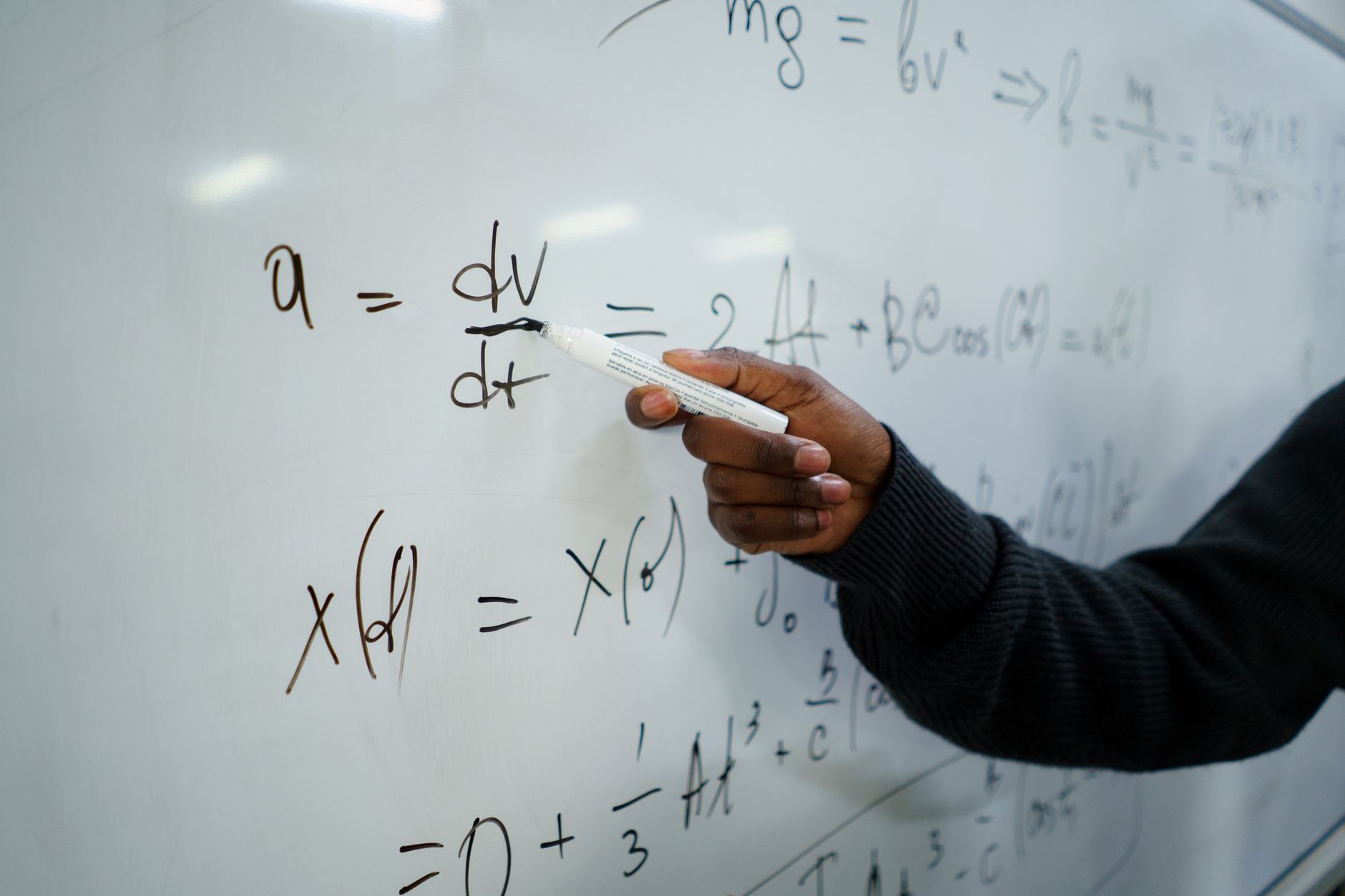
What Are Waves in Physics, Really?
A wave in physics is a moving disturbance that carries energy from one place to another while the matter itself only shifts a little and then stays put. That is the clean definition students need in a Physics I course, whether they study in a classroom, online, or for college credit through an ACE NCCRS credit path.
Think about a stretched rope with a quick flick at one end. The pulse travels 3 meters down the rope, but no bit of rope rides all the way to the far end. Each section moves up, then down, and then returns near its starting point. That local motion matters, because it tells you the wave uses the rope as a medium instead of hauling the rope along.
The catch: The wave pattern moves, not the whole material, and that single idea explains why sound reaches you from a drum 10 meters away while the air around you does not march across the room. Students who miss that point usually confuse motion with transport.
A Physics I course cares about waves because they connect simple ideas to real measurements. A lab might ask for wavelength in meters, frequency in hertz, or speed in m/s, and those numbers make the topic concrete. I think waves are one of the best first examples in physics because they look simple and still force you to think carefully.
You also see waves in online course problems that ask for transfer of energy, not transfer of stuff. A water ripple on a pond, a slinky pulse, and a stadium wave all show the same core rule: the disturbance travels outward, but the medium mostly stays in place.
How Do Waves Transfer Energy Without Moving Matter?
Waves move energy because each particle in the medium oscillates around an equilibrium point while a restoring force pushes it back. In a spring, rope, or air column, one particle nudges the next, and the disturbance spreads even though no particle travels with the wave for 20 meters.
A water ripple makes this easy to picture. Drop a pebble into a pond, and you get circles that spread outward across 2 or 3 meters. The water does move up and down, but the same patch of water does not shoot to the shore. That difference between particle motion and wave motion sits at the heart of the topic.
Reality check: A stadium wave at a 40,000-seat game looks like a crowd moving around the bowl, but each person mostly stands up, sits down, and returns to the same seat. The energy pattern travels around the stadium, and the people do not.
Sound works the same way in air, just with pressure changes instead of visible bumps. A speaker cone pushes air molecules close together, then lets them spread apart, and that push-pull travels at about 343 m/s in dry air at 20°C. Your ear detects the pressure change, not a chunk of air flying into your head.
This is why wave energy matters in Physics I. The wave carries a disturbance, and the disturbance can do work, trigger hearing, or heat a surface, even when the medium only oscillates locally. That distinction feels small until you start solving problems, and then it saves you from several bad answers.
Learn Physics 1 Online for College Credit
This is one topic inside the full Physics 1 course on UPI Study — a self-paced, online class that earns real college credit. Credits are ACE and NCCRS evaluated and transfer to partner colleges across the US and Canada. Courses start at $250 with no deadlines and lifetime access.
See Physics 1 Course →Which Wave Parts and Properties Matter Most?
In Physics I, 5 wave properties do most of the heavy lifting. If you know amplitude, wavelength, frequency, period, and speed, you can read graphs, solve v = fλ problems, and handle a lot of exam items without guessing.
- Amplitude tells you the maximum displacement from the rest position. Bigger amplitude usually means more energy, like a louder sound or a taller water wave.
- Wavelength is the distance between two matching points on a wave, such as crest to crest. It uses meters, and a 2.0 m wavelength means the pattern repeats every 2.0 m.
- Frequency tells you how many cycles pass a point each second. It uses hertz, and 1 Hz means 1 cycle per second.
- Period is the time for 1 full cycle. If frequency is 5 Hz, the period is 0.2 s, because T = 1/f.
- Speed tells you how fast the wave pattern moves. The basic rule is v = fλ, so a 4 Hz wave with a 3 m wavelength travels at 12 m/s.
- What this means: If frequency rises and wavelength stays the same medium, speed changes with the medium, not with your wishes. That point shows up all over a Physics I course and in Physics I study materials.
- Common trap: students think amplitude changes wave speed. It does not in basic Physics I problems, and that mistake can sink a test question fast.
How Do Mechanical and Electromagnetic Waves Differ?
Mechanical waves need matter to travel through, while electromagnetic waves do not. That difference matters in Physics I because it decides where a wave can exist, how fast it moves, and why sound stops in space but light does not. Students studying for Physics I need this split cold, not fuzzy.
| Type | Mechanical Waves | Electromagnetic Waves |
|---|---|---|
| Medium needed? | Yes: air, water, rope, solid | No: travel in vacuum |
| Examples | Sound, water ripples, seismic waves | Light, radio, microwaves, X-rays |
| Speed | Depends on medium; sound about 343 m/s in air at 20°C | Light about 3.0 × 10^8 m/s in vacuum |
| Everyday clue | You hear a bell through air | You see the Sun across space |
| Where it shows up | Music, earthquakes, ultrasound | Phones, Wi-Fi, ovens, vision |
That split is not trivia. It changes the whole setup of a problem. A sound wave in a 1 m tube follows medium rules, while a radio wave from a tower crosses empty space just fine. I think students miss this because textbooks pack both into the same chapter, which feels tidy but hides the real physics.
Why Do Wave Examples Show Up Everywhere?
Wave ideas show up in music, microwaves, cell signals, ocean waves, and medical imaging because all of them move energy in patterns. A piano note at 440 Hz, a microwave oven around 2.45 GHz, and a phone signal carrying data across a city all rely on wave behavior.
A music student hears amplitude as loudness and frequency as pitch. A doctor reading an ultrasound image watches reflected sound waves return from tissue boundaries in milliseconds, not minutes. A phone antenna also rides on wave rules, since signal strength, wavelength, and frequency all affect how well information moves.
Worth knowing: The same wave logic helps with Calculus I later, but Physics I asks for the direct physical picture first: what moves, what stays, and what the wave properties mean. That focus keeps the topic grounded instead of abstract.
Students who study online need this because wave questions rarely stay inside neat diagrams. A problem might mention sound in a 0.5 m pipe, light with nanometer wavelengths, or a 60 Hz power signal, and each one tests the same core ideas in a different costume.
Waves are everywhere because nature loves repeating patterns. That can feel annoying on homework, but it also makes the topic useful. Once you can read one wave, you can read a lot of real-life signals without starting over.
Frequently Asked Questions about Waves
You miss how energy moves in everything from sound to light, and that breaks a lot of later topics like reflection, refraction, and interference. A wave moves energy through a medium or space while the matter usually only oscillates around a rest position.
Most students memorize formulas like v = fλ and stop there, but what works is drawing one wave and labeling amplitude, wavelength, frequency, and speed. That lets you see how a 2x bigger frequency changes the wavelength when speed stays the same.
What surprises most students is that the medium usually does not travel with the wave. A rippling rope or a stadium wave moves energy forward, but each part of the rope or crowd mostly moves up and down or side to side.
A full Physics I course usually spends at least 1 unit on waves, and many online course outlines fold waves into a 3-part unit with motion, forces, and energy. If you want college credit, wave ideas also show up in lab work and quiz problems on speed, frequency, and wavelength.
Waves in physics are disturbances that transfer energy from place to place without moving matter along with them permanently. That caveat matters because the particles in water, air, or a string move in small loops or back-and-forth motion, not on a one-way trip.
Start with a sketch of one crest, one trough, and the distance between matching points on two waves. Then mark amplitude from the middle line to the crest, because amplitude tells you wave height and energy, while wavelength measures distance in meters.
The most common wrong assumption is that higher frequency always means faster speed. In one medium, wave speed stays fixed by the material, so if frequency goes up, wavelength usually gets shorter because v = fλ still has to balance.
This applies to you if you take high school physics, Physics I, or a college credit online course that covers mechanics and waves, and it doesn't stop at textbook problems. You also use the same ideas for sound in air, water waves, and electromagnetic waves like visible light.
Mechanical waves need matter, like air, water, or a string, while electromagnetic waves can move through a vacuum and include radio waves, microwaves, visible light, and X-rays. Sound is mechanical, so it can't travel through empty space, but light can.
Amplitude tells you how tall the wave is, wavelength tells you the distance between matching points, frequency tells you how many waves pass each second, and speed tells you how fast the wave moves. The link is v = fλ, which uses meters, hertz, and meters per second.
You see waves in physics every day in sound from a phone speaker, water ripples after a drop hits a sink, and light from a lamp or the Sun. A guitar string makes a mechanical wave, and Wi-Fi uses electromagnetic waves.
A wave unit can count as transferable credit when it sits inside an ACE or NCCRS approved online course, and that matters if you study online for Physics I. You still need the college to list the course on its transfer page, since credits live inside a degree plan.
Teachers use waves because they give you a clean model of energy moving without bulk matter moving with it, which you can see in 2D diagrams and lab demos. That same model helps with earthquakes, where P-waves and S-waves travel through Earth in different ways.
Final Thoughts on Waves
Waves sound simple until you start measuring them, and then they turn into one of the smartest ideas in Physics I. A wave carries energy, not a permanent pile of matter. That one fact explains rope pulses, sound in air, light from the Sun, and the numbers students see on homework. Amplitude, wavelength, frequency, period, and speed give you the vocabulary. Once you know those 5 pieces, you can read a graph, solve for missing values, and tell whether a problem talks about the medium or the wave pattern itself. That skill matters in a college classroom, on an online course quiz, and in any setting where a transfer credit grade depends on clean reasoning. Mechanical waves and electromagnetic waves split the world into two big cases. One needs matter. The other does not. That simple divide helps you make sense of sound, water, radio, light, and imaging tools that show up in medicine and daily life. If you want to get better at waves, start by naming the medium, then write down the units, then use the wave equation with care. Do that on 3 or 4 practice problems, and the topic stops feeling slippery fast.
How UPI Study credits actually work
Ready to Earn College Credit?
ACE & NCCRS approved · Self-paced · Transfer to colleges · $250/course or $99/month