
Integration of transcendental functions means finding antiderivatives for non-algebraic functions like e^x, ln x, sin x, and cos x. The job looks messy at first, but most problems in a calculus 2 course fall into a small set of patterns. Once you spot the function type, the rule usually shows up fast. The biggest mistake students make is simple and stubborn: they hunt for one magic rule and ignore the form of the integrand. That habit breaks down on mixed expressions like e^(3x), sin(2x+1), and 1/x^2. You do better when you ask, “What function do I see, and what inside function sits with it?” A solid approach saves time in both homework and exams. Start with the base rule for the outer function, then check whether a substitution or a trig identity will turn the integral into something familiar. That idea matters more than memorizing ten separate tricks, because calculus keeps recycling the same structures with different numbers attached. A student who can recognize e^(g(x)) and sin(g(x)) has a real edge over someone who memorizes examples from one online course and hopes for the best. Check the result by differentiating it. That last step catches missing constants, bad signs, and chain-rule slips in 30 seconds or less.
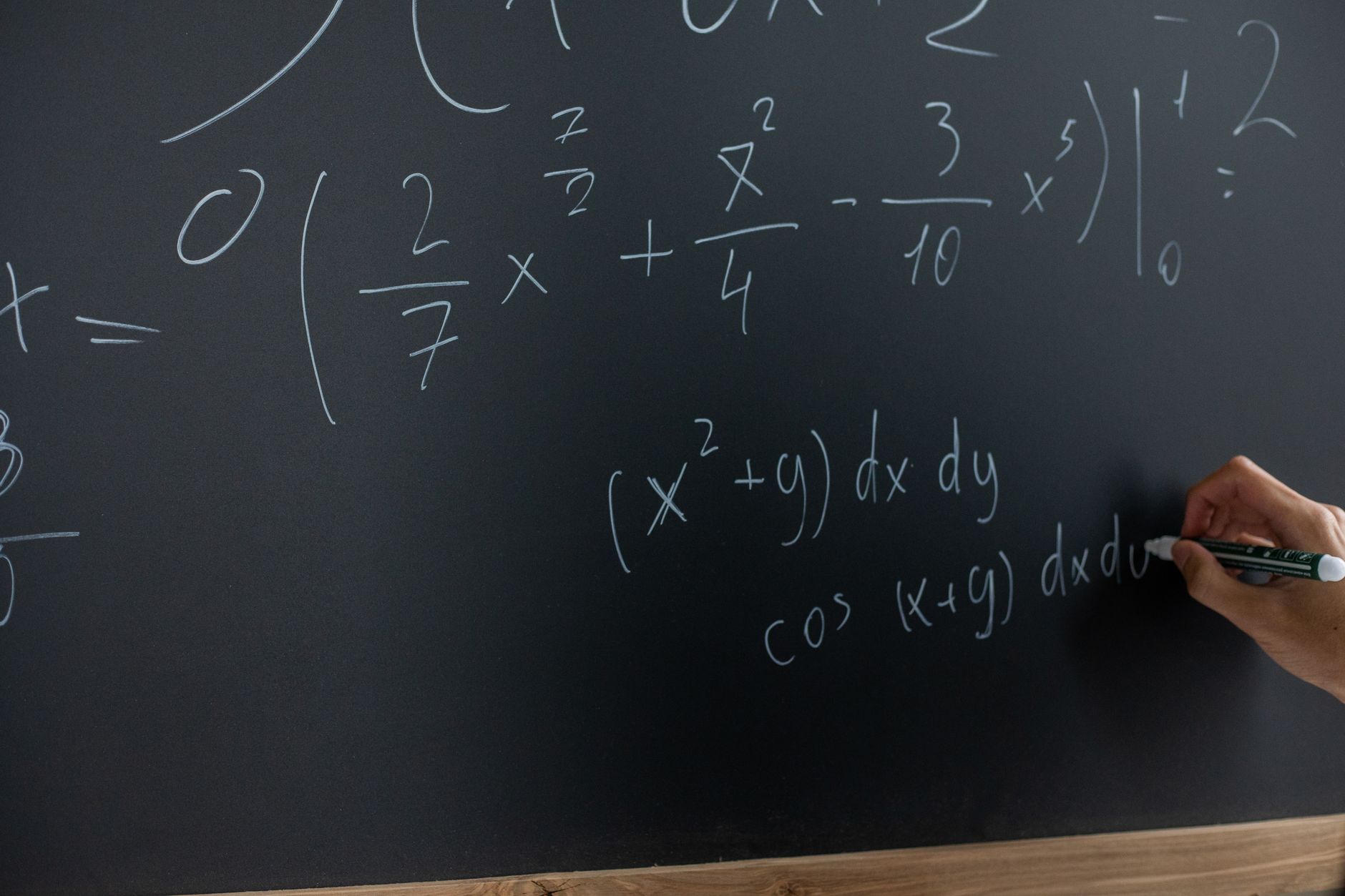
What Is Integration Of Transcendental Functions?
Integration of transcendental functions means finding antiderivatives for functions that do not come from polynomials or simple rational expressions, like e^x, ln x, sin x, cos x, and inverse trig functions such as arctan x. In calculus 2, that usually means you are undoing derivatives you already know from Calc I, just with more mixed forms and more careful pattern spotting.
Most students miss this: They treat every integral like a brand-new puzzle, but the smart move is to identify the function family first and the method second. That matters because ∫e^x dx, ∫sin x dx, and ∫1/x dx all behave differently, even though they all belong in the same chapter. A sloppy guess can cost a full 10-point problem.
Integration means “find a function whose derivative gives the original.” That sounds plain, and it is. For example, the antiderivative of e^x is still e^x, while the antiderivative of 1/x is ln|x| + C, not 1/x^2 or some made-up shortcut. The absolute value matters, and so does the + C, because antiderivatives come in families, not single answers.
The most common misconception is that transcendental integration uses one universal rule. It does not. Students often try to force substitution onto every problem or memorize a table without checking whether the inner derivative matches. That habit fails on forms like e^(3x), ln(5x), and sin(4x), where the structure tells you what to do in the first 5 seconds.
A better habit is blunt: name the outer function, look for an inner derivative, and then choose the rule. That way you stop guessing and start reading the integrand like a map.
Reality check: The same 3 or 4 patterns show up again and again, and that is why this part of calculus 2 feels easier after the first week.
Which Antiderivative Rules Apply To Each Function?
The core rules in this chapter cover only a handful of standard forms, and you can learn them without memorizing a giant wall of formulas. A clean set of 7 rules handles most homework in a calculus 2 course, including the logarithm that appears when the integrand looks like 1/x.
- ∫e^x dx = e^x + C. The derivative of e^x gives back e^x, so the antiderivative does the same.
- ∫a^x dx = a^x/ln a + C, where a > 0 and a ≠ 1. This rule matters because bases like 2, 3, and 10 do not behave like e.
- ∫sin x dx = -cos x + C, and ∫cos x dx = sin x + C. One sign flips, the other does not, which students mix up constantly.
- ∫sec^2 x dx = tan x + C. This one shows up often because the derivative of tan x is sec^2 x.
- ∫sec x tan x dx = sec x + C. The pairing matters; if you see sec x and tan x together, that is a strong signal.
- ∫1/x dx = ln|x| + C. Logs appear naturally here, and the absolute value keeps the rule correct for negative x too.
- For any of these rules, the constant of integration C must stay on the page. Lose it once, and your answer stops being a full antiderivative.
Watch the sign: The sign pattern for sine and cosine trips up a lot of people, especially when they work 6 problems in a row and stop checking each one.
A good memory trick helps, but only if you attach it to the derivative, not to a rhyme. If you know d/dx(tan x) = sec^2 x and d/dx(sec x) = sec x tan x, you can reverse them fast.
One sharp warning: Do not force a logarithm where no 1/x structure exists; that mistake shows up in about half the wrong answers I see in early calculus 2 practice.
If the function includes a constant multiple or an inner linear term, this page on Calculus 2 gives the same base rules in one place. You can also compare the chain-rule pattern with Calculus I if the derivative side feels rusty.
Learn Calculus 2 Online for College Credit
This is one topic inside the full Calculus 2 course on UPI Study — a self-paced, online class that earns real college credit. Credits are ACE and NCCRS evaluated and transfer to partner colleges across the US and Canada. Courses start at $250 with no deadlines and lifetime access.
Browse Calculus 2 Course →How Do You Use Substitution In Transcendental Integrals?
Substitution works when a transcendental function sits on top of another function and the inside derivative is nearby. In calculus 2, that usually means e^(g(x)), sin(g(x)), cos(g(x)), or ln(g(x)) with a factor like g'(x) already in the integrand. The move is simple, but students rush it and lose the thread.
- Spot the inner function first. If you see e^(3x+1), the inside is 3x+1, and its derivative is 3.
- Set u equal to that inside expression, then compute du. This step turns a messy x-integral into a cleaner u-integral in under 1 minute on most homework problems.
- Rewrite every x-term in terms of u. If the original integral has a matching factor like 3 dx, substitution usually clicks into place right away.
- Integrate in u using the standard rule. For e^u, sin u, or ln u, you use the same antiderivative rules you already know, just with a new variable.
- Substitute back to x and simplify. A clean final answer should look like the original variable, not a half-finished scratchpad.
- Check the result by differentiating it. If the derivative gives your original integrand, the substitution worked; if not, a factor or sign went missing somewhere.
Common trap: Students often choose u too late, after they have already tried to integrate by sight for 2 or 3 lines. That wastes time and hides the real pattern.
A small warning: substitution does not fix every transcendental integral. If the inside derivative is missing, you may need a rewrite first or a different method altogether.
A lot of online practice sets stop at easy examples, but the harder ones mix 2 layers of structure. A problem like e^(x^2) is not a plain substitution problem, while e^(2x) usually is.
For a clean practice set, the Calculus 2 course page shows the same technique in standard form. If you want to see how this builds from first-semester derivative rules, the Calculus I outline is the natural bridge.
Why Do Some Transcendental Integrals Need Trig Identities?
Some transcendental integrals resist the direct rules because the trig part hides in a product or a power, like sin^3 x cos^2 x or sec^4 x. In those cases, the right identity turns a 2-minute headache into a routine problem. That is not magic. It is just algebra with a sharper purpose.
The main identities students use are sin^2 x + cos^2 x = 1 and sec^2 x = 1 + tan^2 x, plus the odd-power trick for sine, cosine, secant, and tangent. If one trig factor has an odd power, you often split off one factor and use an identity to rewrite the rest. If the power is even, you usually convert part of it with a square identity.
Good rewrite first: The rewrite matters more than the integration step in a lot of these problems, and I think this is where students waste the most time in calculus 2.
Take a product like sin^5 x cos x. You can save one sin x, turn the rest into 1 - cos^2 x, and then use u = cos x with almost no friction. A power like sec^4 x asks for a different move: pull out sec^2 x, rewrite the rest as 1 + tan^2 x, and let u = tan x do the work.
The downside is obvious. If you pick the wrong identity, the integral gets uglier instead of easier. That is why identity choice matters before you start integrating, not after you get stuck.
A clean rule: odd power, save one factor. Even power, convert part of it. That simple split solves a surprising number of trig integrals in under 5 steps.
How Do You Check A Transcendental Antiderivative?
Differentiation is the best error check in calculus 2 because it tells you in seconds whether your antiderivative actually matches the original integrand. Students who skip this step miss chain-rule factors, sign flips, and lost constants more often than they admit, and one wrong sign can wreck a whole 8-point free-response problem.
- Differentiate your answer first.
- Match the result to the original integrand term by term.
- Look for chain-rule factors like 2, 3, or 5 that may need correction.
- Check signs on sin, cos, and ln|x| carefully.
- Confirm that the constant C disappears after differentiation, as it should.
Last check: If the derivative matches only after you "hope" a factor cancels, the answer still needs work.
This habit feels small, but it saves real time on exams and homework. A checked solution also builds trust in your method, which matters when the integral uses substitution, a trig identity, or both.
One more thing: do not trust a neat-looking answer just because it looks familiar. A wrong antiderivative can still look elegant for 20 seconds.
If the derivative gives back the original function exactly, you have the right antiderivative. If it does not, go back to the function type and the method choice, not the final line.
Frequently Asked Questions about Transcendental Functions
This applies to you if you're in precalculus, calculus 2, or an online course that covers antiderivatives, and it doesn't fit you if you only need basic algebra or arithmetic. You'll use it for exponentials, logarithms, and trig functions like \u222b e^x dx, \u222b 1/x dx, and \u222b sin x dx.
Integration of transcendental functions means finding antiderivatives for functions like e^x, ln x, sin x, cos x, and tan x. The catch is that each type uses a different rule, so you don't guess; you match the function to the method.
Most students try one memorized trick for every problem, but what actually works in calculus 2 is spotting the function first and then choosing the rule. If you see e^{ax}, sin(ax+b), or 1/x, you stop and pick the matching antiderivative or substitution.
What surprises most students is that a tiny change in the integrand can switch the method completely. For example, \u222b e^{2x}dx needs chain-rule reversal, while \u222b x e^{x^2}dx needs substitution, and \u222b \u221a(1-x^2)dx points you toward trig methods.
Start by naming the function type, then check whether it already matches a basic antiderivative rule. If it doesn't, try u-substitution with something like u=2x+1 or u=x^2, because that covers a lot of college credit-level problems in one move.
If you get it wrong, your final answer can look close but fail every check when you differentiate it back, which costs points fast in an online course. A missing constant, a wrong exponent, or a bad substitution can turn a correct-looking answer into a zero.
The most common wrong assumption is that every problem uses the same method, but transcendental functions split into different families with different rules. You don't treat ln x like sin x, and you don't treat e^x like x^3.
$0 is possible for a free practice set, but paid study online programs often charge a course fee and then offer ace nccrs credit or transferable credit through a partner school. You should look for the exact course length, exam policy, and credit recommendation before you enroll.
Differentiate your answer and see if you get the original integrand back, which works for 100% of basic antiderivatives like e^x, 1/x, and sin x. If you don't match exactly, fix the exponent, the constant, or the substitution step.
Look for a function inside another function, because that usually signals substitution in 1 step. If you see e^{g(x)}, \u221a(g(x)), or sin(g(x)), and the derivative of g(x) sits nearby, u-substitution is usually the right move.
Final Thoughts on Transcendental Functions
Integration of transcendental functions stops feeling random once you sort problems by type. Exponentials, logarithms, and trig functions each bring their own antiderivative rules, and the right method usually shows up in the first line if you read the integrand with care. That is the whole trick, and it is not a small one. A lot of students think calculus 2 rewards memory first. It does not. It rewards recognition, then method, then checking. If you spot e^(g(x)), sin(g(x)), or 1/x fast, you already cut the problem in half. If you also know when to use u-substitution or a trig identity, you cut it again. The hardest part is not the formulas themselves. It is choosing the right one before you start writing. That is why the most useful habit is still the oldest one: differentiate your answer and make the derivative match the original integral exactly. A clean check beats a clever guess every time. Keep the rule set small in your head. Learn the base antiderivatives. Watch for inner derivatives. Rewrite trig powers with identities when the direct path stalls. Then use differentiation as your final guardrail. Next time you meet a transcendental integral, name the function family first and solve from there.
The way this actually clicks
Skip step 3 and the whole thing is wasted.
Ready to Earn College Credit?
ACE & NCCRS approved · Self-paced · Transfer to colleges · $250/course or $99/month