
Project management in system analysis and design means running the work so the team can turn requirements into a finished system without blowing the schedule, the budget, or the scope. It covers planning, assigning people, setting deadlines, handling risks, and checking progress against the baseline plan. That control sits inside the system analysis and design process itself; it does not sit off to the side as extra paperwork. Think of a project and a system like two parts of the same job. The analysts define what the business needs, the designers shape the solution, and the project manager keeps the work moving in the right order. A project without that control turns messy fast. One missed approval can push 3 weeks, and one unclear requirement can ripple through testing, training, and deployment. Students in a system analysis and design course usually meet project management early because real projects do not wait for perfect conditions. Teams have limited hours, fixed deadlines, and competing tasks. A small class project may only last 8 weeks, while a larger software effort can run for 2 semesters or more. Either way, the same rules apply: set scope, estimate effort, watch risks, and compare actual progress to the plan. That is how teams keep requirements from drifting and stop a simple build from becoming a budget problem.
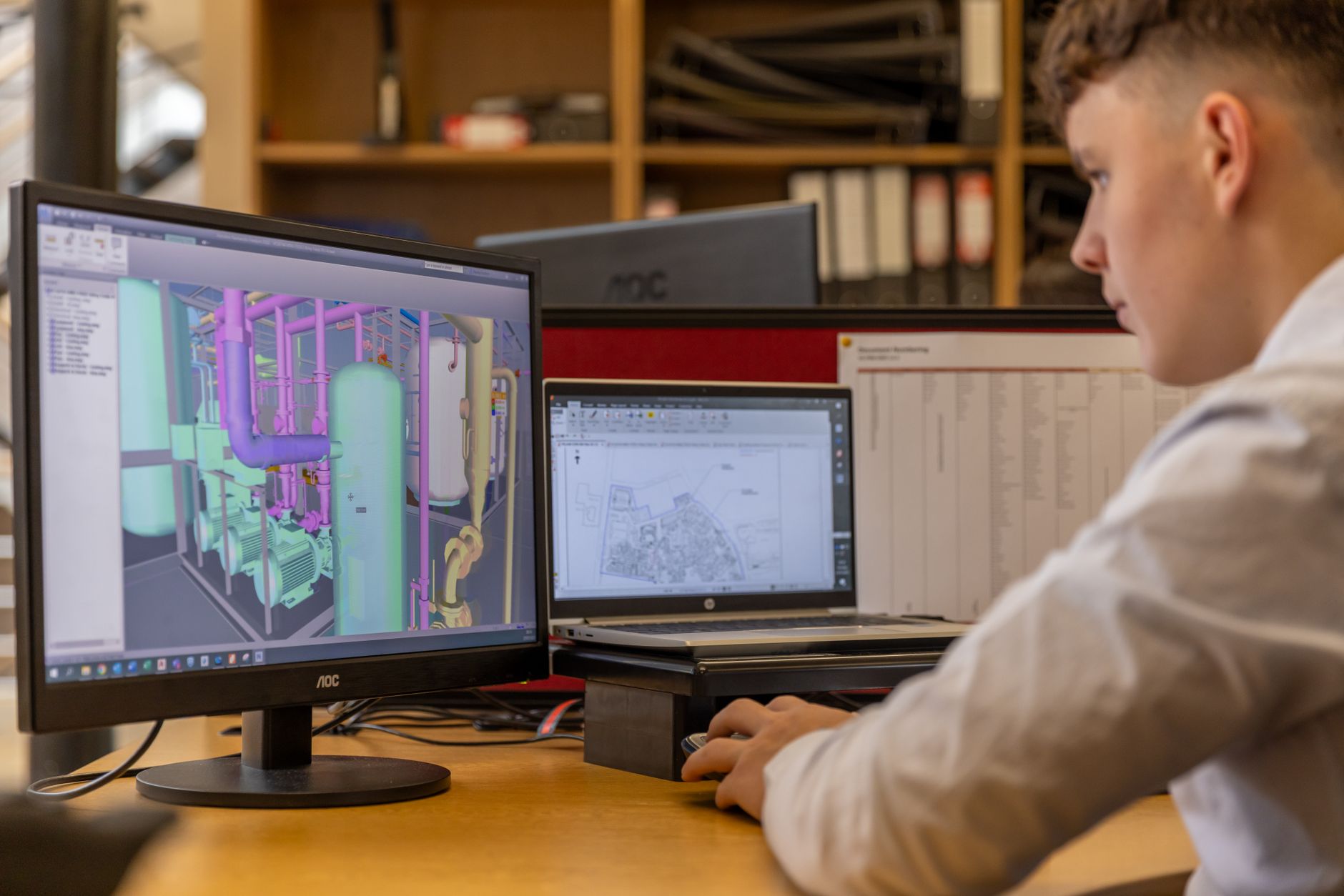
What Is Project Management in System Analysis?
Project management in system analysis and design is the part of the work that coordinates scope, schedule, budget, people, and deliverables from the first idea to delivery. It keeps the project and the system analysis and design process moving as one controlled effort, not as random tasks.
The catch: A project manager does not replace the analyst or designer; the role lines up the work so the team can meet 1 clear set of requirements, 1 deadline, and 1 budget. That matters because a 12-week build with 4 people needs different control than a 6-month build with 12 people.
The job starts at initiation, where the team defines the problem, the goals, and the limits. Then planning turns those goals into tasks, estimates, and checkpoints. During execution, the team builds, tests, and adjusts while the manager watches dates, effort, and changes. At closure, the team hands over the system, documents the result, and checks that the final output matches the approved scope.
That is why project management belongs inside system analysis and design, not outside it. Analysis tells you what the business needs. Design shows how the system will work. Project management keeps both of those things under control while the team moves from concept to delivery.
A good manager also watches the small stuff that breaks big plans: one late interview, one missing approval, one tool that adds 5 extra hours a week. Those details look tiny until they stack up. This part of the work can feel dull to students, but I think it is the difference between a polished build and a half-finished class demo.
Why Does Project Management Matter Here?
Project management matters because systems projects fail fast when nobody controls requirements, time, or effort. In 1 study after another, poor planning shows up as missed deadlines, rework, and budget overruns, and those problems hit small teams even harder than big ones.
Requirements drift is the classic mess. A client asks for 3 more reports, then a dashboard, then mobile access, and the original plan gets buried. Reality check: That kind of change sounds harmless until the team spends 10 extra hours on one feature and another 15 hours fixing the test plan. The project still looks alive, but the budget and deadline both start to slip.
Good management also protects quality. If one developer handles 4 modules, one analyst handles 20 interviews, and one tester gets 2 days instead of 2 weeks, the work gets thin in a hurry. Project control keeps the workload balanced so people do not burn out and the system does not ship with holes.
In a system analysis and design course, this is the part students often underestimate. They can write strong requirements or draw clean diagrams, then lose the whole project because nobody tracked who owned which task. My take: a team can recover from a rough design. It cannot recover as easily from a bad schedule with 3 missed handoffs and 0 clear owners.
The point is not to add red tape. The point is to stop the project from drifting away from the business need it was supposed to solve.
Learn Systems Analysis Design Online for College Credit
This is one topic inside the full Systems Analysis Design course on UPI Study — a self-paced, online class that earns real college credit. Credits are ACE and NCCRS evaluated and transfer to partner colleges across the US and Canada. Courses start at $250 with no deadlines and lifetime access.
Browse Systems Design Course →How Are Scope, Schedule, and Resources Planned?
Planning starts with the target, not the tools. A team writes the objective, defines what the system will and will not do, and sets a time frame, often 8 to 15 weeks for a class project or 1 to 2 semesters for a larger course build.
- Define the scope in plain words. List the business goal, the main users, and the exact outputs the system must produce.
- Break the work into tasks. A work breakdown structure helps the team split analysis, design, testing, and documentation into smaller pieces.
- Estimate effort in hours. If one person can spend 6 hours a week and the class runs 12 weeks, the team must plan around 72 hours per person.
- Assign people, tools, and dates. Match each task to an owner, then line up software, meeting rooms, or cloud tools before the work starts.
- Set milestones and build the schedule. A team can place checkpoints at week 3, week 6, and week 10 so it can catch delays before they turn into missed finals.
- Review capacity and adjust. If a task needs 20 hours and the team only has 12 open hours this week, the schedule needs a change, not wishful thinking.
Bottom line: Planning works best when the team treats time like money. A schedule with 0 slack and 5 people already overloaded is asking for trouble.
A strong plan also makes grading easier in school projects because everyone can see who owns what and when each piece should finish. That is why Systems Analysis and Design and Project Management often sit close together in a system analysis and design course track.
Which Risks and Changes Must Be Managed?
A systems project usually needs risk control from day 1, because even a 5-person team can hit the same problems as a larger one: unclear needs, technical limits, staff shortages, and deadline pressure.
- Unclear requirements create rework. If the team waits 2 weeks to define a feature, it can lose another 2 weeks fixing the wrong design.
- Scope creep sneaks in through small requests. One extra report or screen sounds minor, but 8 small changes can rewrite the whole plan.
- Technical constraints hit hard when the team chooses a tool that does not fit the job, such as a database that cannot handle the needed volume or security rules.
- Resource shortages matter when one person holds 3 roles. If the analyst, tester, and scheduler all share 1 person, delays pile up fast.
- Deadline pressure pushes weak decisions. Teams under a 10-week deadline often skip review steps, and that usually costs more later.
- Change requests need a simple review path. The team should log the request, check the impact on scope, time, and cost, then approve or reject it in writing.
- Approved changes should update the baseline. If the original plan changed on week 4, the team should record that new version instead of pretending the old one still fits.
One thing students miss: not every change is bad, but every change has a price. That is the part people hate hearing, because it turns a nice idea into a trade-off.
Systems Analysis and Design classes usually test this with case studies, and the best answers name the risk, the impact, and the person who owns the fix.
How Is Progress Tracked Against Deadlines?
Progress tracking keeps a project honest. A team compares actual work to the baseline plan every week, often through status reports, milestone reviews, task boards, and earned progress checks. That matters because a project can look busy while still missing the date by 2 or 3 weeks, and nobody wants to find that out at the final demo.
Worth knowing: A good control system does not just ask, “Are we busy?” It asks, “Did we finish the 3 tasks due this week, and did we stay inside the hours and money we planned?”
- Slipped milestones show the schedule is moving right.
- Budget burn outpaces progress when spending rises faster than completed work.
- Incomplete deliverables mean the team owes more than it has shipped.
- Unresolved dependencies block later tasks, even if the current task looks fine.
- Late approvals often cause 1 small delay to become 3 separate delays.
Status reports work best when they name dates, owners, and next steps. A report that says “testing is behind” tells you almost nothing. A report that says “testing slipped 4 days because the data set arrived late” gives the team something useful.
Task boards help too. A simple board with To Do, Doing, and Done can show bottlenecks in 30 seconds, which is better than waiting for a weekly meeting to notice the problem. Earned progress gives a tougher check, because it compares completed work with planned work instead of relying on optimistic talk.
The sharpest teams watch the baseline like a scorecard. The dull teams hope the deadline moves. It never does.
Frequently Asked Questions about Systems Analysis Design
The most common wrong assumption students have is that project management means only making a timeline, but it also covers scope, budget, risk, and team control in a system analysis and design project. You use it to keep requirements, tasks, and deadlines lined up.
Project management keeps the system analysis and design course work organized from the first requirements meeting to final testing. It helps you plan tasks, assign people, track deadlines, and stop scope creep before it eats time or money.
Start by defining the project scope, the users, and the final deliverables. Then break the work into smaller tasks, set dates, and map who does what, because a vague start causes missed requirements and extra rework.
A 12-week project plan can save you from losing entire phases to confusion. Good scheduling, resource allocation, and progress tracking keep the team focused on the 3 big control points: scope, deadline, and budget.
If you get this wrong, you miss deadlines, overspend, and build the wrong system. The project and the requirements drift apart fast, and by the time testing starts, the team has to fix avoidable mistakes.
This applies to anyone taking a system analysis and design course, plus anyone working on software, business systems, or college project teams. It doesn't stop at programmers; analysts, testers, and managers all use the same planning basics.
Most students jump straight into tasks and hope the project stays on track, but that usually creates missed dates and duplicate work. What actually works is a simple plan with milestones, assigned owners, and weekly progress checks.
What surprises most students is that risk management matters as much as coding or diagrams. A single late user interview, a missing approval, or one wrong requirement can shift the whole schedule by 2 to 4 weeks.
Yes, if you study online through an online course with ACE NCCRS credit or transferable credit, you can often pair the topic with college credit at cooperating schools. That matters when a school accepts prior learning and counts it toward a degree plan.
Planning sets the scope, schedule, and resources before work starts, and tracking compares real progress against those plans each week. You watch milestones, budget use, and change requests, so the project stays aligned with requirements instead of drifting.
Resource allocation decides who does the work, how much time they get, and what tools they use. A team with 5 people and 3 major tasks can still fall behind if 1 person gets overloaded or 2 tasks share the same bottleneck.
Final Thoughts on Systems Analysis Design
Project management gives system analysis and design its backbone. Analysis finds the need, design shapes the solution, and project control keeps the whole thing from wandering off schedule, budget, or scope. If you skip that control, even a smart idea can turn into a late, expensive, half-finished build. Students usually get tripped up by the same 4 things: vague scope, weak scheduling, hidden risks, and poor tracking. Those failures do not happen because people lack talent. They happen because the team never made the work visible enough to manage it. Once you can name the task, set the owner, mark the date, and compare actual progress to the plan, the project gets easier to steer. That is the real lesson behind project management in system analysis and design. It protects the link between what the business asked for and what the team actually builds. It also gives students a clean way to think about deadlines, budgets, and quality without guessing. Use that lens in your next class project or case study. Start with scope, map the tasks, and check progress against the baseline every week.
How UPI Study credits actually work
Ready to Earn College Credit?
ACE & NCCRS approved · Self-paced · Transfer to colleges · $250/course or $99/month