KansasHealth careers guide

Checked by the team. Sources are listed at the end of the page.

The degree behind a Kansas paramedic licence: credits you can finish online

The short answer

Kansas paramedic degree requirements sit in one regulation. K.A.R. 109-11-8(a)(5) says a student completes a paramedic initial course of instruction only with both clinical and field internship components done and confirmation of eligibility for at least an associate degree in applied science from the post-secondary institution. The general education inside that degree is where online courses may fit, via a college transcript, if your college agrees.

PRO opens every course. Cancel or pause anytime. Ask the college and the office that decides in writing before you pay.

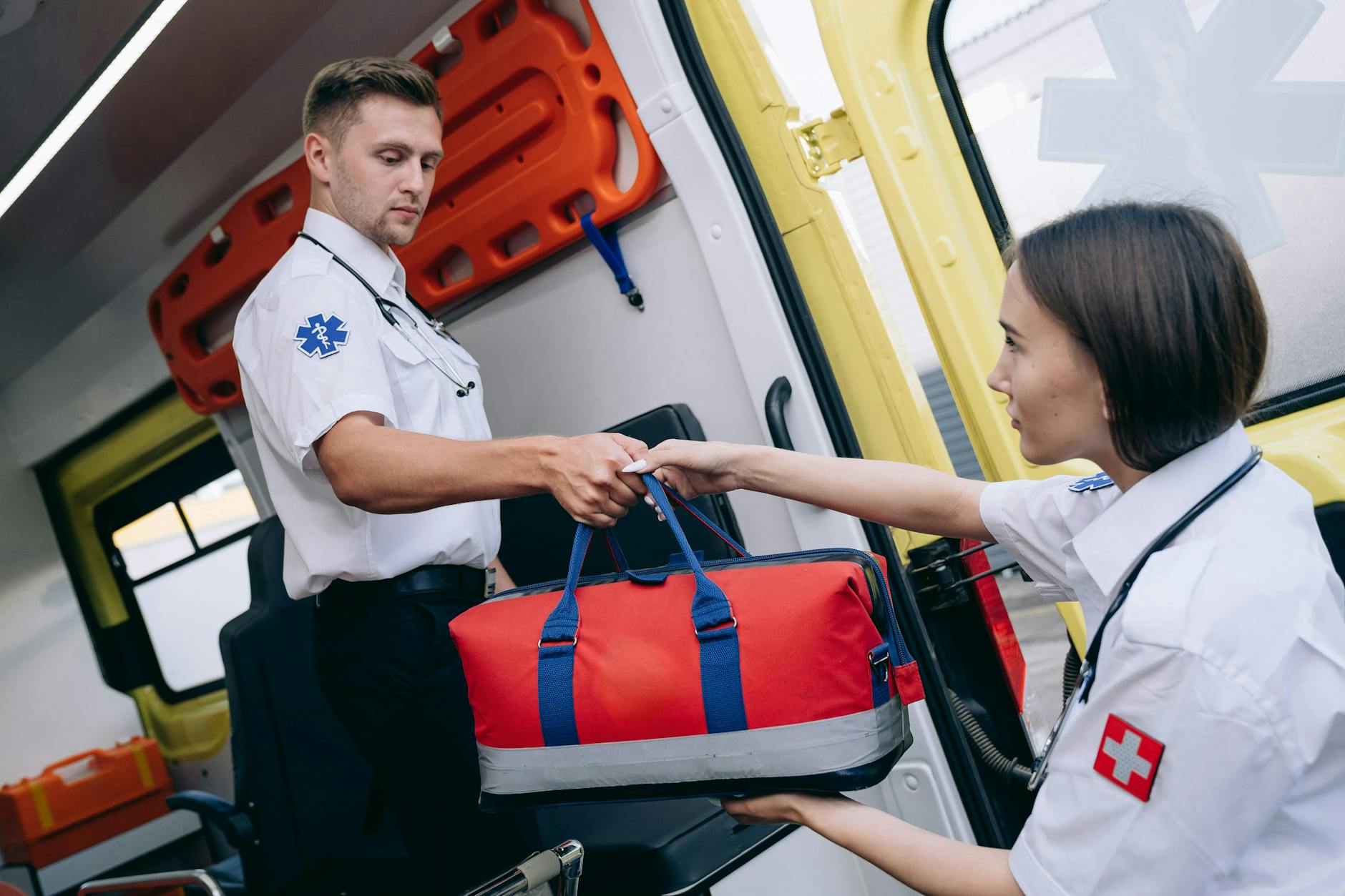
Male and female paramedics exchanging a medical kit inside an ambulance, showcasing teamwork
KansasHealth careers guide
Checked 15 Nov 2026
Photo: Mikhail Nilov / Pexels
The rule asks for
No credit number in the rule; it names a degree (at a minimum, an associate degree in applied science), and the college's catalog sets the credits
Who decides
Kansas Board of Emergency Medical Services
The legal source
K.A.R. 109-11-8

Your path

From where you are to meeting the rule

Six steps, in order. UPI Study is one of them: the courses that fill the hours you are missing.

  1. Read the rule and your catalog side by side

    The rule names the degree

  2. Write to the registrar before you enrol anywhere

    Name each outside course, its credits and whether it is ACE-recommended or...

  3. Where UPI Study comes in

    Take UPI Study courses

    Online, at your own pace, ACE-recommended or NCCRS-recommended

  4. Ask the programme about science and timing

    Ask the paramedic programme director what it expects for anatomy and any lab, and the...

  5. Finish the agreed courses and send the record

    Complete only the courses the college agreed to review

  6. Let the instructor verify

    The primary instructor gives written verification within 15 days of the final class and...

Step 3 is the one we help with. Every other step is between you, the college and the Kansas Board of Emergency Medical Services.

See the plans ↓

The rule at a glance

The rule

Under K.A.R. 109-11-8(a)(5), a student in a Kansas paramedic initial course of instruction must demonstrate successful completion of both clinical and field internship components and confirmation of eligibility to be conferred, at a minimum, an associate degree in applied science by the post-secondary institution.

Every EMS student
Demonstrate application of a cognitive understanding of each EMS educational standard, and all practical skills to the satisfaction of the primary instructor
Paramedic: training with patients
Successful completion of both clinical and field internship components
Paramedic: degree
Confirmation of eligibility to be conferred, at a minimum, an associate degree in applied science by the post-secondary institution
Verification
Written verification by the primary instructor within 15 days of the final class and at least seven days before the state examination for certification

Official source

Who decides

Kansas Board of Emergency Medical Services decides how this rule applies to you. We read its published rule and the pages below; each was checked on 15 Nov 2026.

RequirementWhat the rule saysSource
Every EMS studentDemonstrate application of a cognitive understanding of each EMS educational standard, and all practical skills to the satisfaction of the primary instructor[1]
Paramedic: training with patientsSuccessful completion of both clinical and field internship components[1]
Paramedic: degreeConfirmation of eligibility to be conferred, at a minimum, an associate degree in applied science by the post-secondary institution[1]
VerificationWritten verification by the primary instructor within 15 days of the final class and at least seven days before the state examination for certification[1]
Who makes the ruleBoard of Emergency Medical Services; K.A.R. 109-11-8 is listed as a permanent regulation, amended March 6, 2026[2]

Credits and courses

Which credits count

What counts

  • Eligibility for an associate degree in applied science, or a higher minimum if your college sets one, confirmed by the post-secondary institution behind your paramedic course
  • The general education courses that college lists inside the degree, taken there or posted there as transfer credit
  • Transfer credit the college itself agrees to post on its transcript, which can include ACE-recommended or NCCRS-recommended courses if the college reviews them
  • Both the clinical and the field internship components of the paramedic course, completed in the programme

What does not count

  • A course certificate or a credit recommendation that no college has posted on a transcript
  • Online study in place of the clinical or field internship components; those are done in the programme
  • General education a college has declined to post toward the degree
  • Credits alone without the college's confirmation that you are eligible for the degree

Courses that fit

Each course below is ACE-recommended or NCCRS-recommended for college credit. Whether it counts here is the decision of the college and of Kansas Board of Emergency Medical Services. Press Trailer on a picture to watch a short preview.

English Composition 1 course

ENG 101 · 3 credits · NCCRS-recommended

English Composition 1

Most associate degrees include a writing course; 3 credits, NCCRS-recommended. Your college decides whether to post it.

Self-paced online English Composition 1 course (ENG 101). NCCRS recommends 3 semester credits; each college decides how it applies them.

See the course →
College Algebra course

Math 111 · 3 credits · NCCRS-recommended

College Algebra

A common mathematics choice in associate degrees; 3 credits, NCCRS-recommended. Check which mathematics course your catalog names.

Self-paced online College Algebra course (Math 111). NCCRS recommends 3 semester credits; each college decides how it applies them.

See the course →
Introduction to Psychology course

Psychology 110 · 3 credits · ACE-recommended

Introduction to Psychology

A common social or behavioural science choice; 3 credits, NCCRS-recommended and ACE-recommended.

Self-paced online Introduction to Psychology course (Psychology 110). ACE and NCCRS recommend 3 semester credits; each college decides how it applies them.

See the course →
Introduction to Sociology course

Sociology 110 · 3 credits · ACE-recommended

Introduction to Sociology

Another social science option where the degree lists one; 3 credits, NCCRS-recommended and ACE-recommended.

Self-paced online Introduction to Sociology course (Sociology 110). ACE and NCCRS recommend 3 semester credits; each college decides how it applies them.

See the course →
Anatomy and Physiology I course

Biology 211 · 3 credits · NCCRS-recommended

Anatomy and Physiology I

3 credits, NCCRS-recommended. Many health programmes want their own anatomy course or a lab, so ask the programme director before taking it.

Self-paced online Anatomy and Physiology I course (Biology 211). NCCRS recommends 3 semester credits; each college decides how it applies them.

See the course →
Medical Terminology course

Health 120 · 3 credits · NCCRS-recommended

Medical Terminology

3 credits, NCCRS-recommended; useful where a programme lists a health support course. Ask first.

Self-paced online Medical Terminology course (Health 120). NCCRS recommends 3 semester credits; each college decides how it applies them.

See the course →

Where UPI Study comes in

One plan opens every course

You have seen the rule and which credits count. UPI Study is step 3 of your path: online courses that are ACE-recommended or NCCRS-recommended, which a college may consider for its transcript. Every plan opens all 88 UPI Study courses. Lifetime is one payment, with no renewals, and covers every current and future course.

  1. 1
    Pick the courses that fitStart with the courses above, or any of the 88.
  2. 2
    Study online, at your own paceStart any day and work on your own schedule.
  3. 3
    A college posts the creditIt reaches the Kansas Board of Emergency Medical Services via a college transcript.

1-Month Plan (PRO)

$99

per month · cancel anytime

Try it month by month
  • All 88 courses
  • ACE-recommended or NCCRS-recommended courses
  • Take as many courses as you finish in the month
  • Cancel or pause anytime
Start with PRO →

Billed $99 monthly

Best value

Lifetime Plan

$599

one-time payment · never expires

Pay once
  • Lifetime access to every course
  • Every current and future course
  • One payment, with no renewals
  • Study at your own pace
Get Lifetime Access · $599 →

One payment of $599

4-Month Plan

$279

billed every 4 months

$117 less than four single months
  • Everything in the 1-month plan
  • Time for several courses in a row
  • Cancel or pause anytime
Get 4 Months →

Billed $279 every 4 months

Cancel or pause anytimeMonthly and 4-month plans stop when you say.
ACE and NCCRSEvery course is ACE-recommended or NCCRS-recommended for college credit.
Start any dayOnline and self-paced, on your schedule.

The same plans for every US student. Writing, algebra, psychology and sociology are on PRO. Ask your paramedic college's registrar in writing first. ACE and NCCRS have over 2,100 cooperating colleges that will consider accepting credits; the final decision is with the universities.

Step by step

The path via a college transcript

  1. Step 1

    Read the rule and your catalog side by side

    The rule names the degree. Your college's catalog page for the paramedic A.A.S. names the courses. List the general education lines you have not yet met.

  2. Step 2

    Write to the registrar before you enrol anywhere

    Name each outside course, its credits and whether it is ACE-recommended or NCCRS-recommended. Ask which degree line it would meet and whether there is a limit on transfer credit. Keep the written reply.

  3. Step 3

    Ask the programme about science and timing

    Ask the paramedic programme director what it expects for anatomy and any lab, and the date by which all general education must be posted so your degree eligibility can be confirmed.

  4. Step 4

    Finish the agreed courses and send the record

    Complete only the courses the college agreed to review. Have the record sent to the college and check that the credit appears on your college transcript.

  5. Step 5

    Let the instructor verify

    The primary instructor gives written verification within 15 days of the final class and at least seven days before the state examination for certification. Make sure nothing on the degree side is still open by then.

Colleges to ask first

TESU, UoPeople and Newlane are partner colleges that consider ACE-recommended or NCCRS-recommended credit. For this rule, though, the degree comes from the post-secondary institution behind your Kansas paramedic course, so ask that college in writing which courses it will review before you enrol.

Who makes the final call

ACE and NCCRS have over 2,100 cooperating colleges that will consider accepting credits; the final decision is with the universities.

Compare the options

What it costs

OptionPriceFor this rulePrice checked
UPI Study PRO$99 a month, every courseBilled for each month you are subscribed; take as many courses as you finish in that time15 Nov 2026
Johnson County Community College$106 per credit hour (Johnson County residents), $128 (other Kansas counties)An example of general education taken directly at a Kansas community college; a 3-credit course is $318 or $384 before fees15 Nov 2026
Sophia Learning monthly plan$99 a month, or $799 a yearGeneral education, if your college will review it15 Nov 2026
StraighterLine membership$99 a month plus $79 a courseMembership plus a fee for each course15 Nov 2026

These prices cover general education only. The paramedic courses, clinical time and field internship are paid to your programme, and we do not quote those costs. An outside course saves money only if your college posts it, so get the written answer first.

Plain facts

What UPI Study cannot do here

  • UPI Study is not a college and is not accredited. Our courses do not meet K.A.R. 109-11-8 on their own; the degree is conferred by the post-secondary institution behind your paramedic course.
  • We cannot say any college will post our courses toward a paramedic A.A.S.; each college decides, course by course.
  • We teach no paramedic, skills, clinical or field internship content. Those parts are done in your programme.
  • We do not state any Kansas programme's course list, credit total, fees or examination details here; we did not confirm them on an official page on the day we checked.
  • This rule is about a Kansas initial course of instruction. We do not describe the rules for people trained or certified in another state.

UPI Study is not a college and is not accredited. ACE and NCCRS review our courses and recommend credit; a college decides whether to give that credit and records it on its own transcript.

Confirm in writing first

Ask your college's registrar in writing which outside courses it will post toward the paramedic A.A.S., and ask the Kansas Board of Emergency Medical Services in writing about anything in the rule that is unclear for your case, before you enrol.

In more detail

Topic by topic

Four short reads that go further than the summary above. Each one stands on its own.

What the Kansas rule says, word for word

Kansas writes its paramedic degree requirement into the rule on finishing a course, not into a separate licensing page. K.A.R. 109-11-8 is headed 'Successful completion of a course of instruction' and belongs to the Board of Emergency Medical Services. For a paramedic initial course of instruction it asks the student to demonstrate two things: '(A) Successful completion of both clinical and field internship components; and (B) confirmation of eligibility to be conferred, at a minimum, an associate degree in applied science by the post-secondary institution.'

We read that text on 15 November 2026. The regulation uses the word certification for the state examination; people also say licence in everyday speech, and this page uses both to mean the same Kansas paramedic credential.

Notice what is missing. There is no credit total, no list of general education courses and no named college. The rule points to the post-secondary institution and lets it decide what its associate degree in applied science contains.

Where online credits can honestly fit

An associate degree in applied science has two halves. One is the paramedic coursework with its clinical and field internship components, which only your programme can teach. The other is general education: usually writing, mathematics, a social or behavioural science and sometimes a science course.

General education is the half that many colleges allow a student to bring in as transfer credit. Courses with ACE or NCCRS credit recommendations are one source of that credit, where the college chooses to review them. UPI Study is not a college and is not accredited. Our courses are ACE-recommended or NCCRS-recommended, and they reach a degree only via a college transcript.

  • Good first questions: writing, mathematics and a social science.
  • Ask before taking anatomy: health programmes often set their own conditions for it.
  • Not possible online with us: any paramedic skill, clinical or field internship requirement.

Why timing matters more than people expect

The rule has a clock in it. The primary instructor must give written verification that students met the requirements 'within 15 days of the final class and at least seven days before the state examination for certification'. Degree eligibility is one of those requirements for paramedic students.

A general education course that is unfinished, or finished but not yet posted by the college, can therefore hold up a student who has done everything else. Finishing general education before the paramedic sequence begins, or in the breaks between terms, removes that risk. Self-paced courses suit that plan, as long as the college has already agreed in writing to review them.

What to ask, and whom

Two offices matter. The registrar decides transfer credit. The paramedic programme director knows the programme's own conditions and its dates. The Kansas Board of Emergency Medical Services owns the rule and can answer questions about how it applies.

  • To the registrar: will you review ACE-recommended or NCCRS-recommended courses toward the paramedic A.A.S., and which degree line would each one meet?
  • To the registrar: is there a limit on transfer credit, or a number of credits that must be taken at the college?
  • To the programme director: what do you require for anatomy, labs, grades and how recent a course must be?
  • To the programme director: by what date must every general education course be on my transcript?
  • To the Board: does anything about my situation, such as earlier training in another state, change which rules apply?

Answers

All 23 questions people ask

Every question we have been asked about this rule, in three groups. Tap a question to open the answer.

The Kansas Board of Emergency Medical Services rule 6 questions

Does Kansas require a degree to become a paramedic?

For students finishing a Kansas paramedic initial course of instruction, K.A.R. 109-11-8(a)(5)(B) asks for confirmation of eligibility for at least an associate degree in applied science from the post-secondary institution. Ask the Board about other routes, such as training completed in another state.

How many college credits does the Kansas paramedic rule ask for?

The rule gives no number. It names a degree, an associate degree in applied science at a minimum, and leaves the credit total and course list to the college that confers it. Your college's catalog page for the paramedic A.A.S. is where the number is written.

Can I do the general education part online?

Possibly. Many colleges allow some general education as transfer credit, and some review ACE-recommended or NCCRS-recommended courses. Your own college decides, course by course. Get its answer in writing before you enrol in any outside course.

Can online courses replace clinical or field internship time?

No. The rule asks for successful completion of both the clinical and field internship components, and those are done in your paramedic programme with patients and preceptors. Nothing we teach stands in for them.

Is UPI Study a college?

No. UPI Study is not a college and is not accredited. We teach online courses that carry ACE or NCCRS credit recommendations. A college may choose to post them via a college transcript, and that college, not us, confers any degree.

Do EMTs and advanced EMTs need the degree too?

Not under this rule. The EMT and AEMT paragraphs of K.A.R. 109-11-8 list patient contacts and skills. The degree line appears only in the paramedic paragraph. General education finished early may still help later if your paramedic college agrees to post it.

Credits, courses and transcripts 12 questions

Does the Kansas rule say paramedics need a bachelor's degree?

No. The words are 'at a minimum, an associate degree in applied science'. A higher degree is above the minimum, but how a college and the Board treat a student who already holds one is a question to put to your programme and the Board in writing.

Does the rule list the general education courses I must take?

No. K.A.R. 109-11-8 names the degree and the institution that confers it, and stops there. The course list comes from your college's catalog, so two Kansas paramedic programmes can ask for different general education courses and both satisfy the same sentence in the rule.

When is the degree eligibility checked?

Subsection (b) says the primary instructor gives written verification within 15 days of the final class and at least seven days before the state examination for certification. Plan to have every course posted before that window opens, and ask your programme for its own internal date.

Is this page legal advice?

No. We quote the regulation as we read it on 15 November 2026 and link to it. Regulations are amended; the Kansas Register lists this one as amended in March 2026. Read the current text and ask the Kansas Board of Emergency Medical Services about your own case.

Will my Kansas paramedic college take these courses?

We cannot say, and no outside provider can. Each college sets its own transfer policy and can treat one course differently from another. Send the registrar the course names and recommending bodies, and wait for a written reply before you pay for anything outside the college.

Is Anatomy and Physiology safe to take outside the college?

Be careful with it. Health programmes often require their own anatomy course, a lab component, a minimum grade or a recent completion date. Ask the programme director as well as the registrar, and start with writing, mathematics or a social science if the science answer is uncertain.

What does 'via a college transcript' mean?

It means the credit only counts for the degree once a college has posted it on its own transcript. The course provider issues a record of completion, the college reviews it against the ACE or NCCRS recommendation, and the college decides whether to post credit toward your A.A.S.

How much can this save?

It depends on how many courses your college agrees to post and on its own tuition. Compare the college's per-credit price with a monthly subscription for the months you would need, and remember that a course the college will not post saves nothing at all.

Do Kansas EMTs need a degree?

Not under this rule. The EMT paragraph of K.A.R. 109-11-8 asks for one complete patient assessment and one nebulized breathing treatment during clinical or field internship training, on top of the standards and skills every student must show. No degree is named for EMT.

Do Kansas AEMTs need a degree?

Not under this rule. The AEMT paragraph lists supervised procedures, patient assessments, ambulance calls, charts and electrocardiogram work. It names no degree and no college credits. The degree line appears only in the paramedic paragraph that follows it.

Should I take general education before paramedic school?

It can make sense, because the paramedic course is demanding and the degree needs general education finished in time. But choose the college first and get its written answer on which courses it will post. Credit a college declines to post does not help you.

Where can I read the rule myself?

Search for K.A.R. 109-11-8 on the Kansas Secretary of State's regulations pages or the Cornell Legal Information Institute's state regulations collection. The heading is 'Successful completion of a course of instruction', under Agency 109, Article 11. We read it on 15 November 2026.

About UPI Study 5 questions

Do UPI Study courses count toward this rule?

UPI Study is not a college, so its courses count toward a rule that asks for college credit only once an accredited college posts them on its own transcript. Whether that credit meets the rule is decided by the Kansas Board of Emergency Medical Services. Ask the college and the Kansas Board of Emergency Medical Services in writing before you pay.

How do UPI Study courses get onto a college transcript?

You study a course online and pass it. Each course is ACE-recommended or NCCRS-recommended for college credit. A college that considers those recommendations reviews your record and decides whether to post the credit on its own transcript. TESU, UoPeople and Newlane are partner colleges that consider ACE-recommended or NCCRS-recommended credit. Ask the college in writing first.

Is UPI Study accredited?

UPI Study is not a college and is not accredited. ACE and NCCRS review our courses and recommend credit; a college decides whether to give that credit and records it on its own transcript.

How much does UPI Study cost?

PRO is $99 a month and opens every course; cancel or pause anytime. The 4-month plan is $279, billed every 4 months. Lifetime access is $599, paid once.

Can I study at my own pace?

Yes. Every course is online and self-paced, and PRO lets you take as many courses as you finish in the month.

Ready when you have it in writing

Writing, algebra, psychology and sociology are on PRO. Ask your paramedic college's registrar in writing first.

Where the facts come from

Sources

  1. Kan. Admin. Regs. 109-11-8: Successful completion of a course of instruction (Cornell Legal Information Institute) OfficialThe full text of the rule, including paragraph (a)(5)(B): 'confirmation of eligibility to be conferred, at a minimum, an associate degree in applied science by the post-secondary institution', and subsection (b) on the primary instructor's written verification. Checked on 15 Nov 2026.
  2. Kansas Register, Volume 45, Issue 8: Board of Emergency Medical Services, permanent administrative regulations OfficialThe Kansas Secretary of State's Register lists K.A.R. 109-11-8 as a permanent regulation of the Board of Emergency Medical Services, with a history line showing it amended March 6, 2026. Checked on 15 Nov 2026.
  3. Johnson County Community College: Tuition ratesAn example of Kansas community college tuition per credit hour, used only for the cost comparison. Checked on 15 Nov 2026.
  4. Johnson County Community College: Tuition ratesPrice for Johnson County Community College, checked on 15 Nov 2026.
  5. Sophia Learning: Plans and pricingPrice for Sophia Learning monthly plan, checked on 15 Nov 2026.
  6. StraighterLine: PricingPrice for StraighterLine membership, checked on 15 Nov 2026.

Updated