
Test anxiety before an online exam usually shows up as racing thoughts, shaky focus, tight breathing, or blanking on things you studied yesterday. A little nervousness can help you stay sharp. Once the fear starts messing with sleep, memory, or your ability to read simple questions, it stops helping and starts getting in the way. Proctored online exams can make that feeling worse because you face a camera, a timer, and tech checks all at once. You may worry about being flagged for moving the wrong way, losing Wi-Fi, or getting stuck on a login screen. That pressure can feel weirdly personal, even when the exam itself has only 60 or 90 questions. The good news: you do not need a magic trick. The best proctored exam anxiety help comes from boring, repeatable habits that lower the load on your brain. Sleep matters. Food matters. A clean desk matters. So does a short breathing reset before you click start. This article focuses on what actually helps in the 24 hours before a test and the last 60 minutes before you begin. You will also see where stress turns into a bigger problem that calls for extra support from a counselor or health professional.
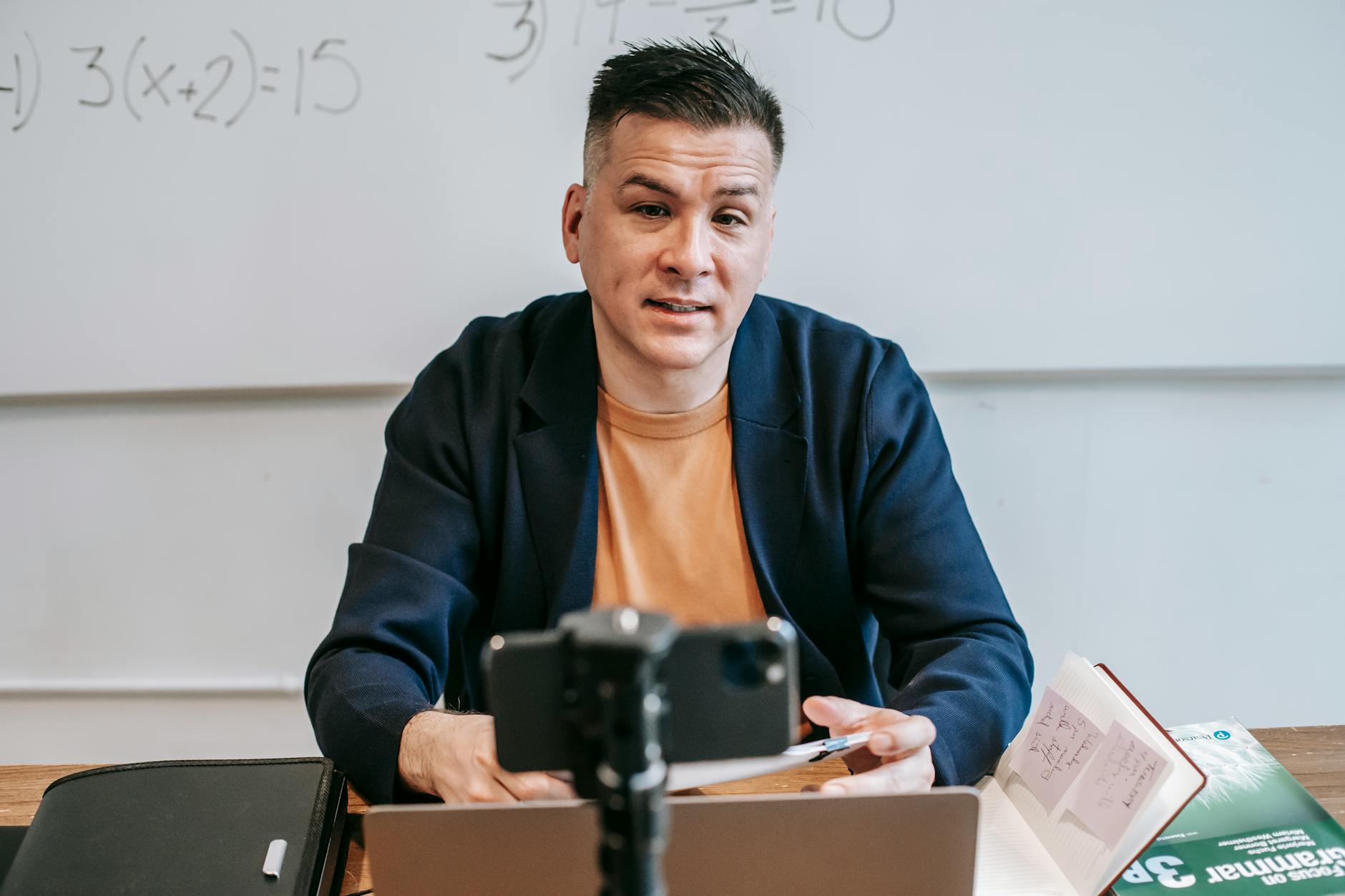
What Is Test Anxiety Before Online Exams?
Test anxiety is the stress response that shows up right before or during a test and makes thinking harder than it should be. Normal nerves feel like a little stomach flutter before a 20-minute quiz. Anxiety crosses the line when it steals sleep for 2 nights, blurs focus, or makes you reread the same 1 question five times.
A proctored online exam can crank that feeling up fast. The camera stays on. The timer keeps moving. Your browser may lock down the screen, and that 1 small beep from your laptop can feel louder than it really is. A student taking a 75-minute accounting exam at 8:00 a.m. may worry less about the questions and more about the proctor software, the mic, the room scan, and whether a roommate will walk through the door.
Reality check: Stress before a test does not mean you are weak or unprepared. I have seen students who knew the material for 3 straight weeks freeze the second a proctor window popped up, and that reaction says more about pressure than intelligence.
The hard part is that anxiety feeds on uncertainty. If you do not know whether your Wi-Fi will hold, whether your webcam sits at the right angle, or whether a scratchy chair will distract you for 90 minutes, your brain keeps spending energy on threats instead of answers. That is why proctored exam anxiety help starts before exam day, not after the panic hits.
Some worry feels useful. Too much turns into a mess. If your sleep drops below 6 hours, your appetite changes, or your hands shake during a practice login, the stress has moved past normal nerves and needs a calmer plan.
A lot of students also get trapped by the feeling that they must control every detail. They cannot. They can control the room, the clock, and the routine they use before they click start. That smaller goal usually works better than trying to feel fearless.
The same pattern shows up in Introduction to Psychology and Abnormal Psychology students, because both courses deal with memory, stress, and how the brain reacts under pressure.
Test Anxiety: Exam vs Course?
An exam and a course solve the same credit problem in very different ways. The exam asks for one strong sitting, while the NCCRS & ACE-recommended course gives you more room to practice, review, and show mastery over time. That difference matters when anxiety spikes around proctored testing, because one path depends on a single score and the other builds credit through coursework and checks.
| Row | Exam | NCCRS & ACE-Recommended Course |
|---|---|---|
| Where to take it | College Board / Prometric | UPI Study |
| Format | Single proctored sitting | Coursework + mastery checks |
| Time pressure | 60-120 minutes, fixed clock | Self-paced, no deadlines |
| Retake / review | Limited retakes, test-day risk | Unlimited review, repeat lessons |
| Cost | Varies by exam; often $90-150+ | $250 per course or $99/month unlimited |
| Credit result | Exam score decides credit | Credit-bearing transfer at cooperating colleges |
The catch: The course path feels slower at first, but it removes the one-shot gamble that fuels a lot of online exam stress. That tradeoff looks boring on paper and brilliant on a bad anxiety day.
The exam can still work well for confident test-takers who like pressure. The course works better for students who want more control, more practice, and less drama around the final result.
The Complete Resource for Test Anxiety
UPI Study has a full resource page built specifically for test anxiety — covering which courses count, how credits transfer to US and Canadian colleges, and how to get started at $250 per course with no deadlines.
Browse UPI Study Resources →How Should You Handle The Night Before?
The night before a proctored exam should feel plain, not heroic. Stop heavy studying 2 to 3 hours before bed, because the brain needs a chance to cool off after all that recall work. A late cram session can make you feel busy while it steals sleep, and sleep loss hits memory harder than most students expect.
Eat a simple dinner with protein, carbs, and water. Chicken and rice, eggs and toast, yogurt and fruit, or beans and a baked potato all work fine. Skip the 11:30 p.m. energy drink. Caffeine can stay active in your system for 6 hours or more, and that is a nasty deal when you need calm, not extra jitter.
What this means: You want your room and your brain to agree that the test is tomorrow, not tonight. Set out your ID, charger, headphones if allowed, water bottle, and any notes you need for the login check before 9:00 p.m., so you do not start hunting for them at 7:10 a.m.
A lot of students try to outwork anxiety with one more chapter, one more video, or 30 more flashcards. I think that usually backfires after about 20 minutes. The brain wants closure, not a last-minute lecture.
Turn off extra tabs and stop scrolling 45 minutes before bed. Blue light, hot takes, and random comments all keep your head noisy. A 10-minute shower, a light stretch, or a paper book does more good than another round of panic reading.
Set 2 alarms if you have a history of sleeping through the first one. That tiny bit of backup can save the whole morning. Then give yourself permission to sleep, even if your brain still whispers that you forgot something.
How Do You Calm Down In The Hour Before?
The last hour before a proctored test should be a short, same-every-time routine. Do the same steps in the same order so your brain stops spinning and starts following instructions.
- Use the bathroom, drink a few sips of water, and sit down with 10 minutes to spare. Small body needs create big mental noise if you ignore them.
- Check your device, charger, mic, webcam, and login page 20 minutes before start time. A 1-minute tech problem feels huge when the clock already runs.
- Breathe in for 4 counts, hold for 4, and breathe out for 6. Repeat that 5 times; the longer exhale tells your body to stop sounding the alarm.
- Do a 5-4-3-2-1 grounding scan: 5 things you see, 4 you feel, 3 you hear, 2 you smell, 1 you taste. The point is not deep wisdom, just a steadier head.
- Say one blunt line to yourself: “I prepared for this, and I can handle the first 5 questions.” That line works better than fake hype.
- Log in 10-15 minutes early if the platform allows it, then stop touching extra tabs. Give the room and the software time to settle before the first question appears.
Bottom line: The hour before the test is not the time for new facts. It is the time for calm, setup, and a little self-control.
If your mind starts racing anyway, do not fight the thought. Label it, breathe, and return to the next step.
Which Setup Problems Make Anxiety Worse?
A real mess can turn mild nerves into full panic. Picture a community college student taking a 75-minute statistics exam from a shared apartment where 2 roommates talk in the kitchen, the desk sits under a dim lamp, and the Wi-Fi drops every 15 minutes. That student may know the formulas but still freeze because the room keeps sending threat signals. Bad setup does not just annoy people; it can trigger the same stress response that makes hands shake and thoughts scatter. I think this part gets ignored too often, and that is a mistake.
- Use a bright lamp and clear desk space within 2 feet of the laptop.
- Put the router close by, or move to a stronger 5 GHz connection.
- Tell roommates or family about the test window 60 minutes ahead.
- Keep water, charger, and ID within arm’s reach before login.
- Close noisy apps and put your phone 1 room away.
Worth knowing: If the same panic keeps showing up across 2 or 3 exams, or if you cannot sleep, eat, or focus for more than 1 week, talk to a counselor or health professional. That is not overreacting. That is smart.
A few setup fixes can drop stress fast, but severe anxiety often needs more than better lighting. If your heart races every time the proctor screen appears, or if you have had panic attacks before, extra support can give you a steadier plan than white-knuckling it alone.
reduce anxiety before proctored test
Frequently Asked Questions about Test Anxiety
Test anxiety before a proctored online exam is a stress response that can make your heart race, cloud your thinking, or make you freeze during the test. It can show up in the 24 hours before the exam and get worse if you keep checking the clock or your camera feed.
Most students keep cramming late, but what actually helps is a short plan with 2-3 study blocks, a full practice run, and a stop time the night before. That mix cuts last-minute panic better than reading the same notes for 6 straight hours.
The biggest wrong assumption is that you need to feel calm before you start, but you can test well while still feeling nervous. A little anxiety can sharpen focus, while panic only takes over when you skip sleep, food, or a clear setup.
What surprises most students is that the hour before the exam matters more than the 10th review of your notes. A 5-minute breathing break, a glass of water, and a quick room check often help more than more studying.
If you get them wrong, your stress can spike from shaky nerves into a full freeze, which makes simple questions feel hard and wastes time. Skipping a practice login or a device check can also trigger avoidable panic 5-10 minutes after the exam starts.
This helps students with mild to moderate test anxiety before online exam days, including people who get tense, sweaty, or distracted but can still function. It doesn't replace care for severe anxiety, panic attacks, or sleep loss that lasts more than 2 weeks, which may need a counselor or health professional.
15 minutes is a smart reset window before a proctored exam, and it gives you time for a bathroom break, water, and one last tech check. That small buffer can cut the rushed feeling that often starts the panic cycle.
First, make a 1-page plan with your login, ID, charger, water, and the exact start time, then test your camera, mic, and internet 1 day before. A clean setup removes a lot of last-minute doubt.
A 4-6 breathing pattern helps: breathe in for 4 seconds, out for 6, and repeat for 2 to 3 minutes before you open the exam. Slower exhale breathing can lower the body’s alarm response without making you drowsy.
Use a 10-minute cool-down, then write down what triggered the stress so you can fix it before the next test. For UPI Study resources on test anxiety before online exam prep, practice plans, and more online exam stress strategies, explore the resources page.
Final Thoughts on Test Anxiety
Test anxiety before a proctored online exam feels awful because it mixes school stress with tech stress and then asks you to perform on command. That combo can make smart students feel scattered, rushed, or weirdly blank for no good reason. None of that means you are bad at the subject. The best fix usually looks ordinary. Sleep enough. Eat something real. Set up the room. Test the mic. Breathe out longer than you breathe in. Those steps sound small, but they cut down the noise that makes panic grow. Do not chase perfect calm. Chase a workable state. If your hands still shake a little, you can still pass. If your stomach flips, you can still think. The goal is not to feel nothing. The goal is to keep the fear from running the test. Severe anxiety deserves more than solo grit. If the same dread keeps showing up, or if you lose sleep for several nights in a row, get extra support from a counselor or health professional and build a plan that fits your body, not just the clock. Start with one change for your next exam: pick a bedtime, clear your desk, or run the login once before test day. Small moves beat a last-minute panic spiral.
How UPI Study credits actually work
Ready to Earn College Credit?
ACE & NCCRS approved · Self-paced · Transfer to colleges · $250/course or $99/month