
Anatomy and Physiology 1 covers the structure and function of the human body, from cells and tissues to the skeletal, muscular, nervous and endocrine systems. In Biology 211, you build from basic chemistry and anatomical terms toward questions about how body systems work together. Here is what each chapter covers and how the topics connect.
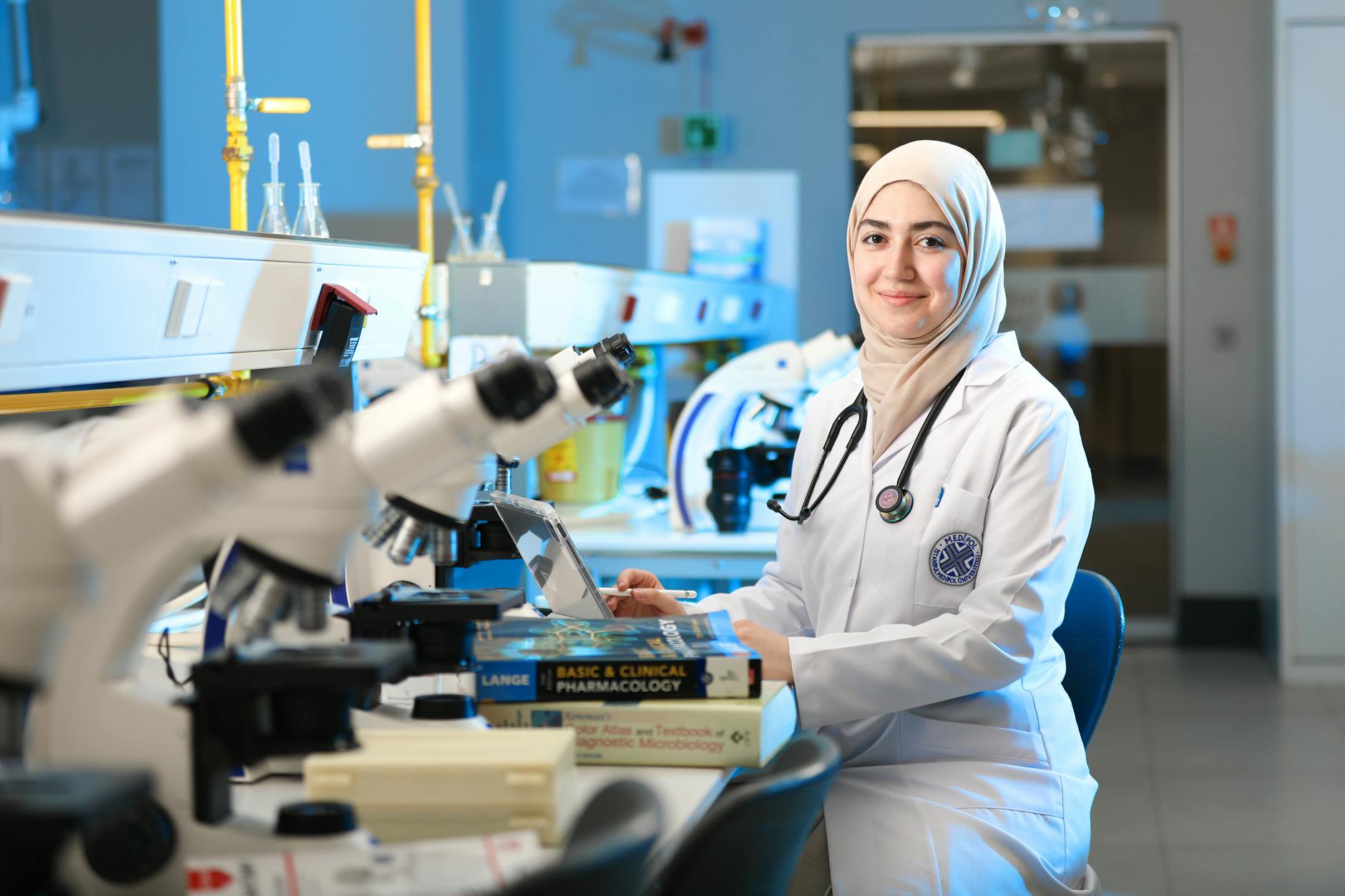
What is taught in anatomy and physiology 1?
UPI Study’s Anatomy and Physiology I course organizes Biology 211 into 17 chapters, followed by an assignment and final exam. The syllabus below lists each chapter’s lessons and hours.
| # | Chapter | Lessons | Hours |
|---|---|---|---|
| 1 | An Introduction to the Human Body | Overview of Anatomy and Physiology; Structural Organization of the Human Body; Functions of Human Life; Requirements for Human Life | 3 |
| 2 | The Chemical Level of Organization | Elements and Atoms: The Building Blocks of Matter; Chemical Bonds; Chemical Reactions; Inorganic Compounds Essential to Human Functioning | 2 |
| 3 | The Cellular Level of Organization | The Cell Membrane; The Cytoplasm and Cellular Organelles; The Nucleus and DNA Replication; Protein Synthesis | 3 |
| 4 | The Tissue Level of Organization | Types of Tissues; Epithelial Tissue; Connective Tissue Supports and Protects; Muscle Tissue and Motion | 3 |
| 5 | The Integumentary System | Layers of the Skin; Accessory Structures of the Skin; Functions of the Integumentary System; Diseases, Disorders, and Injuries of the Integumentary System | 2 |
| 6 | Bone Tissue and the Skeletal System | The Functions of the Skeletal System; Bone Classification; Bone Structure; Bone Formation and Development | 3 |
| 7 | Axial Skeleton | Divisions of the Skeletal System; The Skull; The Vertebral Column; The Thoracic Cage | 3 |
| 8 | The Appendicular Skeleton | The Pectoral Girdle; Bones of the Upper Limb; The Pelvic Girdle and Pelvis; Bones of the Lower Limb | 3 |
| 9 | Joints | Classification of Joints; Fibrous Joints; Cartilaginous Joints; Synovial Joints | 3 |
| 10 | Muscle Tissue | Overview of Muscle Tissues; Skeletal Muscle; Muscle Fiber Contraction and Relaxation; Nervous System Control of Muscle Tension | 5 |
| 11 | The Muscular System | Interactions of Skeletal Muscles, Their Fascicle Arrangement, and Their Lever Systems; Naming Skeletal Muscles; Axial Muscles of the Head, Neck, and Back; Axial Muscles of the Abdominal Wall and Thorax | 3 |
| 12 | The Nervous System and Nervous Tissue | Basic Structure and Function of the Nervous System; Nervous Tissue; The Function of Nervous Tissue; The Action Potential | 3 |
| 13 | Anatomy of the Nervous System | The Embryologic Perspective; The Central Nervous System; Circulation and the Central Nervous System; The Peripheral Nervous System | 2 |
| 14 | The Sense Organs | Sensory Perception; Central Processing; Motor Responses | 2 |
| 15 | The Autonomic Nervous System | Divisions of the Autonomic Nervous System; Autonomic Reflexes and Homeostasis; Central Control; Drugs that Affect the Autonomic System. | 2 |
| 16 | The Neurological Exam | Overview of the Neurological Exam; The Mental Status Exam; The Cranial Nerve Exam; The Sensory and Motor Exams. | 3 |
| 17 | The Endocrine System | An Overview of the Endocrine System; Hormones; The Pituitary Gland and Hypothalamus; The Thyroid Gland | 6 |
| ASSIGNMENT | 5 | ||
| FINAL EXAM | 2 |
The chapters build in a useful sequence: chemistry supports cell function, cells form tissues, and tissues make up organs. You then study particular systems and how they contribute to homeostasis—the maintenance of relatively stable internal conditions.
What is covered in anatomy and physiology 1 chapter 1 and chapter 2?
Chapter 1 introduces body organization, the requirements for human life, homeostasis, anatomical terminology and medical imaging. Anatomical position and directional terms give you a shared way to describe structures: for example, the elbow is proximal to the wrist, meaning it is closer to the point where the limb attaches to the body.
Chapter 2 covers atoms, chemical bonds, reactions and compounds important to human function. Water, for example, helps dissolve substances and supports chemical reactions. This foundation becomes useful when you study how cells move substances and make proteins.
What is covered in anatomy and physiology 1 chapter 9 on joints?
Chapter 9 examines fibrous, cartilaginous and synovial joints, along with body movements and selected synovial joints. The elbow is a synovial joint that permits flexion and extension; connecting its structure to those movements is a useful way to study.
The surrounding chapters develop that idea. Chapters 3–5 cover cells, tissues and skin; chapters 6–8 cover bone tissue and the axial and appendicular skeleton; and chapters 10–11 cover muscle tissue and the muscular system.
Chapters 12–16 move through nervous tissue, nervous system anatomy, the senses, the autonomic nervous system and the neurological exam. Chapter 17 covers hormones and endocrine organs, including the thyroid, adrenal glands and endocrine pancreas.
The Complete Resource for Anatomy
UPI Study has a full resource page built specifically for anatomy — covering which courses count and how to get started at $250 per course with no deadlines. Your college decides how credits transfer.
See the A&P 1 course →What is the difference between anatomy and physiology?
Anatomy describes body structures and their relationships; physiology explains how those structures function. For instance, identifying a skeletal muscle and its attachment points is anatomy, while explaining how its fibers contract is physiology.
The subjects work best together: the arrangement of a joint and its muscles helps explain the movements it can produce. For more examples, see anatomy vs. physiology.
What is the difference between anatomy and physiology 1 and 2?
Anatomy and Physiology 1 commonly establishes body organization and covers systems involved in support, movement and coordination. Anatomy and Physiology 2 commonly continues with systems such as the cardiovascular, respiratory, digestive and urinary systems, although the division varies by school.
Compare the actual syllabi if you need a particular sequence. The Anatomy and Physiology 2 chapter guide offers a closer look at a second-course example.
Which colleges list Anatomy and Physiology I on an equivalency chart?
These colleges show Anatomy and Physiology I (Biology 211) on their equivalency charts with UPI Study. Open a college for its full chart.
| College | Equivalent course | Credits | Status |
|---|---|---|---|
| CSU | EMS 2301 – Anatomy and Physiology for EMS I | 3 | Recommended by UPI Study — the college confirms on evaluation |
| Crestpoint | General Education – Natural Science | 3 | Recommended by UPI Study — the college confirms on evaluation |
| Dunlap-Stone | General Education Science | 3 | Recommended by UPI Study — the college confirms on evaluation |
| Gracelyn | General education: Broad Knowledge and Intellectual Skills (Sciences) | 3 | Recommended by UPI Study — the college confirms on evaluation |
| Indiana Tech | BIO 2710 – Human Anatomy and Physiology I | 3 | Recommended by UPI Study — the college confirms on evaluation |
| Maestro | UPI Recommended | 3 | Recommended by UPI Study — the college confirms on evaluation |
| Newlane | Scientific Reasoning GE | 3 | Recommended by UPI Study — the college confirms on evaluation |
| Nexford | Natural and Physical Science Elective (Gen Ed) | 3 | Recommended by UPI Study — the college confirms on evaluation |
See the rest of the equivalency on the Anatomy and Physiology I course page, or open a college above for its full chart. ACE and NCCRS have over 2,100 cooperating colleges that will consider accepting credits; the final decision is with the universities.
Frequently Asked Questions about Anatomy
Yes. Anatomy and physiology are branches of biology concerned with living organisms’ structures and functions. In this course, the focus is the human body.
It can be challenging because it combines new terminology with explanations of how systems work. Regularly practicing terms and connecting structures to their functions can make the material more manageable.
It depends on the school and its course requirements. Check the second course’s prerequisites before planning your sequence.
Sometimes, but only if the school permits it and the second course does not require the first as a prerequisite. Consider the workload and check the sequence rules before enrolling in both.
Lab activities can include identifying structures on models or specimens and observing physiological processes. Activities vary by course, so ask the institution what its lab involves and whether it meets your program’s requirements.
A practical exam asks you to identify or interpret structures or observations, often using models, images or specimens. The format varies, so practice with the materials your course uses.
Yes, online anatomy and physiology courses are available. Check the course format and whether your intended program requires a particular lab experience.
An online course may be considered for credit, but the receiving college makes the decision. Ask the college how it evaluates the course and whether its lab requirements are met.
The price depends on the course and provider. UPI Study offers Anatomy and Physiology I for $250 per course, including lifetime access to that course.
Final Thoughts on Anatomy
Start with the syllabus and identify the topics you already know and those that need review. If you need the course for a degree or nursing program, ask your college how it evaluates the course and whether a separate lab is required.
The way this actually clicks
Skip step 3 and the whole thing is wasted.
Ready to Earn College Credit?
Credit recommended by NCCRS · Self-paced · Your college decides how credits transfer · $250/course or $99/month (US)
Comments
No comments yet. Ask a question or share how it went for you.