
To study for an A&P 1 lab, practice identifying structures without labels, explain what they do, and review them repeatedly using the kinds of images or models you will see in class. For bones, muscles and the nervous system, knowing a name is only the start. You also need to recognize structures from different views and connect them to movements or functions.
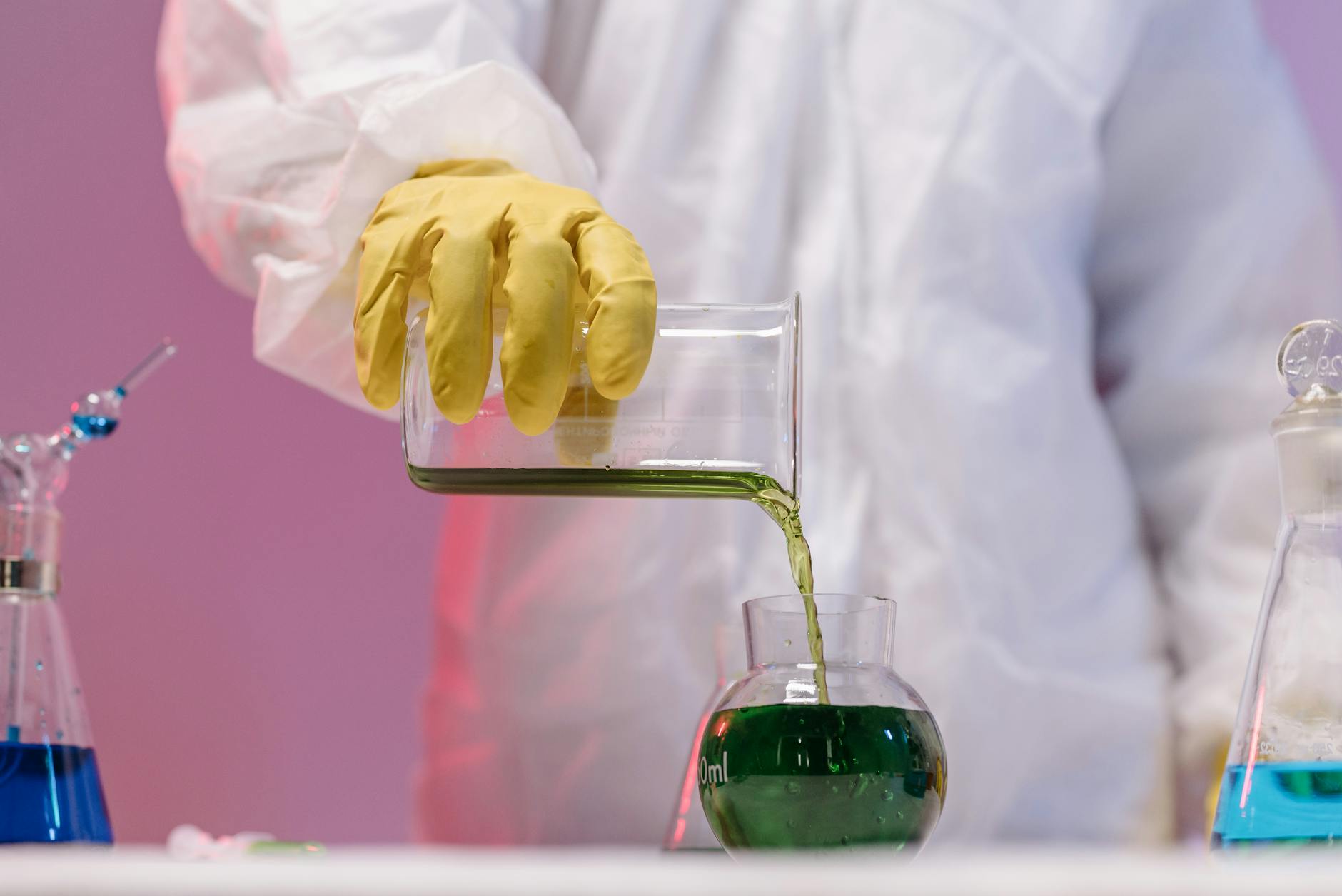
What do you do in anatomy and physiology 1 lab?
An A&P 1 lab gives you a chance to apply concepts from lecture. Depending on the course, you might identify structures on models or images, use virtual simulations, take measurements, interpret data and write lab reports.
The UPI Study Anatomy and Physiology I Lab course uses virtual laboratories. Its syllabus below shows how skeletal, muscular and nervous system topics fit alongside the other labs.
| # | Chapter | Lessons | Hours |
|---|---|---|---|
| Lab 1 | Introduction to Anatomy & Physiology | Part 1: Levels of structural organization; Part 2: The eleven organ systems; Part 3: Properties of life & homeostasis; Part 4: Directional terms | 5 |
| Lab 2 | Chemistry of Life | Part 1: Elements & atomic structure; Part 2: Chemical bonds; Part 3: Types of energy; Part 4: Reaction rates | 8 |
| Lab 3 | Cell Structure & Membrane Transport | Part 1: Cell structure; Part 2: The plasma membrane; Part 3: Diffusion; Part 4: Osmosis & tonicity | 4 |
| Lab 4 | The Integumentary System | Part 1: Layers of the skin; Part 2: Accessory structures; Part 3: Melanin, UV & vitamin D; Part 4: Thermoregulation | 6 |
| Lab 5 | The Skeletal System | Part 1: Gross bone anatomy; Part 2: Bone tissue; Part 3: Bone cells & remodeling; Part 4: Bone shapes & fractures | 6 |
| Lab 6 | Axial & Appendicular Skeleton | Part 1: Axial vs appendicular; Part 2: The skull; Part 3: The vertebral column; Part 4: The appendicular skeleton | 3 |
| Lab 7 | Joints & Movements | Part 1: Joint classification; Part 2: The synovial joint; Part 3: Types of synovial joint; Part 4: Body movements | 3 |
| Lab 8 | The Muscular System | Part 1: Muscle tissue types; Part 2: Muscle organisation; Part 3: The sarcomere & sliding filament; Part 4: The neuromuscular junction | 5 |
| Lab 9 | Muscles — Identification, Actions & Levers | Part 1: How muscles are named; Part 2: Major muscles; Part 3: Origin, insertion & action; Part 4: Muscle interactions | 3 |
| Lab 10 | The Central Nervous System | Part 1: The neuron; Part 2: Neuroglia; Part 3: The action potential; Part 4: The brain | 3 |
| Lab 11 | The Endocrine System | Part 1: Hormone classes & mechanisms; Part 2: The endocrine glands; Part 3: Negative feedback; Part 4: The oral glucose tolerance test | 4 |
| Graded Quizzes (11 quizzes) | Course platform (Thinkific) | 3 | |
| LAB REPORT | Course Platform | 2 |
Your own lab may cover topics in a different order or use different specimens and assessments. Check its syllabus and instructor’s study list before deciding what to memorize. For more context, see what you do in an anatomy and physiology 1 lab.
How do you study for an anatomy and physiology lab practical?
A lab practical often asks you to identify structures on images, models or specimens, sometimes at individual stations. Ask your instructor what format to expect and whether you must identify landmarks, describe functions or answer questions about measurements.
- Make a checklist from the structures and skills on your course’s study guide.
- Study a small group with labels, then cover the labels and identify each item from memory.
- For each structure, say where it is and give its function or a distinguishing feature.
- Mix old and new items, use different views, and mark every mistake for another round.
- Try a timed practice session using blank diagrams, models or photos similar to your lab materials.
Review missed items again after a break and on later days. Looking at a labeled diagram until it feels familiar is less useful than testing whether you can produce the name yourself.
Which colleges have matched Anatomy and Physiology I Lab? 1 college confirms UPI Study's Anatomy and Physiology I Lab (Biology 211L, 2 credits), according to its equivalency page on UPI Study. Here they are, with the course it counts as at each:
| College | Course it counts as | Credits | How it counts |
|---|---|---|---|
| University of the People | General Elective (UoPeople) | 2 | Transfers (Elective) |
See Anatomy and Physiology I Lab on UPI Study →
ACE and NCCRS have over 2,100 cooperating colleges that will consider accepting credits; the final decision is with the universities. Each college confirms the course when it evaluates your transcript.
How do you study bones for an anatomy and physiology 1 lab practical?
Start by sorting bones into the axial skeleton, including the skull and vertebral column, and the appendicular skeleton, including the limbs and their girdles. Then learn each bone’s shape, orientation and required landmarks.
For example, identify the femur by its rounded head, long shaft and distal condyles. Practice locating the head and greater trochanter, then turn the image or model and find them again. Check the features used to orient the bone before deciding whether it is a left or right femur.
Use blank images to test both directions: point to a landmark and name it, then read the name and point to it. Compare easily confused structures side by side, such as the tibia and fibula, rather than studying each only in isolation.
The Complete Resource for Anatomy Lab
UPI Study has a full resource page built specifically for anatomy lab — covering which courses count and how to get started at $250 per course with no deadlines. Your college decides how credits transfer.
See the A&P 1 Lab →How do you practice anatomy and physiology lab practical labeling?
For muscles, make a short card or table for each required structure: name, location and main action. Add origin and insertion if your instructor expects them.
For example, the biceps brachii lies on the anterior upper arm and helps flex the elbow and supinate the forearm. On a blank image, find the muscle first; then say its actions without looking at your notes. Compare it with the triceps brachii, which lies mainly on the posterior upper arm and extends the elbow.
Practice on images from different angles and point to the whole muscle as well as any labeled attachment your course requires. If you miss a label, note whether the problem was the name, the location or the view.
How do you study for an A&P nervous system lab practical?
Separate identification from processes, then connect them. On a neuron diagram, practice finding the cell body, dendrites and axon; explain that dendrites generally receive signals and the axon conducts signals away from the cell body.
For a reflex arc, trace the sequence: receptor, sensory neuron, integration center in the central nervous system, motor neuron and effector. Use a withdrawal reflex as an example, and redraw the pathway without notes until you can explain the direction of the signal.
If your lab includes brain or spinal cord structures, use the assigned images and model views to practice those too. Your instructor’s list determines which structures and details you need.
What should an anatomy and physiology 1 lab study guide include?
Build your guide around what you will be asked to do, not just chapter titles. Include a structure checklist, blank diagrams, key functions, confusing pairs, and any measurements or calculations your lab has practiced.
For reports and data questions, rehearse recording units, showing calculations and explaining how your observations support a conclusion. If you study online, these anatomy lab tips for online students can help you organize your workspace and practice.
Before the exam, run through a mixed set of bones, muscles and nervous system images. Spend your final review on the items you missed rather than repeatedly checking the ones you already know.
Which colleges list Anatomy and Physiology I Lab on an equivalency chart?
These colleges show Anatomy and Physiology I Lab (Biology 211L) on their equivalency charts with UPI Study. Open a college for its full chart.
| College | Equivalent course | Credits | Status |
|---|---|---|---|
| UoPeople | General Elective (UoPeople) | 2 | Elective credit |
| CSU | Open Electives | 2 | Recommended by UPI Study — the college confirms on evaluation |
| Crestpoint | General Elective (Crestpoint) | 2 | Recommended by UPI Study — the college confirms on evaluation |
| Dunlap-Stone | General Education Science | 2 | Recommended by UPI Study — the college confirms on evaluation |
| Gracelyn | General education: Broad Knowledge and Intellectual Skills (Sciences) | 2 | Recommended by UPI Study — the college confirms on evaluation |
| Indiana Tech | BIO 2720 – Human Anatomy and Physiology I Lab | 2 | Recommended by UPI Study — the college confirms on evaluation |
| Maestro | UPI Recommended | 2 | Recommended by UPI Study — the college confirms on evaluation |
| Newlane | Scientific Reasoning GE | 2 | Recommended by UPI Study — the college confirms on evaluation |
See the rest of the equivalency on the Anatomy and Physiology I Lab course page, or open a college above for its full chart. ACE and NCCRS have over 2,100 cooperating colleges that will consider accepting credits; the final decision is with the universities.
Frequently Asked Questions about Anatomy Lab
Anatomy and physiology 1 lab is a practical setting for applying concepts about body structures and functions. Activities and topics vary by course, so consult the syllabus for the tools and assessments you will use.
You may identify anatomical structures, make observations, interpret measurements and explain results. Depending on the course, activities may use physical materials, images or virtual simulations.
Practice identifying the required structures without labels, using materials that resemble your lab exam. Mix topics and views, check mistakes, and repeat difficult items on later days.
It should include your instructor’s required structures, relevant functions, blank diagrams and any skills or calculations you need to demonstrate. Add a list of structures you commonly confuse so you can compare them.
Start with the final exam’s scope and make a checklist of its required topics and skills. Practice mixed questions and identification from memory, then focus your remaining review on errors.
Some anatomy and physiology 1 courses include or accompany a lab, but arrangements vary by school. Check the course description and your program’s requirements to see whether a separate lab is needed.
Yes, some anatomy and physiology labs are offered online. UPI Study’s Anatomy and Physiology I Lab uses interactive virtual simulations, reports and quizzes, and requires a computer or laptop.
Final Thoughts on Anatomy Lab
Get your lab’s structure list and choose one small group to practice today. Test yourself on an unlabeled image, record what you miss and return to those items in your next session.
The way this actually clicks
Skip step 3 and the whole thing is wasted.
Ready to Earn College Credit?
Credit recommended by NCCRS · Self-paced · Your college decides how credits transfer · $150/course or $99/month (US)
Comments
No comments yet. Ask a question or share how it went for you.