
Study for A&P 2 lab by practicing the tasks you may be asked to perform: identifying structures, reading results, doing calculations and explaining what the results mean. For blood typing, ECGs and urinalysis, work through examples without looking at the answers. Then check your course materials to see which procedures and reference ranges your instructor expects you to know.
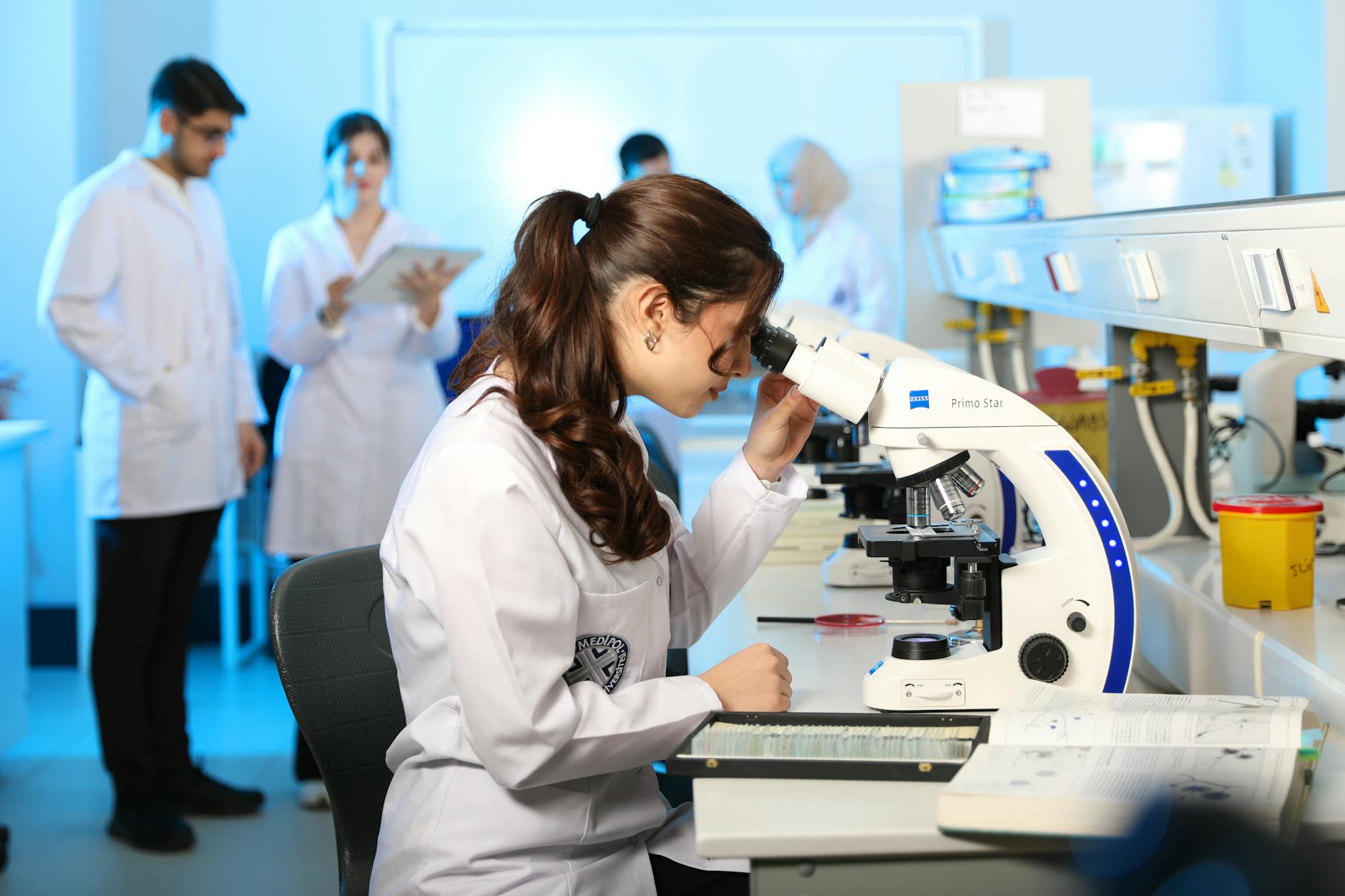
How do you study for A&P 2 lab?
Begin with your lab manual, objectives and any instructor-provided practice materials. Make a checklist for each lab: what you must identify, what you must measure or calculate, and what you must explain. Lab practicals can differ, so confirm the format and topics before you prepare.
- Recall: Label a blank diagram or describe a procedure without your notes.
- Apply: Work through a new result, tracing each step to your conclusion.
- Check: Compare your reasoning with the lab material and correct errors.
- Explain: Write a few sentences connecting the result to the underlying physiology.
For online study habits, see anatomy lab tips for online students.
What should you study for the anatomy and physiology 2 blood lab?
Start with the difference between red blood cell antigens and antibodies in plasma. In ABO typing, a reaction with anti-A or anti-B reagent indicates the corresponding antigen is present on the red cells. Clumping, called agglutination, is a positive reaction; a reaction with anti-D indicates Rh-positive blood.
Try this example: a sample clumps with anti-A and anti-D, but not anti-B. It is type A positive. Explain each reaction rather than memorizing the pattern as a single picture.
For transfusion questions, check whether the question concerns red cells or plasma: compatibility depends on the component. For red cell transfusion, recipient antibodies must not react with antigens on donor red cells. Blood typing and cross-matching are related but distinct; a cross-match checks compatibility between a particular donor and recipient.
Which colleges have matched Anatomy and Physiology I Lab? 1 college confirms UPI Study's Anatomy and Physiology I Lab (Biology 211L, 2 credits), according to its equivalency page on UPI Study. Here they are, with the course it counts as at each:
| College | Course it counts as | Credits | How it counts |
|---|---|---|---|
| University of the People | General Elective (UoPeople) | 2 | Transfers (Elective) |
See Anatomy and Physiology I Lab on UPI Study →
ACE and NCCRS have over 2,100 cooperating colleges that will consider accepting credits; the final decision is with the universities. Each college confirms the course when it evaluates your transcript.
How do you prepare for a human anatomy and physiology 2 lab practical?
For ECG questions, first label the P wave, QRS complex and T wave on a tracing. The P wave represents atrial depolarization, the QRS complex represents ventricular depolarization, and the T wave represents ventricular repolarization. Atrial repolarization is usually hidden within the QRS complex.
Next, practice measuring the PR interval, QRS duration and R–R interval using the scale given on the strip. If the R–R interval is 800 milliseconds, heart rate is 60,000 ÷ 800 = 75 beats per minute. For a regular rhythm on standard ECG paper running at 25 mm per second, the 300 method estimates rate by dividing 300 by the number of large squares between successive R waves.
Check the reference ranges and measurement rules in your lab materials. An educational rhythm-strip calculation is practice in interpretation, not a diagnosis.
The Complete Resource for Anatomy Lab
UPI Study has a full resource page built specifically for anatomy lab — covering which courses count and how to get started at $250 per course with no deadlines. Your college decides how credits transfer.
See the A&P 2 Lab course →What should you study for the anatomy and physiology II lab on the urinary system?
Draw a nephron and trace filtrate from the glomerulus and Bowman’s capsule through the proximal tubule, loop of Henle, distal tubule and collecting duct. For each segment, connect its location to a function, such as filtration, reabsorption or regulation of water balance.
If your lab includes urinalysis, practice interpreting findings in context. For example, glucose is normally reabsorbed from filtrate; glucose in urine can appear when the filtered load exceeds the kidney’s capacity to reabsorb it. Protein or blood in urine can have several causes, so a single finding does not establish a diagnosis.
For a clearance calculation, use clearance = urine concentration × urine flow ÷ plasma concentration. With inulin, the result estimates glomerular filtration rate when the measurements and units are appropriate. Some urinary labs emphasize nephron function and clearance rather than a urine dipstick, so follow your own lab objectives.
How do you use an anatomy and physiology lab exam 2 study guide?
Turn your study guide into a practice test. Cover the answers, label diagrams from memory and work through sample results using a calculator and the units provided. If you miss a question, note whether the problem was a forgotten term, a measurement error or an explanation that skipped a step.
Practice writing a short report that states the objective and method, presents the observations and calculations, and explains what the data support. Include a possible source of error rather than changing the result to match what you expected.
For a broader picture of lab activities, read what to expect in an A&P 2 lab.
How does human anatomy and physiology 2 with lab online work?
Online labs can use interactive simulations and data analysis rather than only physical equipment. The Anatomy and Physiology 2 Lab course from UPI Study uses self-paced virtual laboratories; the course details are summarized below.
| Anatomy and Physiology 2 Lab | Detail |
|---|---|
| Course code | Biology 212L |
| College credits | 2 semester credits |
| Credit recommended by | NCCRS |
| Format | Self-paced, online, on UPI Study's platform |
| Chapters | 14 chapters, 0 study hours in the syllabus |
| To pass | A score of 70 or above (NCCRS requirement) |
| Price (one course, lifetime access) | $250 |
| US plans (all courses) | $99/month · $279/4 months · $495/year · $599 lifetime |
For this course, use a computer or laptop, a basic calculator and a notebook. Complete each lab in one sitting: closing or refreshing the tab discards the work and starts a new data set. Reports cannot be exported until at least 30 minutes of lab time have elapsed.
Each lab ends with an exported report and a graded quiz after the report is submitted. For more on the format, see how a virtual anatomy lab works.
Which colleges list Anatomy and Physiology 2 Lab on an equivalency chart?
These colleges show Anatomy and Physiology 2 Lab (Biology 212L) on their equivalency charts with UPI Study. Open a college for its full chart.
| College | Equivalent course | Credits | Status |
|---|---|---|---|
| UoPeople | General Elective (UoPeople) | 2 | Elective credit |
| CSU | Open Electives | 2 | Recommended by UPI Study — the college confirms on evaluation |
| Crestpoint | General Elective (Crestpoint) | 2 | Recommended by UPI Study — the college confirms on evaluation |
| Dunlap-Stone | General Education Science | 2 | Recommended by UPI Study — the college confirms on evaluation |
| Gracelyn | General education: Broad Knowledge and Intellectual Skills (Sciences) | 2 | Recommended by UPI Study — the college confirms on evaluation |
| Indiana Tech | BIO 2740 – Human Anatomy & Physiology II Lab | 2 | Recommended by UPI Study — the college confirms on evaluation |
| Maestro | UPI Recommended | 2 | Recommended by UPI Study — the college confirms on evaluation |
| Newlane | Scientific Reasoning GE | 2 | Recommended by UPI Study — the college confirms on evaluation |
See the rest of the equivalency on the Anatomy and Physiology 2 Lab course page, or open a college above for its full chart. ACE and NCCRS have over 2,100 cooperating colleges that will consider accepting credits; the final decision is with the universities.
Frequently Asked Questions about Anatomy Lab
It can have a lab, but the requirements depend on the course and program. Check whether your program requires a separate lab as well as the lecture.
Study by practicing the tasks listed in your lab objectives. Label structures, interpret unfamiliar results, calculate values and explain your reasoning without looking at your notes.
A practical may ask you to identify structures, interpret observations or use measurements, but the exact content depends on your instructor. Use your lab objectives and practice materials to narrow your review.
It should cover the specific labs assigned before your first practical. Organize them by structures, procedures, calculations and interpretations, then test yourself on each.
Know how to read ABO and Rh agglutination patterns and explain what the reactions indicate. Also review blood components and transfusion compatibility if they appear in your objectives.
Online lab study is available, although the format and requirements vary. UPI Study’s Anatomy and Physiology 2 Lab uses interactive virtual laboratories that students complete at their own pace.
Use answers to check your work after you have attempted the questions. For missed items, explain why the correct answer fits the observation or calculation.
Final Thoughts on Anatomy Lab
Choose one blood typing pattern, one ECG strip and one urinary-system problem to practice without notes. Check each answer against your materials, then revisit the step you found hardest.
The way this actually clicks
Skip step 3 and the whole thing is wasted.
Ready to Earn College Credit?
Credit recommended by NCCRS · Self-paced · Your college decides how credits transfer · $150/course or $99/month (US)
Comments
No comments yet. Ask a question or share how it went for you.