
Psychologists measure intelligence with standardized tests, norm scores, and school-based evaluations, not with one magic number. In practice, they compare a person's score to a large reference group, then use that result to study learning needs, placement, and support in educational psychology. This matters because people often ask how we measure how smart someone is intelligence methods without realizing the word “smart” covers more than one skill. A child who solves puzzles fast, a teen who reads well, and an adult who reasons well in a quiet room may not all score the same way. Most major tests use a mean of 100, and many also report percentiles, so a score tells you where someone stands against a norm group, not whether they are “better” or “worse” as a whole person. Schools use these results for screening, gifted placement, learning support, and special education decisions. They also pair test scores with grades, teacher notes, and classroom work. That mix matters because intelligence testing helps with decisions, but it never captures every skill a student brings into a room.
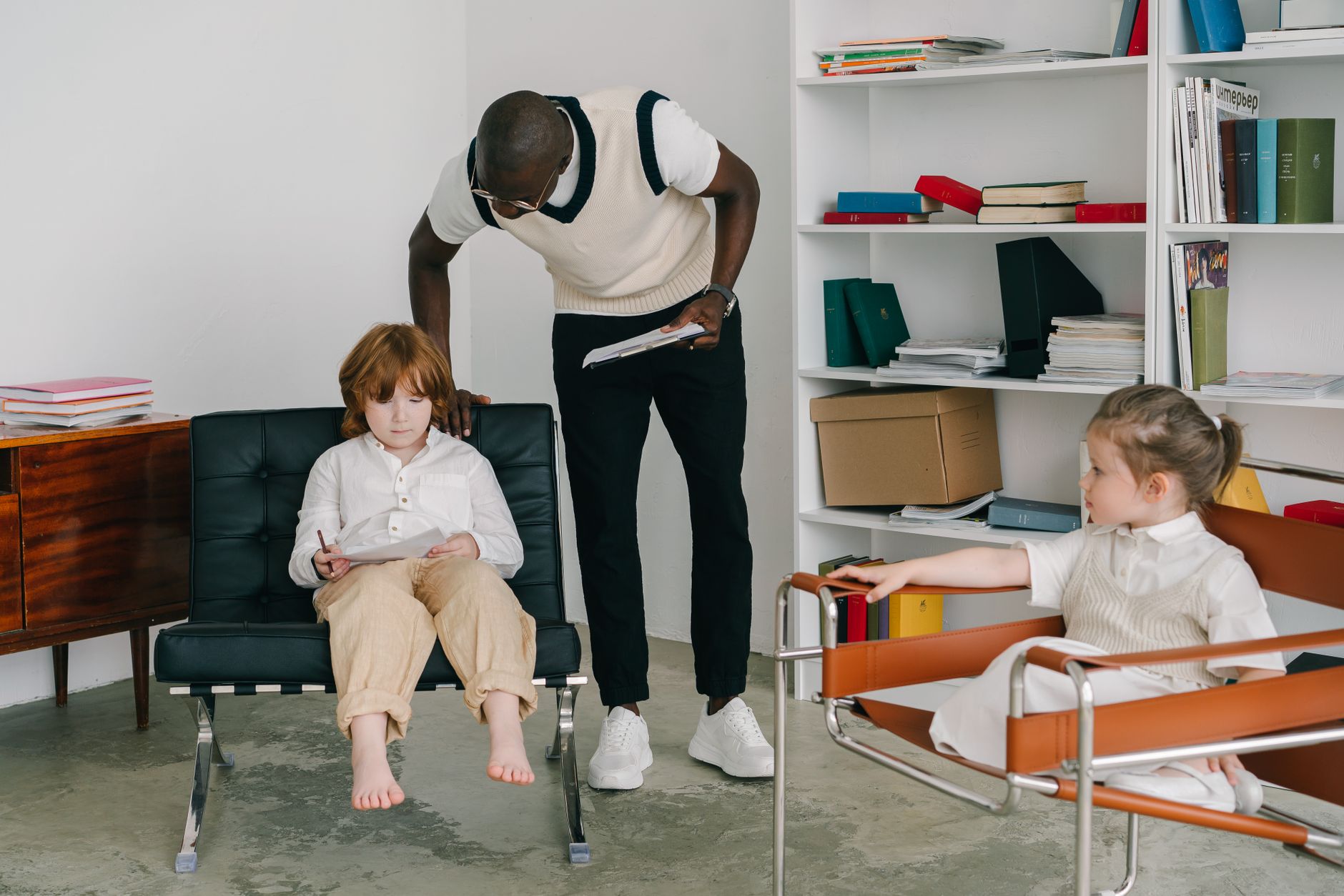
How Do Psychologists Measure Intelligence?
Psychologists measure intelligence with standardized tools that compare one person’s performance with a norm group, often using a mean score of 100 and a standard deviation of 15. That setup lets them see whether a score sits near average, above average, or well below the group used to build the test.
The catch: A test score only means something because the test maker gave it to hundreds or thousands of other people first. Without that 2020s-style norming work, a raw score of 18 items correct tells you almost nothing.
Educational psychology uses these scores to spot learning needs, plan support, and decide whether a student needs more testing. A school might use one score to flag a reading issue, then use a second tool to look at memory, processing speed, or verbal reasoning. That 2-step process beats guesswork every time.
The basic idea behind intelligence measurement is simple: compare performance, then interpret the gap. A student who scores at the 25th percentile performs better than 25 out of 100 people in the norm group, while a student at the 90th percentile scores higher than 90 out of 100. Those numbers help schools talk about support in plain terms.
Reality check: A 95, 100, and 105 score can look close, but schools treat them as different data points when they sit inside a larger pattern. That is why psychologists care about confidence bands, subtest scatter, and 1 or 2 weaker areas, not just the headline number.
The best psychologists treat intelligence measurement like a map, not a verdict. A good map helps you choose a route. It does not tell you everything about the person holding it.
Which Intelligence Tests Do Psychologists Use?
Psychologists use several test types because each one answers a different question. IQ tests often give the broadest score, while school screening tools help with fast decisions in K-12 settings. Individual assessments take longer, but they usually give a fuller picture than group tests, which schools can give to many students at once.
| Test type | What it measures | Who gives it / where used | What scores tend to show |
|---|---|---|---|
| IQ test | General reasoning, memory, speed | Licensed psychologist; clinics, schools | Mean 100; SD 15 |
| Individual cognitive assessment | Verbal, visual, working memory, processing speed | Psychologist or school psychologist | Strengths, weaknesses, uneven profile |
| Group standardized test | Broad academic-cognitive screening | School staff; many students at once | Percentiles, cut scores, flags |
| School screening tool | Early signs of giftedness or learning risk | Teachers, counselors, screening teams | Quick yes/no referral signal |
What this means: A full individual test often takes 60-120 minutes, while group screens can take 20-45 minutes for a whole class. That time gap explains why schools use both.
The table shows the trade-off. Fast tools help with 200 students in a district. Deeper tests help with one child who needs a clearer answer.
What Do IQ Scores Actually Mean?
IQ scores mean where a person stands compared with a norm group, usually around a mean of 100 and a standard deviation of 15. On many scales, scores from about 90 to 109 sit in the average range, while scores near 130 often fall in the very high range.
A percentile makes that easier to picture. A score at the 50th percentile sits right in the middle, while the 84th percentile means the person scored higher than 84 out of 100 people in the norm group. That sounds simple, but people mess it up all the time.
Worth knowing: A score of 115 does not mean “15% smarter.” It means the person scored one standard deviation above the mean on that test version, and that test version used a specific norm sample from a specific year.
IQ scores also come with limits. A 110 on one day and a 104 on another day can both land inside the same confidence band, especially if the test’s standard error runs a few points wide. That is why psychologists do not treat a 3-point gap like a dramatic change.
The score tells you something real, but not everything. It gives a snapshot of performance on that day, with that examiner, under that set of instructions. I think that makes IQ scores useful and annoyingly easy to overread at the same time.
Educational psychology uses those scores as one piece of a larger case file. A student with a 98 IQ and a 70 reading score may need very different help than a student with a 98 IQ and a 98 reading score.
Learn Educational Psychology Online for College Credit
This is one topic inside the full Educational Psychology course on UPI Study — a self-paced, online class that earns real college credit. Credits are ACE and NCCRS evaluated and transfer to partner colleges across the US and Canada. Courses start at $250 with no deadlines and lifetime access.
Explore on UPI Study →Why Is Intelligence Hard To Measure?
Intelligence is hard to measure because tests can miss culture, language, stress, and uneven access to practice. A child who speaks English as a second language, for instance, may lose points on verbal sections even if their reasoning skills run strong in math or visual tasks.
Bias concerns matter here. A test built in one country or one social setting can favor people who know its words, formats, and hidden rules. That problem has shown up for decades, and psychologists still argue about it in 2026 because no test floats above culture.
Test anxiety also bends scores. A student can know the material and still freeze during a 45-minute timed task, especially if the room feels tense or the stakes feel huge. That does not mean the score lies, but it does mean the score only shows one slice of ability.
Reality check: Academic skill and broad cognitive skill do not match perfectly. A strong reader may not solve visual puzzles fast, and a fast reasoner may struggle with written output. That split tells psychologists more than a single total score ever could.
Psychologists reject the idea of one perfect intelligence test because human ability has too many parts. Memory, speed, language, planning, and reasoning all matter, and they do not always move together. A clean-looking number feels neat, but real minds do not stay neat for long.
How Is Intelligence Measured In Schools?
Schools measure intelligence to guide gifted placement, special education decisions, and support plans, but they rarely rely on one score alone. A school psychologist may combine a 2-hour cognitive test, classroom work, and teacher reports before making a recommendation. This matters because a single number can miss a student who looks average on paper but struggles in class, or a student who tests high but still needs support in reading or behavior.
- Classroom grades: 3 quarters or 2 semesters show patterns over time.
- Teacher observations: notes on attention, problem solving, and language use.
- Multiple assessments: reading, math, memory, and processing speed.
- Family history: early delays, language changes, or repeated absences.
- Response to support: how the student does after 6-8 weeks of help.
Bottom line: Schools care about the full picture because a score from one morning cannot explain 180 school days. That is a hard truth, and I think it keeps schools honest.
Educational psychology uses these measures to spot who needs a deeper look, who might qualify for enrichment, and who needs special education services under local rules. The test opens the door. The rest of the file decides the plan.
Which Measures Give The Best Picture?
The best picture comes from several measures together: IQ scores, academic records, teacher observations, and sometimes language or achievement tests. A psychologist who only looks at one number risks missing a student’s real strengths, and that mistake can cost months of support or 1 missed placement cycle.
A strong evaluation often compares scores across 2 or 3 areas, like verbal reasoning, visual reasoning, and working memory. That comparison helps show whether the student has a broad pattern or a narrow issue. It also gives schools a better base for planning than a flat total score alone.
Educational psychologists care about history too. Did the student change schools 3 times? Did illness hit during testing month? Did English arrive at age 9 instead of age 4? Those details change how a score reads, and any good evaluator knows that context can matter as much as the number itself.
I like the multi-measure approach because it respects real life. Kids and adults do not come with one clean label, and a test should not pretend they do.
If you want the most honest answer to intelligence, look at the score, the setting, the language, the school record, and the person’s day-to-day work. That mixed view gives educators something they can actually use without turning a human being into a single digit.
Frequently Asked Questions about Educational Psychology
Start with a standardized IQ test, like the Wechsler scales or the Stanford-Binet, because psychologists score your answers against a norm group, usually with 100 as the average and 15 as the standard deviation. That gives you a clear comparison point, not a guess.
If you read the score wrong, you can label a student too high or too low, and that can affect placement in gifted programs, special education, or a psychology 120 educational psychology course discussion. A score of 120 does not mean genius; it usually means above-average performance on that test.
This applies to students, teachers, school psychologists, and anyone taking a psychology 120 educational psychology course, but it does not apply to people who think one test can fully measure all thinking skills. Intelligence tests work best as one tool among several, not as a full picture of a person.
A full one-on-one IQ test often costs about $300 to $1,000, depending on the city, the examiner, and whether the test is for school, work, or clinical use. The price matters because trained scoring and interpretation take time.
Yes, they measure certain parts of intelligence, especially reasoning, memory, and problem-solving, but they don't capture every kind of smart. That means a score can show how you perform on one set of tasks, not your full ability in real life.
Most students memorize terms like IQ and standard score, but what actually works is learning how tests compare your score to a norm group of 100 and how 1 standard deviation on many scales equals 15 points. That helps you read results instead of just repeating labels.
What surprises most students is that psychologists measure intelligence with several methods, not one magic test, and some schools use achievement tests, aptitude tests, and nonverbal tasks too. A child can score low on one test and still show strong reasoning in another setting.
The most common wrong assumption is that an IQ score never changes, but scores can shift with age, test type, practice, and education. A score from age 8 does not lock in the same result for life.
Standardized assessments help psychologists compare you with thousands of other test takers using the same rules, timing, and scoring. That's why they matter in schools and in research, where fairness depends on consistent testing conditions.
Yes, you can study online and earn ace nccrs credit through an online course that covers educational psychology and test methods, and that college credit can transfer at cooperating schools. That matters if you're building flexible credit options while you study from home.
Bias concerns matter because language, culture, and school access can affect test scores, especially on verbal sections and timed tasks. Psychologists use multiple measures, including nonverbal tests, to reduce that problem and get a fairer read on ability.
Final Thoughts on Educational Psychology
Psychology does not measure intelligence with one magic test, and that is not a flaw. It is the honest part. A score can tell you where someone stands in a norm group, but it cannot show grit, curiosity, stress, language history, or how that person learns on a messy Tuesday in March. That is why schools lean on a full file instead of a single number. They look at IQ scores, classroom work, teacher notes, achievement data, and the student’s own history. A 15-point standard deviation, a 50th percentile, or a 120 score all mean something, but only in context. Strip away the context, and the number turns sloppy fast. A good educational psychologist reads the score like a clue, not a verdict. That habit protects students from bad labels and gives schools a better shot at the right support. It also keeps the question honest: not “How smart is this person?” but “What does this set of data say about how this person learns right now?” If you are studying this topic, focus on the parts that show up again and again: norms, percentiles, bias, and multiple measures. Those ideas carry most of the weight, and they show up everywhere from classroom screening to formal evaluation.
How UPI Study credits actually work
Ready to Earn College Credit?
ACE & NCCRS approved · Self-paced · Transfer to colleges · $250/course or $99/month