
Piaget’s four stages of thinking describe how children move from reflexes to abstract reasoning in four clear steps: sensorimotor, preoperational, concrete operational, and formal operational. The big idea is plain enough for psychology 120 educational psychology: a 2-year-old does not think like a 12-year-old, and a teen does not think like an infant with better words. Piaget argued that children build schemas, then change them through assimilation and accommodation. That sounds fancy, but it means they fit new facts into old mental boxes, then bend those boxes when the facts do not fit. The process runs from birth through adolescence, and each stage brings new limits and new strengths. A child at 4 years old may use a stick as a magic wand. A student at 9 may sort rocks by size and color. A teen at 15 may test a hypothesis in algebra or science. That stage pattern matters because teachers waste time when they expect 7-year-olds to reason like 17-year-olds. Piaget’s model does not claim every child moves at the same pace, and modern research has poked holes in the rigid version. Still, the four stages give educators a useful map for age, ability, and classroom design. If you teach, study online, or earn college credit through an online course, this framework comes up again and again in educational psychology because it explains why the same lesson lands differently across ages. It also helps you spot when a student needs concrete examples before abstract rules.
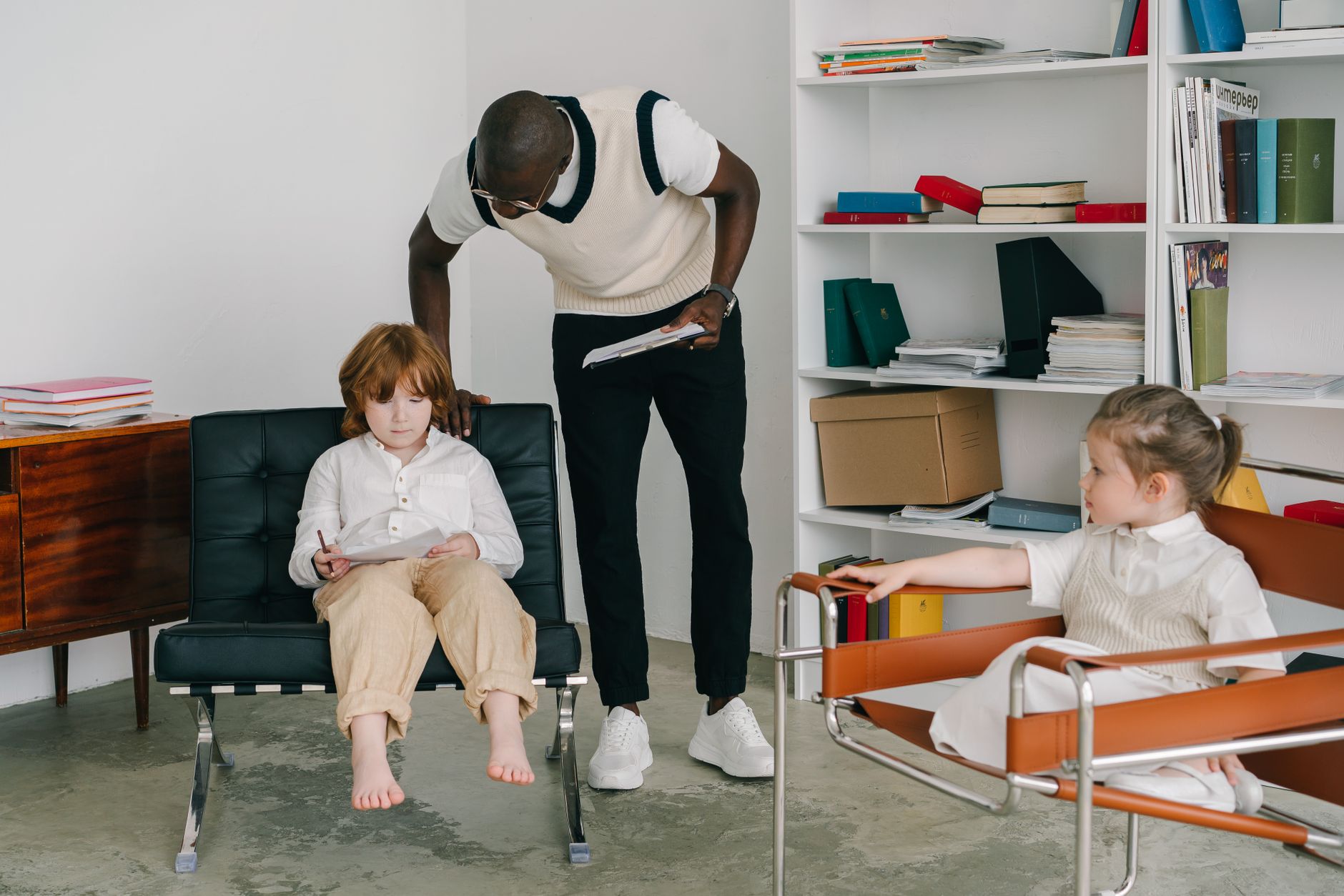
What Are Piaget's Four Stages of Thinking?
Piaget’s four stages of thinking are a 4-part model of cognitive growth that starts at birth and runs into the teen years, with each stage showing a different way of solving problems, using language, and making sense of the world. In psychology 120 educational psychology, this theory matters because it treats children as active thinkers, not small adults who just know less.
Piaget said children build schemas, which are mental plans for how the world works. A baby learns one schema for shaking a rattle. A 6-year-old builds another for “dog,” “school,” or “number line.” New experiences trigger assimilation when they fit an old schema, and accommodation when the child has to change the schema. That back-and-forth drives growth across the 4 stages, not just simple memory gain.
The catch: Piaget did not see thinking as smooth and even; he saw clear shifts, and that idea still shapes educational psychology because a 9-year-old can handle 2-step logic while a 3-year-old may still rely on symbols and pretend play. That gap is not a small detail. It changes how students read, count, and explain their answers. A child in stage 2 may say a taller glass has more water, while a child in stage 3 can compare volume after seeing the same amount poured into 2 containers.
The stages are sensorimotor from birth to about 2 years, preoperational from about 2 to 7, concrete operational from about 7 to 11, and formal operational from about 11 or 12 onward. That range is not a prison cell. Students often move at different speeds, and school, language, and practice can nudge the timeline. Still, Piaget’s model gives teachers a blunt but useful truth: reasoning changes with age, and it changes in patterned ways.
How Does Thinking Change From Baby To Teen?
The four stages line up with clear shifts in age, language, and logic. A baby learns through touch and movement. A child in elementary school starts using symbols and then concrete logic. A teen can test possibilities and think about ideas that have no physical shape. That jump matters in classrooms, because teachers who skip straight to abstract rules often lose half the room.
Reality check: Piaget’s stages do not flip on a birthday, and that is the part people like to pretend away. A 10-year-old can still struggle with abstract math, while a 13-year-old may reason like a formal thinker in science but not in social settings. That unevenness is normal.
| Stage | Typical age | Thinking focus | Classroom example |
|---|---|---|---|
| Sensorimotor | 0-2 years | Senses, actions, object permanence | Peekaboo and cause-effect toys |
| Preoperational | 2-7 years | Symbols, pretend play, egocentrism | Uses blocks as cars |
| Concrete operational | 7-11 years | Conservation, classification, reversibility | Sorts 20 objects by size |
| Formal operational | 11+ years | Abstract, hypothetical, metacognitive thought | Tests a science hypothesis |
What this means: The real threshold sits around 7 years old: children start handling logic better when the problem uses visible, concrete facts instead of hidden ideas. That is why a 9-year-old can solve “3 apples plus 2 apples” faster than “If x changes, what happens?”
Why Is The Sensorimotor Stage So Important?
The sensorimotor stage runs from birth to about 2 years, and it builds the first serious links between action, memory, and thought. Infants learn by looking, grabbing, sucking, shaking, and repeating, which sounds simple until you realize those actions become the base for all later mental work. A 9-month-old who drops a spoon from a high chair is doing more than making noise. That child is testing cause and effect.
Object permanence is the big milestone here. Around 8 to 12 months, many infants start understanding that a toy still exists when it hides under a blanket. Before that, a baby may act as if the object vanished. Piaget treated that shift as a major sign that the child can hold a mental representation, not just react to what sits in front of the eyes. That step matters more than a lot of adults admit.
The stage also includes trial-and-error problem solving. A 1-year-old may push, pull, or twist a toy until something works. That kind of repeated action builds early schemas for space, motion, and memory. It also explains why early play matters so much in developmental psychology. A child who gets rich sensory input from 0 to 24 months usually has more chances to build stable patterns for later language and reasoning.
Bottom line: Early experience is not decoration; it is the raw material for thinking. Babies who explore with their hands, eyes, and mouths get more chances to connect action with meaning, and that shape shows up later when students handle symbols, words, and numbers.
Learn Educational Psychology Online for College Credit
This is one topic inside the full Educational Psychology course on UPI Study — a self-paced, online class that earns real college credit. Credits are ACE and NCCRS evaluated and transfer to partner colleges across the US and Canada. Courses start at $250 with no deadlines and lifetime access.
Explore on UPI Study →What Changes In Preoperational And Concrete Thinking?
Between ages 2 and 11, thinking changes in a way teachers can see fast: children move from symbolic play and self-focused reasoning to logic tied to real objects, with the cleanest shift showing up near age 7. That split matters because a child can talk well and still miss conservation, reversibility, or classification. Words do not equal logic.
- Preoperational thinking, about 2-7 years, uses symbols, pretend play, and simple language.
- Egocentrism shows up early; a 4-year-old often assumes others see the world the same way.
- Conservation usually fails before age 7, so 2 equal glasses can look unequal after pouring.
- Concrete operational thinking, about 7-11 years, handles classification, reversibility, and visible logic.
- A child around 9 can sort 30 objects by color, size, or shape with less effort.
- Abstract logic still causes trouble because ideas like justice or variable x have no physical form.
Worth knowing: This stage shift shows up in class more than test scores do. A 6-year-old may tell a wild story with 3 characters and 1 plot twist, while a 10-year-old can explain why 250 milliliters of water stays 250 milliliters after a pour. That is not just better memory. It is a deeper grip on the rules behind what they see.
Teachers often rush this part and pay for it. If you ask for algebraic reasoning before a child can handle concrete categories, you get guessing dressed up as effort. That is a bad trade.
How Does Formal Operational Thinking Work?
Formal operational thinking usually starts around ages 11 to 12 and lets students reason about ideas that do not sit in front of them, such as justice, freedom, or chemical formulas. Teens can use hypothetical-deductive thinking, which means they can form a guess, test it, and change it if the data disagree. That is the kind of thinking science classes and debate clubs reward.
Metacognition also gets stronger in this stage. Students start thinking about their own thinking, which helps them spot errors, plan ahead, and check answers before turning in work. A 14-year-old may know that a geometry problem needs a diagram, while a 16-year-old may notice that a bad study plan is the real reason for a low grade. That shift sounds small. It is not.
Still, not every teen uses formal operations all the time. A student may reason abstractly in biology on Tuesday and then act oddly concrete in a social fight on Friday. Subject matter, practice, stress, and schooling all shape when formal thinking shows up. A hard algebra proof may expose gaps that a multiple-choice quiz hides. That is normal, and it gives modern educational psychology a reason to avoid romantic talk about teen genius.
Piaget’s fourth stage matters because it marks the move from “what I can see” to “what might happen if...” That move opens the door to advanced math, lab work, and careful argument. It also carries a downside: teens can overthink, jump to weak theories, or get stuck on possibilities that never happen.
How Should Educators Use Piaget's Stages?
Teachers get better results when they match lessons to developmental readiness, and that usually means starting with concrete work before abstract rules, especially before age 11. Piaget helps here, but rigid stage talk can turn lazy fast if educators treat age as a ceiling instead of a clue.
- Use objects, drawings, and short tasks for ages 2-7 before heavy verbal logic.
- Ask 7-11-year-olds to sort, compare, measure, and explain visible changes.
- Save abstract “what if” questions for students who can handle 11+ reasoning.
- A 10-minute hands-on demo can teach more than a 30-minute lecture for younger children.
- Do not assume every 13-year-old uses formal operations in every subject.
- Pair new ideas with familiar schemas so students can connect old and new knowledge.
- Modern research says development is messy, so treat Piaget as a guide, not a cage.
How Does This Connect To College Credit And Online Study?
A course on Piaget fits well in psychology 120 educational psychology course work because the topic is short, testable, and tied to real classroom practice. Students usually need about 1-2 weeks of focused review for the four stages, not months of memorizing. That makes it a smart target for anyone building college credit through an online course.
Introduction to Psychology gives the base terms, and Educational Psychology goes deeper into stage theory, learning, and classroom use. If you want ace nccrs credit or transferable credit, those course types matter because they line up with recognized review systems used by colleges. That is the part students should care about, not flashy promises.
The catch: A good online course should give you clear content, a set pace, and a clean finish path, because sloppy structure wastes time fast. A 3-credit class usually needs real study time, and a student who waits until the last week usually pays for that mistake with sleep and stress.
The smartest move is to treat Piaget as both content and test prep. Learn the ages, the traits, and the classroom examples. Then connect them to lesson design, child behavior, and the limits of stage theory. That combination shows up in education classes, exam questions, and transfer paperwork far more often than surface-level definitions do.
Frequently Asked Questions about Piaget Stages
Start with the ages: sensorimotor runs from birth to about 2, preoperational from 2 to 7, concrete operational from 7 to 11, and formal operational starts around 11 or 12. In psychology 120 educational psychology, that timeline helps you match each stage to the kind of thinking you see in class and daily life.
What surprises most students is that a child can be smart in one stage and still miss logic in another. A 6-year-old may use language well but still fail conservation tasks, while a 12-year-old can think about abstract ideas and hypothetical cases.
Piaget gives you 4 stages, not 3 or 5, and that clean structure makes the theory easy to study in a psychology 120 educational psychology course. If you take an online course for college credit, you usually need to know the age range, the main skill, and one clear example for each stage.
Most students memorize the names and miss the thinking changes. What actually works is tying each stage to one concrete skill: object permanence for sensorimotor, pretend play for preoperational, conservation for concrete operational, and abstract logic for formal operational.
Piaget's theory applies to children and teens from birth through about 15 or 16, but it doesn't fully explain adult thinking or cultural differences in the same way across all settings. It helps you study school-age reasoning, not every type of learning people do across life.
If you get the stages wrong, you'll mix up age ranges and miss the logic behind student behavior, which can cost you points on short-answer questions and case studies. A 4-year-old's egocentric thinking belongs in preoperational, not concrete operational.
The most common wrong assumption is that kids suddenly jump from one stage to the next on a birthday. Piaget showed smoother growth, so a 7-year-old can show concrete operational thinking in one task and still act preoperational in another.
No, they're not identical for every child, because the ages are rough averages, not hard lines. Most children reach sensorimotor in infancy, preoperational in early childhood, concrete operational in middle childhood, and formal operational in adolescence, but practice and schooling can shift timing.
In sensorimotor, from birth to about 2 years, you learn through your senses and actions, and object permanence shows up near the end of that stage. A baby starts by grabbing, staring, and mouthing, then slowly learns that hidden things still exist.
In preoperational, from about 2 to 7 years, you use symbols, language, and pretend play, but you still struggle with conservation and other people's viewpoints. A child may know words for size and number yet think a taller glass holds more water.
In concrete operational, from about 7 to 11 years, you think more logically about real things, understand conservation, and sort objects by size, color, or type. You can follow rules better, but abstract ideas still feel harder than facts you can see.
In formal operational, starting around 11 or 12, you can think abstractly, test hypotheses, and reason about possibilities, not just what you can touch. Teenagers can debate justice, algebra, or science experiments because they can handle 'what if' thinking.
Final Thoughts on Piaget Stages
Piaget’s four stages of thinking still matter because they explain why age, language, and logic do not all grow at the same speed. A child can speak in full sentences at 4 and still miss conservation at 6. A teen can solve abstract problems in chemistry and still think in very concrete ways during stress or conflict. That mix is not a flaw in the child. It is how development works. The sensorimotor stage builds action and object permanence. The preoperational stage adds symbols and pretend play. The concrete operational stage brings visible logic, reversibility, and classification. The formal operational stage opens abstract and hypothetical thought. Each step changes what students can do, what teachers should ask, and what kind of support actually helps. Piaget does have limits. Modern research shows that children can show advanced skills earlier than Piaget expected, and context matters more than his old stage chart sometimes admits. Still, his model gives educational psychology a clean way to think about growth from infancy through adolescence. That is why it keeps showing up in classrooms, training programs, and college courses. Use the stages as a tool, not a slogan. If you remember the ages, the thinking style, and the classroom signs, you can spot where a learner is and what kind of reasoning comes next. Start there before you ask for more abstract work.
How UPI Study credits actually work
Ready to Earn College Credit?
ACE & NCCRS approved · Self-paced · Transfer to colleges · $250/course or $99/month