
To write an anatomy and physiology lab report, describe the question, explain what you did, present your observations, and interpret what the results mean.
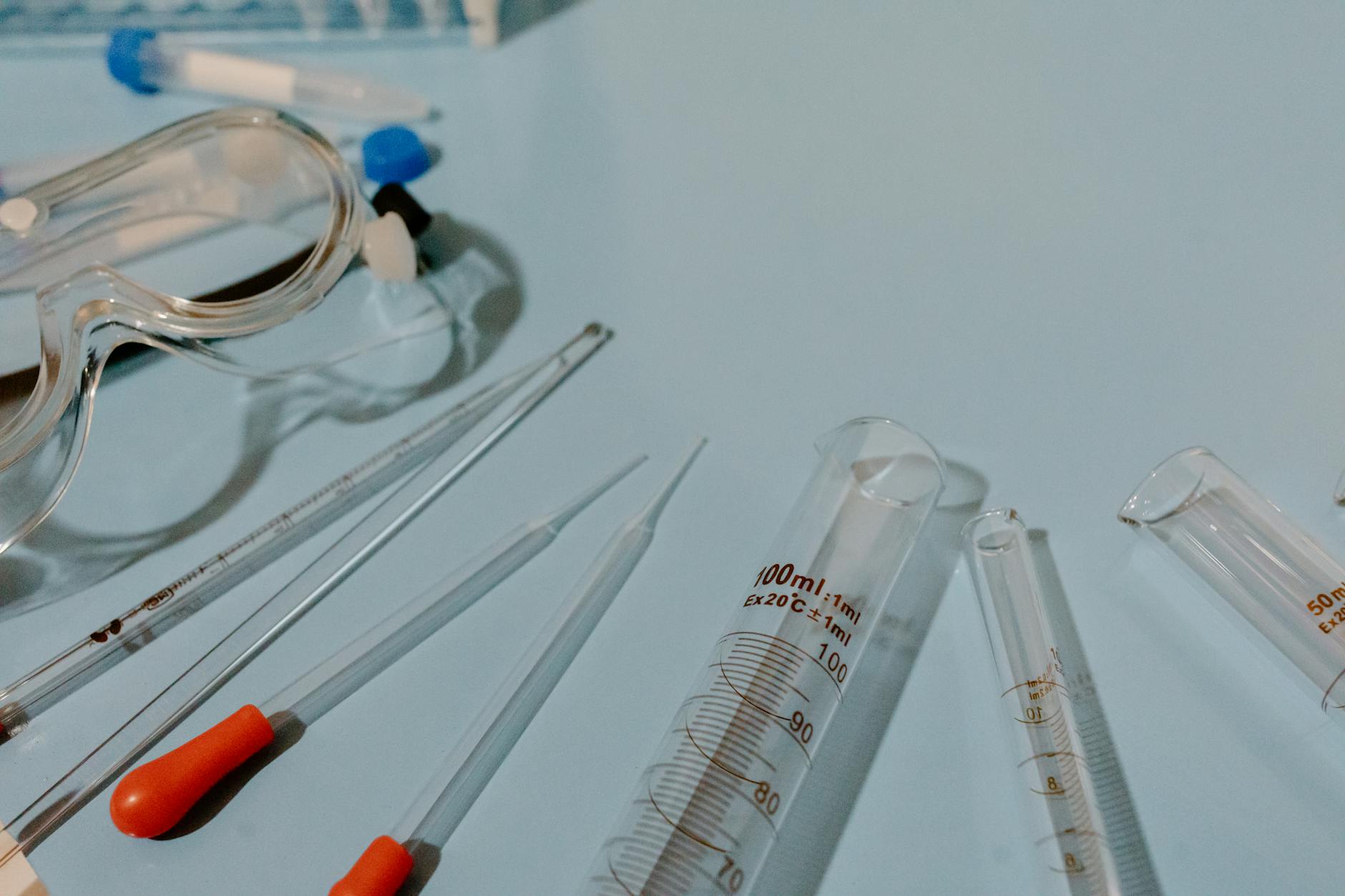
What do you do in anatomy and physiology lab?
In an anatomy and physiology lab, you investigate body structures and how they function. Depending on the activity, you might identify tissues, measure a response, examine a model, or analyze data from an experiment.
Your report records the purpose of the activity and the evidence you collected. For a closer look at common activities, read what you do in an anatomy and physiology 1 lab.
What should you expect in anatomy and physiology 1 lab?
A report’s exact format depends on the assignment, but the following structure works as a starting point. Some activities use a worksheet or post-lab questions instead of a full report, so check the instructions before you begin.
- Title: Identify the topic and activity, such as “Osmosis in Potato Tissue.”
- Introduction: Give the biological background and state the question. Include a testable hypothesis if the activity calls for one.
- Methods: Describe the materials, conditions, and steps clearly enough for a reader to understand how you obtained the results.
- Results: Present observations, measurements, calculations, and any required tables or figures. Label quantities and units.
- Discussion: Explain what the results suggest and relate them to the relevant anatomy or physiology. Address unexpected findings and limitations.
- Conclusion and references: Summarize the answer to the question and cite sources in the format your instructor requests.
A descriptive identification exercise may not need a hypothesis. In that case, state its purpose and explain how your observations relate to the structures studied.
Which colleges have matched Anatomy and Physiology I Lab? 1 college confirms UPI Study's Anatomy and Physiology I Lab (Biology 211L, 2 credits), according to its equivalency page on UPI Study. Here they are, with the course it counts as at each:
| College | Course it counts as | Credits | How it counts |
|---|---|---|---|
| University of the People | General Elective (UoPeople) | 2 | Transfers (Elective) |
See Anatomy and Physiology I Lab on UPI Study →
ACE and NCCRS have over 2,100 cooperating colleges that will consider accepting credits; the final decision is with the universities. Each college confirms the course when it evaluates your transcript.
What do you do in an anatomy and physiology lab?
Keep your results separate from your interpretation. Results say what you observed; the discussion explains what those observations may mean.
For example, imagine a potato piece placed in a sucrose solution had a starting mass of 5.0 g and a final mass of 4.5 g. The change would be −0.5 g, and the percentage change would be (−0.5 ÷ 5.0) × 100 = −10%. These are hypothetical numbers, not measurements to submit.
In the discussion, you could explain that the decrease is consistent with water moving out of the potato tissue by osmosis. You should also note limits: one measurement alone does not establish how reliably the result would occur, and inaccurate drying or weighing could affect the change. Report any control or repeated trials you actually used.
The Complete Resource for Lab Reports
UPI Study has a full resource page built specifically for lab reports — covering which courses count and how to get started at $250 per course with no deadlines. Your college decides how credits transfer.
See the A&P I Lab course →How do you study for anatomy and physiology 1 lab?
Before the activity, review the relevant structures and processes, then read the procedure and rubric. Set up a notebook or data table with spaces for measurements and units so you can record observations as you go.
Afterward, check calculations against your raw data and use precise terms. For example, describe a structure as “superior to the heart” only if its position supports that description. Cite the lab manual or other sources as instructed, and distinguish source material from your own observations.
For more preparation ideas, see anatomy lab tips for online students.
Can you take anatomy and physiology lab online?
Yes. Some labs use virtual activities in which students make observations and measurements on a computer. The same reporting principles apply: record your own data, show your calculations, and answer the questions in the assigned format.
For one online example, the Anatomy and Physiology I Lab from UPI Study uses interactive virtual simulations. The table summarizes its course details.
| Anatomy and Physiology I Lab | Detail |
|---|---|
| Course code | Biology 211L |
| College credits | 2 semester credits |
| Credit recommended by | NCCRS |
| Format | Self-paced, online, on UPI Study's platform |
| Chapters | 13 chapters, 55 study hours in the syllabus |
| To pass | A score of 70 or above (NCCRS requirement) |
| Price (one course, lifetime access) | $250 |
| US plans (all courses) | $99/month · $279/4 months · $495/year · $599 lifetime |
Each UPI Study laboratory must be completed in one sitting; closing or refreshing the tab discards the work. Use a computer or laptop, and keep a calculator and notebook ready to record measurements.
Which colleges list Anatomy and Physiology I Lab on an equivalency chart?
These colleges show Anatomy and Physiology I Lab (Biology 211L) on their equivalency charts with UPI Study. Open a college for its full chart.
| College | Equivalent course | Credits | Status |
|---|---|---|---|
| UoPeople | General Elective (UoPeople) | 2 | Elective credit |
| CSU | Open Electives | 2 | Recommended by UPI Study — the college confirms on evaluation |
| Crestpoint | General Elective (Crestpoint) | 2 | Recommended by UPI Study — the college confirms on evaluation |
| Dunlap-Stone | General Education Science | 2 | Recommended by UPI Study — the college confirms on evaluation |
| Gracelyn | General education: Broad Knowledge and Intellectual Skills (Sciences) | 2 | Recommended by UPI Study — the college confirms on evaluation |
| Indiana Tech | BIO 2720 – Human Anatomy and Physiology I Lab | 2 | Recommended by UPI Study — the college confirms on evaluation |
| Maestro | UPI Recommended | 2 | Recommended by UPI Study — the college confirms on evaluation |
| Newlane | Scientific Reasoning GE | 2 | Recommended by UPI Study — the college confirms on evaluation |
See the rest of the equivalency on the Anatomy and Physiology I Lab course page, or open a college above for its full chart. ACE and NCCRS have over 2,100 cooperating colleges that will consider accepting credits; the final decision is with the universities.
Frequently Asked Questions about Lab Reports
An anatomy and physiology lab is an opportunity to examine body structures and investigate how they work. Activities may involve identification, observation, measurement, or interpretation of experimental data.
You may identify anatomical structures, investigate physiological processes, and analyze measurements. The activities and required reports depend on the course.
Practice identifying structures and explaining their functions without relying on labels. Use your course materials to review the structures and terminology your instructor expects you to know.
Some anatomy and physiology 1 courses include or accompany a lab, but requirements vary. Check your course description and ask your academic advisor whether a separate lab is needed.
Yes, some anatomy and physiology labs are offered online using virtual activities. Check the course requirements to understand what equipment and assignments are involved.
Expect to apply anatomy and physiology concepts through observations, identification, or measurements. Your instructor may also ask you to complete reports, answer post-lab questions, or prepare for practical assessments.
Review the relevant structures and concepts before each activity, then practice using the terms accurately. Keep your observations organized so you can use them when preparing reports and assessments.
Final Thoughts on Lab Reports
Start with your assignment instructions, then create headings for each required section before the lab. As you work, record your observations and units so your final report reflects what you actually did.
The way this actually clicks
Skip step 3 and the whole thing is wasted.
Ready to Earn College Credit?
Credit recommended by NCCRS · Self-paced · Your college decides how credits transfer · $150/course or $99/month (US)
Comments
No comments yet. Ask a question or share how it went for you.