
A&P lab can be hard because it asks you to recognize body structures, use anatomical terms and apply what you learned in lecture. How difficult it feels depends on your background, study habits and the lab’s format. The good news is that lab skills improve with practice. Knowing what you’ll be asked to do—and studying with images, models and data rather than notes alone—can make the work more manageable.
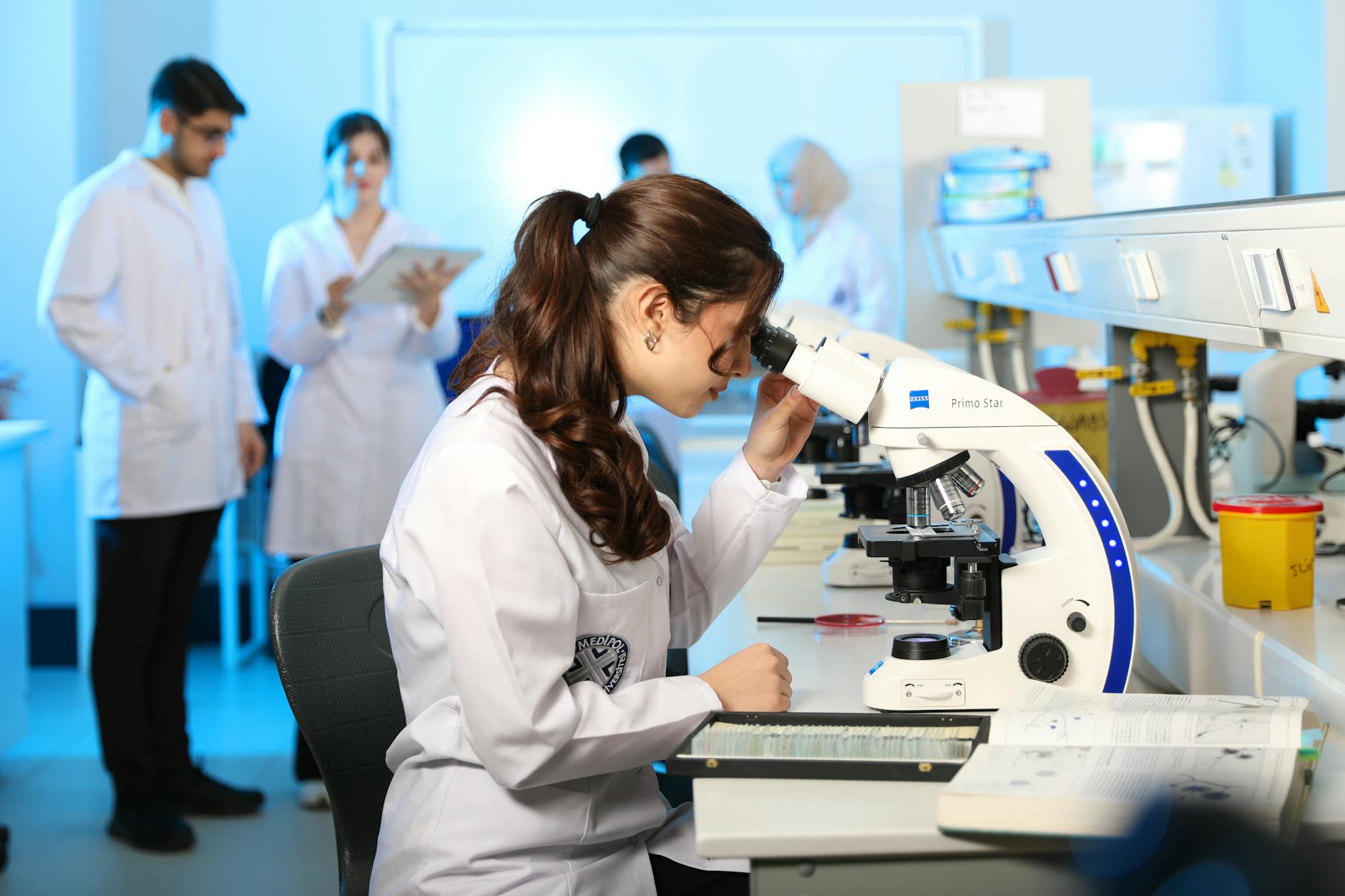
Is A&P lab hard?
A&P lab can feel demanding because you must learn many unfamiliar names and recognize structures in context. A structure that is easy to identify on a labeled diagram may look different on a model, microscope image or specimen.
Lab also requires precision. For example, knowing that the radius and ulna are forearm bones is useful, but you may need to tell them apart and describe their positions using anatomical terms. If your lab includes reports, you may also need to explain what your observations or measurements mean.
The challenge is manageable when you practice a little at a time. Start with the structures and skills listed in your lab materials, then test yourself without the labels.
What do you do in anatomy and physiology lab?
Activities vary by course, but anatomy labs often ask students to identify structures on diagrams, models, tissue images or specimens. Physiology activities can involve observing a process, taking measurements and interpreting results.
For example, you might identify parts of a long bone, compare tissue types under a microscope or use a data set to explain how the body responds to a change. Some courses use physical materials, while others use virtual simulations. Your syllabus will tell you which activities and assessments apply to you.
Which colleges have matched Anatomy and Physiology I Lab? 1 college confirms UPI Study's Anatomy and Physiology I Lab (Biology 211L, 2 credits), according to its equivalency page on UPI Study. Here they are, with the course it counts as at each:
| College | Course it counts as | Credits | How it counts |
|---|---|---|---|
| University of the People | General Elective (UoPeople) | 2 | Transfers (Elective) |
See Anatomy and Physiology I Lab on UPI Study →
ACE and NCCRS have over 2,100 cooperating colleges that will consider accepting credits; the final decision is with the universities. Each college confirms the course when it evaluates your transcript.
How do anatomy and physiology 1 lecture and lab differ?
Lecture typically focuses on concepts and explanations; lab gives you opportunities to recognize and use them. The topics often overlap, but the questions can look different.
| Topic | Lecture example | Lab example |
|---|---|---|
| Skeleton | Explain what bones do. | Identify a bone or landmark on a model. |
| Membrane transport | Explain osmosis. | Interpret observations about water movement across a membrane. |
| Muscle | Describe how muscle contraction works. | Identify a muscle or interpret a measurement related to contraction. |
Lecture and lab may be separate requirements, even when they cover related material. For more on checking your program’s requirements, see whether you need the anatomy lab separately from lecture.
The Complete Resource for Anatomy Lab
UPI Study has a full resource page built specifically for anatomy lab — covering which courses count and how to get started at $250 per course with no deadlines. Your college decides how credits transfer.
See the A&P I Lab course →How do you study for an anatomy lab practical?
A practical may ask you to identify structures or demonstrate skills using the kinds of materials you encountered in lab. Check your instructor’s guidance first: the format and material vary by course.
- Make a list of the structures and skills your lab covers.
- Practice with the actual models, images or specimens available to you, if possible.
- Cover labels and name each structure, then check your answer.
- Change the view or orientation so you are not relying on one picture.
- Explain each structure’s location and function aloud, and revisit the ones you miss.
For example, instead of only memorizing a labeled femur, practice finding it in a full skeleton and distinguishing its major landmarks. If the exam includes data interpretation, practice explaining what a result shows and how you reached that conclusion.
How does online anatomy lab work?
An online lab may use interactive images, simulations, recorded observations or other digital materials. Some courses may require physical materials as well, so check the course instructions before enrolling.
Pay particular attention to how you submit work, whether sessions can be paused and what equipment you need. For study strategies specific to this format, read anatomy lab tips for online students.
What can you expect in anatomy and physiology 1 lab?
Expect to build from basic anatomical language and cell concepts toward body systems. The exact sequence and workload depend on the course, so use its syllabus to plan your study time.
For a concrete example, the table shows the first six labs in UPI Study’s Anatomy and Physiology I Lab, including their lessons and listed hours.
| # | Chapter | Lessons | Hours |
|---|---|---|---|
| Lab 1 | Introduction to Anatomy & Physiology | Part 1: Levels of structural organization; Part 2: The eleven organ systems; Part 3: Properties of life & homeostasis; Part 4: Directional terms | 5 |
| Lab 2 | Chemistry of Life | Part 1: Elements & atomic structure; Part 2: Chemical bonds; Part 3: Types of energy; Part 4: Reaction rates | 8 |
| Lab 3 | Cell Structure & Membrane Transport | Part 1: Cell structure; Part 2: The plasma membrane; Part 3: Diffusion; Part 4: Osmosis & tonicity | 4 |
| Lab 4 | The Integumentary System | Part 1: Layers of the skin; Part 2: Accessory structures; Part 3: Melanin, UV & vitamin D; Part 4: Thermoregulation | 6 |
| Lab 5 | The Skeletal System | Part 1: Gross bone anatomy; Part 2: Bone tissue; Part 3: Bone cells & remodeling; Part 4: Bone shapes & fractures | 6 |
| Lab 6 | Axial & Appendicular Skeleton | Part 1: Axial vs appendicular; Part 2: The skull; Part 3: The vertebral column; Part 4: The appendicular skeleton | 3 |
When planning your week, allow time both to complete the activity and to review what you observed. A familiar lecture topic can still require fresh practice when you have to identify it or use it to interpret data.
Which colleges list Anatomy and Physiology I Lab on an equivalency chart?
These colleges show Anatomy and Physiology I Lab (Biology 211L) on their equivalency charts with UPI Study. Open a college for its full chart.
| College | Equivalent course | Credits | Status |
|---|---|---|---|
| UoPeople | General Elective (UoPeople) | 2 | Elective credit |
| CSU | Open Electives | 2 | Recommended by UPI Study — the college confirms on evaluation |
| Crestpoint | General Elective (Crestpoint) | 2 | Recommended by UPI Study — the college confirms on evaluation |
| Dunlap-Stone | General Education Science | 2 | Recommended by UPI Study — the college confirms on evaluation |
| Gracelyn | General education: Broad Knowledge and Intellectual Skills (Sciences) | 2 | Recommended by UPI Study — the college confirms on evaluation |
| Indiana Tech | BIO 2720 – Human Anatomy and Physiology I Lab | 2 | Recommended by UPI Study — the college confirms on evaluation |
| Maestro | UPI Recommended | 2 | Recommended by UPI Study — the college confirms on evaluation |
| Newlane | Scientific Reasoning GE | 2 | Recommended by UPI Study — the college confirms on evaluation |
See the rest of the equivalency on the Anatomy and Physiology I Lab course page, or open a college above for its full chart. ACE and NCCRS have over 2,100 cooperating colleges that will consider accepting credits; the final decision is with the universities.
Frequently Asked Questions about Anatomy Lab
Anatomy lab is a chance to examine and identify body structures using materials such as models, images or specimens. Depending on the course, you may also collect data, complete exercises or write reports.
A&P lab generally consists of activities that apply anatomy and physiology concepts. Those may include identifying structures, observing processes, interpreting measurements and completing assessments, though the exact work varies.
Study with the same kinds of materials your exam will use, and practice identifying structures without labels. Check your course instructions for whether you also need to interpret data or demonstrate procedures.
Wear whatever your lab’s safety instructions require. For an in-person lab, that may include closed-toe shoes, protective clothing or eye protection; check before your first session.
Yes, online anatomy and physiology labs are available. Check the course format and ask your college whether the particular lab meets your program’s requirement before enrolling.
An online A&P lab can provide laboratory activities, but whether it satisfies a particular requirement is up to your college. Ask the relevant department to review the course and its format before you enroll.
Anatomy and physiology I may have a lab, but course arrangements differ. Your college may list lecture and lab together or separately, so check your degree plan and course catalog.
Requirements depend on the course and can include specific technology, supplies and uninterrupted time. UPI Study’s lab requires a computer or laptop, a basic calculator and a notebook; each lab must be completed in a single sitting.
Final Thoughts on Anatomy Lab
Before you start, check your syllabus for the lab materials, assessment format and topics you need to know. Then make a short practice plan that combines identification with explaining what each structure or result means.
The way this actually clicks
Skip step 3 and the whole thing is wasted.
Ready to Earn College Credit?
Credit recommended by NCCRS · Self-paced · Your college decides how credits transfer · $150/course or $99/month (US)
Comments
No comments yet. Ask a question or share how it went for you.