
The light-dependent reactions are the first stage of photosynthesis, and they turn light energy into ATP and NADPH inside the thylakoid membranes. That sounds dense, but the idea is simple: plants catch sunlight, split water, release oxygen, and store usable energy for the next stage. Those products matter because the Calvin cycle cannot run without them. Think of this stage as the power collection step. Chlorophyll in photosystems II and I absorbs light, excited electrons move through an electron transport chain, and the membrane builds a proton gradient that drives ATP synthase. Water also gets broken apart, which replaces lost electrons and gives off oxygen as a byproduct. One molecule of oxygen comes from splitting water, not from carbon dioxide. Students usually mix up the sequence. They remember “sunlight in, sugar out,” but photosynthesis works in two linked parts, and the first part does not make glucose directly. It makes ATP and NADPH, which the Calvin cycle uses to build sugar from carbon dioxide. Miss that handoff, and the whole chapter feels muddy. This is one of those topics where the details matter. Photosystem II starts the electron flow, photosystem I boosts it again with light, and ATP synthase uses the proton gradient like a tiny molecular machine. If you can track the electrons, the rest stops looking magical and starts looking orderly.
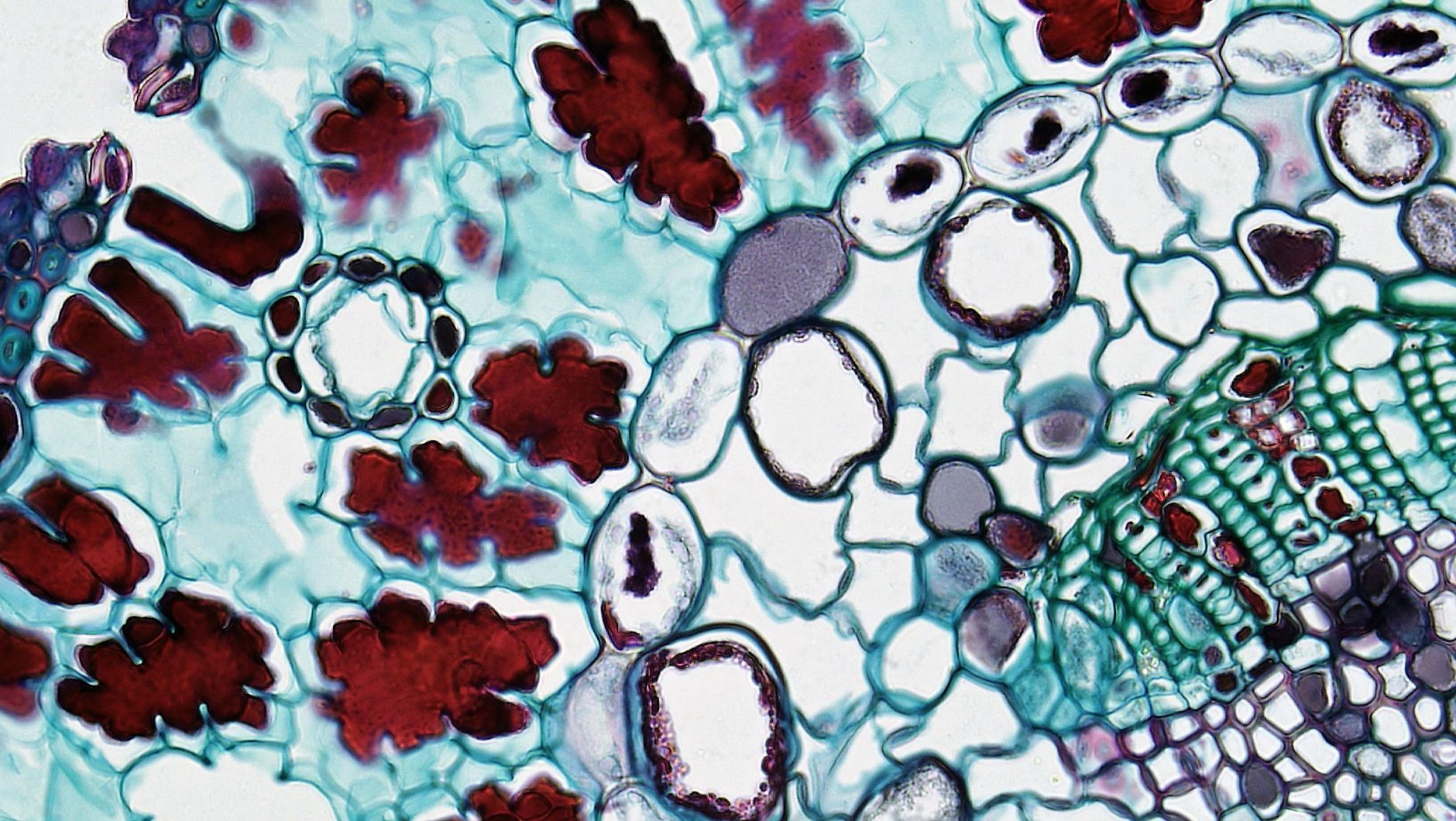
What Are The Light-Dependent Reactions?
The light-dependent reactions are the first stage of photosynthesis, and they happen in the thylakoid membranes of chloroplasts. Their job is direct: turn light into ATP and NADPH, then release oxygen when water splits.
That matters because the plant cannot build sugar from carbon dioxide without those two energy carriers. A chloroplast does not make glucose in this stage at all, and that trips up plenty of students in intro to biology I. The light reactions act like a charging station, while the Calvin cycle later spends the charge.
Inside the thylakoid, chlorophyll and other pigments absorb photons with specific energy levels. Photosystem II and photosystem I sit in the membrane and handle the first light-driven steps. The reaction center in photosystem II uses light to push electrons onto a higher energy path, and that starts the whole chain.
Water enters the picture because photosystem II loses electrons as it works. The plant replaces those electrons by splitting water, which gives off hydrogen ions, electrons, and oxygen. That oxygen does not serve as a waste with no use in the world; it exits the leaf and becomes part of the air you breathe.
What this means: The stage looks small, but it moves 3 major products at once: ATP, NADPH, and O2. That is a lot of work for a membrane only a few nanometers thick.
A lot of textbooks flatten this into one sentence, and that makes the process feel vague. I do not like that shortcut, because the sequence matters more than the slogan. Once you see that the light-dependent reactions build energy carriers and free oxygen, the photosynthesis diagram stops feeling like random arrows.
For a clean study path, the biology basics in Introduction to Biology I line up well with this topic, especially if you want college credit later.
How Do Light-Dependent Reactions Capture Energy?
Light capture starts when pigments in photosystem II absorb photons, usually in the visible range around 400-700 nm. That light excites electrons in chlorophyll, and the electrons jump to a higher energy state instead of staying parked in the reaction center.
From there, the electrons move through an electron transport chain in the thylakoid membrane. Each transfer releases a little energy, and the membrane uses that energy to pump hydrogen ions into the thylakoid lumen. That creates a proton gradient across a membrane that is only about 5-10 nm thick.
Reality check: The whole setup works because electrons lose energy in small steps, not all at once. That controlled drop is what lets the membrane store usable energy instead of wasting it as heat.
Photosystem I picks up the electrons after they pass through the chain and hit a lower energy state. A second burst of light excites them again, which gives the plant enough push to keep building NADPH later in the process. That two-step light boost feels clunky at first, but it works like a relay.
The proton buildup matters because protons do not cross the membrane freely. They pile up in the lumen, and the difference between the lumen and the stroma drives ATP synthase. That enzyme turns proton flow into ATP the way a turbine turns moving water into electricity.
Students in an intro to biology I course usually get stuck on the word “transport,” because they think it means cargo moving in one direction. Here it means energy moving too, and that energy ends up stored in a chemical gradient. If you miss that, the electron chain looks like busywork instead of the main event.
A related chapter in Introduction to Biology I helps here because it covers membranes, enzymes, and ATP in the same language. That overlap is handy when you want transferable credit without relearning the same facts three times.
For a student who likes a hard number, the membrane gradient only works because tiny proton differences create a big effect across a very small distance. Biology loves that trick.
Why Does Water Split During The Light-Dependent Reactions?
Water splits during the light-dependent reactions to replace the electrons that photosystem II loses after light excites them. This process, called photolysis, makes electrons, hydrogen ions, and oxygen, and it keeps the electron flow alive.
Without that replacement, photosystem II would stall almost right away. The plant cannot keep pulling electrons out of chlorophyll forever, so water acts like the backup source that keeps the system moving. That is why water matters so much even though most students think of it as a simple input.
The oxygen comes off as a byproduct because the plant does not need it for this stage. It releases O2 into the air, while the electrons stay in the chain and the hydrogen ions help build the proton gradient. One split water molecule does not sound dramatic, but the chemistry adds up fast across millions of reaction sites.
Bottom line: No water splitting means no fresh electrons, and no fresh electrons means photosystem II shuts down. The plant cannot skip this step, no matter how bright the light gets.
The downside is that this step gets taught too fast. Students hear “water is split” and stop there, but the real point is electron replacement. The oxygen release matters, yet the plant mainly cares about keeping the light reactions running at full speed.
You also see this idea in exam questions that ask where the oxygen in photosynthesis comes from. It comes from water, not carbon dioxide, and that distinction shows up often in intro to biology I tests. If you remember only one detail, make it that one.
For extra practice, the chemistry behind redox reactions also connects well with Chemistry I, especially if your course uses a 15-week semester format.
Learn Biology 1 Online for College Credit
This is one topic inside the full Biology 1 course on UPI Study — a self-paced, online class that earns real college credit. Credits are ACE and NCCRS evaluated and transfer to partner colleges across the US and Canada. Courses start at $250 with no deadlines and lifetime access.
Browse Biology 1 Course →How Are ATP And NADPH Made?
ATP and NADPH come from two linked jobs in the thylakoid membrane: proton flow through ATP synthase and electron transfer to NADP+ reductase. The plant turns light energy into chemical energy by using both paths at once, not one after the other in isolation.
- Light excites electrons in photosystem II, and the electron transport chain starts moving them through the membrane. That movement helps pump protons into the thylakoid lumen.
- Protons build up in the lumen until the concentration difference across the membrane becomes steep. The gap between lumen and stroma drives chemiosmosis, and the gradient acts like stored pressure.
- ATP synthase lets protons flow back across the membrane and uses that movement to make ATP from ADP and phosphate. In many biology labs, students track this step as the payoff for the whole 1-step proton gradient idea.
- Electrons reach photosystem I, get boosted by a second burst of light, and move to a higher energy state again. That second light hit keeps the chain alive and prepares the electrons for the final transfer.
- NADP+ reductase accepts the electrons and helps form NADPH, which carries high-energy electrons to later reactions. This step finishes the light reactions and hands the Calvin cycle a usable reducer.
- ATP and NADPH then leave the thylakoid side as the two main energy products. Without both, carbon fixation slows hard, and the plant cannot build sugar at a normal rate.
Worth knowing: ATP synthase does not “make energy” out of nowhere. It converts a proton gradient into ATP, which is a very different thing.
The link from membrane chemistry to carbon building shows up clearly in Introduction to Biology I, and it also fits cleanly with Introduction to Biology II for students who study online and want ace nccrs credit.
Which Parts Of Photosynthesis Use ATP And NADPH?
The Calvin cycle uses ATP and NADPH, and it spends both molecules to turn carbon dioxide into sugar precursors. That handoff happens in the stroma, not in the thylakoid membrane, so the two stages stay separated even though they depend on each other.
ATP supplies the energy for carbon fixation, reduction, and RuBP regeneration. NADPH supplies the electrons that reduce carbon compounds, which lets the plant build 3-carbon molecules that later become glucose and other sugars. In a 3-step cycle, both carriers get used fast.
The first part of the Calvin cycle adds carbon dioxide to RuBP with help from the enzyme rubisco. Then ATP and NADPH push the new carbon compound through reduction, and ATP helps rebuild RuBP so the cycle can keep turning. That reset step matters because the plant needs a fresh acceptor for the next CO2 molecule.
The handoff: Light reactions store energy; the Calvin cycle spends it. If you keep that 2-stage split straight, the whole chapter gets easier to follow.
A lot of confusion comes from treating photosynthesis like one flat process. It is not. The light-dependent reactions make ATP and NADPH in the thylakoid membrane, and the Calvin cycle uses them in the stroma to make sugar building blocks. Miss the location split, and exam diagrams start looking like spaghetti.
This is why teachers keep pairing the two stages on tests. They want you to know that the first stage captures energy and the second stage uses it to build carbon compounds. If you can trace ATP and NADPH from one stage to the next, you already have the core logic.
That logic shows up cleanly in Introduction to Biology I, and the carbon side gets even clearer in Environmental Science when students study photosynthesis in ecosystems.
What Should You Remember For Biology Exams?
Three facts carry most exam questions on this topic: the light-dependent reactions happen in the thylakoid membrane, they make ATP and NADPH, and they release oxygen from water. Keep those 3 pieces straight, and the rest gets easier.
- Photosystem II starts the electron flow, and photosystem I finishes the light boost. That 2-photosystem setup shows up in almost every diagram.
- Water splits in photolysis to replace lost electrons. Oxygen leaves as O2, not from CO2.
- ATP synthase uses the proton gradient across the thylakoid membrane to make ATP. The membrane does the heavy lifting here.
- NADPH forms after electrons reach NADP+ reductase. That carrier feeds the Calvin cycle with high-energy electrons.
- The Calvin cycle uses ATP and NADPH in the stroma. It does not make those molecules in the first stage.
- Do not say the light-dependent reactions make glucose directly. They make energy carriers, then the Calvin cycle builds sugar.
- On a test, watch for location words like thylakoid, lumen, and stroma. Those 3 terms usually decide the right answer.
Frequently Asked Questions about Light Dependent Reactions
You lose points on the whole photosynthesis chain because the light-dependent reactions make ATP, NADPH, and oxygen in the thylakoid membranes, and the Calvin cycle depends on those products. If you mix them up with the Calvin cycle, you usually miss 2 core outputs and the water-splitting step.
They apply to anyone studying photosynthesis in plants, algae, and cyanobacteria, and they don't apply to cells that can't run photosynthesis, like animal cells. In an intro to biology I course, you study them as the light-driven stage inside chloroplast thylakoids, not as a sugar-making stage.
The light-dependent reactions are the first stage of photosynthesis, and they use light in the thylakoid membranes to make ATP and NADPH. They also split water, release oxygen, and send energy to the Calvin cycle, which runs in the stroma.
The most common wrong assumption is that they make glucose directly. They don't. They make ATP and NADPH first, and those 2 carriers feed carbon fixation later in the Calvin cycle, which is why the first stage matters even though it doesn't build sugar yet.
A single photosynthesis unit can easily cover 5-10% of an intro to biology i course grade, and the light-dependent reactions often show up in 1 or 2 exam questions. If you miss the ATP, NADPH, and oxygen parts, you usually lose easy points fast.
Start with the thylakoid membrane and trace the electron flow from water to photosystem II, then to the electron transport chain, photosystem I, and NADPH. That order helps you place where ATP forms and where oxygen comes from in an online course.
Most students memorize the words ATP, NADPH, and oxygen, but what actually works is drawing the pathway 3 times from memory. You should mark photosystem II, photosystem I, and ATP synthase on the diagram, because those 3 spots do the real work.
What surprises most students is that water, not carbon dioxide, supplies the electrons here. Water splits at photosystem II, oxygen leaves as a waste product, and that step happens before the Calvin cycle ever starts.
They make ATP by using a proton gradient across the thylakoid membrane, and ATP synthase turns that gradient into usable energy. Light energy helps move electrons through the chain, which builds the H+ difference that drives ATP production.
They make NADPH when electrons reach photosystem I and reduce NADP+ at the end of the chain. That 2-electron carrier then moves high-energy electrons into the Calvin cycle, where the plant uses them to help build sugars.
Oxygen comes out because the light-dependent reactions split 2 water molecules into electrons, protons, and O2 during photolysis. The oxygen leaves the leaf as a byproduct, while the electrons keep moving through the thylakoid membrane.
They matter in college credit biology courses because schools often test them in general biology, and an ace nccrs credit online course can cover the same core ideas. If you study online, you still need to know the 3 outputs: ATP, NADPH, and oxygen.
Yes, you can learn them in a college credit online course, and the topic usually sits inside the photosynthesis unit with 2 linked stages: light-dependent reactions and the Calvin cycle. If your course offers transferable credit, this concept still shows up as a standard biology topic.
Final Thoughts on Light Dependent Reactions
The light-dependent reactions look complicated until you track three things: light enters, electrons move, and ATP plus NADPH come out. That is the whole engine. Photosystem II starts the chain, photosystem I finishes the boost, and water split keeps the electron flow alive while oxygen escapes as a byproduct. The thylakoid membrane does not act like a passive wall. It acts like a working machine. It holds the photosystems, builds the proton gradient, and gives ATP synthase the pressure it needs to make ATP. That is why membrane location shows up again and again on exams. Students often miss the handoff between stages. The light-dependent reactions do not make glucose. They make the chemical tools that let the Calvin cycle run in the stroma, where carbon dioxide turns into sugar building blocks. Once you see that split, the diagram gets a lot less scary. A good way to study this topic is to redraw the pathway from memory twice on the same day, then again 24 hours later. If you can label photosystem II, photosystem I, ATP synthase, NADPH, oxygen, and the Calvin cycle without peeking, you are in strong shape for class and exam day. Start with the arrows, then add the terms. That order sticks.
The way this actually clicks
Skip step 3 and the whole thing is wasted.
Ready to Earn College Credit?
ACE & NCCRS approved · Self-paced · Transfer to colleges · $250/course or $99/month