
Energy in living systems is the ability to do work in cells and bodies, and life depends on a nonstop supply of it. A cell uses energy to build proteins, move ions, copy DNA, and keep water and salts in the right balance. Without that flow, order breaks down fast. Think of a plant leaf, a muscle cell, and a bacterium. They all need energy, but they get it in different ways. Plants trap light in photosynthesis. Animals and fungi pull energy from food through cellular respiration. Bacteria can do both, and some use unusual chemical sources that do not come from sunlight at all. ATP sits at the center of this system. Cells make ATP from ADP and phosphate, then spend it almost right away on work that lasts seconds or minutes. That quick turnover matters because life does not store much usable energy in one place for long. A human body may contain trillions of cells, yet each one still runs on tiny bursts of chemical energy. This topic also shows why biology feels less like memorizing labels and more like following a set of linked steps. Photosynthesis, respiration, growth, movement, and homeostasis all connect through energy transfer. Once you see that pattern, the whole subject starts to click.
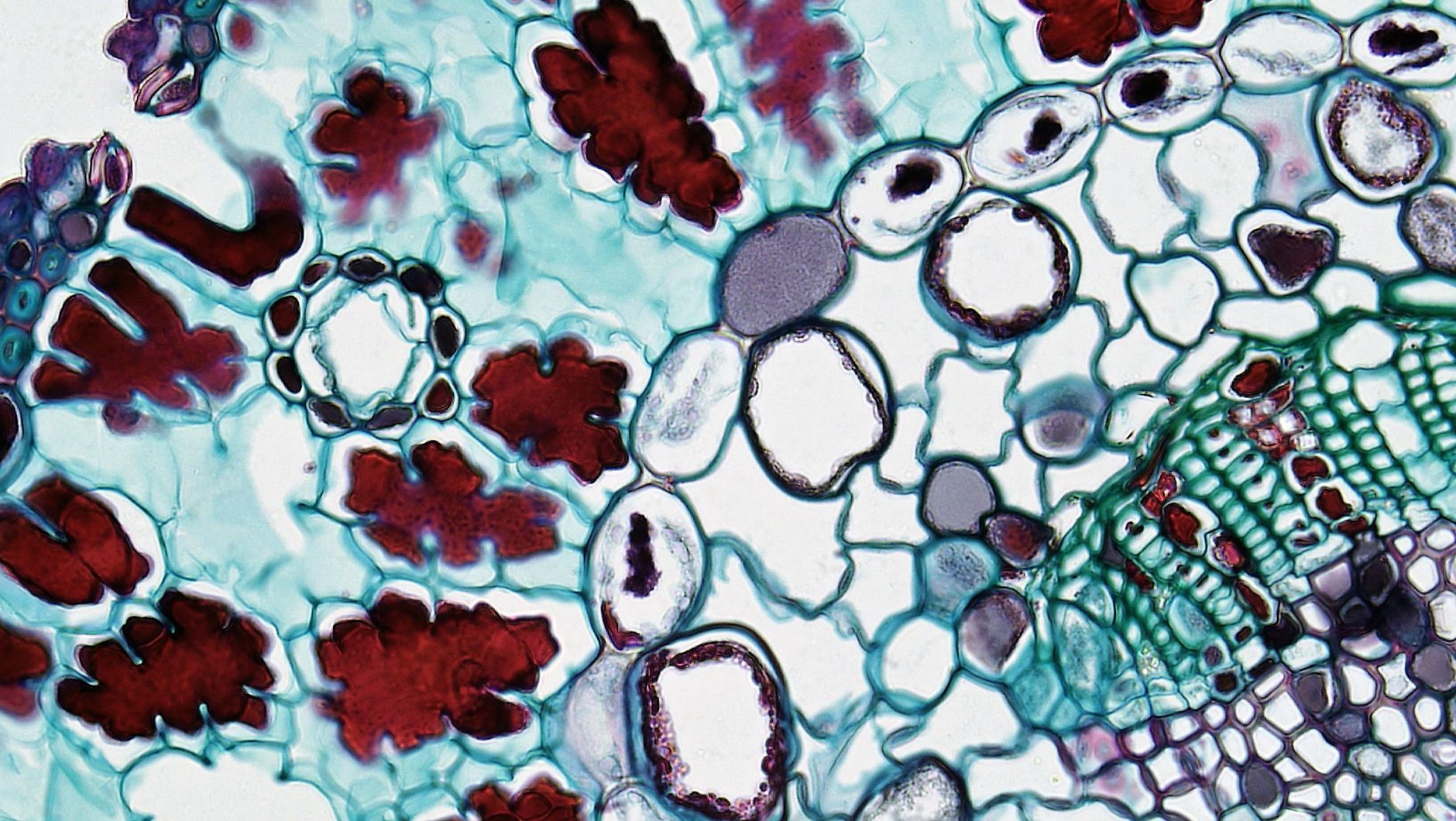
What Is Energy in Living Systems?
Energy in living systems means the capacity to do work inside cells and whole organisms, and cells spend that energy on growth, repair, movement, and control of internal conditions. Life sits in a constant fight against entropy, which pushes systems toward disorder, so a cell must keep pulling in energy every minute to stay organized.
A simple way to see it: a red blood cell keeps ion levels balanced with membrane pumps, a plant cell builds starch, and a human muscle cell contracts during a 100-meter sprint. Those jobs do not happen by chance. They need chemical energy, usually in small bursts, because the cell has to move molecules across membranes, build large compounds, and keep temperature and pH within a narrow range.
The catch: Cells do not store lots of ready-to-use energy the way a gasoline tank stores fuel; they keep a fast-turnover system, and ATP often lasts only seconds before the cell makes more. That is why biology feels so active, almost restless.
A lot of students miss the scale of this. A cell may be only about 10 to 100 micrometers wide, yet it still runs hundreds of reactions at once. That tiny space handles massive chemical traffic, and every step depends on energy transfer. I think that makes biology more impressive than any tidy diagram in a textbook.
The downside is plain: if energy supply drops, the whole system gets sloppy fast. Membranes leak, repair slows, and homeostasis weakens. A living system survives by spending energy constantly, not by saving it for a rainy day.
How Do Cells Make ATP?
ATP, or adenosine triphosphate, gives cells a common energy unit they can spend fast, often within a few seconds. Cells build it by capturing energy from food in respiration or from light in photosynthesis, then moving a phosphate group onto ADP.
- Cells first capture energy from glucose, fats, or light, depending on the organism. In human cells, food molecules enter pathways like glycolysis and the citric acid cycle.
- The cell uses that captured energy to add a phosphate to ADP and form ATP. This phosphate transfer stores energy in a usable form, not in a long-term stash.
- ATP then hydrolyzes, usually by losing its outer phosphate, and releases energy for cell work. That reaction happens fast enough to power processes that need action in less than 1 second.
- The released energy helps drive active transport, muscle contraction, and biosynthesis. A sodium-potassium pump can move ions against a gradient, which keeps nerve and muscle cells ready to fire.
- After ATP gives up its phosphate, it becomes ADP again. The cell recycles ADP back into ATP again and again, sometimes thousands of times per day in one cell.
- Cells keep this cycle going as long as fuel or light keeps coming in. If the supply stops, ATP levels fall and work slows almost right away.
What this means: ATP does not act like a battery you charge once and forget; it behaves more like cash in a busy store, because cells spend and replace it all the time. That is the part students remember once they stop picturing energy as a vague cloud.
The weak spot in this system is speed. Cells burn through ATP quickly, so they need steady input from respiration or photosynthesis. No extra drama. No backup plan that lasts 3 days.
Learn Biology 1 Online for College Credit
This is one topic inside the full Biology 1 course on UPI Study — a self-paced, online class that earns real college credit. Credits are ACE and NCCRS evaluated and transfer to partner colleges across the US and Canada. Courses start at $250 with no deadlines and lifetime access.
Browse Biology 1 Course →Why Are Photosynthesis and Respiration Linked?
Photosynthesis and cellular respiration form a matched pair: photosynthesis stores light energy in glucose, and respiration pulls that stored energy back out as ATP. In green plants, algae, and some bacteria, photosynthesis uses light, water, and carbon dioxide to build sugar, then respiration can break that sugar down when the cell needs usable energy.
The numbers help here. Chloroplasts trap light energy, and mitochondria release energy from glucose through a series of reactions that make ATP. A plant does both jobs, not just one, because it still needs ATP at night, in roots, and in tissues that never see sunlight. Leaves make sugar in the day, but root cells still respire 24 hours a day.
Reality check: Photosynthesis sounds like the star of the show, but respiration often does the heavy lifting for day-to-day cell work, and that makes respiration the grittier process. Light starts the story, yet ATP powers the next move.
A carbon atom can move from carbon dioxide into glucose in photosynthesis, then back out as carbon dioxide during respiration. That round trip links the two pathways in a way students can actually track. The energy does not vanish; it changes form as the cell moves from light energy to chemical energy and then to ATP plus heat.
A downside shows up in the math of life: plants do not store every bit of captured light as sugar, and cells lose some energy as heat at each step. That loss looks small in a diagram, but it matters across an entire forest.
Which Biological Processes Use Energy?
Cells spend ATP on a long list of jobs, and those jobs keep a body alive across 24 hours a day. Some use tiny bursts of energy, while others drain ATP fast, especially in muscle, nerve, and dividing cells.
- Active transport moves substances against a concentration gradient. The sodium-potassium pump, for instance, keeps nerve cells ready to signal by moving ions in and out of the membrane.
- Biosynthesis builds large molecules like proteins, DNA, and lipids. A ribosome links amino acids one by one, and that assembly line needs chemical energy at each step.
- Muscle contraction uses ATP to slide actin and myosin filaments past each other. Without that ATP cycle, a muscle cannot contract or relax properly.
- Nerve signaling depends on ion gradients and membrane pumps. One action potential can travel in milliseconds, but the cell must restore the gradient right after it fires.
- Cell division uses energy to copy DNA and separate chromosomes. Human body cells can divide in about 24 hours in fast-growing tissues, which makes the ATP demand feel relentless.
- Thermoregulation and homeostasis use energy to keep internal conditions stable. Sweating, shivering, and pumping heat around the body all cost ATP or fuel that gets turned into ATP.
Bottom line: Energy use in biology never stays abstract for long; you can point to a pump, a fiber, or a chromosome and see where the ATP goes. That directness is why this topic matters in any intro to biology I course.
The weak point is obvious. If ATP supply falls, these jobs fail in a chain, and the cell does not politely wait around.
How Does Energy Move Through Ecosystems?
Energy moves through ecosystems in one direction, from the Sun to producers, then to consumers, and finally to decomposers. Matter cycles, but energy flows, and that difference shapes every food chain from a pond to a 1,000-acre forest.
Producers such as plants and algae capture solar energy by photosynthesis. Herbivores eat producers, carnivores eat herbivores, and decomposers break down dead matter and return nutrients to the soil. At each transfer, organisms use some energy for life, so less remains for the next level. Ecologists often describe a rough 10% transfer efficiency between trophic levels, which means most energy leaves as heat or gets used in metabolism.
That heat loss matters. A rabbit does not pass all its energy to a fox because the rabbit spends energy on breathing, movement, and body heat before the fox ever arrives. The fox then spends even more. This is why food webs often have fewer top predators than producers and why energy pyramids shrink as you move upward.
Worth knowing: Energy transfer in ecosystems makes a clean rule feel messy in real life, and that mess is exactly what makes ecology worth studying. A pond, a grassland, and a coral reef all follow the same broad pattern, but the numbers change with temperature, species mix, and season.
One hard limit shows up everywhere: no ecosystem recycles energy forever. Sunlight enters, heat leaves, and the system keeps moving only because new energy keeps arriving each day.
Frequently Asked Questions about Energy In Living Systems
What surprises most students is that living things don't create energy from nothing; they move it, change it, and store it in forms like ATP. Cells use that energy for metabolism, growth, movement, and homeostasis, all at the same time.
Start with ATP, because it's the cell's main energy currency and powers reactions in seconds, not hours. Then connect it to photosynthesis in plants and cellular respiration in cells that break down glucose.
The most common wrong assumption is that energy in living systems means only food calories, but cells also depend on chemical energy, light energy, and ATP. A plant uses sunlight to build glucose, and an animal breaks glucose down to make ATP.
This applies to you if you're in intro to biology i, an intro to biology i course, or any biology class where metabolism and cells come up, and it doesn't stop there. You also need it if you want college credit, an online course, or ace nccrs credit tied to biology basics.
ATP powers nearly every fast job in the cell, and one ATP molecule can release energy in less than a second when a phosphate bond breaks. That energy drives transport, muscle contraction, and building new molecules.
Most students memorize photosynthesis and cellular respiration as separate charts, but what actually works is tracing energy flow from sunlight or food to ATP and then to cell work. That gives you one clear chain across 3 stages.
No, but the two processes connect tightly: photosynthesis stores energy in glucose, and cellular respiration pulls that energy back out to make ATP. In plants, both happen in the same organism, and the cell uses each one for a different job.
If you get this wrong, you'll mix up matter and energy, and that can cost you points on 2-step exam questions about food chains, ATP, and homeostasis. You might also miss why cells need constant energy input instead of a one-time supply.
Living systems get energy from the Sun, from food, or from chemicals in some microbes, and each route starts a different chain of transfer. Plants capture light in chloroplasts, animals eat organic matter, and some bacteria use chemical reactions.
Energy transfer matters because no cell can keep working without moving energy from one molecule to another, usually through ATP, NADH, or glucose. That transfer lets cells build proteins, pump ions, and keep internal conditions steady.
Photosynthesis makes glucose and oxygen, and cellular respiration uses both to produce ATP, carbon dioxide, and water. In a typical plant cell, chloroplasts and mitochondria work as a linked system across 2 organelles.
Yes, you can study online in an online course and earn transferable credit when the class carries ACE and NCCRS credit approval. That matters for nontraditional biology study, since the same core ideas appear in college credit courses.
Remember this first: energy in living systems flows through living matter, and ATP acts as the short-term battery for cells. That one idea connects growth, movement, metabolism, and homeostasis across every major organism.
Final Thoughts on Energy In Living Systems
Energy in living systems ties almost every part of biology together. ATP powers the immediate work. Photosynthesis stores energy in sugar. Cellular respiration pulls that energy back out. Ecosystems move energy from producers to consumers and lose some of it as heat at every step. That pattern matters because life never stays still. Cells keep making proteins, pumping ions, copying DNA, and fixing damage. Organisms keep growing, moving, and holding temperature steady. Ecosystems keep passing energy along while matter circles back through soil, water, and air. A small detail can help the whole topic click: energy in biology does not act like a pile of saved money. It acts like cash moving through a busy day. Cells grab it, spend it, and replace it fast. That is why ATP sits at the center of the story instead of some hidden reserve. If you are studying this for class, keep one question in front of you: where did the energy come from, where did it go, and what job did it pay for? That habit turns a dense chapter into a clear chain of cause and effect. Next time you see a diagram, trace the arrows with that question and the whole system will read faster.
How UPI Study credits actually work
Ready to Earn College Credit?
ACE & NCCRS approved · Self-paced · Transfer to colleges · $250/course or $99/month